
The US Power Grid Just Said It Can't Power the AI Boom — Here's What That Means for Everyone Running Real Servers
The largest US power grid fell 6.8 gigawatts short of its reliability target as AI data centers consume ever more electricity. A 10-year hosting veteran breaks down what the transformer shortage, surging power prices, and grid capacity crisis mean for independent hosting providers.
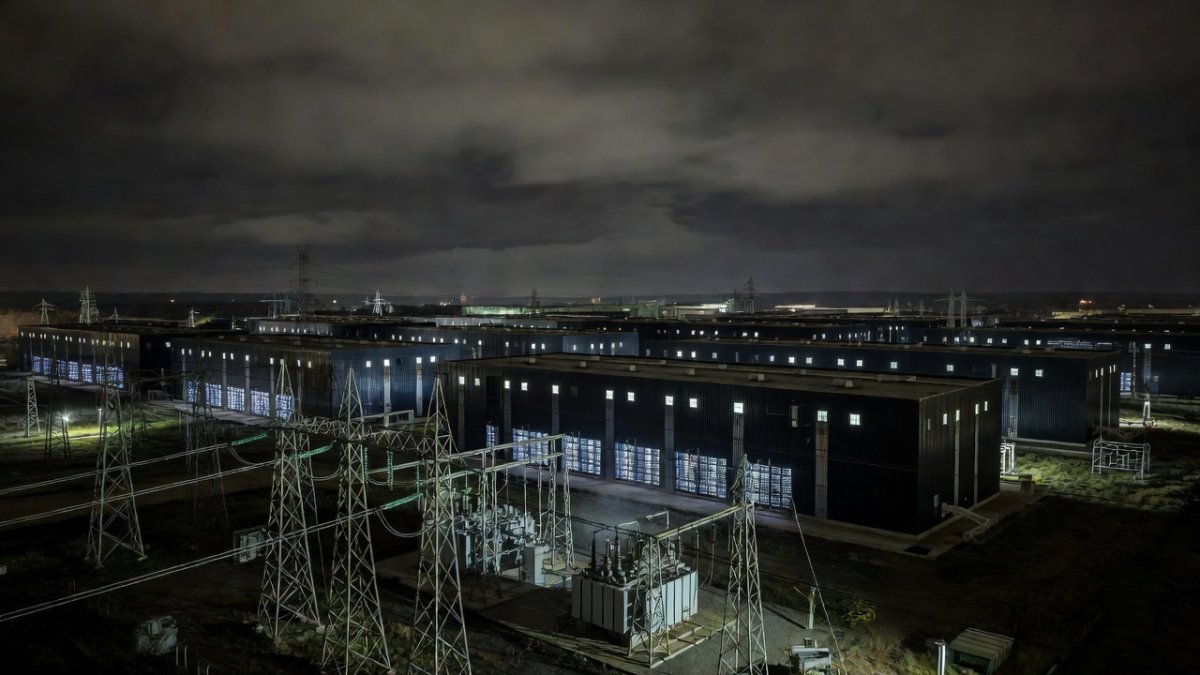
The US Power Grid Just Said It Can't Power the AI Boom — Here's What That Means for Everyone Running Real Servers
Let me tell you something that's been sitting heavy on my mind as someone who's been running production infrastructure for over a decade.
The largest power grid in the United States just held an auction to guarantee electricity supply for 2028 and 2029 — and it came up 6.8 gigawatts short. That's not a typo. That's not a rounding error. That's the equivalent of several large nuclear power plants' worth of capacity that simply doesn't exist.
And if you run any kind of hosting, cloud, or server infrastructure — or if you're a founder who relies on any of those things — this is your problem now.
The Numbers That Should Scare Every Hosting Provider
Let me give you the raw numbers, because the headlines don't do this justice.
PJM Interconnection is the grid operator for 67 million people across 13 states and Washington DC — including Northern Virginia, which is the data center capital of the world. Their capacity auction for the 2028/2029 delivery year cleared at the maximum price the Federal Energy Regulatory Commission allows: $325 per megawatt-day. And that cap is the only thing keeping the numbers from looking even worse. Without it, the clearing price would have been $554.72 — a 70% jump.
This is the third consecutive year PJM has missed its reliability target. Three years in a row the grid has said "we can't guarantee enough power." And every year the gap gets wider because AI data centers are consuming electricity at a rate nobody predicted.
PJM power prices have already jumped 76% in the first quarter of 2026 alone, according to Monitoring Analytics, the grid's independent market monitor. PJM's own CEO David Mills described the situation as — and I quote — "untenable."
When the CEO of the largest power grid in America says things are untenable, small and medium hosting providers should be paying very close attention.
Henrico County — The Canary in the Coal Mine
Here's a story that illustrates exactly how absurd this situation has gotten.
Henrico County, Virginia — home to 37 data centers — recently told residents to conserve electricity. The county manager, John Vithoulkas, asked schools and public buildings to turn off their lights. They asked people to unplug appliances and stop using space heaters.
Meanwhile, the 37 data centers in that same county keep humming along, consuming massive amounts of power to run AI training workloads and cloud services for the biggest tech companies on the planet.
Let that sink in for a moment. Residents are being asked to sit in the dark so that data centers — built by trillion-dollar corporations — can keep running. The local government is asking its own people to sacrifice comfort and productivity because the grid cannot keep up with industrial demand.
Virginia isn't an outlier here. It's the leading indicator. What's happening in Henrico County today will be happening across the country in three to five years if the supply-side problems don't get fixed. And based on the PJM auction results, there's no fix coming anytime soon.
The Transformer Problem Nobody's Talking About
There's a bottleneck in the data center construction pipeline that doesn't get enough attention, and it's not GPUs or fiber or cooling systems. It's transformers.
Distribution-class power transformers now carry lead times of 52 to 78 weeks. Large power transformers? 128 weeks and counting. That's over two years from order to delivery for a piece of equipment that every single data center needs before it can draw a single watt from the grid.
The numbers tell the story: nearly half of all planned US AI data center capacity for 2026 — 7 gigawatts out of 12 gigawatts total — has already been delayed or canceled. The primary reason isn't lack of demand or funding. It's that the electrical equipment simply isn't available. Transformers, switchgear, and grid interconnection queues that stretch four to ten years are killing projects before they break ground.
Electrical equipment represents less than 10% of a data center's total construction cost. But it's 100% of the bottleneck. When you can't get a transformer, you can't energize the building. It doesn't matter how many NVIDIA GPUs you've ordered or how much cooling capacity you've installed. Without power, it's an empty shell.
What This Actually Means for Independent Hosting Providers
So let me connect these dots for the founders and operators who are actually reading this — the people running independent hosting companies, managed service providers, and small cloud operations.
Your power costs are going up. PJM prices jumped 76% in a single quarter. That's not a blip — that's a structural shift. If you're running servers in the PJM territory (and if you're hosting in the eastern US, you almost certainly are), your electricity bill is going to climb significantly over the next 12 to 24 months. And unlike the hyperscalers, you can't just sign a power purchase agreement with a solar farm to hedge your exposure.
Your hardware costs are going to rise. The transformer shortage isn't just a data center problem — it affects the entire electrical supply chain. When utilities can't get transformers for their own grid upgrades, they prioritize large industrial customers. Guess who gets deprioritized? Everyone else. Your colocation provider's expansion plans, your data center's ability to add capacity, your ability to deploy new cabinets — all of it is downstream of a transformer supply chain that's stretched beyond breaking point.
The hyperscalers are going to get even more aggressive. When Microsoft, Amazon, and Google can't build the data centers they want in Northern Virginia, they'll compete even harder for the power that is available. They'll pay premium rates, secure long-term contracts, and push smaller players further down the queue. I wrote about the $700 billion AI capex bubble last week, and this is exactly what I warned about — the hyperscalers can absorb cost increases that would break a smaller operator.
What Smart Founders Should Do Right Now
I'm not going to leave you with nothing but bad news. Here's what I'm actually doing and what I'd recommend to any founder running infrastructure right now.
Lock in your colocation contracts early. If you're on month-to-month or short-term agreements, now is the time to negotiate longer terms. Data center operators know power costs are rising, and they're going to pass those increases through. Locking in multi-year agreements at today's rates — with reasonable escalation caps — protects you from the worst of the coming wave.
Geographically diversify your deployment. Northern Virginia is the most power-constrained market in the country, but it's far from the only one. Look at markets with better power availability and lower costs — the Midwest, the Pacific Northwest, or even international options in Europe and Asia. Yes, latency matters. But running out of power entirely is a much worse problem than a few extra milliseconds of latency.
Build energy efficiency into your hardware planning. When power costs double, the efficiency difference between an older server and a modern one becomes a significant line item. If you've been deferring hardware refreshes because "it still works," now is the time to reconsider. Newer processors deliver dramatically better performance per watt, and in a rising-power-cost environment, those upgrades pay for themselves faster than ever.
Watch the regulatory landscape. The PJM auction results are going to trigger a wave of regulatory activity at both the state and federal level. Rate changes, interconnection reforms, maybe even moratoriums on new data center construction in the most constrained areas. You need to be paying attention to this, because a regulation that doesn't affect AWS at all could seriously impact your operation.
The Bottom Line — This Is a Structural Shift, Not a Blip
I've been through a lot of market cycles in my decade running infrastructure. I've seen hosting companies come and go. I've watched the hyperscalers eat the lunch of smaller providers who thought they could compete on price. I've weathered hardware shortages, bandwidth bottlenecks, and economic downturns.
But this one is different. This isn't a supply chain disruption that will resolve itself in 6 to 12 months. This is a fundamental mismatch between the rate at which electricity demand is growing — driven by AI data centers — and the rate at which new generation and transmission capacity can be brought online. Building a power plant takes years. Building transmission lines takes even longer. And the demand is growing faster than anyone projected.
The hosting industry that emerged from this power crunch will not look the same as the one that entered it. Some providers will fail because they can't absorb the cost increases. Others will thrive because they planned ahead. The difference between those two outcomes depends on what you do in the next six months, not the next six years.
Stop worrying about which AI model is winning and start worrying about whether your servers will have power to run in 2028. Because the grid just told us the answer, and it's not a comfortable one.
— Allan Ali, Founder
This article was produced with AI-assisted research and editorial support. Reporting is based on sources cited in the article.
What's Your Reaction?
 Like
0
Like
0
 Dislike
0
Dislike
0
 Love
0
Love
0
 Funny
0
Funny
0
 Wow
0
Wow
0
 Sad
0
Sad
0
 Angry
0
Angry
0

Publisher of Global1.News. Automation architect, systems builder, and the guy making sure the truth gets published.













Comments (0)