
Yazidi Genocide, Survivor Testimony, and Dr. Nagham Nawzat's Lifelong Work
The Yazidi Genocide and the Invasion of Sinjar The events of August 2014 marked a turning point for the Yazidi community in northern Iraq. Islamic State militants seized control of Sinjar and surrounding areas, resulting in the deaths or kidnappings of at least 12,000 Yazidis according to United Nations assessments that describe the campaign as an ongoing genocide against this
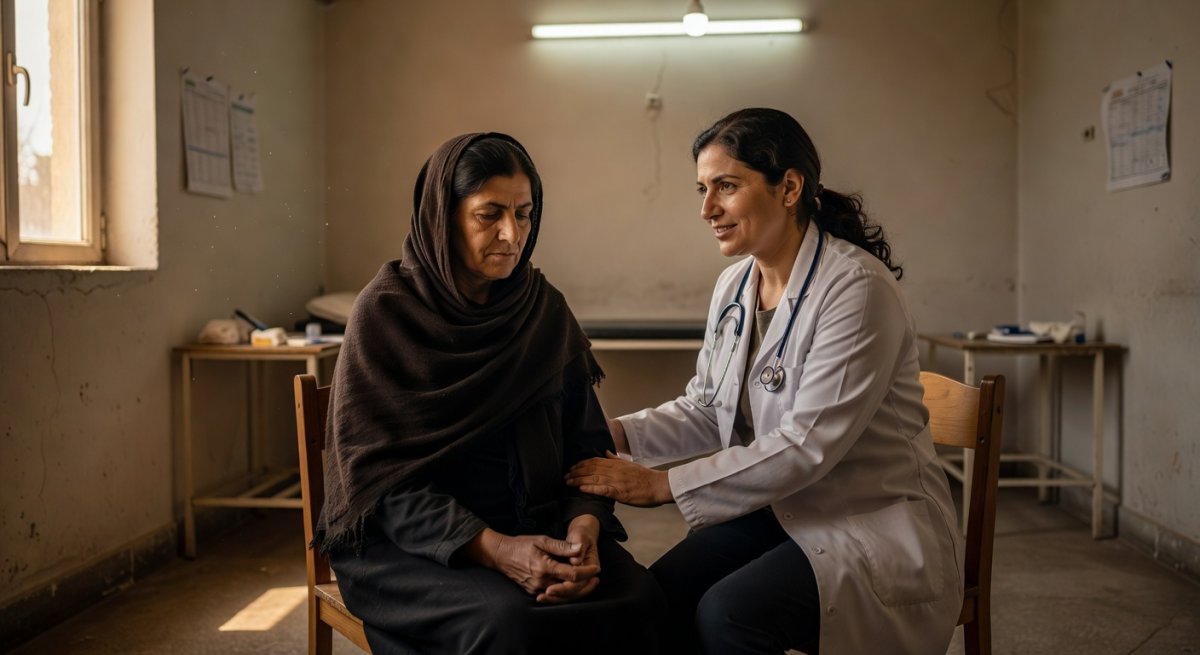
The Yazidi Genocide and the Invasion of Sinjar
The events of August 2014 marked a turning point for the Yazidi community in northern Iraq. Islamic State militants seized control of Sinjar and surrounding areas, resulting in the deaths or kidnappings of at least 12,000 Yazidis according to United Nations assessments that describe the campaign as an ongoing genocide against this religious minority. The source text notes that Yazidis revere Melek Tawwus, the Peacock Angel, yet militants insisted this figure was the devil and compelled conversions to Islam. Such forced religious impositions compounded the physical violence, stripping individuals of cultural identity while displacing entire families from their ancestral lands.
Historical context from the period reveals how quickly the occupation disrupted daily life in Sinjar. Families who had lived for generations in the region found themselves targeted specifically because of their faith. The United Nations characterization underscores the systematic nature of the attacks, which went beyond territorial gains to target the survival of Yazidi traditions and communities. This backdrop of displacement and loss set the stage for the individual stories of captivity that followed.
Human rights dimensions emerge clearly in the scale of the assault. With almost a third of Iraq under Islamic State control at the time, the minority status of Yazidis left them particularly vulnerable. The genocide label reflects not only immediate killings but also the long-term erasure attempted through enslavement and cultural suppression, affecting economic stability and social structures in the affected towns.
Shireen’s Captivity and Daily Realities Under ISIS Control
Shireen was nineteen years old and preparing for a high school examination in her Sinjar home when militants entered on 3 August 2014. She was taken from her family and sold as a sex slave first in Tal Afar and later to Abu Omar in Mosul, where she became his third wife. The source text records that Abu Omar already maintained two Iraqi wives who lived separately yet participated in beating her during visits. These details illustrate the layered forms of abuse that combined sexual violence with household domination.
Over more than two years, Shireen remained confined to the Mosul house, forbidden even from stepping into the garden. Two guards stood at the entrance, enforcing isolation that prevented any access to fresh air or external contact. She was required to cook, wash dishes, and clean daily, routines that turned ordinary domestic tasks into instruments of control. The presence of two additional Yazidi girls—one aged six forced into cleaning duties and another aged ten—further highlighted the exploitation of minors within the same household.
Survivor testimony in the source text captures the psychological toll. Shireen recounts Abu Omar declaring love while subjecting her to repeated rape, an experience she describes as destroying her life. Her attempts to intervene when he targeted the younger girls went unheeded. Upon liberation in 2016 during the Mosul campaign, she learned that her uncle and many friends had been killed, while her father and one sister remained missing since 2014. These losses left lasting images of skeletons buried beneath the ground, fueling ongoing depression and nightmares that blocked sleep.
Dr. Nagham Nawzat’s Early Commitment to Women’s Health
Born in Mosul in 1976 to a Yazidi family, Nagham Nawzat pursued medicine from an early age with a focus on women’s issues. She graduated from Mosul’s Medical College in 2002 with a specialization in gynaecology. Her stated motivation was to understand women’s health concerns more deeply, to educate others about healthcare practices, and to deliver direct support. This foundation prepared her for the specialized role she would later assume amid crisis.
The decision to study gynaecology reflected a long-standing concern for gender-specific challenges within her community. Even before the 2014 events, Nawzat recognized the need for medical professionals attuned to the particular vulnerabilities faced by women. Her training in Mosul equipped her with clinical skills that would prove essential when survivors began arriving in the Kurdish region years later.
Human rights dimensions of her career choice connect directly to broader patterns of gender-based violence documented in conflict zones. By prioritizing women’s health education and care, Nawzat positioned herself to address both physical injuries and the social stigmas that often accompany them. This proactive stance became especially relevant once Islamic State atrocities began generating large numbers of traumatized patients.
The Duhok Survivors’ Centre and Its Specialized Mandate
In 2015, Nawzat joined the Duhok Survivors’ Centre, where she volunteers to deliver healthcare alongside psychological support. Funded by the United Nations Population Fund, the facility stands as the only centre in Iraq dedicated specifically to gender-based violence. Its location in the Kurdish region allowed it to receive survivors liberated from Islamic State territories, providing a structured environment for recovery.
The centre’s approach integrates medical examinations with attentive listening sessions. Nawzat employs a post-traumatic medical method commonly used in Iraq, beginning with physical assessments before inviting patients to discuss fears and experiences. This sequence creates space for survivors to share without immediate pressure, fostering an atmosphere where trust can develop gradually.
Local context in Duhok highlights the centre’s importance within the wider humanitarian response. As the sole specialized facility, it fills a gap left by general hospitals that may lack training in gender-based trauma. The United Nations Population Fund support ensures resources remain available for ongoing work with women who have endured captivity and enslavement.
Nawzat’s Method of Building Trust and Offering Support
Nawzat describes her role as resembling that of a big sister in whom survivors can confide. She builds relationships grounded in mutual trust, allowing patients to reveal deepest emotions and fears with greater ease. Follow-up meetings occur whenever individuals request additional psychological support, extending care beyond initial visits.
The source text emphasizes how this relational approach complements clinical care. After physical check-ups, Nawzat provides positive reinforcement and emotional validation. For survivors like Shireen, such interactions proved transformative; Shireen credits Nawzat with helping her survive the aftermath of captivity and states that without this assistance she would not be present today.
Analysis of the human impact shows how consistent availability reduces isolation. By remaining open to repeated consultations, Nawzat addresses the chronic nature of trauma symptoms such as nightmares and depression. This sustained engagement aligns with the needs of women whose experiences spanned years of confinement and multiple sales into servitude.
The Scale of Support and Official Figures on Liberation
According to Hussein al-Qaidi, director of the Kidnapped Affairs department at the Kurdistan Regional Government in Duhok, 2,023 Yazidi women had been liberated from Islamic State territories as of July 2018. Nawzat provided support to more than half of these women, assisting an estimated 1,200 individuals. These numbers reflect the concentrated demand placed on a single practitioner operating within one specialized centre.
The figures underscore the magnitude of the genocide’s aftermath. Each liberated woman carries a distinct history of abduction, forced conversion, and domestic or sexual exploitation. Nawzat’s capacity to reach over 1,200 cases demonstrates both the efficiency of the Duhok model and the depth of need persisting years after the initial 2014 attacks.
Human rights reporting within the source text connects these statistics to broader accountability efforts. The Kurdistan Regional Government’s tracking of liberated individuals highlights institutional recognition of the crimes committed, while the concentration of cases at the Survivors’ Centre illustrates the practical challenges of delivering care at scale.
International Recognition Through the Women of Courage Award
In March 2016, Nawzat received the International Women of Courage Award from then-US Secretary of State John Kerry. The award cited her provision of psychological support to traumatized Yazidi survivors and her efforts to combat gender-based violence. This formal acknowledgment placed her work within a global framework of recognition for frontline responders.
The timing of the award, two years after the Sinjar attacks, coincided with ongoing military operations to retake cities such as Mosul. It drew attention to the medical and emotional dimensions of recovery that accompany territorial liberation. Kerry’s presentation emphasized the courage required to confront the consequences of systematic sexual violence.
Contextual analysis reveals how such awards can amplify local initiatives. By highlighting Nawzat’s contributions, the recognition potentially encouraged further international funding and attention to centres like the one in Duhok. It also affirmed the legitimacy of addressing gender-based violence as a central component of post-genocide reconstruction.
Human Rights Dimensions and the Ongoing Path to Recovery
The experiences documented in the source text illustrate violations that extend beyond individual acts to encompass collective targeting of a religious minority. Forced conversions, enslavement of minors, and prolonged house confinement represent breaches of fundamental rights to freedom, dignity, and security. Nawzat’s interventions address the health consequences of these violations while survivors navigate missing family members and community losses.
Survivor testimony such as Shireen’s demonstrates the intersection of physical and psychological harm. The inability to sleep, persistent nightmares, and grief over killed relatives point to long-term mental health requirements that standard medical services may overlook. The Duhok centre’s specialized focus ensures these dimensions receive dedicated attention.
Broader implications for justice and healing emerge from the numbers of women still awaiting liberation or support. With 2,023 documented cases by mid-2018 and Nawzat’s direct involvement in more than half, the data indicate both progress and the scale of remaining work. Continued access to care remains essential for restoring agency to those whose lives were upended by the 2014 campaign.
By Fatima Al-Rashid, Staff WriterThis article was produced with AI-assisted research and editorial support. Reporting is based on sources cited in the article.
What's Your Reaction?
 Like
0
Like
0
 Dislike
0
Dislike
0
 Love
0
Love
0
 Funny
0
Funny
0
 Wow
0
Wow
0
 Sad
0
Sad
0
 Angry
0
Angry
0
Gulf/MENA Correspondent at Global1.News. Based in Doha, covering Gulf politics, energy markets, diplomacy, and development across the Middle East and North Africa. Tracks the economic transformation of the Gulf states.












Comments (0)