
Turkish Court Jails 5 Daesh Suspects in 8-Province Raids
Turkish security forces have once again demonstrated their operational reach with a multi-province counterterrorism sweep that netted 11 foreign nationals suspected of links to Daesh, the terrorist group also known as ISIS. According to the Nevşehir Provincial Police Department, the operation was orchestrated under the direction of the Nevşehir Chief Public Prosecutor’s Office.
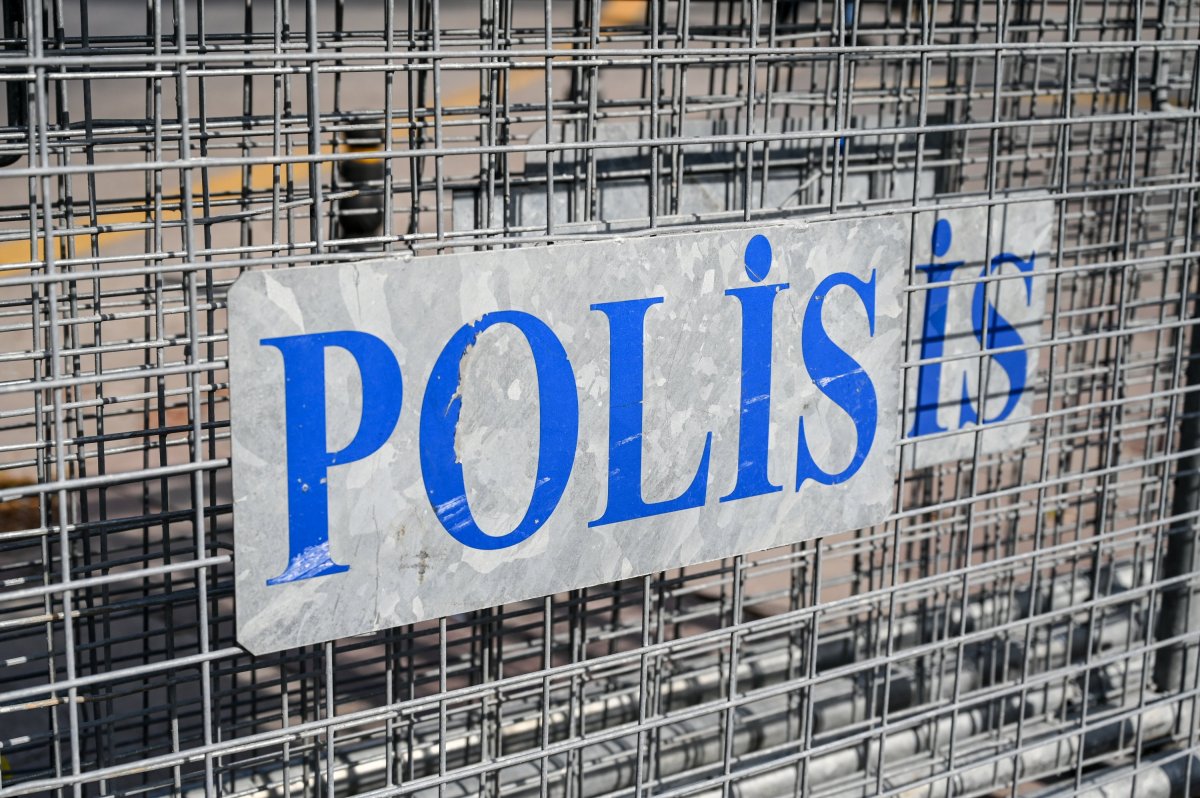
Turkish authorities arrested five foreign Daesh suspects on Friday following coordinated counterterrorism raids across eight provinces, in the latest demonstration of Ankara's sustained campaign against the terrorist organization's residual networks in the country. The operation, centered on the central Anatolian province of Nevşehir, underscores Turkey's continuing role as a frontline state in the global fight against ISIS and its foreign fighter networks.
Turkish Raids Highlight Ankara's Enduring Fight Against Daesh Networks
Istanbul, Turkey — July 17, 2026 — Turkish Raids Highlight Ankara’s Enduring Fight Against Daesh Networks
Operation Details: Coordinated Strikes Across Central and Peripheral Provinces
Turkish security forces have once again demonstrated their operational reach with a multi-province counterterrorism sweep that netted 11 foreign nationals suspected of links to Daesh, the terrorist group also known as ISIS. According to the Nevşehir Provincial Police Department, the operation was orchestrated under the direction of the Nevşehir Chief Public Prosecutor’s Office. Simultaneous raids targeted addresses in eight provinces: Nevşehir itself, Adana, Mersin, Konya, Bursa, Samsun, Bolu and Karabük.
All 11 individuals were transferred to Nevşehir for interrogation. Following police questioning and judicial review, a court ordered the arrest of five suspects identified only by their initials: A.H., M.M., E.E., E.A. and I.M. The remaining six have been referred to the Provincial Directorate of Migration Management for deportation proceedings. Turkish officials described the action as part of a broader investigation aimed at both preventing potential attacks and dismantling residual Daesh facilitation networks inside the country.
While Turkish authorities have released limited details about the specific roles of those detained, the geographic spread of the operation—from the Mediterranean coast to the Black Sea and deep into central Anatolia—suggests intelligence indicated a distributed support apparatus rather than a single concentrated cell. Such operations have become routine yet remain essential given Daesh’s proven ability to maintain low-profile networks even after losing its territorial caliphate in 2019.
Turkey’s Sustained Counterterrorism Campaign Since 2015
This latest action fits into a pattern of persistent Turkish pressure on Daesh that dates back more than a decade. Since 2015, when the group reached the height of its power and began exporting terrorism beyond Syria and Iraq, Ankara has conducted hundreds of domestic raids, border operations and cross-border military incursions. Turkish security forces have repeatedly targeted not only operational cells but also facilitators, financial couriers and propaganda nodes.
Recent figures underscore the scale of this effort. In December 2025 alone, Turkish authorities detained 357 Daesh suspects across 21 provinces in a single coordinated wave. Throughout 2025 and into 2026, multiple similar operations have kept pressure on what remains of the group’s infrastructure inside Turkey. These actions reflect a strategic evolution: from emergency responses to large-scale attacks, such as the 2015 Suruç and Ankara bombings, to a proactive posture designed to prevent resurgence.
President Recep Tayyip Erdoğan’s government has consistently framed the campaign as a national security imperative. Turkey’s long border with Syria, which served as a primary conduit for foreign fighters entering Daesh-held territory between 2014 and 2016, left Ankara with both a vulnerability and a responsibility. The sustained tempo of operations demonstrates that Turkish authorities do not consider the territorial defeat of the caliphate as the end of the threat. Instead, they treat Daesh as a persistent transnational network requiring constant disruption.
The Enduring Challenge of Foreign Terrorist Fighters
A notable feature of Friday’s operation is that all 11 suspects were foreign nationals. This highlights one of the most complex dimensions of the post-caliphate era: the management of foreign terrorist fighters (FTFs) and their families. Turkey has long argued that it bears a disproportionate burden stemming from the influx of thousands of Europeans, Central Asians, North Africans and others who transited its territory en route to Syria and Iraq during the height of Daesh’s recruitment success.
Many of those who survived the collapse of the caliphate have sought to return home, disappear into diaspora communities, or re-establish support networks in transit countries like Turkey. The six suspects now slated for deportation reflect Ankara’s preference for returning individuals to their countries of origin whenever possible, though this process often encounters legal and diplomatic obstacles. European governments have been notoriously reluctant to repatriate their citizens, leaving Turkey and countries in the Levant to manage the residual risk.
The arrested individuals, now in custody, represent the sharper end of the threat. Turkish officials have repeatedly warned that Daesh maintains both “sleeper” and “active” structures composed of battle-hardened returnees and new recruits. The use of initials rather than full names in official statements is standard Turkish judicial practice in terrorism cases, intended to protect ongoing intelligence sources and methods. Yet the pattern is clear: foreign fighters continue to constitute a significant percentage of those targeted in Turkish operations, underscoring the international character of the residual Daesh threat.
Turkey’s Strategic Role in the Global Coalition Against Daesh
Ankara remains a key member of the Global Coalition Against Daesh, co-chairing the Foreign Terrorist Fighters Working Group alongside the United States. This position grants Turkey both influence and responsibility in shaping international policy on repatriation, prosecution and deradicalization. Turkey has also permitted coalition aircraft to use its airspace for strikes against Daesh targets in Syria and Iraq and has hosted training programs for local forces engaged in counterterrorism.
This cooperation exists alongside significant tensions. Turkey’s military operations against Kurdish-led Syrian Democratic Forces (SDF), the primary ground partner of the U.S.-led coalition in northeast Syria, have created friction. Ankara views the SDF as an extension of the Kurdistan Workers’ Party (PKK), which it designates as a terrorist organization. The resulting complexity illustrates a classic Middle East dilemma: shared interests in combating Sunni jihadist terrorism coexist with competing visions of regional order and divergent threat hierarchies.
Nevertheless, Turkish contributions to the coalition have been substantial. Beyond airspace access and joint working groups, Turkish intelligence has provided critical reporting on Daesh financial flows, particularly those involving hawala networks and cryptocurrency that allow the group to sustain itself despite territorial losses. The latest operation, while domestic, should be understood within this broader multilateral framework. By maintaining pressure inside its own borders, Turkey reduces the risk of attacks that could destabilize the wider region and undermine coalition efforts.
Regional Implications for Iraq and Syria
The implications of Turkey’s counter-Daesh efforts extend directly into neighboring Iraq and Syria. In Syria, where Daesh retains a residual presence in the desert regions of Deir Ezzor and Raqqa provinces, Turkish operations against facilitation networks disrupt the group’s ability to move fighters, money and materiel across borders. This is particularly relevant as the Syrian civil war has entered a new phase following the fall of the Assad regime, creating both opportunities and risks for jihadist resurgence.
In Iraq, where Daesh continues low-level insurgency activities in provinces such as Diyala, Kirkuk and Nineveh, Turkish intelligence sharing and cross-border operations have occasionally complemented Baghdad’s efforts. However, Ankara’s focus on the PKK presence in northern Iraq has sometimes complicated coordination with Iraqi federal forces and the Kurdish Regional Government. The Sunni-Shia geopolitical competition adds another layer: both Turkey and Saudi Arabia share an interest in preventing Daesh revival that could further inflame sectarian tensions, yet their approaches to Iranian-backed militias in Iraq differ sharply.
The deportation of foreign fighters also carries regional consequences. If returned to unstable environments in North Africa or Central Asia, these individuals may rejoin militant networks. If they remain in legal limbo inside Turkey or are pushed toward Syria, they risk becoming recruits for new iterations of jihadist groups. Effective management of this human terrain is therefore not merely a Turkish domestic concern but a regional security imperative.
The Broader Middle East Security Landscape and Second-Order Effects
This operation occurs against a backdrop of shifting regional dynamics that influence the terrorist threat environment. The Abraham Accords have reshaped Arab-Israeli relations, allowing some Gulf states to focus more resources on counterterrorism and economic diversification under initiatives such as Saudi Vision 2030. Yet the Iranian nuclear program and Tehran’s regional proxy network, including Hezbollah in Lebanon and various Shia militias in Iraq and Syria, continue to shape threat perceptions in Sunni capitals.
Turkey’s neo-Ottoman foreign policy under Erdoğan seeks to expand Ankara’s influence from the Horn of Africa to the Balkans, including in post-Assad Syria. This ambition brings both opportunities and risks. On one hand, a more assertive Turkey can project power against Daesh remnants in northern Syria. On the other, overreach could alienate potential partners and create vacuums that jihadists exploit.
Great power competition further complicates the picture. The United States maintains a residual military presence in northeast Syria focused on Daesh, while Russia and Iran back different factions in the Syrian transition. China, increasingly invested in regional stability to protect Belt and Road interests, quietly supports counterterrorism efforts that safeguard its own citizens and economic projects. In this multipolar environment, Turkey’s ability to conduct effective domestic operations while managing complex regional relationships becomes a key variable for Middle East stability.
The second-order effects are significant. Successful Turkish disruption of Daesh networks reduces the immediate risk of spectacular attacks in Europe and the Middle East, which in turn affects migration politics, energy market confidence and investor sentiment. Conversely, any perception that Ankara is distracted by its rivalry with Kurdish groups or its ambitions in Syria could encourage Daesh to reconstitute. Oil prices, already sensitive to Middle East tensions, could spike on renewed terrorist activity targeting energy infrastructure.
From a Lebanese perspective, where Hezbollah’s role as an Iranian proxy has long shaped security calculations, Turkey’s campaign against Sunni jihadists is watched carefully. Beirut understands that a resurgence of Daesh could further destabilize an already fragile region, potentially drawing Lebanon into new cycles of sectarian violence. The memory of Daesh’s 2014 surge, which brought the group to within kilometers of the Lebanese border at one point, remains vivid.
Ultimately, Friday’s arrests represent both a tactical success and a reminder of strategic persistence. Daesh has lost its territory, its caliph, and much of its leadership, yet it retains ideological appeal and operational adaptability. Turkey’s willingness to conduct frequent, large-scale operations across multiple provinces demonstrates a recognition that counterterrorism in the Middle East is a long-term endeavor rather than a finite campaign.
As the region navigates the aftermath of the Assad regime’s collapse, the Israeli-Palestinian conflict, and evolving Gulf realignments, Ankara’s role will remain pivotal. Its success or failure in containing Daesh’s residual networks will influence not only Turkish national security but the broader stability of the Middle East, with implications that stretch from Baghdad to Beirut and beyond. The latest operation is therefore not an isolated incident but another data point in an ongoing regional struggle whose outcome will help determine the security architecture of the coming decade.
By Malik Hassan, Staff WriterThis article was produced with AI-assisted research and editorial support. Reporting is based on sources cited in the article.
What's Your Reaction?
 Like
0
Like
0
 Dislike
0
Dislike
0
 Love
0
Love
0
 Funny
0
Funny
0
 Wow
0
Wow
0
 Sad
0
Sad
0
 Angry
0
Angry
0

Middle East Correspondent at Global1.News. Based in Beirut, covering politics, conflict, energy, and society across the Middle East. Brings context and depth to a region often reduced to headlines.













Comments (0)