
North Korea's Fake Starbucks Reserve Signals Byungjin Strategy
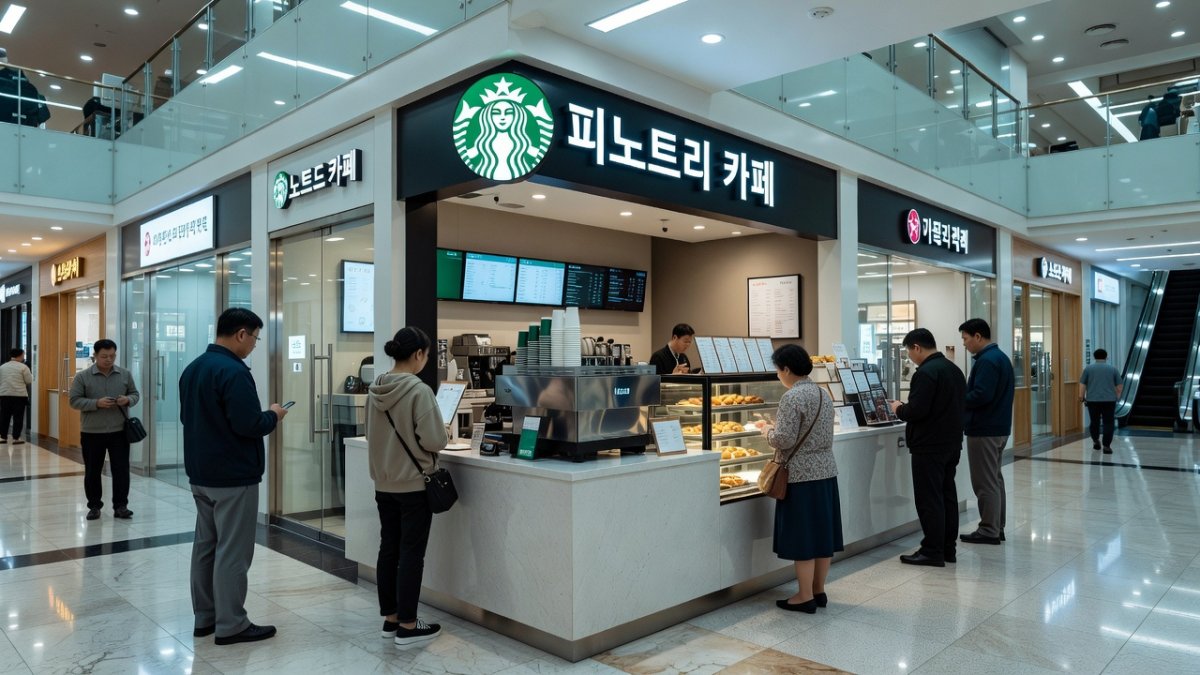
In a striking display of selective modernization, North Korea has unveiled a counterfeit Starbucks Reserve outlet inside Pyongyang's Rangrang Aeguk Kumgang Service Complex, serving macchiatos and other Western-style beverages to select patrons for roughly eight dollars each. This July 2026 development forms part of a broader pattern in which the regime replicates global commercial aesthetics while sustaining its nuclear program and authoritarian controls.
In a striking display of selective modernization, North Korea has unveiled a counterfeit Starbucks Reserve outlet inside Pyongyang's Rangrang Aeguk Kumgang Service Complex, serving macchiatos and other Western-style beverages to select patrons for roughly eight dollars each. This July 2026 development forms part of a broader pattern in which the regime replicates global commercial aesthetics while sustaining its nuclear program and authoritarian controls.
North Korea's Starbucks Imitation Reveals Byungjin Strategy
Seoul, South Korea — Article continues...
Appearance of the Counterfeit Outlet
The store replicates the visual identity of Starbucks Reserve locations found elsewhere, complete with branded signage and interior design elements. Patrons in Pyongyang can purchase coffee drinks that mirror offerings in global chains, though the establishment operates without any affiliation to the Seattle-based company.
Payment occurs through mobile phone systems available to North Korean elites, allowing cashless transactions within the controlled environment of the service complex. This setup provides a limited segment of the population with access to a simulated international consumer experience.
Expansion of Imitated Commercial Spaces
Similar replications extend beyond coffee retail. Bootleg versions of IKEA stores and luxury shopping venues have appeared in recent years, alongside the introduction of mobile payment platforms. These facilities create environments that echo capitalist retail models while remaining under state oversight.
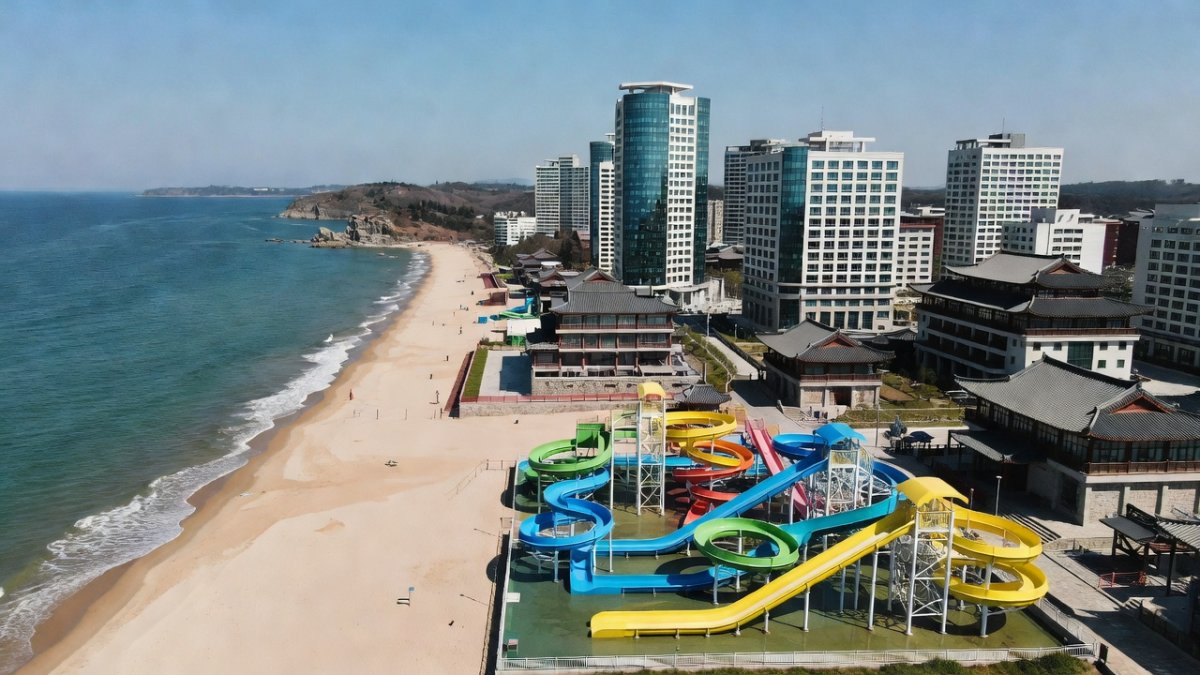
The Wonsan seaside resort, located roughly one hundred miles from Pyongyang, further illustrates the approach. The site features water slides and stocks foreign beers, functioning as a Kim Jong Un priority project designed to offer leisure amenities to selected visitors and domestic elites.
Kim Jong Un's Combined Nuclear and Consumer Approach
North Korean policy under Kim Jong Un maintains parallel tracks of nuclear weapons development and selective consumer infrastructure. The regime projects an image of modernity through these aesthetic borrowings even as it sustains strict enforcement of internal controls and compliance with international sanctions regimes.
UN sanctions continue to restrict broader economic engagement, yet the construction of such venues allows the leadership to signal progress to domestic audiences and potential foreign tourists without altering core political structures.
Kim Jong Un's byungjin (parallel advancement) line, formally articulated at the March 2013 plenary meeting of the Workers' Party Central Committee, explicitly couples nuclear-force development with selective consumer-goods production and light-industry growth. This dual-track approach departs sharply from Kim Jong Il's songun (military-first) policy, which subordinated civilian consumption to heavy-industry and missile programs. Under byungjin, Pyongyang has sustained luxury imports through Chinese intermediaries even as UN Security Council resolutions 2270, 2321, and 2397 tightened sectoral sanctions.
The consumer facade therefore functions as both regime legitimation and sanctions-evasion mechanism. By showcasing limited market signals, Kim signals to domestic elites that nuclear status has delivered tangible benefits without dismantling the command economy. Contemporary KDI and Asan Institute analyses conclude that the resulting hybrid economy raises the political cost of denuclearization for Pyongyang while simultaneously exposing new financial nodes that targeted sanctions have yet to sever.
Effects on Inter-Korean Relations
These developments occur against the backdrop of stalled inter-Korean dialogue. South Korean observers note that the visual emulation of Southern and international commercial forms does not translate into policy shifts regarding denuclearization or cross-border cooperation.
Historical patterns show that North Korean leadership has periodically adopted outward symbols of prosperity during periods of heightened sanctions pressure, yet such measures have not produced sustained openings for engagement with Seoul.
During the Moon Jae-in administration (2017-2022), inter-Korean engagement briefly revived, with 2018 summits producing pledges to reconnect railways and expand tourism. After the Kaesong Industrial Complex closure in February 2016, North Korea's 2020 demolition of the inter-Korean liaison office and severance of military hotlines effectively nullified these channels. The subsequent Yoon Suk-yeol government has reframed policy around "deterrence and dialogue," conditioning any resumption of economic projects on verifiable nuclear rollback.
North Korea's simultaneous construction of consumer-oriented venues in Pyongyang while closing dialogue windows has hardened Seoul's assessment that the consumer facade serves internal consolidation rather than inter-Korean confidence-building. Unification Ministry white papers and Korea Institute for National Unification analyses now treat these spaces as evidence of regime resilience.
Consequences for South Korean Unification Planning
South Korean unification policy frameworks must account for the persistence of authoritarian governance alongside these surface-level consumer experiments. The gap between displayed amenities and underlying repression complicates assumptions about gradual convergence between the two societies.
Analysts in Seoul emphasize that any future integration process would require addressing not only economic disparities but also the entrenched mechanisms of control that remain intact despite the introduction of mobile payments and resort facilities.
The visible consumer experiments complicate long-standing South Korean cost projections. KDI's unification cost studies, which placed the price tag above $2 trillion over three decades, assumed a sudden collapse followed by wholesale replacement of northern institutions. Sustained market activity in Pyongyang suggests portions of the economy may already exhibit partial monetization.
Looking toward the 2026 South Korean political landscape, these dynamics influence party platforms. Conservative roadmaps emphasize phased functional integration over rapid political merger. Progressive platforms may revive conditional engagement, betting that expanded cross-border commerce can erode the nuclear-consumer linkage. The facade has shifted planning assumptions from cost-centric collapse scenarios to protracted coexistence strategies.
By Prof. David Park, Staff Writer
This article was produced with AI-assisted research and editorial support. Reporting is based on sources cited in the article.
What's Your Reaction?
 Like
0
Like
0
 Dislike
0
Dislike
0
 Love
0
Love
0
 Funny
0
Funny
0
 Wow
0
Wow
0
 Sad
0
Sad
0
 Angry
0
Angry
0

East Asia/Technology Correspondent at Global1.News. Seoul-based voice covering Korean politics, technology, business, and culture. Analyzes how technology and geopolitics intersect across East Asia.










Comments (0)