
UK Heatwave: Third Day of Record June Temperatures Hits 37C
Britain endured a third successive day of record June temperatures on 26 June 2026, with the mercury reaching 37C across large parts of England and forecasters warning that isolated spots could hit 40C. Millions of commuters faced rail cancellations and delays as overhead lines sagged in the heat, while another hospital in south-west England declared a critical incident as extr
Britain endured a third successive day of record June temperatures on 26 June 2026, with the mercury reaching 37C across large parts of England and forecasters warning that isolated spots could hit 40C. Millions of commuters faced rail cancellations and delays as overhead lines sagged in the heat, while another hospital in south-west England declared a critical incident as extreme temperatures strained the NHS to breaking point. Thunderstorm warnings are now in force across northern England and Wales, even as the south continues to swelter.
UK Heatwave: Third Consecutive Day of Record June Temperatures Brings 37C Heat and Nationwide Disruption
London, UK – 27 June 2026 —
Record Temperatures Mark Third Consecutive June High
Britain recorded its third straight day of record June temperatures on 26 June 2026, with the mercury hitting 37C across southern and central regions. The Met Office confirmed the figure surpassed previous benchmarks set earlier in the week, while forecasters warned that isolated spots could yet reach 40C before the weekend. These readings place the current spell among the most intense early-summer heat events since records began in 1884.
The persistence of such heat has placed unprecedented strain on the national grid and water infrastructure managed by the Environment Agency. Reservoirs in the South East have seen levels drop sharply, prompting temporary hosepipe restrictions in Kent and Sussex. Experts at the Met Office note that the jet stream’s northerly position has allowed warm air from the continent to dominate, a pattern now occurring with greater frequency.
Regional variations remain stark. While London and the Home Counties baked under clear skies, coastal areas of Devon and Cornwall recorded slightly lower maxima yet suffered from oppressive humidity. Public health officials in these counties have issued alerts urging residents to limit outdoor exertion during peak afternoon hours.
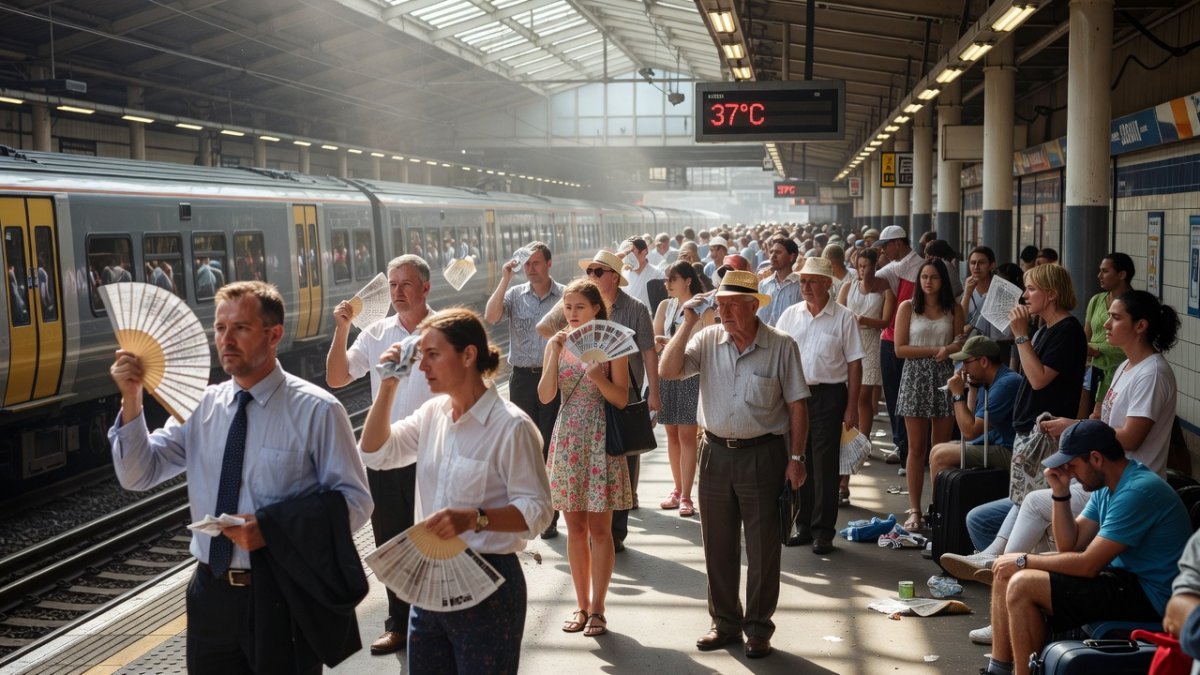
Transport Networks Buckle Under Evening Rush
Millions of commuters attempting to return home on 26 June encountered widespread rail disruption as overhead lines sagged and points failed in the heat. Network Rail reported cancellations on key routes out of London Euston, Birmingham New Street and Manchester Piccadilly, with delays averaging 45 minutes across the West Coast Main Line. The Department for Transport confirmed that several services were curtailed entirely after temperatures exceeded design tolerances for overhead electrification.
Road networks fared little better. The M25 orbital motorway experienced multiple breakdowns linked to tyre blowouts, while sections of the M4 westbound saw temporary closures after asphalt surfaces softened. Transport for London advised passengers to allow extra journey time, noting that Tube trains were running at reduced speeds to prevent track buckling in tunnels beneath the capital.
These failures highlight long-standing concerns about Victorian-era infrastructure resilience. The Rail Delivery Group has previously warned ministers that without accelerated investment in climate-adapted signalling and cooling systems, such summer disruptions will become routine rather than exceptional.
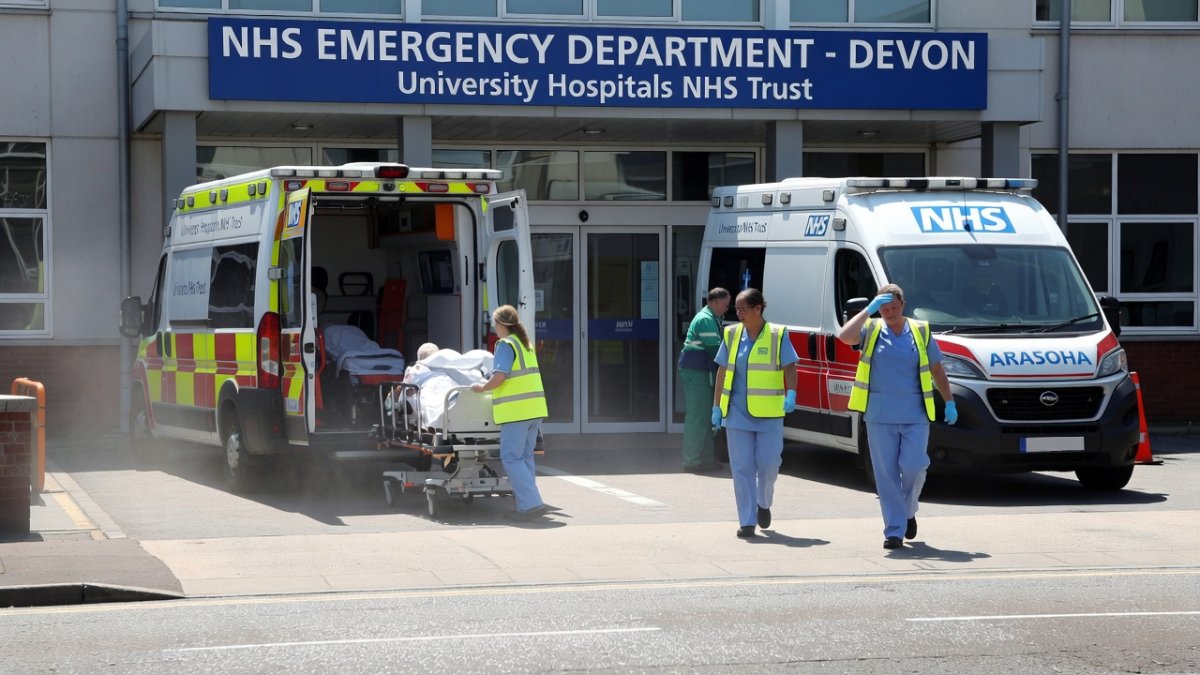
NHS Declares Further Critical Incidents in South West
Another hospital trust in south-west England declared a critical incident on 26 June as extreme heat and humidity compromised clinical operations. Royal Devon and Exeter NHS Foundation Trust cited difficulties maintaining safe ward temperatures and a surge in heat-related admissions, particularly among elderly patients. NHS England has now activated its national emergency protocol for the third consecutive day.
Ambulance services across the region reported a 30 per cent increase in call-outs for dehydration and heat exhaustion. Paramedics described scenes at accident and emergency departments where patients waited on trolleys in corridors because air-conditioned bays were already at capacity. The Department of Health and Social Care confirmed that additional portable cooling units have been deployed to 12 trusts in England.
Public health analysts at the UK Health Security Agency emphasise that the current pressure compounds existing staffing shortages. With temperatures unlikely to moderate until Sunday, clinicians fear the cumulative toll on both patients and staff could push more trusts into emergency measures over the coming days.
Met Office Issues Thunderstorm Warnings for Northern Regions
The Met Office placed north Wales, northern England and parts of the Midlands under yellow thunderstorm warnings valid until midnight on 27 June. Forecasters predict intense downpours, lightning and localised flash flooding capable of disrupting travel and damaging property. These storms are expected to bring only marginal relief from the heat, with humidity remaining high overnight.
Environment Agency flood teams have been placed on standby along the River Severn and in the Peak District, where saturated ground from earlier rainfall increases runoff risk. Residents in Shropshire and Staffordshire have been advised to avoid low-lying roads and to secure outdoor furniture ahead of gusty winds accompanying the storms.
Local authorities in Greater Manchester have opened additional rest centres for vulnerable residents should power cuts occur. The contrast between southern heat and northern storms underscores the complex meteorological picture facing the country this week.
Daily Life Disrupted Across Workplaces and Schools
Employers in England and Wales have been urged by the Health and Safety Executive to review shift patterns and provide additional hydration stations. Construction sites in Birmingham and Leeds halted work during the hottest hours, while office workers in central London reported difficulty concentrating in buildings without adequate air conditioning. Trade unions have called for statutory heat thresholds similar to those already in place in several European countries.
Schools in 14 local authority areas closed early or moved lessons online, affecting more than 180,000 pupils. Headteachers cited concerns over pupil welfare and the inability to keep classrooms below 30C despite open windows. The Department for Education confirmed it is monitoring attendance figures closely and may extend closures if temperatures remain elevated.
Vulnerable populations, including those in care homes and social housing without cross-ventilation, face the greatest risk. Age UK has deployed volunteers to check on isolated older people in Sheffield and Newcastle, distributing battery-operated fans and bottled water funded by emergency grants from the Treasury.
European Heatwave Affects 150 Million People
More than 150 million people across the continent are enduring temperatures above 35C, according to the European Centre for Medium-Range Weather Forecasts. The heat dome responsible for Britain’s conditions has also driven extreme readings in France, Germany and the Low Countries, prompting coordinated alerts from national meteorological services.
Paris Pride organisers postponed the annual march until September after city authorities cited safety concerns over heat stress for participants. In Germany, a section of the A9 motorway near Munich buckled, damaging dozens of vehicles and forcing a lengthy closure while engineers assessed the concrete. These incidents mirror the infrastructure challenges now visible on British roads and railways.
Cross-border cooperation through the EU Civil Protection Mechanism has facilitated the sharing of cooling equipment and medical supplies. British officials, although outside formal EU structures post-Brexit, have maintained informal contact with counterparts in Paris and Berlin to share forecasting data.
Relief Expected Sunday as Resilience Questions Mount
Forecasters anticipate a gradual cooling from Sunday 29 June, with temperatures returning closer to seasonal averages by early July. The Met Office stressed, however, that overnight lows will remain elevated, offering limited recovery time for both people and infrastructure. Public Health England continues to advise caution until the heat truly breaks.
Ministers face mounting scrutiny over the adequacy of national adaptation plans. The Climate Change Committee has repeatedly highlighted gaps in building regulations and transport investment that leave Britain exposed to repeated extreme events. Opposition MPs have demanded an urgent statement in the House of Commons on long-term resilience measures.
Local councils in affected regions are already compiling cost estimates for emergency responses. These figures will feed into negotiations with the Treasury over additional funding, with early indications suggesting the current heatwave could cost public services tens of millions of pounds.
Climate Change Drives Increasing Frequency of Extremes
Scientists at the Met Office Hadley Centre attribute the current heatwave’s intensity and duration to anthropogenic climate change, noting that such events are now at least ten times more likely than in the pre-industrial era. The record June temperatures follow similar spikes in 2022 and 2023, forming a clear trend of earlier and more severe summer heat.
Policy responses remain fragmented. While the government’s Net Zero Strategy targets emissions reductions, critics argue that adaptation funding for hospitals, railways and housing has lagged. The Environment Agency’s latest climate risk assessment warns that without accelerated investment, heat-related deaths could rise sharply by 2050.
Communities across the UK are adapting in real time. From community cool hubs in Glasgow to retrofitted shading in Bristol schools, local initiatives demonstrate both ingenuity and the urgent need for coordinated national strategy. The coming days will test whether existing systems can withstand the pressures of a rapidly warming climate.
By Erica Thornton, Staff WriterThis article was produced with AI-assisted research and editorial support. Reporting is based on sources cited in the article.
What's Your Reaction?
 Like
0
Like
0
 Dislike
0
Dislike
0
 Love
0
Love
0
 Funny
0
Funny
0
 Wow
0
Wow
0
 Sad
0
Sad
0
 Angry
0
Angry
0

US Politics and Policy Correspondent at Global1.News. Based in Washington DC, covering American politics, policy, elections, and the courts. Knows how the system works and tells you what it actually means.














Comments (0)