
Beyond Pride: Inclusion as a Driver of Economic and Social Progress
The Bangkok Post Pride Dialogue 2026 opened on June 26 with Panel 1 examining how inclusion functions as an economic driver. Acting Counsellor Lisa Davidson of the Australian Embassy and Numan Afifi of the APCOM Foundation addressed foreign investment, workplace policies, and Thailand’s Marriage Equality Act passed earlier in 2026. The discussion took place during Pride Month a
The Bangkok Post Pride Dialogue 2026 opened on June 26 with Panel 1 examining how inclusion functions as an economic driver. Acting Counsellor Lisa Davidson of the Australian Embassy and Numan Afifi of the APCOM Foundation addressed foreign investment, workplace policies, and Thailand’s Marriage Equality Act passed earlier in 2026. The discussion took place during Pride Month as Thailand advances its bid for World Pride 2030.
Beyond Pride: Inclusion as a Driver of Economic and Social Progress
Bangkok, Thailand – June 27, 2026 — The Bangkok Post Pride Dialogue 2026 continued yesterday at a central Bangkok venue with focused attention on measurable economic outcomes from inclusive policies. Panelists presented data linking diversity practices to increased foreign direct investment and tourism revenue. Thailand’s position as one of Asia’s most LGBTQ+-friendly destinations received repeated emphasis through references to the Pink Economy and recent legislative changes.
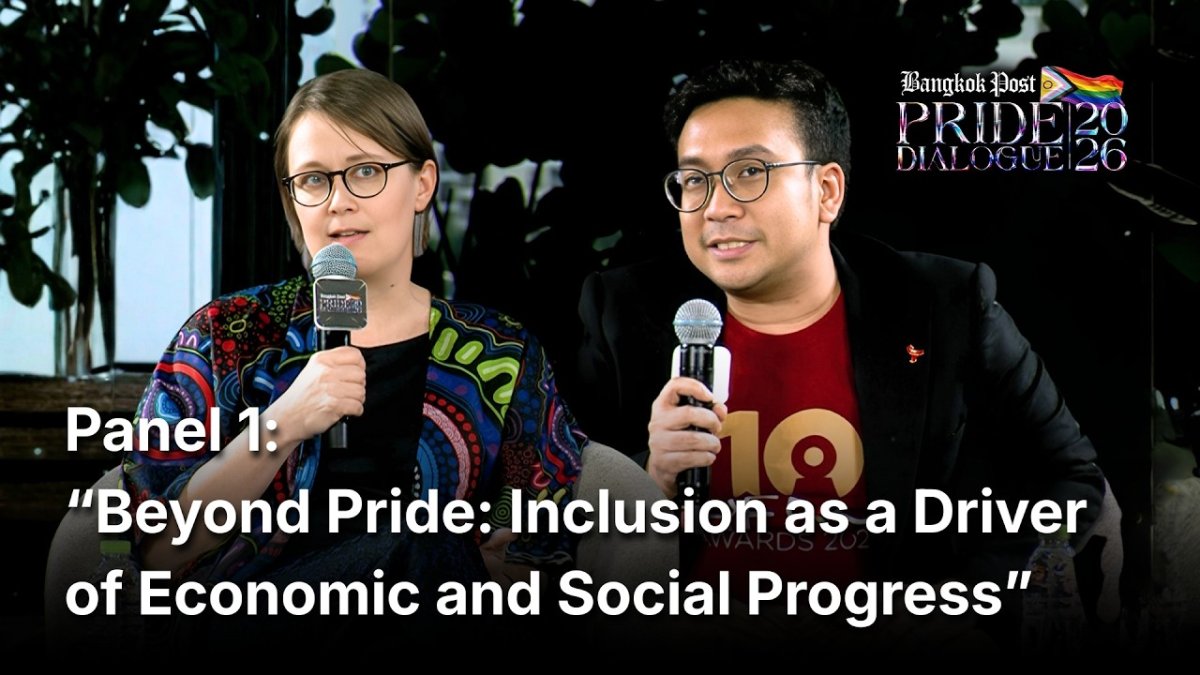
Thailand’s Marriage Equality Act Passed Earlier in 2026
The Thai Parliament approved the Marriage Equality Act earlier in 2026, granting same-sex couples full legal recognition. This legislation directly supports inclusive workplaces by removing barriers to spousal benefits and family leave. Local communities in Bangkok and Pattaya have already reported increased participation in business networks following the law’s enactment.
Buddhist principles of metta, or loving-kindness, align with the Act’s emphasis on equal treatment within families. Temples across central Thailand have hosted community discussions that connect traditional compassion teachings to modern legal protections. These gatherings strengthen social cohesion in provinces where tourism and small enterprises form the economic base.
The Pink Economy’s Contribution to Tourism and Entertainment
Thailand’s Pink Economy generates revenue through tourism, entertainment, and retail sectors that specifically serve LGBTQ+ visitors. Tiffany’s Show Pattaya continues to draw international audiences with its long-running performances that celebrate gender diversity. SOF Studios and Canvas Ventures International have expanded production and investment activities tied to inclusive content creation.
These enterprises operate within Thailand’s broader soft power strategy that promotes inclusivity as a national asset. During Pride Month in June 2026, visitor arrivals linked to LGBTQ+ events increased in Bangkok and coastal provinces. The economic activity supports local vendors, transport services, and hospitality workers who benefit from sustained demand.
Thailand’s Leadership Role Across ASEAN
Thailand currently leads ASEAN nations in legal protections and public visibility for LGBTQ+ communities. Neighbouring countries observe Thailand’s policy developments as benchmarks for their own legislative processes. Regional cooperation through APCOM Foundation networks facilitates knowledge exchange on workplace inclusion standards.
This leadership strengthens Thailand’s diplomatic position when engaging with ASEAN economic forums. Foreign investors cite Thailand’s legal framework as a factor when selecting regional headquarters locations. The resulting capital inflows support infrastructure projects and job creation in manufacturing and service industries.
Perspectives from Australian Embassy Representative Lisa Davidson
Lisa Davidson, Acting Counsellor (Economic) and Pride Champion at the Australian Embassy, outlined bilateral cooperation on diversity initiatives. She noted that inclusive policies correlate with higher rates of foreign direct investment from Australian companies operating in Thailand. Davidson referenced joint programs that train Thai businesses on equitable hiring practices.
The Australian Embassy’s engagement aligns with Thailand’s soft power goals by sharing practical models of workplace inclusion. These exchanges occur through regular diplomatic channels established over recent years. Thai participants in the programs report improved retention rates among diverse employee groups.
Insights from Numan Afifi of the APCOM Foundation
Numan Afifi, Programme and Advocacy Lead at the APCOM Foundation, presented evidence that inclusive workplaces raise productivity across ASEAN member states. He highlighted data showing reduced turnover when companies adopt non-discrimination policies. Afifi connected these findings to Thailand’s current economic planning documents.
The APCOM Foundation works directly with Thai community organisations to implement training modules on inclusive management. These modules reach small and medium enterprises in Bangkok and regional centres. Participants apply the practices to daily operations, producing measurable improvements in team performance.
Integration with Buddhist Values and Local Communities
Thai Buddhist teachings emphasise harmony and acceptance, providing cultural grounding for inclusion efforts. Monks in several Bangkok temples have incorporated discussions of the Marriage Equality Act into weekly sermons attended by local residents. These teachings reinforce community support for diverse families.
Local markets and neighbourhood associations in Chiang Mai and Phuket have begun recognising LGBTQ+ entrepreneurs through annual awards. The recognitions celebrate business contributions while reflecting Buddhist values of mutual respect. Such events strengthen social ties that underpin stable economic activity.
Thailand’s Bid for World Pride 2030 and Long-Term Soft Power
Thailand’s formal bid for World Pride 2030 builds on the legislative and economic progress achieved earlier in 2026. Hosting the event would showcase Bangkok’s infrastructure and cultural openness to a global audience. Organisers project significant increases in tourism revenue and international media coverage.
The bid forms part of Thailand’s ongoing soft power strategy that positions inclusivity as a competitive advantage. Success would elevate Thailand’s profile within ASEAN and attract additional foreign investment in creative industries. Local communities anticipate expanded opportunities in hospitality and event management sectors.
Measurable Effects on Foreign Investment and Workplace Policies
Companies operating in Thailand report that inclusive policies improve their ability to recruit international talent. Foreign investment inflows have risen in sectors such as technology and finance where diverse teams drive innovation. The Australian Embassy and APCOM Foundation both cited case studies from Bangkok-based firms that adopted these practices in 2025 and 2026.
Workplace guidelines now include explicit protections against discrimination, aligning with the Marriage Equality Act. These changes reduce legal risks for employers and create stable environments for long-term business planning. Thai workers across multiple industries benefit from clearer career pathways regardless of personal identity.
By Ann Srisawat, Staff WriterThis article was produced with AI-assisted research and editorial support. Reporting is based on sources cited in the article.
What's Your Reaction?
 Like
0
Like
0
 Dislike
0
Dislike
0
 Love
0
Love
0
 Funny
0
Funny
0
 Wow
0
Wow
0
 Sad
0
Sad
0
 Angry
0
Angry
0

Southeast Asia Correspondent at Global1.News. Based in Bangkok, covering Thai and Southeast Asian politics, economy, technology, and culture. Deep regional perspective on one of the world's most dynamic regions.














Comments (0)