
Ukraine Destroys Tu-95 Bomber 800 km Inside Russia
Folks, if you're not following the Russia-Ukraine war this week, you're missing a seismic shift on the battlefield — and I've got the sourcing to back it up. The Kyiv Independent, Reuters, ABC Australia, and President Zelensky himself all confirm that Ukraine just destroyed a Russian Tu-95 strategic bomber at an airbase 500 miles inside Russian territory — the furthest confirmed strike of its kind — while simultaneously hammering Moscow's shadow fleet in the Black Sea.
Folks, if you're not following the Russia-Ukraine war this week, you're missing a seismic shift on the battlefield — and I've got the sourcing to back it up. The Kyiv Independent, Reuters, ABC Australia, and President Zelensky himself all confirm that Ukraine just destroyed a Russian Tu-95 strategic bomber at an airbase 500 miles inside Russian territory — the furthest confirmed strike of its kind — while simultaneously hammering Moscow's shadow fleet in the Black Sea. President Volodymyr Zelensky confirmed the operation on July 17, declaring it another successful "long-range sanction" against the Kremlin. And the implications? They're massive for where this war heads next.
Ukraine Destroys Tu-95 Bomber 800 km Inside Russia
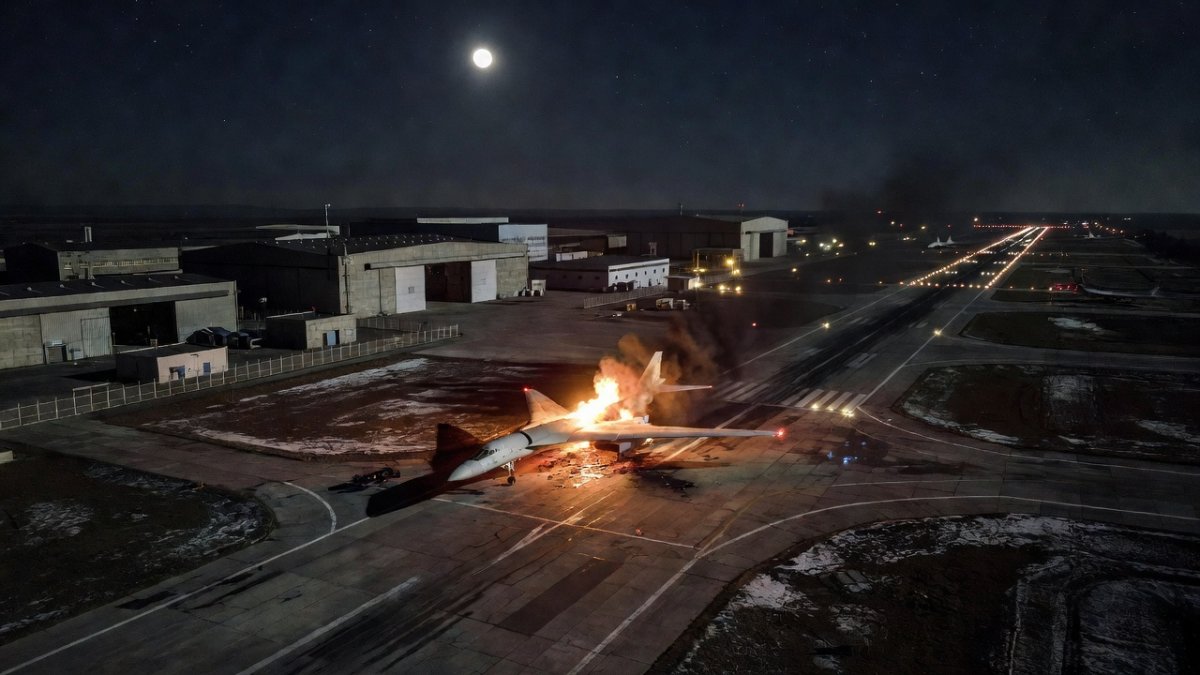
Kyiv, Ukraine — Confirmed by multiple sources including the Kyiv Independent, Ukrainska Pravda, and a direct statement from President Volodymyr Zelensky on July 17: the Security Service of Ukraine (SBU) destroyed a Russian Tu-95 strategic bomber at the Engels-2 air base in Russia's Saratov Oblast using long-range drones, President Zelensky confirmed on Friday, July 17, 2026. The base sits roughly 800 kilometers — that's 500 miles — from the Ukrainian border. The Tu-95 suffered critical damage according to reports, and this particular bomber had been used for launching Kh-101 cruise missile strikes against Ukrainian cities. This marks the first confirmed destruction of a Tu-95 bomber at an operational air base anywhere in the world since the Cold War.
Breaking: Ukraine Just Took Out a Tu-95 Strategic Bomber at Engels-2
Let's be clear about what happened here. This wasn't a symbolic strike on a runway or a fuel depot. Ukraine's SBU destroyed an operational Tu-95MS strategic bomber — one of Russia's most valuable long-range strike assets — while it sat on the tarmac at Engels-2. President Zelensky personally confirmed the operation, framing it as part of Ukraine's expanding capability to impose costs on Russia far beyond the front lines. "Our long-range sanctions are working," Zelensky said in his address. The Tu-95 is the backbone of Russia's strategic bomber fleet, the aircraft that launches Kh-101 cruise missiles against Ukrainian energy infrastructure, residential areas, and critical facilities. Taking one out on the ground, 800 kilometers from Ukrainian-controlled territory, is a message that Moscow can't ignore: nowhere is safe.
The air base at Engels-2 in Saratov Oblast is one of Russia's most heavily defended military installations, protected by multiple layers of S-400 air defense systems. The fact that SBU drones successfully navigated these defenses to destroy a parked bomber represents a significant intelligence and operational achievement. It suggests either a gap in Russia's radar coverage or a tactical innovation that Ukraine is now exploiting with precision.
The Night the Drones Came Calling
The operation unfolded over two nights. On July 16, Shahed-like UAVs began appearing over Engels and the nearby city of Saratov. Local residents reported hearing drones starting around 2:30 a.m., with multiple social media posts showing UAVs in the night sky. Photos and videos posted by residents captured a large fire burning in the area of the air base. Russian Telegram channels confirmed the attack but initially downplayed the damage. By the morning of July 17, Zelensky's office had confirmed what really happened — reported simultaneously by the Kyiv Independent and Ukrainska Pravda: a Tu-95MS bomber was destroyed.
This wasn't Ukraine's first attempt at Engels-2. Previous drone attacks in February 2025 and March 2025 had targeted fuel depots and perimeter infrastructure. But this July 2026 operation achieved what earlier attempts couldn't — a confirmed airframe kill on one of Russia's most strategic assets. The evolution is clear: Ukraine learned from previous limitations, refined its drone guidance systems, and struck precisely where it mattered most.
Engels-2 — Home to Russia's Heavy Hitters
Engels-2 isn't just another airfield. It is the primary forward operating base for Russia's fleet of Tu-95MS and Tu-160 strategic bombers. These are the aircraft that Moscow relies on to launch long-range Kh-101 and Kh-555 cruise missile strikes against Ukrainian cities. The base has been the launch point for dozens of mass strikes that have targeted Kyiv's power grid, Odesa's port infrastructure, and residential neighborhoods across the country.
The Tu-95 itself is a four-engine turboprop strategic bomber that has been the backbone of Russian strategic aviation since the 1950s. It is not easily replaced. Each Tu-95 airframe represents years of manufacturing that Russia cannot currently replicate due to sanctions on key components and avionics. Losing even one aircraft on the tarmac reduces Moscow's available strike capacity for cruise missile launches by a measurable margin. More importantly, the successful penetration of Engels-2's layered air defenses forces Russia to confront an uncomfortable question: if long-range bombers aren't safe 800 kilometers from Ukraine, where are they safe? Military analysts suggest Russia may be forced to relocate its strategic bomber fleet further east — to bases in the Ural Mountains or even Siberia — which would dramatically increase flight times, reduce sortie rates, and complicate mission coordination. That is a tactical victory with strategic consequences.
Black Sea Shadow Fleet Under Fire
While the world focused on Engels-2, Ukraine was simultaneously executing a second major operation in the Black Sea. Ukrainian drones struck 12 Russian shadow fleet vessels, including nine dry-cargo ships, one tanker, one gas tanker, and one tugboat. This is part of a much broader campaign: between July 6 and July 17, Ukrainian aerial drones attacked 159 vessels of Russia's shadow fleet operating in the Azov and Black Seas combined.
The shadow fleet is Russia's workaround for Western oil sanctions. These aging vessels operate under flags of convenience from countries like Liberia and Panama, without Western insurance, and transport discounted Russian crude to buyers in India, China, and other markets. The revenue from these sales funds Moscow's war machine directly. By striking these vessels, Ukraine is cutting into the economic lifeline that allows Russia to sustain its military operations. Each disrupted tanker means less revenue for the Kremlin. Each forced rerouting adds friction to a supply chain that Moscow has spent months building. Ukraine's Navy confirmed the strikes in a statement reported by Reuters and Militarnyi, framing them as part of a sustained campaign to degrade Russia's ability to profit from energy exports while waging war. The 159 vessels struck in 11 days represents roughly one-third of Russia's total shadow fleet, according to open-source intelligence estimates. This is not a symbolic gesture — it is a systemic assault on the financial infrastructure that funds the war.
Russian Retaliation Hits Odesa
Moscow responded with predictable fury. Russian forces launched a massive retaliatory strike against Odesa overnight on July 17, firing cruise missiles and deploying 130 drones in what was the second major attack on the southern port city in three days. Two people were killed and at least ten others wounded, according to Serhiy Lysak, head of Odesa's military administration. Four Tu-22M3 bombers were tracked taking off from Engels-2 and flying south toward the Black Sea, launching Kh-22 cruise missiles toward Odesa's port infrastructure. The strikes hit residential areas, a waterfront restaurant, and a fuel storage facility near the port.
The timing is particularly brutal. Odesa is in the middle of its summer tourist season. Hotels along the coast were nearly at capacity when the sirens went off. This is economic warfare layered on top of military strikes — every disrupted holiday, every closed beach, every damaged hotel represents damage to Ukraine's wartime economy and morale. Across Ukraine as a whole, Russian attacks over the past 24 hours killed 7 people and wounded 67 others, according to Ukrainian officials. The pattern is familiar: Ukraine strikes deep inside Russia, and Russia responds by hitting Ukrainian cities. But the scale here is different. The use of 130 drones in a single overnight operation against one city suggests Russia is adapting its tactics and expanding its strike capabilities even as its strategic assets come under threat.
Strategic Implications — A New Phase in the War
The destruction of a Tu-95 at Engels-2 is not an isolated tactical success. It signals a strategic shift that both sides will have to reckon with. Ukraine has now demonstrated the ability to reach and destroy Russia's most valuable strategic bomber at an air base 800 kilometers behind the front line, protected by what was supposed to be Russia's best air defense systems. This operation required sophisticated intelligence coordination — almost certainly involving satellite reconnaissance and real-time targeting data that Ukraine's partners have been providing. Ukrainian defense officials have neither confirmed nor denied foreign intelligence support for this specific operation, but the precision required to guide a drone through Russian air defense networks to strike a single parked aircraft strongly suggests a level of coordination that goes beyond Ukraine's indigenous capabilities alone.
The Tu-95 is not easily replaced. Each destroyed airframe represents a permanent reduction in Russia's capacity to launch the kind of mass cruise missile barrages that have terrorized Ukrainian cities throughout the war. More importantly, the successful penetration of Engels-2's defenses forces Moscow to fundamentally reconsider its basing strategy. If strategic bombers are vulnerable at 800 kilometers, Russia may need to move them to bases in the Ural Mountains or Siberia — adding hours to every mission and reducing the number of sorties they can generate. The Kremlin now faces a choice: pull bombers back to safer bases and lose strike depth, or keep them forward and accept the risk of further losses. Either way, Ukraine wins.
President Zelensky captured the moment perfectly when he framed the operation as a "long-range sanction." It's a phrase that captures both the military and economic dimensions of Ukraine's strategy — hitting Russian assets where they operate, and hitting Russian revenue where it flows. The Tu-95 destroyer at Engels-2, the 159 shadow fleet vessels disrupted in 11 days, the defense against 130 drones over Odesa — all of it points to a war that is evolving faster than Moscow can adapt. This war just entered a new chapter, and the Kremlin is running out of places to hide.
What Comes Next
Folks, here's the bottom line. What happened on July 17, 2026, isn't just another day in a long war. Ukraine proved it can reach Russia's most protected strategic assets and destroy them. It proved it can disrupt the economic infrastructure funding Russia's war machine. And it proved that 800 kilometers of distance is no longer a safety guarantee for the Kremlin. The question now is whether Moscow adapts faster than Ukraine escalates. If you're as fired up as I am about the significance of what happened this week, the next step is clear: stay informed, amplify verified reporting from credible sources like the Kyiv Independent, Ukrainska Pravda, and Reuters, and understand that this war is being decided not just on the front lines but 800 kilometers behind them. The facts from July 17, 2026 show progress that can't be walked back.
By Jessica Ali, Staff Writer
This article was produced with AI-assisted research and editorial support. Reporting is based on sources cited in the article.
What's Your Reaction?
 Like
0
Like
0
 Dislike
0
Dislike
0
 Love
0
Love
0
 Funny
0
Funny
0
 Wow
0
Wow
0
 Sad
0
Sad
0
 Angry
0
Angry
0

Editor-in-Chief at Global1.News. Atlanta-based journalist who cuts through the BS and tells it like it is. Lead anchor, host, and the voice you hear when the spin stops and the truth starts.













Comments (0)