
Mexico Rejects DEA Chief's Deadly Cartel Connection Claim
Mexico's National Security Cabinet has pushed back strongly against recent statements from the head of the U.S. Drug Enforcement Administration. The joint statement from key agencies underscores Mexico's ongoing efforts against organized crime while rejecting accusations that link federal authorities directly to cartels. This development arrives at a sensitive moment in bilateral relations.
Mexico Rejects DEA Chief's Deadly Cartel Connection Claim
Mexico's National Security Cabinet has pushed back strongly against recent statements from the head of the U.S. Drug Enforcement Administration. The joint statement from key agencies underscores Mexico's ongoing efforts against organized crime while rejecting accusations that link federal authorities directly to cartels.
This development arrives at a sensitive moment in bilateral relations. Ordinary families across the country continue to feel the effects of both the drug trade and the political friction it generates between the two neighbors.
The Story Unfolds — what Cole said and when/where
DEA Administrator Terry Cole spoke at the Fentanyl-Free US Summit held in Orlando, Florida, on July 14. He described what he called a "deadly connection" between Mexican cartels and the Mexican federal government, suggesting the two operated as "one and the same."
Cole's remarks focused on the flow of fentanyl and other substances into the United States. The comments quickly drew attention in both countries because they came from the leader of a major U.S. law enforcement agency.
Officials in Mexico noted that the statements lacked supporting evidence presented at the event. The timing coincided with other U.S. actions targeting Mexican criminal organizations and certain public figures.
Listeners at the summit heard Cole emphasize the need for stronger cooperation. Mexican authorities later pointed out that such public characterizations can complicate joint work already underway along the border and in major cities.
Mexico's Response — Sheinbaum's mañanera rejection and Cabinet statement
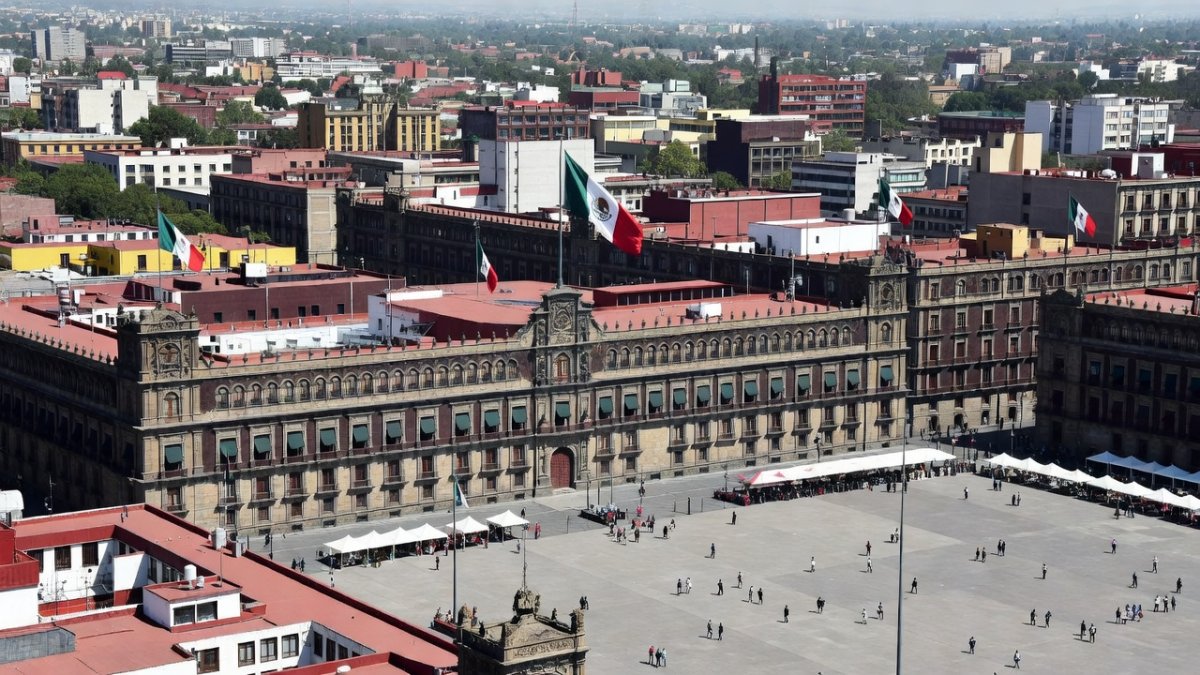
President Claudia Sheinbaum addressed the remarks the following day during her mañanera at Palacio Nacional on July 15. She described Cole's comments as resembling a political statement more than one supported by concrete evidence.
Sheinbaum reminded listeners that the United States remains the world's largest market for illicit drugs. She suggested the DEA would achieve more by concentrating on distribution networks, money laundering, and consumption inside the U.S.
The National Security Cabinet, which includes SSPC, SEDENA, SEMAR, FGR, and Guardia Nacional, released a formal joint statement labeling the claims baseless. The document highlighted arrest and seizure statistics as proof of Mexico's zero-impunity approach.
Cabinet members stressed that Mexico continues to act against criminal groups without external direction. They noted that domestic institutions handle investigations and prosecutions as a sovereign responsibility.
A History of Rising Tensions — context of US-Mexico friction under Trump
Relations have faced several strains in recent months. In April the U.S. Department of Justice indicted Sinaloa Governor Rubén Rocha Moya, prompting Sheinbaum to state that no evidence had been shared with Mexican authorities.
The United States has designated eight Mexican cartels as Foreign Terrorist Organizations. This week the Treasury Department added the Juárez Cartel and Los Viagras to its sanctions list, further raising temperatures in diplomatic channels.
Sheinbaum has consistently maintained that rooting out corruption inside Mexico is a domestic matter. She has also noted that Mexico recently filed criminal complaints with U.S. prosecutors concerning deaths of Mexican nationals during deportation operations.
These episodes occur against the backdrop of long-standing cooperation on security. Both countries share information and conduct operations, yet public disagreements can affect trust at the working level between agencies.
The April indictment of Sinaloa Governor Rubén Rocha Moya by the U.S. Department of Justice centered on charges of corruption and ties to organized crime, including allegations of facilitating cartel operations in exchange for political support. President Sheinbaum stood firmly by her Morena colleague, noting that no evidence had been shared through official channels and emphasizing that such unilateral actions undermine trust between the two nations. For the ruling party this episode highlights the delicate balance of maintaining internal unity while defending sovereignty against external pressures that could fracture alliances ahead of future elections.
This week the Treasury Department added the Juárez Cartel and Los Viagras to its sanctions list as part of broader efforts to disrupt fentanyl routes and money laundering networks operating near the northern border. These groups were singled out due to their documented control over key smuggling corridors in Chihuahua and Michoacán, where recent seizures have revealed sophisticated precursor chemical operations. Mexican officials view these designations as another layer of tension that complicates joint enforcement without addressing the demand side in the United States.
Impact on Mexican Communities — how these accusations affect ordinary Mexicans
Residents in colonias and rural communities often feel the ripple effects of such high-level disputes. Families worry that heightened rhetoric may slow cross-border trade that supports local jobs in manufacturing and agriculture.
Small business owners near the border report uncertainty when political statements dominate headlines. They rely on steady movement of goods and people, and any cooling of relations can translate into longer waits at crossings.
Indigenous communities and ejidos in states with significant cartel presence already navigate daily challenges. Accusations that paint the entire government with a broad brush can undermine morale among local officials working to improve security.
Teachers, healthcare workers, and students in affected regions continue their routines while hoping for steady cooperation that reduces violence. They see practical results from seizures and arrests more than from public exchanges between capitals.
In places like Ciudad Juárez and Nuevo Laredo, families who depend on maquiladora jobs have already noticed longer wait times at border crossings, sometimes stretching into hours because of heightened inspections tied to the political friction. Remittances sent from relatives working across the border have also faced delays in processing, leaving households short on funds for groceries and school supplies during these uncertain weeks. These everyday disruptions remind us how distant accusations ripple through our communities, affecting the steady rhythm of work and family life that so many rely upon.
Tijuana residents, many of whom cross daily for employment or family visits, report that the uncertainty has begun to slow local commerce, with small vendors seeing fewer customers from the north. The maquiladora sector, which employs thousands in assembly plants, worries that any further cooling of relations could lead to reduced shifts or postponed investments. In these border cities the human cost feels immediate, as parents balance hope for safer streets with the practical need for stable incomes that cross-border cooperation has long supported.
Reactions and Responses — political and public reactions in Mexico
Opposition parties including PAN and PRI have called for measured diplomacy rather than escalation. Lawmakers in the Congreso de la Unión have urged both governments to return to technical discussions on trafficking routes and financial flows.
Public sentiment in many parts of the country reflects fatigue with external criticism. Citizens point to the daily work of Guardia Nacional and state police as evidence that Mexico is not passive in confronting organized crime.
Community leaders in border cities emphasize that most residents have no connection to cartels. They ask that U.S. officials recognize the distinction between criminal networks and the broader population when making public statements.
Media outlets across Mexico have carried the Cabinet's statistics on arrests and drug seizures. These numbers provide concrete examples that many readers use to evaluate the strength of the government's position.
Leaders from the PAN and PRI have urged measured diplomacy, with PAN senators calling for renewed technical meetings between agencies rather than public exchanges that risk escalating tensions. PRI lawmakers in the Congreso de la Unión stressed the importance of sharing evidence through formal channels before making accusations, warning that inflammatory rhetoric only weakens Mexico's position on the global stage. Both parties have advocated returning focus to practical issues like financial tracking and precursor controls instead of broad characterizations.
Civil society groups such as Causa en Común have called for greater transparency in how security data is shared between nations, while border organizations in Tijuana and Ciudad Juárez emphasize protecting human rights amid any increased enforcement. These groups note that ordinary citizens, not just officials, bear the brunt of strained relations and ask that responses prioritize community safety over political posturing. Their voices add a grounded perspective that reminds everyone of the real people behind the headlines.
What to Watch For — what happens next
Observers will monitor whether the two governments schedule new meetings between security agencies to address the recent friction. Continued data sharing on fentanyl precursors remains a key area of practical cooperation.
Sheinbaum's administration is expected to keep emphasizing Mexico's sovereignty while highlighting results from ongoing operations. Any new U.S. designations or indictments could prompt further formal responses from Palacio Nacional.
Communities along the border and in states with high cartel activity will watch for changes in enforcement patterns. Families hope that disagreements at the political level do not interrupt programs that support victims of violence or strengthen local institutions.
Analysts note that both countries have strong incentives to maintain working relationships on migration, trade, and security. The coming weeks may reveal whether recent statements lead to quieter technical talks or additional public exchanges.
The upcoming USMCA review carries added weight as security tensions could spill into trade discussions, potentially affecting tariff negotiations and supply chain stability that Mexican manufacturers depend on. Observers expect Sheinbaum to maintain a firm yet open stance with the Trump administration, seeking common ground on migration and security while protecting national dignity. Building personal rapport between the leaders may prove essential to preventing further public clashes that distract from shared goals.
The FTO designations raise fresh questions about Mexican sovereignty, as they allow U.S. authorities broader powers to target financial networks without always consulting local partners. Communities hope these moves lead to stronger results against traffickers rather than complicating domestic operations. In the weeks ahead, quiet progress on data exchanges and victim support programs will matter most to families watching from their homes and workplaces across the country.
Tags: Mexico security cabinet, DEA Terry Cole, Claudia Sheinbaum, drug cartels, US Mexico relations, Sinaloa, fentanyl, Guardia Nacional, SEDENA
By Rosa Martinez, Staff Writer
This article was produced with AI-assisted research and editorial support. Reporting is based on sources cited in the article.
What's Your Reaction?
 Like
0
Like
0
 Dislike
0
Dislike
0
 Love
0
Love
0
 Funny
0
Funny
0
 Wow
0
Wow
0
 Sad
0
Sad
0
 Angry
0
Angry
0
Latin America/Andes Correspondent at Global1.News. Based in Bogota, covering politics, environment, energy, and social movements across the Andean region. Passionate about environmental journalism and communities protecting their land.













Comments (0)