
Farage Confronts Record Rivals After Clacton Resignation
Nigel Farage's abrupt resignation as MP for Clacton has produced an extraordinary contest, with 34 candidates now confirmed for the 13 August by-election and the main Westminster parties refusing to take part.
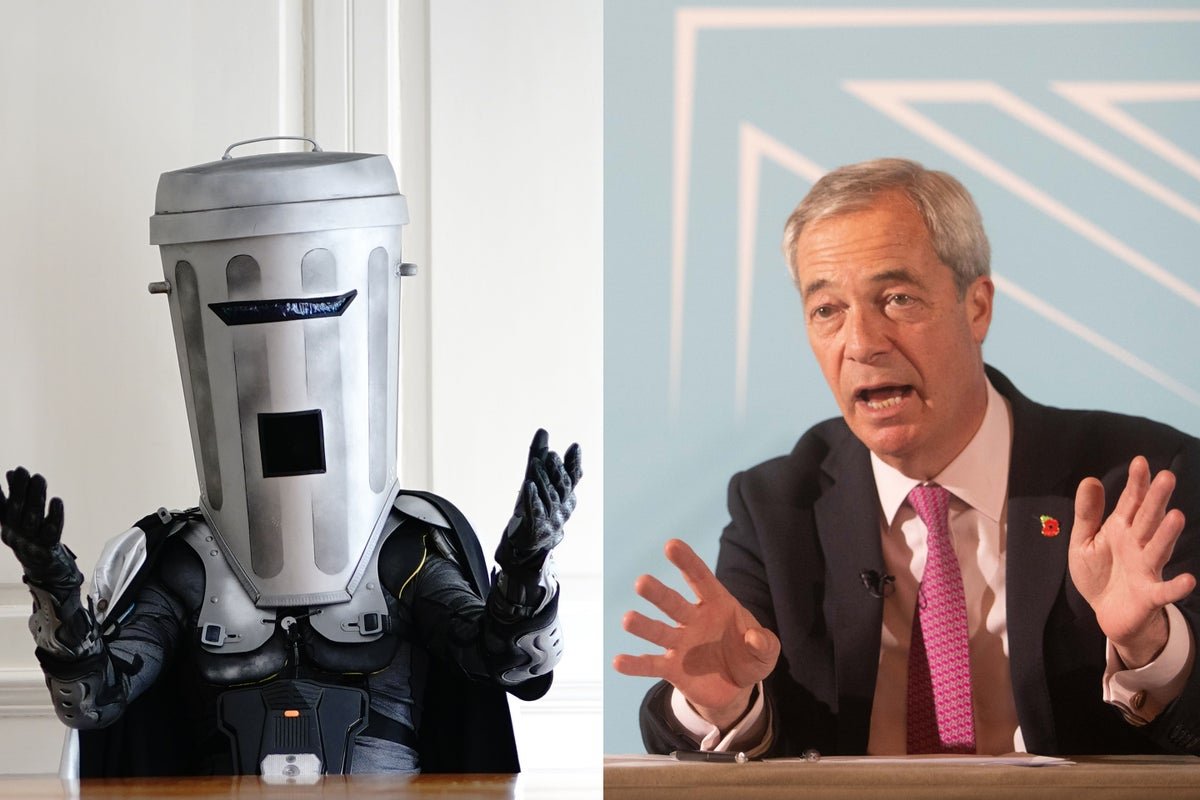
Nigel Farage's abrupt resignation as MP for Clacton has produced an extraordinary contest, with 34 candidates now confirmed for the 13 August by-election and the main Westminster parties refusing to take part.
Farage Confronts Record Rivals After Clacton Resignation
London, UK — Nigel Farage's decision to resign his Clacton seat has produced the largest field of candidates ever recorded in a UK parliamentary by-election, with Tendring District Council confirming 34 names will appear on the ballot papers on 13 August.
Resignation Over Financial Scrutiny
Farage triggered the by-election by stepping down in protest at media and parliamentary examination of his financial affairs and backers. The move was presented by the Reform UK leader as a direct challenge to what he described as establishment interference. Home Secretary Yvette Cooper characterised the resignation as a political tantrum, while other senior figures dismissed it as a gimmick designed to divert attention from the underlying allegations.
The constituency, which Farage won for Reform UK at the previous general election, now faces a contest in which the absence of the major parties has created space for an unusually broad range of challengers. Almost 80,000 electors across the area will choose from the expanded list at 51 polling stations.
The allegations that precipitated Nigel Farage's resignation from Reform UK centred on opaque donations from a small circle of wealthy backers, with media investigations uncovering discrepancies in reported funding sources. Questions arose over whether certain contributions breached electoral commission rules, particularly those linked to offshore interests and individuals with histories of political lobbying. Outlets such as the Guardian and BBC highlighted how Farage's personal finances appeared intertwined with party operations, prompting accusations of inadequate transparency that Westminster insiders described as a "ticking time bomb" for smaller parties.
Main Parties Decline to Contest
Labour, the Conservatives, the Liberal Democrats, the Green Party and Restore Britain have all chosen to boycott the by-election. Party spokespeople described the contest as a stunt that did not merit formal participation. This coordinated withdrawal leaves Reform UK without the conventional opposition that normally structures such campaigns.
The decision echoes earlier instances in which Westminster parties have judged a resignation by-election to lack legitimacy. Without their involvement, the campaign focuses instead on the diverse group of independent and minor-party candidates who have come forward.
Labour's internal deliberations revealed a calculated aversion to legitimising Farage's platform, with senior figures arguing that participation would grant undue oxygen to divisive rhetoric on immigration and Brexit. Party sources indicated that the leadership viewed the by-election as a distraction from core economic messaging, preferring to let Reform UK's internal fractures play out without direct engagement. This stance aligned with a broader strategy of marginalising smaller challengers rather than confronting them head-on in a contest deemed peripheral to national priorities.
Conservative strategists, meanwhile, calculated that Farage's candidacy would split the right-wing vote in Clacton, potentially handing the seat to Labour in a worst-case scenario. Internal memos leaked to the press suggested the boycott preserved resources for more winnable battles, while avoiding the optics of endorsing a rival whose policies overlapped uncomfortably with their own base. The Liberal Democrats and Greens positioned their abstention as a principled stand against personality-driven politics, with spokespeople emphasising the need to focus on proportional representation reforms instead of indulging what they termed "electoral theatre."
Collectively, this coordinated boycott signals Westminster's deepening wariness of Farage as a destabilising force, one whose presence threatens to erode traditional party structures. It reflects a consensus that engaging him risks normalising outsider tactics at a time when institutional trust remains fragile across the political spectrum.
Tendring District Council has verified a total of 34 candidates, surpassing the previous record of 26 set in the Haltemprice and Howden by-election of July 2008. The list includes representatives from several small parties and a substantial number of independents.
Among those standing are Adham Alkhatip for the Forward Party, William Stuart James Clouston for the Social Democratic Party, James Ransley for the Consensus Party, Marcus White for the Everyone is God Party and Ketankumar Pipaliya for UK VOICE. Additional independent candidates include Woke Trump Carrzee, Glenn Charles Cummings, Stephen Richard Ingram, Derrick Norbert Morris and Michael Noel O'Keeffe.
Prominent Challengers in the Field
Satirical candidate Count Binface and Reclaim Party leader Laurence Fox have emerged as the most visible opponents to Farage. Three candidates from the Official Monster Raving Loony Party are also contesting the seat: Howling Laud Hope, Nick The Incredible Flying Brick and Baron Von Thunderclap.
These candidacies have altered the tone of the campaign. Farage had framed the by-election as a straightforward contest between the people and the establishment, yet the presence of well-known satirical and fringe figures has complicated that narrative and drawn additional media attention to the breadth of the field.
Comparison With the 2008 Precedent
The 2008 Haltemprice and Howden by-election, called after Conservative MP Sir David Davis resigned over civil liberties issues, likewise saw the main parties decline to stand. That contest produced 26 candidates and remains the benchmark Farage's opponents have now exceeded.
Both episodes illustrate how a single MP's resignation can create opportunities for minor parties and independents when the larger Westminster organisations choose to stay away. The Clacton result will therefore be measured not only by the winner but by the scale of participation itself.
The Haltemprice and Howden by-election of 2008, triggered by Sir David Davis's resignation over the Labour government's 42-day detention proposals, featured an extraordinary field of 26 candidates ranging from serious contenders to novelty acts. Davis framed his stand as a defence of civil liberties, drawing cross-party support and media attention that elevated the contest beyond local concerns. The result saw him comfortably re-elected, yet the spectacle highlighted early fractures in the two-party system that would widen in subsequent years.
Ballot papers will be issued at 51 polling stations serving the constituency. Electoral administrators have confirmed that preparations are under way to accommodate the expanded list of names and the associated printing and counting requirements.
Turnout expectations remain uncertain given the absence of the main parties and the timing of the contest during the summer holiday period. Local officials have emphasised the need for clear voter information to ensure the process runs smoothly across the district.
Consequences for Reform UK
The by-election outcome will test whether Farage can maintain momentum for Reform UK without the unifying effect of a direct contest against Labour or the Conservatives. A strong performance by Count Binface, Laurence Fox or the Monster Raving Loony Party candidates could dilute the protest vote Farage anticipated.
Westminster observers note that the episode has already shifted attention from policy substance to the mechanics of the contest itself. The result on 13 August will indicate whether Reform UK can convert Farage's personal profile into durable local support when conventional political structures are removed from the equation.
Reform UK's trajectory hinges on whether Farage's personal brand can sustain momentum beyond headline-grabbing stunts, with analysts warning that over-reliance on one figure risks alienating potential supporters seeking policy substance. Polling experts from organisations such as YouGov suggest the party's growth strategy may falter if by-elections devolve into farce, particularly when pitted against eccentric candidates like Count Binface. This gamble could backfire by reinforcing perceptions of Reform as a vehicle for spectacle rather than serious governance.
The presence of Monster Raving Loony Party elements alongside Farage threatens to dilute the party's claims to credibility, as commentators note that such associations play into narratives of fringe irrelevance. Internal tensions over direction have already surfaced, with some members advocating broader alliances while others push for purist independence. Should the Clacton contest yield underwhelming results, it may prompt a reckoning over the sustainability of personality-led expansion in a crowded political marketplace.
By Erica Thornton, Staff Writer
This article was produced with AI-assisted research and editorial support. Reporting is based on sources cited in the article.
What's Your Reaction?
 Like
0
Like
0
 Dislike
0
Dislike
0
 Love
0
Love
0
 Funny
0
Funny
0
 Wow
0
Wow
0
 Sad
0
Sad
0
 Angry
0
Angry
0

US Politics and Policy Correspondent at Global1.News. Based in Washington DC, covering American politics, policy, elections, and the courts. Knows how the system works and tells you what it actually means.














Comments (0)