
Taiwan's Lai Urges Deeper Japan Tech, Security Cooperation
**Meta Description:** Taiwan's president urges expanded semiconductor, AI and maritime security ties with Japan, proposing democratic supply chains to counter regional risks. **Keywords:** Lai Ching-te, Japan Taiwan cooperation, semiconductors, democratic supply chains, Indo-Pacific security, METI, TSMC Kumamoto, maritime security, China Coast Guard, Japan Philippines, cross-st
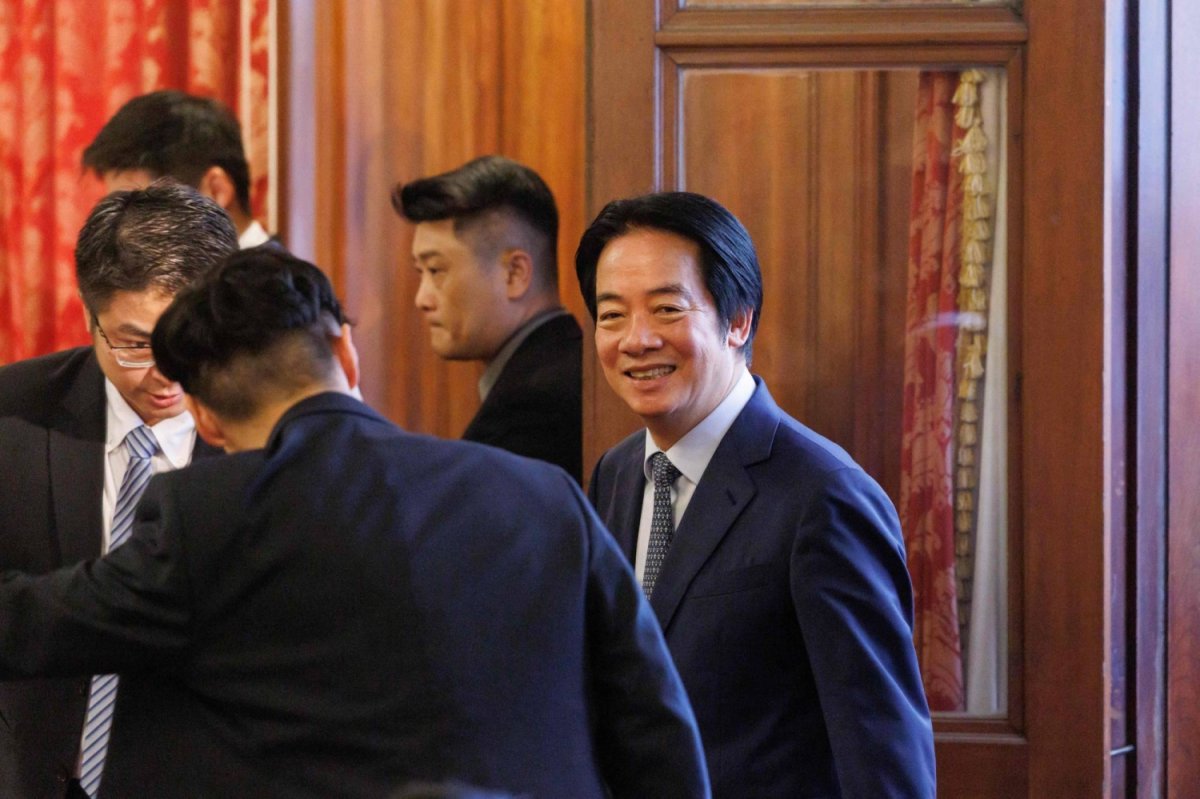
Lai Ching-te’s Taipei Press Conference
Taiwanese President Lai Ching-te convened a press conference with foreign media in Taipei on Thursday, June 18, 2026. The session centered on regional cooperation priorities, with Japan positioned as the central partner for advancing shared interests across the Indo-Pacific. Reporting from Jiji Press via Nippon.com captured Lai’s emphasis on practical collaboration rather than broad rhetoric.
The timing of the remarks aligned with ongoing regional developments, including recent maritime delimitation discussions between Japan and the Philippines. Lai used the platform to outline concrete areas where bilateral engagement could strengthen resilience for both sides. Japanese correspondents present noted the deliberate focus on economic and security linkages that directly involve Japanese government agencies and corporate actors.
Observers in Tokyo viewed the press conference as a signal that Taipei seeks to anchor its external strategy in established partnerships. The event avoided sweeping declarations and instead highlighted specific sectors where Japanese expertise and Taiwanese capabilities already intersect. This measured approach reflected an awareness of the sensitivities surrounding any public discussion of cross-strait dynamics.
Technology and Security Collaboration Priorities
President Lai stated that Japan and Taiwan constitute the most important drivers of a free and open Indo-Pacific. He specifically advocated deeper collaboration in semiconductors, artificial intelligence, and unmanned aircraft systems. These sectors represent areas where existing technical complementarities between the two economies can be expanded without requiring entirely new institutional frameworks.
Japan maintains extensive semiconductor fabrication plants and established AI research programs that align with Taiwan’s manufacturing strengths. Lai’s comments pointed toward joint initiatives that could leverage these assets for mutual benefit. METI’s ongoing supply chain resilience programs provide a natural policy channel for such cooperation, particularly in advanced node production and next-generation computing applications.
Corporate partnerships already active in these fields offer immediate avenues for progress. Japanese firms with longstanding research ties to Taiwanese counterparts stand to accelerate development timelines through closer coordination. The emphasis on unmanned aircraft systems further extends the discussion into defense-adjacent technologies where regulatory alignment between Tokyo and Taipei could yield practical results.
Building Democratic Supply Chains
Lai argued that expanded economic ties could help establish “democratic supply chains” that benefit both economies while reducing external vulnerabilities. Japanese firms operating in semiconductor fabrication and AI development are positioned to gain from more structured cross-border arrangements. Existing investment patterns in technology sectors already demonstrate the viability of such linkages.
The TSMC fabrication facility in Kumamoto serves as a concrete example of how Japanese and Taiwanese capabilities combine in practice. Additional semiconductor investments by Japanese companies in Taiwan have followed similar logic, creating reciprocal exposure that strengthens overall chain resilience. Lai’s formulation of democratic supply chains frames these projects as part of a broader strategic choice rather than isolated commercial decisions.
METI has tracked these investment flows as part of its industrial policy objectives. The presidential remarks suggest Taipei is prepared to support further Japanese participation in Taiwan’s technology ecosystem. This alignment could facilitate smoother regulatory processes for future projects while reinforcing the economic interdependence that underpins regional stability.
Disaster Preparedness and Maritime Security Coordination
President Lai called for greater coordination on disaster preparedness and maritime security, areas that reflect shared regional vulnerabilities. Both Japan and Taiwan face frequent natural disasters and depend on stable sea lanes for economic continuity. The proposal for enhanced cooperation in these domains builds on existing informal exchanges while seeking more systematic mechanisms.
These priorities intersect with recent Japan-Philippines discussions on exclusive economic zone and continental shelf delimitation. The framework for those negotiations was set during the Philippine President’s visit to Japan, producing a joint statement that outlined next steps. Lai’s emphasis on maritime security therefore occurs against a backdrop of active trilateral interest in the same waters.
Japanese policymakers have long recognized that disaster response and maritime domain awareness require reliable partners. Lai’s remarks positioned Taiwan as a willing contributor to such efforts, particularly in information sharing and joint training exercises. The focus remains on practical measures that address immediate operational needs rather than formal alliance structures.
Taiwan’s Position on Japan-Philippines Delimitation Talks
Regarding the delimitation talks covering waters east of Taiwan, Lai stated that Taiwan would safeguard its interests in line with international norms. He reiterated Taiwan’s basic stance without offering direct commentary on the substance of the Japan-Philippines negotiations. The formulation appeared calibrated to avoid creating friction with either Tokyo or Manila.
Taiwan’s foreign ministry separately rejected external interference in the matter and asserted that it should have been consulted. This position maintains consistency with Taipei’s long-standing approach to maritime boundary issues. The measured tone from the presidential level contrasted slightly with the ministry’s more direct statement, illustrating coordinated but distinct messaging tracks.
Japanese officials monitoring the reaction noted the absence of any demand that the talks be halted. Instead, the emphasis remained on Taiwan’s right to participate in processes affecting its claimed areas. This approach preserves space for continued dialogue with Japan while signaling resolve on core interests.
China’s Response and Regional Reactions
China responded by deploying coast guard patrols to waters east of Taiwan, led by vessel Daishan. China Coast Guard spokesperson Jiang Lue described the patrol as “a necessary action taken in response” to the Japan-Philippines talks. China’s foreign ministry characterized the talks themselves as “completely illegal, null and void.”
Taiwan rejected China’s premise, stating that China has no authority to interfere in the delimitation process. The exchange highlighted the sensitivity of any trilateral maritime discussion that touches areas near Taiwan. Japanese analysts viewed the coast guard deployment as a predictable signaling move rather than an escalation that alters operational realities in the region.
The sequence of statements and deployments underscores the narrow margin within which Japan must navigate its regional relationships. Tokyo’s decision to proceed with the Philippines framework while maintaining economic channels with China illustrates the dual pressures at play. Taiwan’s calibrated response similarly sought to register its position without closing off future engagement.
Implications for Japan’s Strategic Balancing Act
The developments test Japan’s dual-track approach of maintaining economic ties with China while deepening security partnerships with like-minded actors. Lai’s emphasis on technology collaboration and democratic supply chains aligns with METI priorities, yet any visible strengthening of Japan-Taiwan links risks prompting further Chinese coast guard activity. Tokyo must therefore calibrate the pace and visibility of new initiatives.
Japan’s role as a mediator and partner in Taiwan Strait stability gains added importance. The recent joint statement with the Philippines demonstrates willingness to address maritime boundaries through established legal processes. At the same time, continued economic engagement with China remains essential for Japanese manufacturers reliant on mainland supply chains and markets.
In coming months, Japanese readers should watch for concrete follow-up on semiconductor and AI cooperation proposals, any adjustments to METI investment screening related to Taiwan, and the next round of Japan-Philippines delimitation talks. The strategic balancing act for Tokyo will require sustaining economic openness while reinforcing the partnerships that Lai identified as central to a free and open Indo-Pacific.
Tags: Lai Ching-te, Japan Taiwan relations, semiconductors, democratic supply chains, METI, TSMC Kumamoto, maritime security, China Coast Guard, Indo-Pacific strategy
By Kenji Tanaka, Staff Writer
This article was produced with AI-assisted research and editorial support. Reporting is based on sources cited in the article.
What's Your Reaction?
 Like
0
Like
0
 Dislike
0
Dislike
0
 Love
0
Love
0
 Funny
0
Funny
0
 Wow
0
Wow
0
 Sad
0
Sad
0
 Angry
0
Angry
0
Japan Correspondent at Global1.News. Tokyo-based voice covering Japanese politics, technology, economy, and culture. Tracks the intersection of tradition and innovation in one of the world's most dynamic societies.












Comments (0)