
Reiwa 8 Kumamoto Quake: 6.8 Magnitude Strikes Kyushu
A powerful 6.8 magnitude earthquake struck Kumamoto Prefecture in Kyushu on Tuesday afternoon, triggering intense Shindo 7 shaking, multiple casualties, and an immediate national emergency response. The Japan Meteorological Agency quickly designated the event the Reiwa 8 Kumamoto earthquake while Self-Defense Forces mobilized to support rescue efforts at collapsed sites.
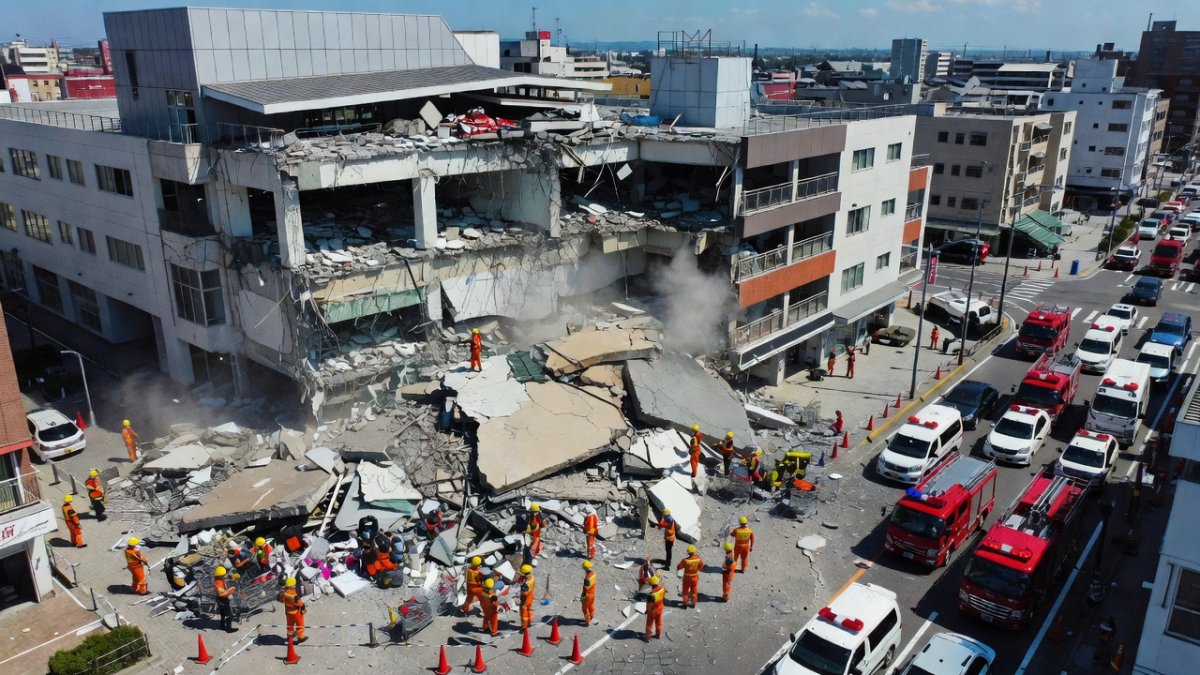
A powerful 6.8 magnitude earthquake struck Kumamoto Prefecture in Kyushu on Tuesday afternoon, triggering intense Shindo 7 shaking, multiple casualties, and an immediate national emergency response. The Japan Meteorological Agency quickly designated the event the Reiwa 8 Kumamoto earthquake while Self-Defense Forces mobilized to support rescue efforts at collapsed sites. This latest seismic event underscores the ongoing hazard in a region still recovering from the devastating 2016 sequence.
The Seismic Event
On Tuesday at 16:27:15 JST, a shallow earthquake of magnitude Mww 6.8 registered by the USGS and MJMA 7.1 by the Japan Meteorological Agency struck near Uki and Uto cities in Kumamoto Prefecture, Kyushu. The event occurred at a depth of 10 km, producing Shindo 7 intensity in Uki and Hikawa, the highest level on the Japanese scale where standing becomes impossible and walls may collapse. The Japan Meteorological Agency promptly named the event the Reiwa 8 Kumamoto earthquake. A magnitude 6.1 aftershock followed minutes later. The epicenter lay approximately 540 miles southwest of Tokyo, placing the tremor firmly within the tectonically active Kyushu region that has experienced repeated seismic activity in recent decades.
The Shindo 7 intensity recorded in Uki and Hikawa represents the uppermost category on the Japan Meteorological Agency scale, where horizontal acceleration exceeds 0.5 g and vertical motion prevents standing or walking, often causing unreinforced masonry or poorly anchored partitions to fail. This level of ground motion arises directly from the event’s 10 km focal depth, which concentrates energy release near the surface and reduces attenuation compared with deeper sources. The Mww 6.8 value reported by the USGS reflects a moment-magnitude calculation based on long-period seismic waves, while the MJMA 7.1 assigned by the Japan Meteorological Agency incorporates regional attenuation relations calibrated for Japanese crust; the roughly 0.3 unit difference is typical for shallow crustal events in Kyushu.
Japan’s dense network of strong-motion seismometers and real-time processing at the Japan Meteorological Agency enabled magnitude determination and intensity mapping within minutes, allowing the agency to designate the event the Reiwa 8 Kumamoto earthquake and issue the subsequent tsunami advisory. The aftershock of magnitude 6.1 minutes later further illustrates the rapid sequence that can follow rupture on the same fault system. These monitoring capabilities, refined through decades of instrument upgrades, provide the high-resolution data required for immediate public alerts and for distinguishing between the two magnitude scales used in official reporting.
Casualties and Damage Reported
At least five people have been confirmed dead, with the first fatalities occurring at the Aeon Mall in Kashima where a second-floor collapse triggered an explosion. More than 100 individuals sustained injuries, while authorities list between 25 and 35 people as missing. These figures reflect the rapid initial assessment conducted in the hours following the Tuesday afternoon event. The combination of structural failure and subsequent fire at the commercial site underscores the concentrated risk to densely occupied buildings during strong shaking. Emergency services continue to search affected zones as the full extent of casualties becomes clearer through systematic door-to-door checks and hospital reporting.
Infrastructure Impact Across the Region
Kumamoto Castle suffered damage to its stone walls, adding to the cultural heritage concerns already heightened by prior seismic events in the prefecture. Thousands of homes lost power immediately after the mainshock, while roads and bridges sustained visible cracking and displacement that has disrupted local transportation networks. The Japan Meteorological Agency issued a tsunami advisory for coastal areas, which was later lifted once sea-level measurements confirmed no significant wave generation. Industrial facilities remain under evaluation by the Ministry of Economy, Trade and Industry, and the Ministry of Land, Infrastructure, Transport and Tourism has initiated building safety inspections to determine which structures can safely reopen.
Government Response and Emergency Measures
Prime Minister Sanae Takaichi issued emergency instructions at 16:29 JST, just two minutes after the mainshock. The rapid activation of national protocols reflects lessons incorporated into Japan’s disaster management framework since the 2016 sequence. Emergency shelters opened across Kumamoto Prefecture to accommodate residents displaced by power outages and structural concerns. These measures prioritize continuity of essential services and orderly evacuation, consistent with Japan’s emphasis on rapid governmental coordination during high-intensity events.
SDF Deployment and Rescue Operations
Defense Minister Shinjiro Koizumi directed the deployment of 3,600 Self-Defense Forces personnel. SDF units immediately launched rescue operations at the Aeon Mall in Kashima, focusing on debris removal and survivor location in the collapsed section. The scale of mobilization demonstrates the Japanese military’s standing role in domestic disaster response, particularly when local resources face simultaneous demands from multiple damaged sites. Ongoing operations include support for medical transport and temporary infrastructure repair in coordination with prefectural authorities.
The 3,600 Self-Defense Forces personnel deployed under Defense Minister Shinjiro Koizumi’s direction brought specialized engineering units equipped for heavy debris removal, medical teams capable of field triage, and helicopter assets for rapid casualty transport from isolated sites. These capabilities operate within Japan’s Disaster Relief Law framework, which authorizes the SDF to support prefectural authorities when local resources are overwhelmed. Coordination occurs through established liaison channels between the Kumamoto Prefecture emergency management headquarters and the regional SDF command, ensuring that rescue priorities at the Aeon Mall collapse site align with broader search-and-rescue grids.
This mobilization level remains modest relative to the 2016 peak deployment of more than 25,000 personnel, reflecting both the more contained geographic footprint of the current event and the standing doctrine that prioritizes rapid, scalable insertion of SDF assets only where civilian agencies request augmentation. The doctrine emphasizes interoperability with local fire and police units, temporary infrastructure repair, and medical evacuation support, allowing the SDF to fill gaps without assuming primary command of the overall response.
Historical Comparison to the 2016 Kumamoto Earthquakes
The Tuesday event occurred in the same prefecture that experienced the 2016 Kumamoto earthquakes, which began with an April 14 magnitude 6.5 foreshock followed by an April 16 magnitude 7.3 mainshock, both registering Shindo 7. The 2016 sequence ultimately caused 276 deaths, including disaster-related fatalities. In response, Japan revised national building codes to enhance resilience against strong ground motion. The 2026 epicenter near Uki and Uto differs from the 2016 focus nearer Kumamoto City, yet the repeated Shindo 7 readings highlight the persistent seismic hazard along the same fault system. Post-2016 code improvements appear to have limited the current death toll relative to the earlier disaster, though the shallow depth and proximity to urban centers still produced significant localized destruction.
Post-2016 revisions to the Building Standard Law strengthened requirements for commercial structures, including improved ceiling anchorage and non-structural element restraint to mitigate the ceiling collapses and fallen fixtures that contributed to casualties in the earlier sequence. Those revisions appear to have reduced the current death toll relative to the 276 fatalities recorded in 2016, which included both direct trauma and disaster-related deaths occurring in subsequent weeks. The 2016 sequence followed a foreshock-mainshock pattern, whereas the Tuesday event consisted of a single mainshock followed by a magnitude 6.1 aftershock, limiting the cumulative loading on already stressed buildings.
Infrastructure retrofitting undertaken across Kumamoto Prefecture since 2016, particularly at cultural sites such as Kumamoto Castle and in public facilities, has focused on wall reinforcement and utility hardening. These measures have demonstrably contained the scale of structural failure despite repeated Shindo 7 shaking along the same fault system. The contrast between the two events underscores how targeted code updates and selective retrofits can alter outcomes even when the underlying seismic hazard remains unchanged.
Coastal and Regional Effects
The initial tsunami advisory for Kyushu coastal zones was lifted after verification that no damaging waves had formed, consistent with the inland epicenter location. Regional effects nevertheless extend beyond Kumamoto Prefecture through power grid strain and transportation interruptions that affect neighboring areas on Kyushu. The Ministry of Economy, Trade and Industry’s ongoing assessment of industrial facilities will determine the broader economic ripple effects across the island. Japan’s integrated early-warning systems and public preparedness training, refined after multiple national disasters, facilitated swift public response during the Tuesday shaking, limiting further casualties in the critical first minutes.
By Kenji Tanaka, Staff Writer
This article was produced with AI-assisted research and editorial support. Reporting is based on sources cited in the article.
What's Your Reaction?
 Like
0
Like
0
 Dislike
0
Dislike
0
 Love
0
Love
0
 Funny
0
Funny
0
 Wow
0
Wow
0
 Sad
0
Sad
0
 Angry
0
Angry
0

Japan Correspondent at Global1.News. Tokyo-based voice covering Japanese politics, technology, economy, and culture. Tracks the intersection of tradition and innovation in one of the world's most dynamic societies.















Comments (0)