
Micron Breaks Ground on $9.3B Hiroshima AI Memory Expansion
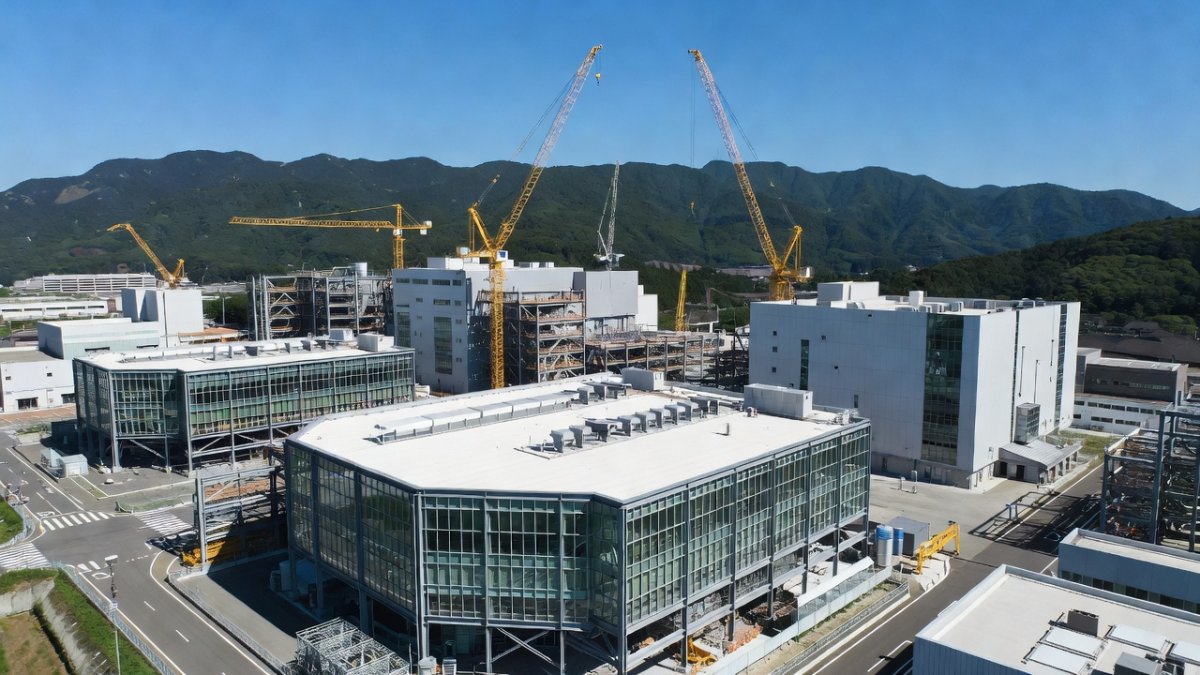
Japan's semiconductor revitalization strategy reached a significant milestone on July 4, 2026, as US memory giant Micron Technology held a groundbreaking ceremony for a ¥1.5 trillion ($9.3 billion) expansion of its DRAM production facility in Higashihiroshima City, Hiroshima Prefecture.
Japan's semiconductor revitalization strategy reached a significant milestone on July 4, 2026, as US memory giant Micron Technology held a groundbreaking ceremony for a ¥1.5 trillion ($9.3 billion) expansion of its DRAM production facility in Higashihiroshima City, Hiroshima Prefecture. The project, backed by up to ¥536 billion ($3.3 billion) in subsidies from Japan's Ministry of Economy, Trade and Industry (METI), targets mass production of cutting-edge high-bandwidth memory (HBM) for generative artificial intelligence applications and represents Tokyo's deepening commitment to rebuilding domestic semiconductor manufacturing capacity.
Micron Breaks Ground on $9.3 Billion Hiroshima AI Memory Expansion
Tokyo, Japan — July 27, 2026 — Micron Technology (NASDAQ: MU) has formally commenced construction of a major expansion at its Hiroshima facility, Japan's only DRAM memory production base. The investment, one of the largest single semiconductor outlays in Japanese history, signals both Micron's ambitions in the AI memory market and Japan's strategic push to reestablish itself as a semiconductor manufacturing power. The expansion will focus on producing advanced HBM using Micron's next-generation 1γ (1-gamma) DRAM process technology, designed specifically for the intensive memory bandwidth requirements of AI training and inference workloads.
Record Investment and Government Backing
Industry Minister Akazawa Ryosei attended the groundbreaking ceremony in Higashihiroshima City, where he emphasized the strategic importance of the project. "Semiconductors not only support the realization of DX and GX, but are also extremely important strategic materials from the perspective of economic security," Akazawa stated. He added that "demand for semiconductors is expected to grow rapidly as we enter the age of AI. It is extremely important to establish a domestic manufacturing base for semiconductors, including DRAM, and to ensure a stable supply system."
METI's subsidy of up to ¥536 billion covers approximately one-third of the total capital expenditure, a figure consistent with Japan's aggressive incentive programs for semiconductor investments. The ministry's support reflects a strategic calculus: rebuilding Japan's capacity to produce advanced memory chips domestically reduces supply chain vulnerabilities and strengthens economic security in an era of intensifying US-China technology competition.
Japan's Semiconductor Revitalization Strategy
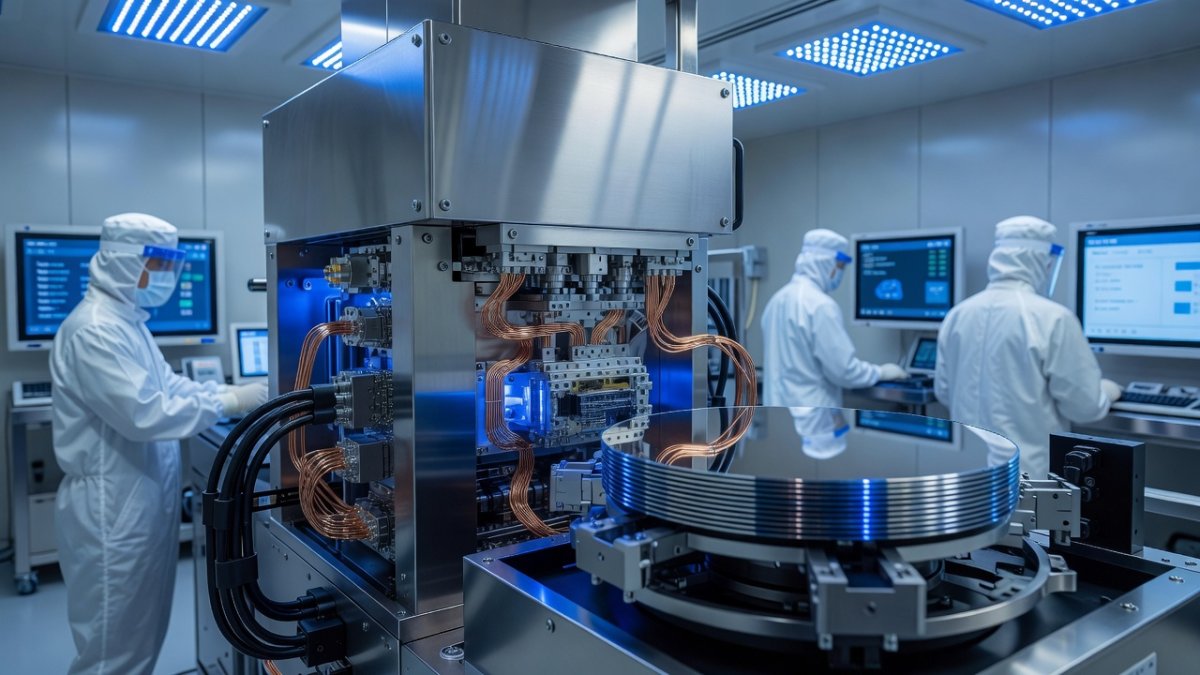
The Micron expansion is the latest and one of the largest components of Japan's nationwide semiconductor revitalization effort, which has mobilized over ¥10 trillion in public and private investment. The strategy operates on multiple tracks: TSMC's Kumamoto fab, a joint venture with Sony Semiconductor Solutions and Denso, is producing advanced logic chips for automotive and industrial applications with plans to move to 3-nanometer process technology. Rapidus, the government-backed startup in Chitose, Hokkaido, is pursuing 2-nanometer chip fabrication in partnership with IBM and Belgium's Imec. Together with Micron's Hiroshima expansion, these projects represent Japan's most aggressive industrial policy initiative since the 1980s.
For Micron, the Hiroshima facility is the company's only DRAM production site in Japan and a critical node in its global manufacturing network alongside facilities in Singapore, Taiwan, and the United States. The expansion positions Hiroshima to serve the rapidly growing Asian AI server market, where demand for HBM is projected to increase more than fivefold between 2025 and 2030 according to industry analysts.
HBM Market Dynamics and Competitive Landscape
The expansion places Micron in direct competition with South Korea's SK Hynix and Samsung Electronics for dominance in the high-bandwidth memory segment, a market that has become the most lucrative battleground in the semiconductor industry. SK Hynix currently leads the HBM market, having established an early advantage with its HBM3 and HBM3E products for NVIDIA's AI accelerators. Samsung has been investing heavily to close the gap, while Micron's Hiroshima expansion represents a deliberate strategy to capture a larger share of the post-HBM4E generation.
The timing of the expansion, with equipment installation scheduled to begin in the second half of 2028 and first shipments targeted around summer 2028, aligns with the expected next wave of AI infrastructure investment. Analysts project that by 2028, demand for AI memory will be driven not only by data center training clusters but also by AI inference at the edge, autonomous systems, and enterprise AI deployment across Asia Pacific markets.
Implications for Japan's Technology Ecosystem
The Micron expansion has significant implications for Japan's broader technology supply chain. Hiroshima Prefecture and the surrounding Chugoku region host a dense cluster of semiconductor materials and equipment manufacturers, including Tokyo Electron, Shin-Etsu Chemical, and Sumco. The expanded fab is expected to generate thousands of construction jobs and hundreds of permanent high-skilled positions in semiconductor engineering and manufacturing.
The project also reinforces Japan's position in the global semiconductor equipment market, where Japanese companies hold approximately 30 percent market share in critical segments such as wafer fabrication equipment and photoresist materials. A growing domestic manufacturing base creates a virtuous cycle: as fabs expand, equipment makers gain a proximate customer base for development and testing, accelerating innovation in both sectors. This dynamic is central to METI's strategy of rebuilding vertically integrated semiconductor capabilities.
Expert Perspectives
Industry observers have noted that the Hiroshima expansion represents a calculated wager on the durability of AI-driven memory demand through the end of the decade. "Micron is betting that the AI memory boom is not a cyclical spike but a structural shift," said analysts tracking the semiconductor sector. The company's record earnings in fiscal 2026, driven by AI memory sales, provide the financial foundation for the investment.
From a policy perspective, the project has drawn attention for the scale of government support involved. METI's subsidy constitutes one of the largest single semiconductor grants in Japan's postwar history, reflecting the heightened priority placed on semiconductor self-sufficiency following the global chip shortage of 2021-2023 and the subsequent tightening of US-led export controls on advanced semiconductor technology to China.
What to Watch For
Several milestones will determine the trajectory of the Hiroshima expansion over the coming years. Equipment installation is scheduled to begin in the second half of 2028, with commercial production ramping through 2029. The evolution of Micron's 1γ DRAM process and its competitiveness against SK Hynix's and Samsung's next-generation memory architectures will be critical factors. Additionally, the broader policy environment — including potential shifts in US-Japan technology cooperation and Japan's semiconductor export control framework — will shape the strategic significance of the Hiroshima facility. For Japan's semiconductor revitalization strategy, the project represents a pivotal test of whether large-scale government subsidies can successfully rebuild advanced manufacturing capacity in a sector where the country lost competitive ground over three decades.
By Kenji Tanaka, Staff Writer
This article was produced with AI-assisted research and editorial support. Reporting is based on sources cited in the article.
What's Your Reaction?
 Like
0
Like
0
 Dislike
0
Dislike
0
 Love
0
Love
0
 Funny
0
Funny
0
 Wow
0
Wow
0
 Sad
0
Sad
0
 Angry
0
Angry
0

Japan Correspondent at Global1.News. Tokyo-based voice covering Japanese politics, technology, economy, and culture. Tracks the intersection of tradition and innovation in one of the world's most dynamic societies.












Comments (0)