
Fed Faces Rate-Hike Showdown as Inflation Rebounds
Folks, the Federal Reserve is staring down a pivotal moment — and the timing could not be more charged. The Federal Open Market Committee kicks off its two-day meeting today, July 28, with a decision slated for Wednesday afternoon. And let me tell you: this one is anything but a foregone conclusion. On paper, the consensus says status quo.
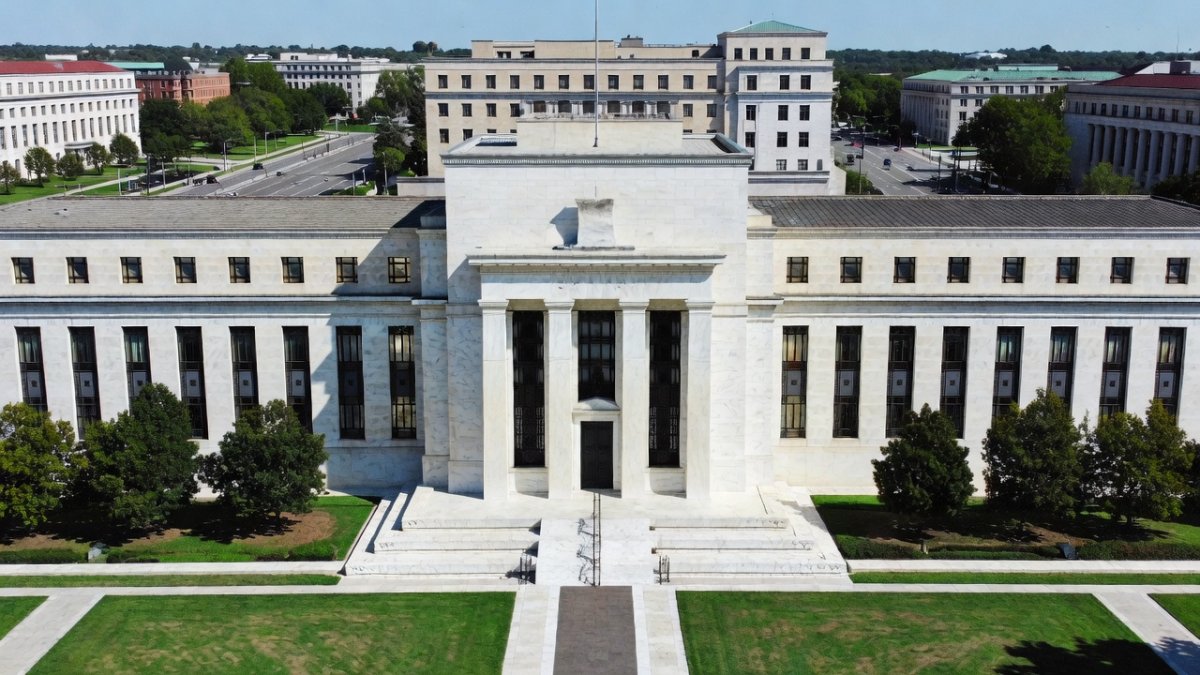
Folks, the Federal Reserve is staring down a pivotal moment — and the timing could not be more charged. The Federal Open Market Committee kicks off its two-day meeting today, July 28, with a decision slated for Wednesday afternoon. And let me tell you: this one is anything but a foregone conclusion.
On paper, the consensus says status quo. All 104 economists polled by Reuters in mid-July expect the Fed to hold the federal funds rate steady at its current range of 3.50% to 3.75%. But here's where it gets interesting — beneath that surface-level calm, the Federal Reserve is deeply divided, inflation is re-accelerating, and the pressure to hike is mounting by the day.
Fed Faces Rate-Hike Showdown as Inflation Rebounds
Washington, D.C. — The Federal Reserve's July 28-29 meeting arrives at a moment of genuine uncertainty. After four consecutive meetings with no rate change — dating back to March 2026 — the central bank now confronts a familiar adversary that refuses to stay down: inflation.
This is a "non-SEP" meeting, meaning there will be no Summary of Economic Projections or dot plot released alongside the decision. What we will get — at 2:00 PM Eastern on Wednesday, followed by the Chair's press conference at 2:30 PM — is a policy statement that could reveal just how deep the divisions within the FOMC really run.
The Setup: A Fed at a Crossroads
Let's talk about where we are. The Fed cut rates aggressively through much of 2024 and 2025 as inflation appeared to be tamed and the labor market showed early signs of softening. But the narrative has shifted dramatically in recent months. Price pressures that were supposed to be "transitory" — sound familiar? — are back with a vengeance.
Three factors are driving the resurgence. First, tariffs. The administration's trade policy has reintroduced cost pressures across supply chains, from consumer electronics to industrial components. Second, energy prices. Rising oil prices — driven by geopolitical tensions and production cuts — are feeding into headline inflation numbers in ways that the core measures can no longer filter out. And third, a factor that wasn't on anyone's radar two years ago: artificial intelligence. The massive capital expenditure required to build out AI infrastructure — data centers, chips, energy grids — is injecting demand into an economy that is already running warm.
Bloomberg captured the tension perfectly in a recent report, noting that Fed officials are heading into this meeting "confronting a resurgence in price pressures that could make their decision on whether to hold or hike interest rates a close call — and a contentious one." That's not the language of a committee at peace with itself.
The Divided Committee: Hawks vs. Doves
The June FOMC minutes, released on July 8, pulled back the curtain on something remarkable: even though the vote to hold rates steady was unanimous, the discussion underneath was anything but. Some committee members explicitly argued that a rate hike was warranted in June. They were persuaded to hold, but only barely.
Here's the thing about central banking — when a dissenting voice emerges inside the FOMC, it rarely disappears. It gets louder. The officials who wanted to hike in June are not going to be quieter in July, especially not after seeing the most recent inflation prints.
TheStreet called this exactly what it is: a "rate-hike showdown." The dovish wing — led by those who believe the current restrictive stance is sufficient to gradually cool the economy — is arguing for patience. They point to lag effects in monetary policy and warn that overtightening could choke off growth ahead of what is shaping up to be a contentious election season.
But the hawks have data on their side. Consumer price readings have ticked up for three consecutive months. The Producer Price Index, a leading indicator of future consumer inflation, surprised to the upside. And perhaps most concerning to the inflation-wary members: wage growth, while moderating, remains above levels consistent with the Fed's 2% target.
Market Reaction: Betting Against the Consensus
This is where things get genuinely interesting. The consensus among professional economists is clear — all 104 of Reuters' surveyed economists expect a hold. But markets are not so sure.
Prediction markets, which have proven increasingly accurate at gauging Fed moves, have priced the odds of a 25-basis-point hike at around 24%. That is not a majority view, but it is significant — a nearly one-in-four chance that the Fed breaks its four-meeting pause and raises rates.
Bond markets are sending mixed signals. Treasury yields have been volatile, reflecting genuine uncertainty about the path ahead. The 2-year yield — the maturity most sensitive to Fed policy expectations — has climbed in recent weeks, suggesting that fixed-income traders are pricing in at least some risk of tightening. Meanwhile, the yield curve remains inverted, a classic recession warning that has persisted for over two years now.
And here is a detail worth watching: the CME FedWatch tool, which tracks fed funds futures, has shown increased volatility in its probabilities over the past two weeks. When the derivatives market starts fluctuating this much this close to a decision, it usually means the outcome is genuinely uncertain.
What Economists Say: All 104 Say Hold — But What About the 25th Percentile?
The unanimity among surveyed economists is worth examining. When Reuters asked 104 economists what the Fed would do, every single one said "hold." That is a remarkable consensus — and in economics, remarkable consensus often means something is being missed.
Think about it this way: consensus forecasts tend to cluster around the most likely outcome. But the most likely outcome is not the only outcome. If there is even a 24% chance of a hike, that is a meaningful tail risk — and tail risks in central banking have a way of becoming reality when the data shifts unexpectedly.
Some economists have privately acknowledged that the window for a July hike is narrower than the public consensus suggests. If the Fed was genuinely divided at the June meeting — when inflation data was weaker than it is now — then the case for action has only strengthened since then.
What we do know: inflation expectations, as measured by the University of Michigan survey, have crept upward. Consumer sentiment has taken a hit as everyday prices continue to rise. And the housing market, which had been showing signs of stabilization, is seeing mortgage rates tick back up in anticipation of potential Fed action.
Political Implications: The 2026 Election Wildcard
Let me be real with you about the elephant in the room. We are less than four months away from the 2026 midterm elections. Every economic decision the Fed makes from here on out carries political weight — even if the Fed insists, as it always does, that politics plays no role in its deliberations.
A rate hike in July would be a political earthquake. It would signal that the Fed believes the economy is overheating at a time when voters are already feeling the pinch of higher prices. For incumbent lawmakers from both parties, the last thing they want is a Fed tightening cycle dominating headlines in the run-up to Election Day.
But here is the uncomfortable truth: if the Fed holds rates steady because of political pressure — or the perception of it — it risks repeating the mistake of 2021, when the "transitory inflation" narrative kept the central bank on the sidelines for too long. That mistake cost Americans dearly in purchasing power, and the Fed has spent the last three years trying to rebuild its credibility.
The Chair will face questions about this at the post-meeting press conference. Watch for any language about the "balance of risks" or "data dependency" that seems carefully calibrated to avoid sounding political. And listen closely to how the dissent count is reported — a divided vote would be a huge story.
What to Watch Next
So what should you, the person actually living through this economy, be watching for on Wednesday?
First, the exact language of the policy statement. The Fed has been describing inflation as "elevated" for months. Any change in that characterization — upgrading to "stubbornly elevated" or downgrading to "moderating" — would signal the committee's evolving view.
Second, the vote count. A unanimous decision to hold would suggest the committee has coalesced around patience. A split vote — even one dissenter arguing for a hike — would confirm what the June minutes hinted at: the hawks are getting restless. And a dissent in the other direction — someone arguing for a cut — would be a completely different signal about the economic outlook.
Third, the Chair's press conference. The question-and-answer period is where the real information lives. Watch for any mention of "risk management" thinking, any acknowledgment that the committee discussed the case for a hike, and any hints about what would trigger action in September.
Fourth, and most importantly for your wallet: look at what happens to mortgage rates and credit card rates in the 48 hours after the decision. Even if the Fed holds, markets will move based on the signal — and that movement flows directly into borrowing costs for families and small businesses.
The Bottom Line
Here is where I land on this, folks. The Fed is at a genuine inflection point. Four meetings of holding rates steady have given the appearance of stability, but beneath the surface, the inflation beast is stirring again. Tariffs, energy costs, and the AI investment boom are creating price pressures that the models did not predict.
The safe bet — the consensus call — is that the Fed holds on Wednesday. All 104 economists say so. But safe bets have a way of looking foolish when the data shifts under your feet. And right now, the data is shifting.
My advice? Do not tune out on Wednesday afternoon. Watch the 2:00 PM release. Watch the press conference at 2:30. And whether the Fed hikes or holds, ask yourself one question: does this decision match what the data is saying, or does it feel like a committee trying to buy time?
Because in an election year, with inflation creeping back and the economy walking a tightrope, the difference between a hold and a hike is not just 25 basis points. It is a signal about whether the Fed learned the lessons of the last three years — or whether it is about to make the same mistakes all over again.
Stay sharp. Stay informed. And keep your eyes on that 2:00 PM clock on Wednesday.
By Jessica Ali, Staff Writer
This article was produced with AI-assisted research and editorial support. Reporting is based on sources cited in the article.
What's Your Reaction?
 Like
0
Like
0
 Dislike
0
Dislike
0
 Love
0
Love
0
 Funny
0
Funny
0
 Wow
0
Wow
0
 Sad
0
Sad
0
 Angry
0
Angry
0

Editor-in-Chief at Global1.News. Atlanta-based journalist who cuts through the BS and tells it like it is. Lead anchor, host, and the voice you hear when the spin stops and the truth starts.













Comments (0)