
Malaysia Raid Exposes Forest City as Cybercrime Hub
Malaysian authorities have dismantled two large-scale online scam syndicates operating from the Forest City development in Johor, arresting 335 people in one of the largest cybercrime enforcement actions in Southeast Asia this year. The July 15 operation, announced publicly on July 28, underscores the growing role of technology in transnational organized crime across the region — a development that Japanese authorities and consumers are watching closely.
Malaysian authorities have dismantled two large-scale online scam syndicates operating from the Forest City development in Johor, arresting 335 people in one of the largest cybercrime enforcement actions in Southeast Asia this year. The July 15 operation, announced publicly on July 28, underscores the growing role of technology in transnational organized crime across the region — a development that Japanese authorities and consumers are watching closely.
Malaysia Raid Exposes Forest City as Cybercrime Haven
Tokyo, Japan – July 29, 2026 — Police in the Malaysian state of Johor have arrested 335 individuals in a coordinated raid on 32 premises across the Forest City development, dismantling two syndicates accused of running sophisticated online fraud operations targeting victims primarily in China and Indonesia.

Scale of the Operation
Johor police chief Ab Rahaman Arsad confirmed that the July 15 operation targeted 27 apartment units and five bungalows within Forest City, a sprawling US$100 billion integrated waterfront development built on reclaimed land near Singapore. Among those arrested were 309 Chinese nationals, 19 Indonesians, four Myanmar citizens, and three Malaysians, aged between 20 and 58.
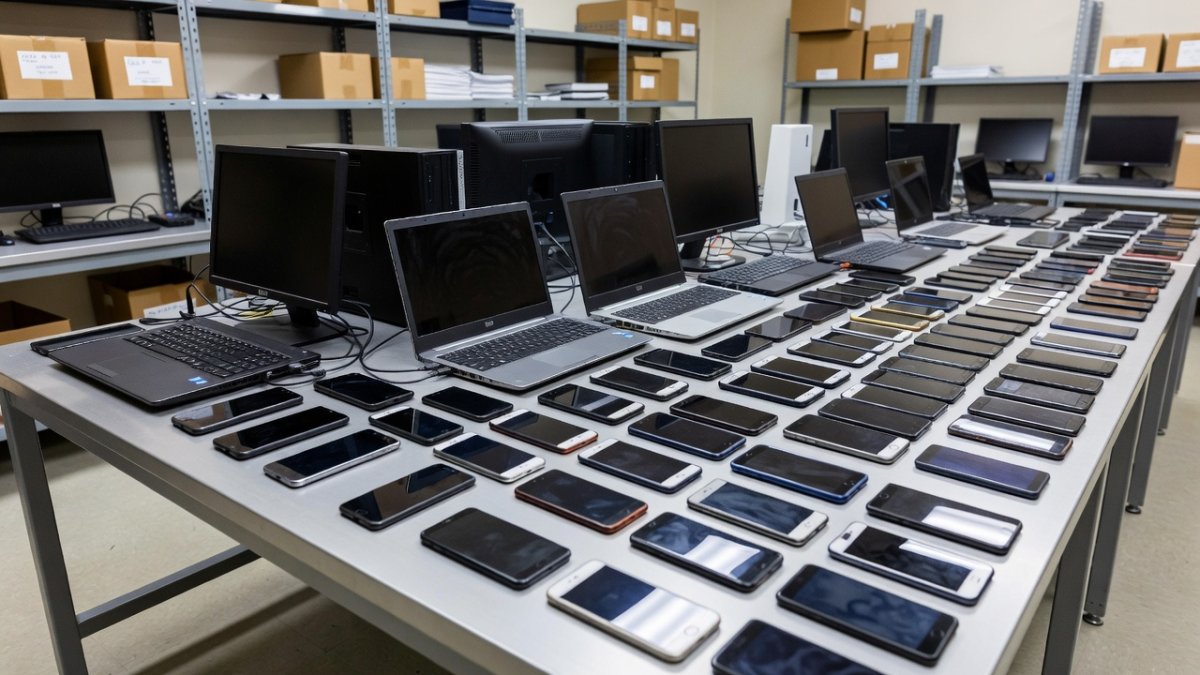
The scale of the equipment seized highlights the industrial nature of the operation: 313 computers, 1,557 mobile phones, 17 laptops, various other electronic devices, and a Mazda CX-8 sport utility vehicle. Authorities also seized assets valued at approximately 1 million ringgit (US$245,000).
Of those arrested, 194 suspects are expected to face charges, with 159 scheduled to appear in court on July 28. The remaining suspects are being processed for immigration violations related to staying in Malaysia without valid travel passes. Police have opened 23 investigation papers linked to the case.
Technology-Enabled Fraud Methods
The syndicates employed a range of technology-driven fraud techniques, including fake cryptocurrency investment schemes and romance scams — commonly known as "love scams" — that used social engineering, messaging applications, and impersonation tactics to defraud victims. According to Ab Rahaman, the operations specifically targeted victims abroad, particularly in China and Indonesia.
Investigators found that syndicate members had entered Malaysia from neighboring countries and had been operating for only a few weeks before the raid, suggesting a rapid deployment model that rotates personnel to evade detection. The operation used residential units in Forest City as call centers, equipped with the computing and telecommunications infrastructure necessary to manage large-scale fraud campaigns across multiple jurisdictions.
Forest City: From Ghost Town to Crime Hub
Forest City, developed by embattled Chinese developer Country Garden Holdings in partnership with a Malaysian company linked to the country's King Sultan Ibrahim Iskandar, was conceived as a luxury residential and business complex on four artificial islands. However, the project has struggled with persistently low occupancy rates since its completion, earning the label "ghost town" in local and international media. The Financial Times and Bloomberg have both reported on Forest City's struggles to attract residents and businesses.
Criminal groups have reportedly exploited the zone's empty properties and lax oversight to establish clandestine operations. The development's proximity to Singapore — a major financial hub — and its status as a special development zone with less regulatory scrutiny have made it an attractive location for illicit technology enterprises.
Broader Southeast Asian Cybercrime Network
The Forest City operation is not an isolated case. In May 2026, Malaysian police arrested 187 suspects in the Klang Valley, seizing assets worth nearly RM58 million (US$14.7 million). That raid included 127 Chinese nationals, 23 Malaysians, nine Japanese nationals, eight Vietnamese, and seven Indonesians, along with suspects from Laos, Thailand, the Philippines, and Myanmar.
The NHK WORLD-JAPAN report also notes that Lao authorities detained over 50 foreigners in a separate fraud-related operation, indicating that the web of technology-enabled scam centers spans multiple Southeast Asian countries. These operations typically target vulnerable populations across the region with increasingly sophisticated methods, including AI-generated voice impersonation and deepfake video calls.
Implications for Japan and ASEAN Cooperation
The presence of Japanese nationals among both the arrested suspects and the victims of these transnational scam networks has drawn the attention of Japanese law enforcement. The National Police Agency (NPA) has been strengthening its cooperation with ASEAN counterparts through Interpol and bilateral channels to address the growing threat of technology-enabled fraud originating from Southeast Asian cybercrime hubs.
Japanese authorities have reported a sharp increase in scam calls and phishing messages originating from overseas call centers, particularly those targeting elderly citizens with impersonation scams. The Ministry of Internal Affairs and Communications has urged telecommunications carriers to implement stricter call-filtering technologies, while the NPA has deployed liaison officers to several ASEAN countries to facilitate real-time intelligence sharing.
The use of Forest City — a high-profile real estate development — as a base for cybercrime operations also raises questions about regulatory oversight in special economic zones across the region. Japanese investors and businesses operating in Southeast Asia have been advised to exercise additional due diligence regarding digital security protocols.
Expert Perspectives
Security analysts tracking Southeast Asian cybercrime note that the syndicates operating from Forest City demonstrate increasing professionalization in their use of technology. "The volume of equipment seized — over 1,500 mobile phones and 300 computers in a single operation — indicates these are not small-time operations but well-funded criminal enterprises with sophisticated technical infrastructure," said one regional security analyst who spoke on condition of anonymity.
The alleged masterminds behind the Forest City syndicates remain at large, and Malaysian authorities have indicated they are working with Interpol to track them down. The cross-border nature of these operations — with syndicate members recruited from multiple countries and victims targeted across national borders — makes enforcement particularly challenging.
What to Watch For
The court proceedings for the 194 charged suspects will be closely watched by regional law enforcement agencies as a test case for prosecuting transnational cybercrime in Malaysia. Japanese authorities will be monitoring whether any links to Japanese victims or suspects emerge during the judicial process.
Meanwhile, the Malaysian government faces growing pressure to strengthen regulatory oversight of special development zones like Forest City, where the combination of vacant properties and limited enforcement has created opportunities for criminal exploitation. Industry observers expect renewed calls for standardized digital security protocols across ASEAN's special economic zones, potentially opening new opportunities for Japanese cybersecurity firms with expertise in cross-border fraud prevention.
The raid also serves as a reminder that as digital financial services expand across Southeast Asia — including Japan-backed initiatives promoting cashless payments and digital banking — the infrastructure for both legitimate commerce and illicit activity develops in parallel. Japanese technology companies operating in the region are expected to face increased scrutiny over their role in securing the digital ecosystem against exploitation by organized crime.
By Kenji Tanaka, Staff Writer
This article was produced with AI-assisted research and editorial support. Reporting is based on sources cited in the article.
What's Your Reaction?
 Like
0
Like
0
 Dislike
0
Dislike
0
 Love
0
Love
0
 Funny
0
Funny
0
 Wow
0
Wow
0
 Sad
0
Sad
0
 Angry
0
Angry
0

Japan Correspondent at Global1.News. Tokyo-based voice covering Japanese politics, technology, economy, and culture. Tracks the intersection of tradition and innovation in one of the world's most dynamic societies.















Comments (0)