
Mexican Cartels Outsource Meth Labs to Nigeria | World News
In a dense forest two hours from Lagos, Nigeria's federal high court convened in an unfinished building reeking of chemicals and crude methamphetamine, where Justice Musa Kakaki inspected vats of crystallising liquid and scattered equipment as three Mexicans and seven Nigerians stood handcuffed befo
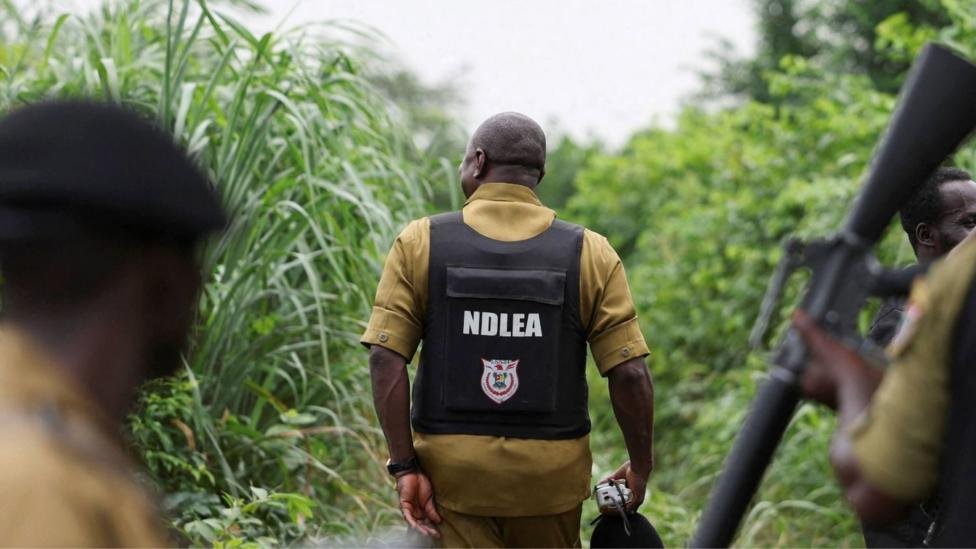
In a dense forest two hours from Lagos, Nigeria's federal high court convened in an unfinished building reeking of chemicals and crude methamphetamine, where Justice Musa Kakaki inspected vats of crystallising liquid and scattered equipment as three Mexicans and seven Nigerians stood handcuffed before him. The air hung heavy with a bitter, pungent odour from a large drum of liquid meth slowly crystallising and open vats of dark, viscous unprocessed product, while propane gas cylinders and bags of caustic soda lay scattered across the floor. Sunlight filtered dimly through the thick canopy overhead, illuminating signs that production had been abruptly disturbed, as the temporary courtroom under heavy guard maintained full legal decorum and protocol despite the remote, makeshift setting. The unusual relocation of the federal high court brought the judicial process directly to the alleged production site, underscoring the scale of what authorities described as the country's largest-ever meth bust. The BBC reported that the operation highlighted how Mexican cartels are extending their reach from Latin American strongholds into West Africa to evade intensifying pressure at home.
Lagos, Nigeria — The NDLEA announced the May arrests as a crippling blow to a sophisticated Nigerian-Mexican syndicate, seizing more than two tonnes of methamphetamine valued at some $360m. This raid, followed the next month by another in neighbouring Oyo State that netted five suspects including one Mexican expert, revealed laboratories hidden deep in forested areas ideal for concealment.
The Forest Laboratory and Judicial Response
Justice Musa Kakaki's inspection of the site revealed signs that production had been disturbed, with the temporary courtroom under heavy guard to maintain protocol amid the evidence. The NDLEA explained the relocation was essential to grasp the full extent of the multi-million-dollar operation, which authorities say involved both local and foreign expertise in synthetic drug manufacturing. Such measures reflect Nigeria's determination to confront the shift from mere transit points to active production hubs, a development that echoes cartel strategies long honed in Latin America's remote regions where enforcement is challenging.
Mexican Cartel Operations and Expertise
Africom stated that intelligence from the command and the US Drug Enforcement Administration has linked some laboratories to Mexico's Sinaloa Cartel and Jalisco New Generation Cartel. James Griego, who leads counter-narcotics operations for US-Africa Command, noted that Mexican specialists, often called cooks, have perfected methods yielding the highest purity and potency meth available globally. Gen Dagvin Anderson testified to US Congress in May that militant groups and narco-traffickers collaborate, with African-based terror organisations increasingly financed by these cartels, expanding their reach in ways that parallel dynamics seen across Latin America where similar alliances sustain production networks.
Griego stated that anybody who is looking to consume methamphetamine understands that the Mexican meth is the best in the world for that purpose, highlighting the reputation that draws syndicates to export their expertise. The first Mexican-linked laboratory discovered by the NDLEA occurred in 2016 and was described at the time as a super lab, marking the beginning of a pattern now seen across multiple African nations. These specialists bring refined techniques developed over decades, allowing rapid scaling of operations once suitable sites are identified in forested regions.
Africom has supplied intelligence to several national anti-drug organisations, enabling raids that have disrupted multiple facilities. The collaboration between militant groups and narco-traffickers, as alleged by Gen Dagvin Anderson, provides financing that increases the lethality and reach of terror organisations operating on the continent. This model mirrors longstanding arrangements in Latin America where cartels have similarly partnered with armed groups to protect production zones.
The sophistication of these laboratories has evolved significantly, with Mexican cooks adapting processes to local conditions while maintaining the high potency that commands premium prices in global markets. Since 2023, authorities have raided 14 Mexican-operated labs in total, with four of the five most recent ones located in Nigeria according to Griego's assessment. Such numbers indicate a deliberate strategy of embedding production expertise within West African networks rather than relying solely on importation.
Pressures from Latin America and African Market Growth
Cartels based in Latin America face mounting scrutiny on traditional routes, prompting diversification into Africa as a corporate production hub, the BBC reported. Sinaloa and Jalisco New Generation have operated globally since the 1990s, yet the recent rise in African lab raids suggests deeper entrenchment driven partly by enforcement elsewhere. This mirrors how these organisations have historically adapted in Mexico and Central America, relocating segments of production to maintain flows amid crackdowns, now extending that model across the Atlantic to porous borders and weaker chemical regulations in Nigeria and beyond.
The BBC reported that since returning to office in 2025, US President Donald Trump has intensified efforts against Latin American drug cartels, increasing pressure that Babafemi says pushes them to view West Africa as an alternative production location. These cartels are feeling the pressure from other parts of the world and so are looking at West Africa as a corporate production hub. Tighter scrutiny of routes from Latin America appears to be one factor in the calculus, though Griego noted it is only part of the story given the organisations' long-standing global presence.
The adaptation strategy allows cartels to sustain output levels even as enforcement intensifies in their home regions. By establishing facilities in remote African forests, they reduce exposure to aerial surveillance and ground operations that have proven effective in parts of Mexico and Central America. This geographic diversification also creates new revenue streams through local consumption while preserving access to established international markets. West Africa poses numerous attractive benefits to Mexican syndicates, starting with swathes of forested land which makes well for secluded production sites. The population is also an attraction for them, especially the huge youth population because with that you get cheap labour and a market for local consumption, NDLEA spokesperson Femi Babafemi told the BBC. There are fears among authorities that methamphetamine consumption will grow in Nigeria, where a 2018 survey found that 14.4% of the adult population had used an illicit drug - more than twice the global average as estimated by the United Nations Office on Drugs and Crime (UNODC). The use of the drug has spread across the continent, according to the Global Initiative Against Transnational Organized Crime. In East Africa, it has become widely available in countries like Kenya and Tanzania, and also in southern Africa, like in South Africa where it is known as tik. Drug syndicates are as interested in international drug markets, as they are in the growing local market, and Africa's location makes it easier to reach Asia and Europe. Producing drugs in West Africa gives traffickers access to Atlantic shipping routes. Combined with the region's porous borders and weaker regulation of chemical imports, this helps them cut costs to lucrative consumer markets. In Europe, the UNODC reported a 47% increase in methamphetamine use between 2014 and 2024. In east and south-east Asia seizures of the drug by authorities reached a record high in 2024. It's a shortening of their supply line into Asia and a shortening of their pathway into Europe, said Griego.
Health Impacts and Future Outlook
Methamphetamine's fast, long-lasting euphoric effects come with severe risks including cardiovascular issues, malnutrition and difficult withdrawal marked by anxiety and depression, authorities warn. Consumption has spread from historical routes into East Africa such as Kenya and Tanzania, and southern markets like South Africa where it is known as tik, with UNODC data showing a 47% rise in European use over the past decade. Nigerian officials remain vigilant, with Babafemi stating that proactive raids prove the country will not serve as a safe haven, helping prevent drugs from reaching communities or international markets while connecting these efforts to broader Latin American struggles against cartel globalisation.
UNODC reports indicate that methamphetamine seizures in East and South-East Asia reached record highs in 2024, reflecting the expanding reach of networks that now originate partly from West African production sites. The 47% increase in European use between 2014 and 2024 further demonstrates how shortened supply lines from Africa are affecting consumption patterns on multiple continents. Local markets in Nigeria and neighbouring countries risk similar growth if production facilities continue to operate unchecked.
Babafemi emphasised that measures such as the court hearing at the laboratory site, combined with increased surveillance and intelligence sharing, allow authorities to intercept operations before drugs reach communities. We've been able to prove that Nigeria won't be a safe haven for them, he stated, underscoring the proactive stance required to counter the entrenchment of these transnational networks. The vigilance comes at a time when synthetic drug production can be established rapidly in any location offering seclusion and basic chemical access.
By Elena Vasquez, Staff Writer
This article was produced with AI-assisted research and editorial support. Reporting is based on sources cited in the article.
What's Your Reaction?
 Like
0
Like
0
 Dislike
0
Dislike
0
 Love
0
Love
0
 Funny
0
Funny
0
 Wow
0
Wow
0
 Sad
0
Sad
0
 Angry
0
Angry
0
Latin America Correspondent at Global1.News. Based in Mexico City, covering politics, economics, energy, and culture across the region. Brings an on-the-ground perspective to stories spanning from the Rio Grande to Patagonia.












Comments (0)