
UAE Balances Iran Thaw With Israel Defense Ties
In the shadowed corridors of Gulf diplomacy, where oil tankers slip past Iranian patrols and Israeli drones hum over Abu Dhabi rooftops, the United Arab Emirates has launched a high-stakes balancing act that could redraw the map of Middle East security. President Sheikh Mohamed bin Zayed al-Nahyan's decision to reopen maritime routes with Tehran while embedding Rafael and Elbit teams in UAE bases sends ripples straight to Jerusalem, where Mossad analysts track every cargo ...
In the shadowed corridors of Gulf diplomacy, where oil tankers slip past Iranian patrols and Israeli drones hum over Abu Dhabi rooftops, the United Arab Emirates has launched a high-stakes balancing act that could redraw the map of Middle East security. President Sheikh Mohamed bin Zayed al-Nahyan's decision to reopen maritime routes with Tehran while embedding Rafael and Elbit teams in UAE bases sends ripples straight to Jerusalem, where Mossad analysts track every cargo manifest and every Iron Beam deployment. This dual-track gamble tests whether pragmatic economics can coexist with ironclad defense pacts forged under the Abraham Accords.
UAE Balances Iran Thaw With Israel Defense Ties
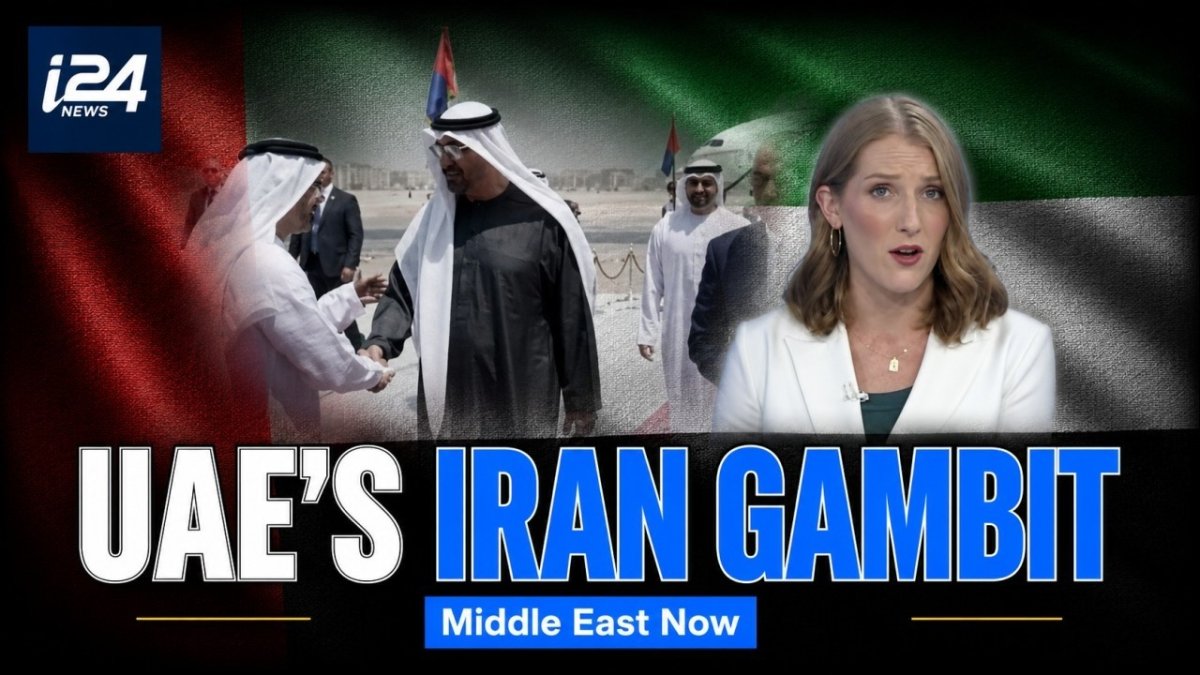
Jerusalem, Israel — In a recent i24NEWS English report titled "UAE restores ties with Tehran while deepening Israel alliance," the network detailed how the United Arab Emirates under President Sheikh Mohamed bin Zayed al-Nahyan has resumed commercial maritime traffic between Dubai ports and Iran while Israeli defense companies maintain permanent bases in Abu Dhabi.
Dual-Track Strategy Under MBZ
Since the Abraham Accords were signed in 2020 under the Trump administration, President Mohammed bin Zayed has pursued a calculated dual-track approach that maintains economic channels with Iran while accelerating security ties with Israel. This strategy reflects MBZ's long-standing preference for pragmatic statecraft over ideological confrontation, a style honed during his years as Abu Dhabi crown prince before ascending to the presidency in 2022. Sheikh Tahnoon bin Zayed, serving as national security adviser and deputy ruler of Abu Dhabi, has played a central role in coordinating these parallel tracks, overseeing intelligence exchanges that allow the UAE to monitor Iranian activities in the Gulf without severing commercial links through ports like Jebel Ali.
Unlike Saudi Arabia, which has kept normalization with Israel on hold amid Gaza tensions, or Qatar's more overt engagement with Tehran through shared gas fields, the UAE under MBZ has positioned itself as a middle power that hedges against Iranian threats while benefiting from Israeli technology. Israeli officials note that this approach has enabled discreet military-to-military contacts even as UAE foreign minister Abdullah bin Zayed maintains diplomatic outreach to Iranian counterparts in Muscat and Baghdad. The result is a Gulf model that prioritizes energy stability and investment flows over the more rigid postures seen in Riyadh or Manama. Jerusalem's defense establishment views this hedging as both an opportunity for expanded intelligence sharing and a potential vulnerability if Iranian Revolutionary Guard elements exploit reopened trade lanes to smuggle components toward Hezbollah positions in southern Lebanon.
Economic Thaw With Iran
Commercial maritime traffic has resumed between Dubai ports and Iran, and direct commercial flights between the UAE and Iran have been reinstated. Approximately 20,000 UAE-based Iranians displaced during the conflict are now permitted to return.
These steps reopen business routes that existed before the escalation. Dubai traders have already reported increased cargo volumes on routes to Bandar Abbas, while Iranian expatriates in Abu Dhabi prepare to resume work in construction and trade sectors.
Israel-UAE Defense Cooperation
Israeli defense firms have established a visible footprint in the UAE since the Abraham Accords. Rafael Advanced Defense Systems has supplied loitering munitions and drone defense systems, while Israel Aerospace Industries maintains a presence through joint ventures focused on unmanned aerial vehicles and satellite technology. Elbit Systems has secured contracts for electronic warfare suites and border surveillance equipment, all operating under the oversight of UAE's Tawazun Council. These partnerships mark a historic shift, placing Israeli personnel and technology directly in Gulf bases for the first time since the 1970s.
The Iron Beam high-energy laser system, developed by Rafael, is now integrated into UAE air defense planning to counter drone swarms from Iranian-backed groups. This deployment represents a qualitative upgrade beyond the Iron Dome batteries previously discussed. During the recent conflict, Prime Minister Benjamin Netanyahu conducted a secret visit to Abu Dhabi, meeting MBZ and defense officials to coordinate real-time intelligence on Iranian missile movements. Israeli defense sources describe the Gulf presence as a strategic depth that was unimaginable before the Accords. Israeli planners now factor in how restored Dubai-Bandar Abbas shipping could complicate efforts to interdict Iranian arms flows that ultimately threaten IDF operations along the northern border with Lebanon.
US Strategic Backing
The United States has rewarded the UAE with enhanced access to advanced military hardware and AI processors. This support strengthens the UAE's ability to maintain its own deterrence while coordinating with Israeli and American systems.
Washington's approval signals continued commitment to the Abraham Accords partners. Israeli defense officials note that the hardware transfers improve interoperability between UAE forces and the IDF in potential future scenarios involving Iran. This American endorsement also ties into broader regional planning, where enhanced UAE capabilities could provide forward basing options for joint operations that safeguard both Israeli energy imports and Gulf shipping lanes against future Iranian provocations.
Strait of Hormuz Contingency Planning
A closure of the Strait of Hormuz would immediately threaten roughly 40 percent of UAE crude exports that still transit the waterway despite diversification efforts. With daily oil flows valued at over $200 million at current prices, Abu Dhabi has accelerated work on the Habshan-Fujairah pipeline, a 360-kilometer line completed in 2012 at a cost exceeding $3.5 billion that now carries up to 1.5 million barrels per day directly to the Indian Ocean port of Fujairah. Energy minister Suhail al-Mazrouei has publicly emphasized the need for further redundancy projects to protect revenues that fund the UAE's sovereign wealth funds.
Gulf energy security discussions now routinely include Israeli input through the new defense channels. Israeli officials highlight that any disruption at Hormuz would also affect Israel's own future LNG imports from the region once normalization expands. The connection between UAE pipeline resilience and Israeli energy planning has become a quiet but growing element of bilateral talks, with both sides examining joint storage and emergency supply arrangements that could mitigate Iranian leverage over Gulf shipping lanes.
Regional Implications for Israel
Israeli assessments from Mossad and Shin Bet indicate that stronger UAE-Iran economic ties have not reduced Tehran's support for Hezbollah in Lebanon, where the group continues to receive Iranian weapons components routed through Iraqi and Syrian networks. This dynamic complicates Israel's northern front calculations even as Abu Dhabi deepens military cooperation with Jerusalem. Saudi Crown Prince Mohammed bin Salman has watched the UAE model closely, using it to recalibrate his own normalization timeline with Israel while maintaining leverage over Palestinian issues.
In the West Bank, Palestinian Authority officials have expressed concern that UAE-Israel defense links could reduce international pressure on settlement expansion. Meanwhile, Mossad evaluations suggest Iran's Revolutionary Guard is accelerating proxy recruitment in response to the UAE's balancing act, requiring Israel to maintain heightened vigilance across multiple fronts. Foreign Ministry sources in Jerusalem emphasize that the Abraham Accords infrastructure remains intact despite the Iran thaw. Daily coordination between Israeli and UAE security services continues without interruption, supporting stability along the Red Sea and in the Persian Gulf.
What This Means for Israeli Security
The UAE's dual-track policy under MBZ creates both opportunities and risks for Israeli energy security, as expanded Gulf cooperation could eventually open direct LNG routes that bypass Hormuz vulnerabilities while requiring Israel to invest in its own port and storage infrastructure. Militarily, the presence of Rafael, IAI and Elbit personnel in UAE facilities gives Israel forward-operating capabilities that enhance deterrence against Iranian missile threats, yet this posture demands careful management to avoid provoking Tehran into targeting Israeli-linked assets in the Gulf.
The UAE's moves demonstrate that economic pragmatism and security cooperation with Israel can advance in parallel. This pattern is likely to shape Gulf diplomacy through the remainder of 2026 and into 2027, with direct consequences for Israel's northern and southern borders as well as its energy security. Looking ahead, the model strengthens prospects for expanding the Abraham Accords to Saudi Arabia and others by demonstrating that economic ties with Iran need not preclude security alignment with Israel, provided intelligence coordination and defense technology transfers continue at their current pace.
By Hannah Berg, Staff WriterThis article was produced with AI-assisted research and editorial support. Reporting is based on sources cited in the article.
What's Your Reaction?
 Like
0
Like
0
 Dislike
0
Dislike
0
 Love
0
Love
0
 Funny
0
Funny
0
 Wow
0
Wow
0
 Sad
0
Sad
0
 Angry
0
Angry
0

Israel Correspondent at Global1.News. Based in Tel Aviv, covering Israeli politics, security, technology, and society. Provides balanced, deeply-sourced reporting on one of the most closely-watched regions in the world.












Comments (0)