
Two Years After ICJ Ruling, UN Warns West Bank Settler Violence and Annexation 'Getting Worse'
Ramallah, Occupied West Bank — Two years after the International Court of Justice delivered its landmark advisory opinion declaring Israel's presence in the occupied Palestinian territory unlawful, the United Nations human rights office has warned that conditions on the ground have deteriorated sharply, with settler violence and de facto annexation reaching unprecedented levels.
Two Years After ICJ Ruling, UN Warns West Bank Settler Violence and Annexation 'Getting Worse'
Ramallah, Occupied West Bank — Two years after the International Court of Justice delivered its landmark advisory opinion declaring Israel's presence in the occupied Palestinian territory unlawful, the United Nations human rights office has warned that conditions on the ground have deteriorated sharply, with settler violence and de facto annexation reaching unprecedented levels.
In a statement issued Wednesday, the Office of the United Nations High Commissioner for Human Rights (OHCHR) said the situation in the occupied West Bank is "only getting worse," pointing to escalating attacks by illegal Israeli settlers, the expansion of settlements and outposts, and what it described as open calls from Israeli leaders for collective punishment against Palestinian communities.
The warning comes on the second anniversary of the ICJ's historic July 2024 ruling, which found that Israel's continued presence in the occupied Palestinian territories — including the West Bank, East Jerusalem, and Gaza — was unlawful under international law and must be brought to an end "as rapidly as possible." Since that ruling, the volume and intensity of violations against Palestinians have only increased, according to the UN and multiple human rights organizations.
UN Rights Office Sounds Alarm
Ravina Shamdasani, the spokesperson for the UN Human Rights Office, detailed a grim picture of accelerating violence and dispossession in the occupied West Bank.
"The violence by settlers and widening annexation of Palestinian territory in the West Bank is only getting worse," Shamdasani said, calling on the international community to take urgent action.
She reported that since the previous Thursday alone, eight Palestinians — including a boy — and two members of the Israeli military had been killed in the occupied West Bank. The spokesperson described how Israeli settlers and security forces, "often acting together," have attacked Palestinian communities, assaulted families, destroyed and confiscated property, and burned mosques.
The rights office voiced particular alarm over movement restrictions that "are now tighter," preventing Palestinians from accessing essential services including healthcare, education, and agricultural land. These restrictions, combined with the expanding network of settler-only roads and military checkpoints, have effectively carved the West Bank into isolated enclaves, fragmenting Palestinian life and economic activity.
Settlement Expansion and De Facto Annexation
Central to the UN's concern is the Israeli government's announced plans to further expand settlements and outposts across the West Bank. These plans, which Shamdasani described as part of a broader pattern of creeping annexation, directly contravene the ICJ's 2024 ruling and multiple UN Security Council resolutions.
Since the start of the current Israeli government, settlement expansion has accelerated at a pace not seen in decades. New outposts have been established, existing settlements have been expanded, and the Israeli Civil Administration has retroactively legalized numerous settlement outposts that were previously considered illegal even under Israeli domestic law.
The UN rights office also expressed deep concern over what it described as open calls by Israeli leaders for revenge and collective punishment against Palestinian communities — language that human rights groups say amounts to incitement under international law. Of particular alarm were threats to "turn the West Bank into another Gaza," echoing the devastating military campaign that has killed tens of thousands of Palestinians in the besieged enclave.
Violence on the Ground Escalates
The human cost of the accelerating settlement enterprise has been devastating for Palestinian communities across the West Bank. Attacks by armed Israeli settlers — often carried out under the protection or with the participation of Israeli security forces — have become a near-daily occurrence in areas such as Masafer Yatta, the South Hebron Hills, and the Jordan Valley.
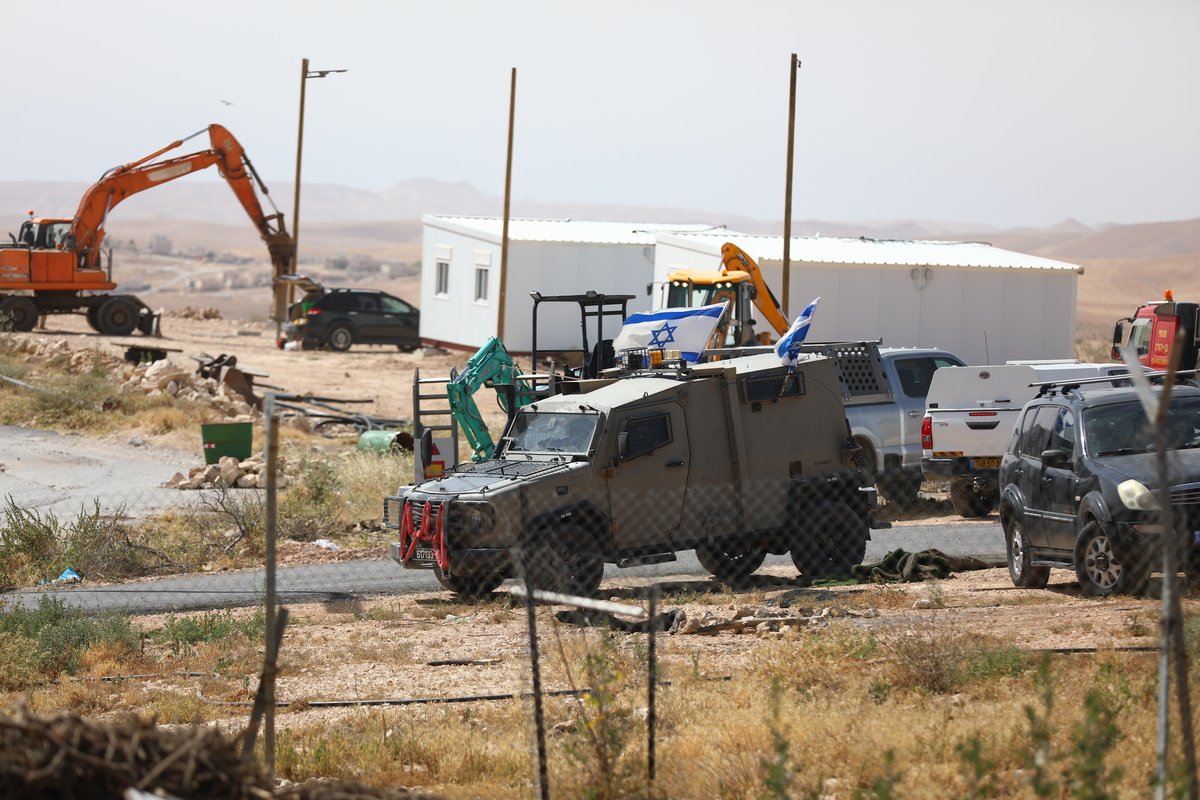
In the village of Umm al-Khair in the Masafer Yatta region south of Hebron, prefabricated houses installed by illegal settlers under the protection of the Israeli army have become a symbol of the ongoing takeover of Palestinian land. The village, like dozens of others in the area, faces the constant threat of displacement as settlers expand their presence onto adjacent lands.
Shamdasani noted that attacks by Israeli settlers and the establishment of settlements and outposts have reached "an all-time high." The statement documented a pattern in which settlers, emboldened by official rhetoric and a permissive security environment, have conducted raids on Palestinian villages, torched agricultural fields, uprooted olive trees, and attacked shepherds and farmers working their land.
The situation in the West Bank has also seen a sharp increase in military operations, with Israeli forces conducting near-nightly raids into Palestinian cities and towns. Detentions have surged, with thousands of Palestinians, including children, held in administrative detention without charge or trial.
International Response and Obligations
Shamdasani urged third states to "act urgently and in unison" to halt the continuing killing and dispossession of Palestinians and to bring an end to the Israeli occupation. This call echoes the ICJ's own finding that all states have an obligation not to render aid or assistance in maintaining the illegal situation created by Israel's presence in the occupied territories.
Under the ICJ's July 2024 advisory opinion, states parties to the Fourth Geneva Convention have a specific obligation to ensure respect for the convention in the occupied territories. The ruling also found that states must distinguish between Israel and the occupied territories in their diplomatic and economic relations, and must not recognize the illegal situation as lawful.
Despite these clear legal obligations, the international response has been widely criticized as inadequate. While some European states have taken limited steps, including restricting settlement goods and issuing travel advisories, no major power has imposed meaningful sanctions on Israel over its ongoing violations of international law.
Human rights organizations, including Amnesty International, Human Rights Watch, and B'Tselem, have repeatedly called on the international community to move beyond statements of concern and take concrete measures — including arms embargoes, targeted sanctions against settlement leaders, and suspension of trade agreements that benefit the settlement enterprise.
The ICJ Ruling: A Landmark That Changed Little on the Ground
The ICJ's July 2024 advisory opinion was hailed as a historic legal development. The court found that Israel's prolonged occupation, its annexation policies, its construction of settlements, and its systematic discrimination against Palestinians all violated fundamental principles of international law.
The ruling was unequivocal: Israel's presence in the occupied Palestinian territory was unlawful, and Israel was obligated to end its presence as rapidly as possible, cease all settlement construction, and make reparation for the damage caused. The court also found that all states were obliged not to recognize the occupation as legal and to differentiate in their dealings with Israel and the occupied territories.
Yet two years on, the ruling has had little tangible impact on the ground. Settlement expansion has accelerated rather than slowed, violence against Palestinians has intensified, and the international community has largely failed to act on the court's findings. This gap between legal principle and political reality lies at the heart of the deteriorating situation that the UN rights office has now documented.
What Comes Next
The trajectory in the West Bank points toward further escalation. With a far-right Israeli government coalition that includes settlement leaders in key ministerial positions, the incentives point toward continued expansion rather than restraint. The open threats to "turn the West Bank into Gaza" suggest that some Israeli leaders see the devastating military campaign in the Strip as a model for addressing the Palestinian presence in the West Bank.
For Palestinian communities across the West Bank, the daily reality is one of increasing isolation, violence, and dispossession. The UN's warning that settler attacks and settlement expansion have reached "all-time highs" is not a prediction of what might happen — it is a description of what is already underway.
Whether the international community will respond to this latest warning with concrete action remains to be seen. The two-year anniversary of the ICJ ruling presents a moment for reflection — but for Palestinians living under occupation, the urgency is measured not in anniversaries but in the daily struggle to hold onto their land, their homes, and their future.
By Fatima Al-Rashid, Staff Writer
This article was produced with AI-assisted research and editorial support. Reporting is based on sources cited in the article.
What's Your Reaction?
 Like
0
Like
0
 Dislike
0
Dislike
0
 Love
0
Love
0
 Funny
0
Funny
0
 Wow
0
Wow
0
 Sad
0
Sad
0
 Angry
0
Angry
0
Gulf/MENA Correspondent at Global1.News. Based in Doha, covering Gulf politics, energy markets, diplomacy, and development across the Middle East and North Africa. Tracks the economic transformation of the Gulf states.












Comments (0)