
Gulf of Paria Spill: Venezuela Demands Compensation as Trinidad Insists 10-Barrel Leak Was Contained
The Gulf of Paria has become the scene of a fresh diplomatic stand-off between Trinidad and Tobago and Venezuela, after Caracas formally demanded information and compensation over a May 1 oil spill that it says originated in Trinidadian waters and risks serious environmental damage to the shared marine ecosystem.
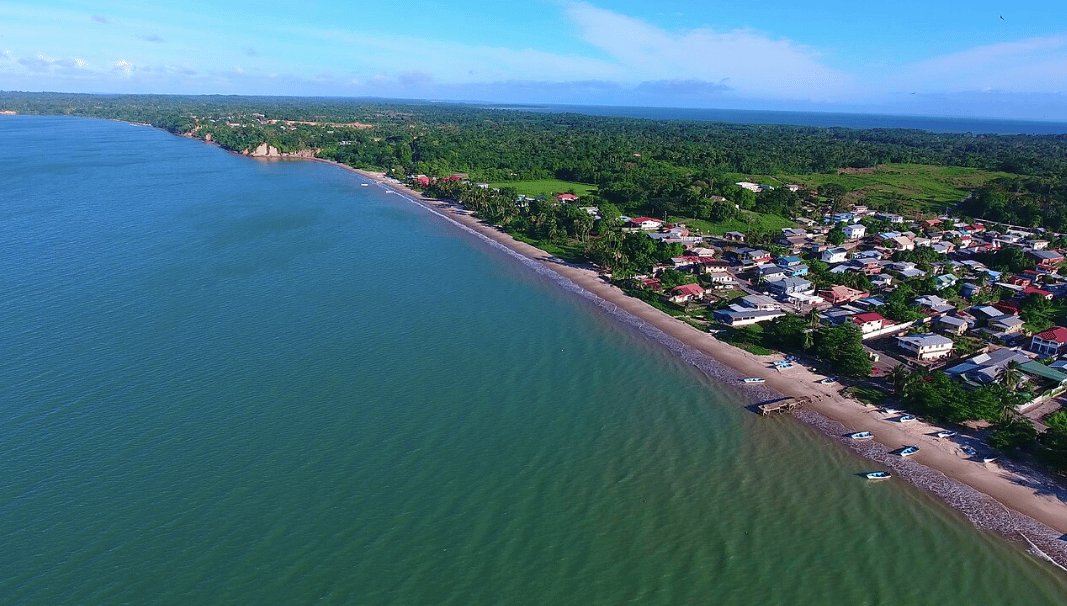
The Gulf of Paria has become the scene of a fresh diplomatic stand-off between Trinidad and Tobago and Venezuela, after Caracas formally demanded information and compensation over a May 1 oil spill that it says originated in Trinidadian waters and risks serious environmental damage to the shared marine ecosystem. The dispute, now entering its third month, threatens to strain relations between two neighbours whose maritime boundary has long been a source of quiet tension beneath a surface of pragmatic cooperation.
Venezuelan Foreign Minister Yvan Gil made the demand during a press conference on May 18, 2026, warning that the spill threatens 1,625 square kilometres of wetland systems across twelve strategic ecological zones in the South American nation's Sucre and Delta Amacuro states. More than 500 fishermen's livelihoods hang in the balance, according to Caracas, which has characterised the spill as a significant transboundary environmental incident requiring urgent remediation and formal accountability.
But Port of Spain has firmly rejected the characterisation of the incident, describing it as a minor 10-barrel spill that was detected and contained swiftly at the start of May with no significant environmental impact. The starkly different accounts reflect deeper disagreements about maritime jurisdiction, environmental responsibility, and the management of shared natural resources in one of the Caribbean's most ecologically sensitive waterways.
A Spill of Two Narratives
The competing accounts highlight the delicate relationship between the two neighbours who share the Gulf of Paria — a shallow, brackish water body lined with extensive mangrove forests on both sides. For Trinidad, approximately 70 per cent of locally consumed fish comes from these waters, making the gulf not just an ecological treasure but an economic lifeline for coastal communities stretching from Chaguaramas in the northwest to Cedros in the southwest. The gulf supports a multibillion-dollar energy sector, artisanal and commercial fisheries, and a tourism industry that depends on clean coastlines.
Energy Minister Stuart Young responded to Venezuela's claims by affirming that Trinidad had dealt adequately with the spill. The Ministry of Energy and Energy Industries confirmed that containment measures were deployed promptly and that the volume released — estimated at roughly 10 barrels — was minimal by international standards for offshore operations. The Environmental Management Authority (EMA) was reportedly engaged to conduct its own assessment of any potential impacts on Trinidad's coastline and marine habitats.
"This was a minor operational incident that was identified, contained and remediated in accordance with standard industry practice," Young reportedly stated. "There is no evidence of the widespread environmental damage that has been alleged. We take our environmental responsibilities seriously and have followed all required protocols."
What Venezuela Is Saying
Caracas sees the matter very differently. Foreign Minister Gil argued during his May 18 press conference that the spill's impact extends far beyond what Trinidad acknowledges, reaching into Venezuela's fragile wetland ecosystems that serve as critical habitats for migratory birds, marine life, and endemic species found nowhere else in the region. The twelve wetland systems identified by Venezuelan authorities include portions of the Orinoco Delta, one of the most biodiverse regions on the continent.
The Venezuelan government is demanding full disclosure of the spill's composition, volume, and trajectory, along with a formal compensation package for environmental remediation. Gil invoked international environmental law and the obligations of states to prevent transboundary harm, hinting at possible legal escalation should Port of Spain refuse to engage. Venezuela has not specified a compensation figure but has reserved the right to pursue the matter through international tribunals if bilateral discussions fail to produce a satisfactory outcome.
Venezuelan authorities claim they have conducted their own scientific evaluations demonstrating damage to coastal areas in Sucre and Delta Amacuro — states whose economies rely heavily on fishing, crabbing, and other artisanal livelihoods that would be devastated by a significant hydrocarbon event. Local fishermen in the affected Venezuelan communities have reported changes in water colour and odour, though independent verification of these claims has been difficult to obtain.
A History of Maritime Tension
This incident does not exist in isolation. The Gulf of Paria has been a theatre of low-level environmental anxiety for years, most notably surrounding the FSO Nabarima — a derelict Venezuelan floating storage and offloading vessel that has been tilting in the gulf since 2020, carrying up to 55 million gallons of crude. Trinidadian fishermen and environmental activists have repeatedly raised alarms about the Nabarima's condition, warning that a catastrophic spill from that vessel would dwarf anything seen before in the region.
The irony of Venezuela demanding compensation from Trinidad over a 10-barrel spill — while a potential ecological time bomb bearing its own flag sits listing in the same gulf — has not been lost on observers in Port of Spain. The Nabarima remains the elephant in the room, a reminder that environmental risk in the gulf flows in both directions and that both nations have unresolved environmental obligations to the waters they share.
The maritime boundary between Trinidad and Venezuela in the Gulf of Paria has never been formally delimited, creating a grey zone where jurisdictional claims overlap. This legal ambiguity complicates any effort to assign responsibility for transboundary environmental incidents and has historically hindered joint efforts to address shared risks such as the Nabarima.
What This Means for Fishermen and Coastal Communities
For the thousands of Trinidadian and Venezuelan families who depend on the Gulf of Paria for their daily catch, the diplomatic back-and-forth offers little comfort. Fishing communities along the Trinidad coast — from the bustling fish markets of Port of Spain to the smaller landings at La Brea and Icacos — have watched the dispute unfold with growing unease. Many of these communities remember the catastrophic 2014 Petrotrin oil spill at Galeota, which disrupted fishing for months and left lasting scars on the local economy.
Even a limited spill can have outsized consequences in a marine environment as sensitive as the Gulf of Paria. The mangroves that line both shores act as nurseries for juvenile fish, and a hydrocarbon event — no matter how contained — can disrupt spawning cycles and contaminate feeding grounds for months or longer. For fishing families already struggling with rising fuel costs, competition from imported seafood, and the lingering effects of the COVID-19 pandemic on tourism-related income, any additional threat to the gulf's productivity is a source of deep concern.
Environmental advocates on both sides of the border have called for a joint scientific assessment of the spill's impact, arguing that the political dispute should not delay a transparent evaluation of what actually happened in the gulf on May 1. They note that the same currents and tides that carry fish across the maritime boundary also carry pollutants, making the health of the gulf a genuinely shared responsibility.
The Wider CARICOM Dimension
The dispute also places CARICOM in a delicate position. Trinidad and Tobago is a founding member of the regional bloc and one of its largest economies, while Venezuela — though not a member — has historically cultivated close ties with Caribbean nations through Petrocaribe and other energy cooperation agreements that provided discounted oil to member states. A prolonged diplomatic spat between Port of Spain and Caracas would test the region's ability to mediate among its neighbours and could complicate broader Caribbean diplomacy on energy security and environmental protection.
Environmental law experts have noted that the case could set a precedent for how transboundary environmental disputes are handled in the Caribbean, where many maritime boundaries remain undemarcated and energy operations frequently straddle contested waters. A well-managed resolution could strengthen regional frameworks for environmental cooperation; a poorly handled one could discourage collaboration on shared challenges like climate adaptation, marine conservation, and disaster response.
What Happens Next
As of late July 2026, the Venezuelan demand for compensation remains unanswered by Trinidad's government, though diplomatic channels are understood to be open. The Ministry of Energy and the EMA are reportedly compiling their own technical assessment of the May 1 incident, which is expected to form the basis of Trinidad's formal response to Caracas. That assessment will likely address the volume and composition of the spill, the containment measures deployed, and any evidence of environmental impact on Trinidad's side of the gulf.
Whether the matter proceeds to international arbitration or is resolved through bilateral negotiations will depend largely on the tone of Port of Spain's reply and whether Caracas considers it sufficient. Options available to Venezuela include referral to the International Tribunal for the Law of the Sea, diplomatic protest through the Organisation of American States, or direct bilateral engagement through existing energy-sector channels. For the fishermen, the environmentalists, and the communities watching from both shores, the hope is that the truth of what happened in the Gulf of Paria on May 1 emerges clearly — along with a renewed commitment to protect the waters upon which so many depend.
By Sharon Sahatoo, Staff Writer
This article was produced with AI-assisted research and editorial support. Reporting is based on sources cited in the article.
What's Your Reaction?
 Like
0
Like
0
 Dislike
0
Dislike
0
 Love
0
Love
0
 Funny
0
Funny
0
 Wow
0
Wow
0
 Sad
0
Sad
0
 Angry
0
Angry
0

Caribbean Correspondent at Global1.News. Based in Port of Spain, Trinidad, covering Caribbean politics, economy, energy, climate, and culture. Amplifying the voices and stories of the Caribbean region.












Comments (0)