
Air India AI 171 Crash: AAIB Rules Out Fuel Switch Failure, Probes Thrust Module
The AAIB has ruled out fuel control switch failure as a cause of the Air India AI 171 crash near Ahmedabad. Investigation now focuses on the thrust control module at the OEM facility with no delay in the final report.
The Aircraft Accident Investigation Bureau (AAIB) has ruled out fuel control switch failure as a cause of the tragic Air India AI 171 crash near Ahmedabad, confirming that detailed structural examination of the component revealed no abnormalities. The focus now shifts to the complete thrust control module, currently under analysis at the original equipment manufacturer's facility.
Air India AI 171 Crash Probe: AAIB Narrowing Down Probable Causes Through Scientific Investigation
New Delhi, India – July 29, 2026 — In a major development in the investigation into the Air India AI 171 crash, the government has confirmed that a comprehensive examination of the fuel control switch, including the structural integrity of its detents, revealed no signs of failure or abnormality. This critical finding allows investigators to redirect resources toward remaining potential causes as the AAIB works to determine what led to the June 12 tragedy that claimed 242 lives.
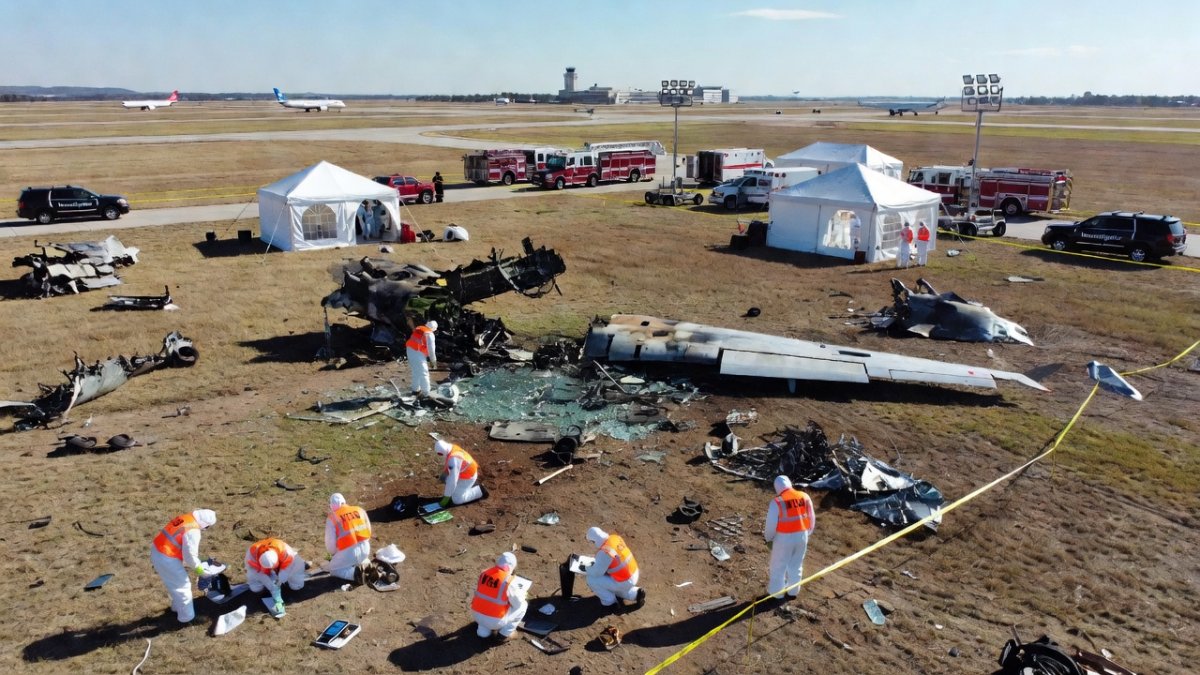
Fuel Control Switch Cleared After Detailed Examination
The fuel control switch — a component that manages fuel flow between engines — underwent rigorous forensic analysis by AAIB specialists. The examination focused on the structural integrity of the component's detents, which are mechanical stops that ensure proper positioning of the switch. According to government officials, no abnormalities were detected in the switch's structure or function, effectively ruling it out as a contributing factor to the crash. This marks the first major component to be formally cleared in the investigation, narrowing the field of probable causes.
Thrust Control Module Under Microscopic Analysis at OEM Facility
With the fuel switch cleared, the investigation has now shifted to the complete thrust control module, which has been sent to the original equipment manufacturer's facility for further inspection. The thrust control module is the central electronic and mechanical assembly that governs engine power output. Its removal from the aircraft for OEM-level analysis indicates that investigators are pursuing a line of inquiry related to potential engine control anomalies. The OEM facility offers specialised diagnostic equipment and engineering expertise that is not available at the AAIB's site-level investigation.

AAIB Final Report Timeline: No Delays Confirmed
The government has clarified that there is no delay in the AAIB's final report submission, directly addressing public speculation about the investigation's pace. The Aircraft Accident Investigation Bureau continues to work through all probable causes and contributing factors systematically. Sources indicate that the comprehensive nature of the investigation — covering flight data recorder analysis, cockpit voice recorder transcripts, maintenance records, and numerous component-level forensic examinations — necessitates a methodical approach rather than a rushed conclusion.
The AI 171 Crash: What We Know So Far
On June 12, 2026, Air India Flight AI 171, a Boeing 787-8 Dreamliner carrying 242 passengers and crew from Ahmedabad to London, crashed in the Meghani area near Ahmedabad airport minutes after takeoff. The captain had issued a mayday call to Air Traffic Control before the crash. The Boeing 787-8 Dreamliner was substantially destroyed in the impact and subsequent fire. Since then, the AAIB has been conducting a methodical investigation following International Civil Aviation Organization (ICAO) Annex 13 protocols, which govern aircraft accident investigation procedures worldwide.
What This Means for Indian Aviation Safety
The systematic elimination of potential causes — starting with the fuel control switch — demonstrates the scientific rigour of India's accident investigation framework. For Indian aviation, the AI 171 investigation represents the most significant crash probe since the 2024 DGCA overhaul of safety protocols. India's civil aviation sector has experienced rapid growth, with passenger traffic increasing approximately 15 percent year-on-year since 2023, placing greater demands on safety infrastructure. The outcome of this investigation will have implications for Boeing 787 operations globally, as airlines and regulators await the AAIB's findings on potential design or maintenance issues.
Expert Perspectives: The Scientific Method in Crash Investigation
Aviation safety experts emphasise that the component-by-component elimination approach used by the AAIB follows established international best practices. Each ruled-out cause represents progress toward identifying the actual failure mechanism. Former DGCA officials have noted that the thoroughness of the current probe — involving OEM-level analysis of critical flight systems — exceeds what was seen in previous Indian crash investigations. The collaboration between the AAIB and the original equipment manufacturer signals that the investigation is leaving no stone unturned in its search for answers.
The Bottom Line
The Air India AI 171 crash investigation marks a critical test of India's aviation accident investigation capabilities. With the fuel control switch eliminated as a cause and the thrust control module now undergoing OEM-level analysis, the scientific process is methodically narrowing the field of probable causes. For the families of the 242 victims and the global aviation community watching closely, the AAIB's commitment to a thorough, evidence-based investigation offers the best path toward understanding what went wrong and preventing future tragedies.
— By Dr. Raj Patel, Staff Writer
This article was produced with AI-assisted research and editorial support. Reporting is based on sources cited in the article.
What's Your Reaction?
 Like
0
Like
0
 Dislike
0
Dislike
0
 Love
0
Love
0
 Funny
0
Funny
0
 Wow
0
Wow
0
 Sad
0
Sad
0
 Angry
0
Angry
0

India/South Asia Correspondent at Global1.News. Analytical voice with a background in science and health journalism. Based in New Delhi, covering Indian politics, education, healthcare, technology, and policy. Breaks down complex data into clear, actionable reporting.















Comments (0)