
Iran-US War Enters New Phase of Direct Confrontation
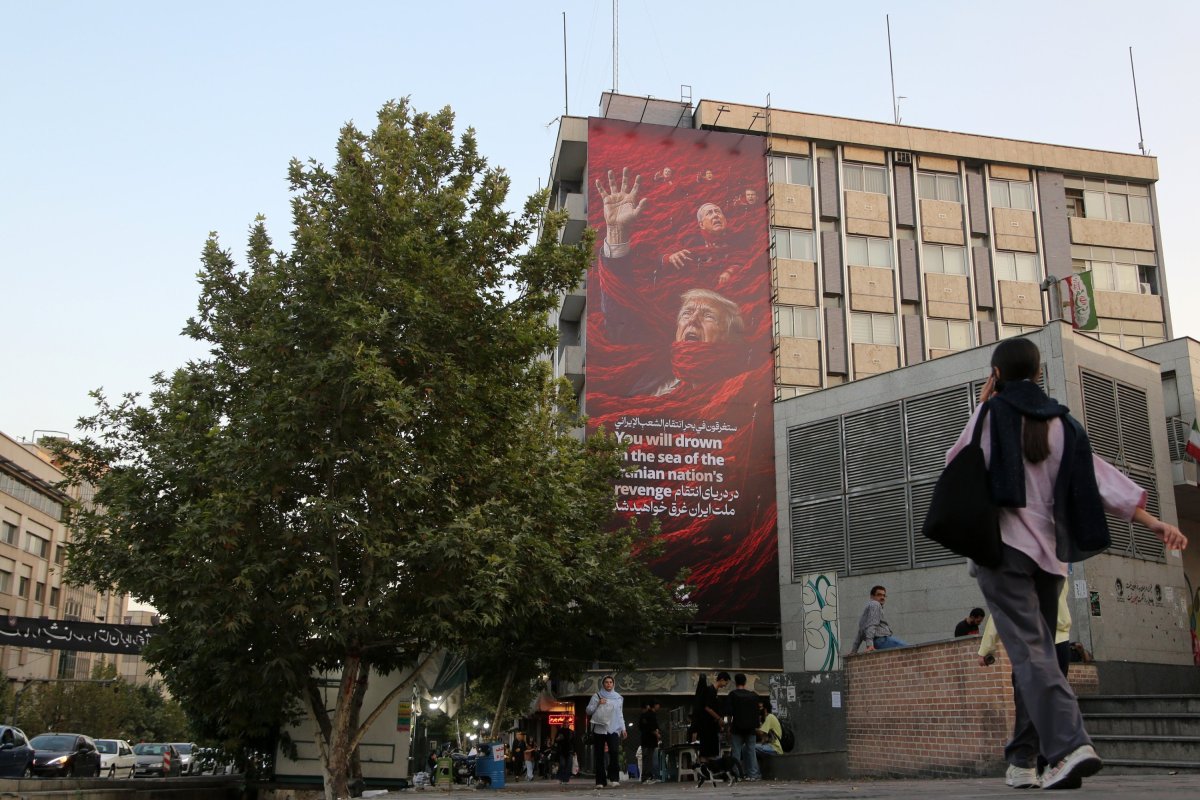
The Current State of the Conflict The fighting that began on February 28, 2026, has now entered a more intense phase. US forces conducted their ninth consecutive night of airstrikes on Iranian territory early on July 20, striking sites in Tabriz and Bushehr. Iranian officials report at least 50 killed and 517 wounded in the latest round. Iran has responded by targeting locations in Bahrain and Kuwait while striking vessels in the Strait of Hormuz.
The Current State of the Conflict
The fighting that began on February 28, 2026, has now entered a more intense phase. US forces conducted their ninth consecutive night of airstrikes on Iranian territory early on July 20, striking sites in Tabriz and Bushehr. Iranian officials report at least 50 killed and 517 wounded in the latest round. Iran has responded by targeting locations in Bahrain and Kuwait while striking vessels in the Strait of Hormuz.
Seventeen US service members have been killed since the war started, including a third confirmed death during the current escalation. Shipping through the Strait of Hormuz has largely stalled, and a vessel caught fire after being hit by a projectile. These developments mark a clear departure from the interim arrangements reached in June.
Iran’s response has been coordinated through Operation True Promise IV, a decentralized missile and drone campaign designed to target US assets and allied positions across multiple fronts. The IRGC’s dual command structure allows it to direct these asymmetric operations independently of the regular Artesh army, which remains focused on conventional territorial defense. This separation enables rapid proxy activation, including Hezbollah’s resumption of hostilities with Israel in March 2026 following Khamenei’s death, thereby opening a sustained second front in southern Lebanon where Israeli forces have maintained an occupation since that month.
The US Navy’s Fifth Fleet, headquartered in Bahrain, has become a primary target of Iranian retaliation, underscoring the maritime dimension of the escalation. Iranian strikes on vessels and Gulf facilities aim to disrupt American power projection while testing the limits of regional host-nation support for US operations.
Diplomatic Signals from Both Sides
Iran’s Foreign Ministry spokesperson Esmaeil Baghaei stated that mediation proposals to restart talks with the United States have been received and communicated internally. At the same time, he emphasized that Iran would continue to defend itself resolutely. US Secretary of State Marco Rubio indicated openness to negotiations but stressed that any agreement must be one Iran is willing to observe.
Former Iranian Foreign Minister Mohammad Javad Zarif called for a new peace agreement and a security framework produced by regional states. These statements suggest both sides are keeping limited diplomatic channels open even as military operations continue. The June 17 Memorandum of Understanding, intended to pause hostilities, collapsed on July 8, leaving little immediate prospect for renewed talks.
Iranian officials repeatedly invoke the 1953 coup, known as Operation Ajax, and the 1979 Islamic Revolution as foundational reasons for deep distrust of Western diplomatic overtures. These historical grievances shape Tehran’s insistence on ironclad security guarantees before any substantive engagement. Parliament Speaker Ghalibaf has assumed a dual role, publicly endorsing diplomatic pathways while privately coordinating with IRGC commanders to maintain operational momentum.
The indefinite postponement of Iran’s 2026 parliamentary elections, originally scheduled for spring, further illustrates how wartime conditions have suspended normal political processes and concentrated decision-making within security institutions.
The Energy and Economic Dimension
Brent crude prices have risen above $90 per barrel, while US gasoline reached $4 per gallon. The disruption in the Strait of Hormuz directly affects global energy flows, as Iran’s IRGC has claimed responsibility for targeting tankers. The United States has reimposed a naval blockade on Iranian ports, redirecting six ships and disabling one.
These measures compound existing pressures on energy markets. Gulf states including Saudi Arabia, the UAE, and Kuwait have participated in operations against Iran, reflecting their interest in protecting maritime routes. The economic effects extend beyond immediate price spikes to questions of long-term supply reliability for importers in Asia and Europe.
Saudi Arabia’s Vision 2030 economic diversification program faces direct threats from prolonged conflict, as higher oil prices and shipping risks could both accelerate and destabilize its fiscal planning. The UAE, by contrast, has preserved limited diplomatic channels with Iran even while coordinating select operations with US forces, illustrating the pragmatic balancing act Gulf capitals are performing.
India issued a shipping advisory on July 15 directing its vessels away from the Strait of Hormuz, while China has sought safe-passage exemptions from both belligerents to protect its energy imports. These moves highlight how Asian powers are adapting to the crisis without direct military involvement.
Patterns of Military Escalation
US Central Command has focused strikes on Iranian military command centers, air defense systems, coastal surveillance sites, maritime capabilities, missile and drone launch sites, and communications networks. President Trump stated that the latest operations were conducted in honor of fallen US soldiers. Iran has expanded its reach by attacking Bahrain, which hosts the US Navy’s Fifth Fleet, and Kuwait.
The sequence shows both sides calibrating responses to previous losses. Iranian attacks on shipping and Gulf targets aim to impose costs on US partners, while American strikes target Iran’s ability to project force through missiles and drones. The risk of further widening remains high as each round produces new casualties and material damage.
The IRGC’s control over missile programs, drone capabilities, and proxy networks gives Iran asymmetric options that the conventional Artesh does not possess. This division of labor allows Tehran to sustain pressure on US and allied targets without committing its regular army to high-risk conventional engagements.
A YouGov poll conducted in early July 2026 revealed that 64 percent of Americans supported the ongoing strikes on Iran, yet only 42 percent backed a ground invasion. These figures suggest domestic political constraints on escalation even as military operations intensify and cumulative US war costs reach $113.3 billion as of June 2026.
Historical Context and Strategic Calculus
The conflict traces back to US-Israeli airstrikes that killed several Iranian officials, including Supreme Leader Ali Khamenei. Iran launched Operation True Promise IV in response, and the United States named its campaign Operation Epic Fury. Iran blockaded the Strait of Hormuz in late March, prompting involvement from several Gulf states.
By June 2026 the war had already cost US taxpayers $113.3 billion. The June 17 MoU represented an attempt to de-escalate, yet underlying disagreements over nuclear issues, regional proxies, and security guarantees prevented lasting compliance. Each side calculates that demonstrating resolve will improve its position in any future negotiations, yet the pattern of retaliation makes de-escalation more difficult.
The IRGC’s integration of proxy forces such as Hezbollah, Iraqi Popular Mobilization Forces, and Yemen’s Houthis into its operational planning extends Iran’s reach far beyond its borders. This networked approach contrasts with the Artesh’s narrower focus on homeland defense and shapes how Tehran distributes risk across multiple theaters.
Both Washington and Tehran appear to view continued demonstrations of capability as necessary precursors to any renewed bargaining, yet the accumulating costs and casualties risk locking both sides into a cycle that neither fully controls.
Regional Implications for the Middle East
The war has drawn in multiple actors and affected longstanding alignments. Sunni-Shia geopolitical competition has intensified as Gulf states coordinate with the United States against Iran. Israeli-Palestinian dynamics remain linked to the broader crisis that began with the Gaza war and helped trigger the current confrontation.
Turkey and Qatar have so far avoided direct involvement, while the Arab League and GCC have not produced unified positions. The conflict also intersects with great-power competition, as Russia and China watch the effects on energy markets and regional stability. A prolonged war risks further damage to infrastructure, higher refugee flows, and sustained pressure on global oil supplies.
Any durable settlement would likely require addressing Iran’s nuclear program, maritime security in the Gulf, and the role of proxy networks. Without such a framework, the current cycle of strikes and counter-strikes is likely to continue, with consequences that extend well beyond the immediate battlefield.
Regional actors are increasingly hedging: Saudi Arabia seeks to shield Vision 2030 investments, while the UAE maintains selective engagement with Tehran. These divergent approaches complicate unified Gulf responses and may prolong the conflict by preventing decisive collective pressure on either side.
By Malik Hassan, Staff WriterThis article was produced with AI-assisted research and editorial support. Reporting is based on sources cited in the article.
What's Your Reaction?
 Like
0
Like
0
 Dislike
0
Dislike
0
 Love
0
Love
0
 Funny
0
Funny
0
 Wow
0
Wow
0
 Sad
0
Sad
0
 Angry
0
Angry
0

Middle East Correspondent at Global1.News. Based in Beirut, covering politics, conflict, energy, and society across the Middle East. Brings context and depth to a region often reduced to headlines.











Comments (0)