
Carney, Smith Announce Joint Homebuilding Initiative in Red Deer
A CBC News YouTube video posted on July 29, 2026, captures Prime Minister Mark Carney and Alberta Premier Danielle Smith side by side at a Red Deer construction site, their joint appearance marking a notable shift in federal-provincial housing talks. The footage reveals the leaders outlining new measures under the Build Canada Homes agency to accelerate modular construction amid Alberta's population surge.
A CBC News YouTube video posted on July 29, 2026, captures Prime Minister Mark Carney and Alberta Premier Danielle Smith side by side at a Red Deer construction site, their joint appearance marking a notable shift in federal-provincial housing talks. The footage reveals the leaders outlining new measures under the Build Canada Homes agency to accelerate modular construction amid Alberta's population surge. This scene underscores how housing pressures are reshaping political alliances across the country.
Carney-Smith Red Deer Deal Advances Modular Housing
Red Deer, Alta. — Article continues...
Federal-Provincial Partnership on Housing
Prime Minister Mark Carney and Premier Danielle Smith announced on July 29, 2026, that Build Canada Homes will fund 4,000 modular homes at six sites including Edmonton, with construction scheduled to begin in 2027. The agency received $13 billion in federal funding and holds authority to approve projects on public lands while providing early-stage financing to municipalities. This partnership represents a pragmatic approach that bypasses some longstanding disputes over carbon pricing and resource development.
Smith stated that Alberta's rapid population growth from interprovincial migration requires immediate action, noting Calgary and Edmonton are already near record housing starts for 2026. Carney added that the Red Deer site will serve as a model for scaling the program to 45,000 homes nationally if initial targets are met. The collaboration allows Alberta to retain zoning control while accessing federal resources that fill gaps left by earlier funding cancellations.
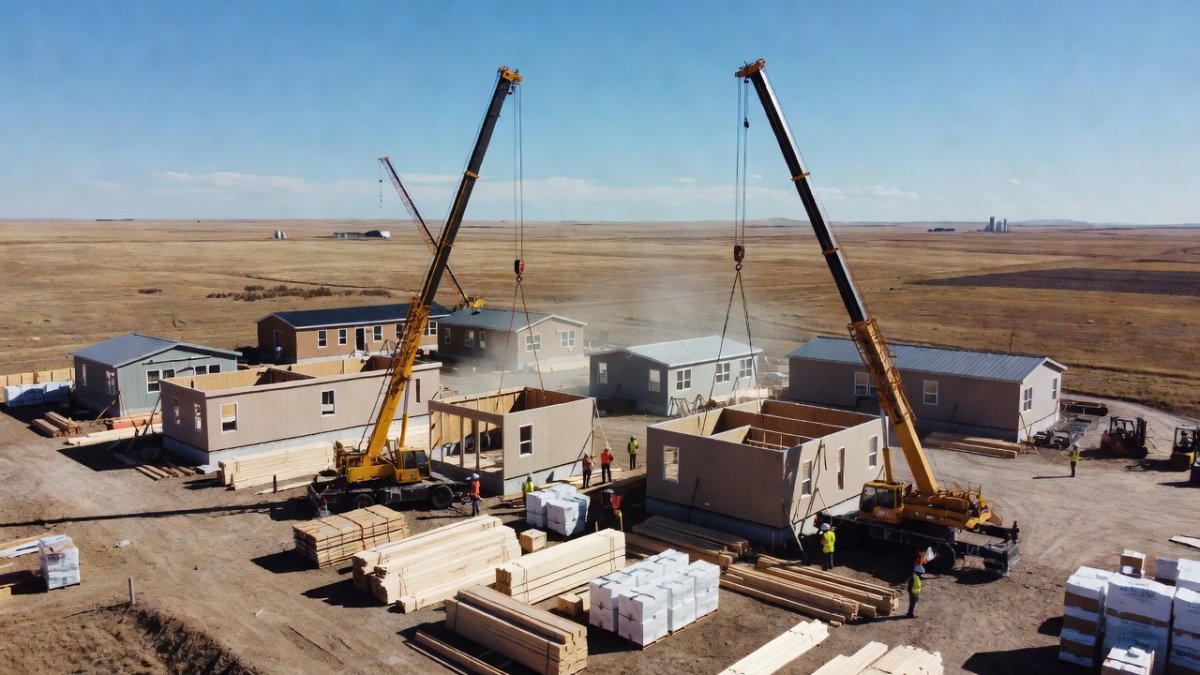
Red Deer city officials confirmed the event took place at a 12-hectare site on the city's north side, where modular housing units are planned as part of the initial rollout. Local leaders expressed optimism that the initiative could stabilise supply in mid-sized centres facing similar migration-driven demand. Analysts note this model could influence how other provinces negotiate with Ottawa on infrastructure projects.
Alberta's Growing Housing Challenge
Alberta recorded strong housing starts in Calgary and Edmonton during the first half of 2026, yet Red Deer lost its $12-million Housing Accelerator Fund agreement with CMHC earlier this year after failing to meet federal conditions. Interprovincial migration has driven Alberta's population increase by more than 80,000 residents since January 2025, placing pressure on existing housing stock in mid-sized centres like Red Deer. This influx has outpaced local construction capacity in several communities.
Local builders in Edmonton reported 12,400 housing starts in the first six months of 2026, approaching the city's previous annual record set in 2022. Premier Danielle Smith noted on July 29, 2026, that federal cancellation of the Red Deer funding created a gap that the new Build Canada Homes initiative aims to fill directly. Western Canada's boom contrasts sharply with slowdowns elsewhere, highlighting regional disparities in market conditions.
CMHC data released in recent months shows Toronto experiencing its lowest annual housing starts in 30 years, while western provinces like Alberta and British Columbia continue to see elevated activity. This divergence stems from differing migration patterns and regulatory environments. Alberta's challenges include not only volume but also the need for affordable options suited to newcomers from other provinces.
The Build Canada Homes Agency Strategy
Prime Minister Mark Carney launched Build Canada Homes earlier in 2026 as a new federal housing agency with $13 billion in allocated funding to address the Parliamentary Budget Office estimate of 3.2 million new homes needed by 2030. Former Toronto city councillor Ana Bailao was appointed CEO of the agency on June 15, 2026, bringing experience from municipal housing initiatives in Ontario's largest city. The agency is funding modular homes in Ottawa, Edmonton, Winnipeg, Toronto, Longueuil, Quebec, and Dartmouth, Nova Scotia, with a target of 4,000 units starting construction next year.
A Canada Mortgage and Housing Corporation report released in March 2026 stated that national housing starts must nearly double to 480,000 units per year by 2035 to meet demand. The modular approach offers faster timelines compared to traditional builds, potentially easing shortages in high-growth areas. Early financing from the agency helps municipalities overcome initial hurdles that often delay projects.
Expansion plans hinge on successful delivery at the six pilot sites, with Carney indicating the Red Deer model could guide national scaling. This strategy emphasises public land use to reduce costs and speed approvals. Critics question whether the federal layer adds efficiency or simply overlays existing provincial efforts already showing results in the west.
Broader Canadian Housing Affordability Crisis
Canada faces a deepening affordability crisis driven by decades of underbuilding, rising interest rates, and uneven population growth across regions. The Parliamentary Budget Office has repeatedly warned that current trajectories fall far short of required supply, leaving many households priced out of ownership and rental markets. In major centres, average home prices continue to strain household budgets despite recent cooling in some segments.
CMHC data underscores the contrast between Toronto's slowdown and western Canada's sustained activity, with national starts remaining below the 480,000 annual target needed by 2035. This imbalance exacerbates migration pressures as people relocate to more affordable provinces like Alberta. Broader economic impacts include reduced labour mobility and increased reliance on government assistance programs.
Policy responses must address both supply constraints and demand factors such as foreign investment and investor activity. The Red Deer announcement signals an attempt to inject federal resources into modular solutions that could lower per-unit costs. Without coordinated action, affordability gaps are projected to widen further in coming years.
Political Implications for Carney and Smith
Prime Minister Mark Carney met Premier Danielle Smith in Red Deer on July 29, 2026, marking their third joint appearance since Carney took office in January 2026, despite Smith's history of tensions with previous federal Liberal governments. The Build Canada Homes partnership allows Alberta to access federal approvals for public land development without requiring full alignment on other national policies such as carbon pricing. This pragmatic engagement could bolster Carney's image as a leader capable of bridging divides.
Smith emphasised during the news conference that Alberta retains control over zoning decisions while receiving early-stage funding from the $13-billion agency. Carney described the Red Deer announcement as evidence that federal-provincial cooperation can proceed on housing even when broader disagreements persist between Ottawa and Edmonton. For Smith, the deal provides tangible benefits for Alberta communities while maintaining her stance on provincial autonomy.
Conservative Leader Pierre Poilievre criticised the Carney government's housing approach on July 28, 2026, describing Build Canada Homes as an unnecessary layer of bureaucracy that duplicates existing provincial efforts. Opposition MPs in the House of Commons questioned the $13-billion allocation during question period on July 28, 2026, asking why Toronto faces its lowest annual housing starts in 30 years while the agency prioritises six initial sites. These dynamics may influence voter perceptions ahead of future elections.
Future Outlook for Housing Policy
Construction on the 4,000 modular homes at the six sites is scheduled to begin in early 2027, with Build Canada Homes monitoring progress before considering expansion to the agency's full capacity of 45,000 units. CMHC will release updated quarterly housing data in October 2026, providing the first national comparison of starts following the Red Deer announcement. Alberta officials confirmed on July 29, 2026, that additional sites in Calgary and Edmonton will be assessed for inclusion in the second phase of Build Canada Homes funding.
Prime Minister Carney indicated that further federal-provincial agreements could be signed in Atlantic Canada and Quebec by the end of 2026 if the initial modular projects demonstrate measurable increases in housing supply. The Parliamentary Budget Office plans to issue a follow-up report in 2027 evaluating whether the combined federal and provincial measures are on track to reach the 480,000 annual starts target by 2035. Success in Red Deer could set precedents for similar initiatives nationwide.
Long-term outcomes depend on sustained political will and effective coordination between levels of government. Regional disparities highlighted by CMHC data suggest tailored approaches will remain essential. Observers will watch closely for signs that the partnership translates into lasting improvements in affordability and supply.

 By Alex Thompson, Staff Writer
This article was produced with AI-assisted research and editorial support. Reporting is based on sources cited in the article.
What's Your Reaction?
 Like
0
Like
0
 Dislike
0
Dislike
0
 Love
0
Love
0
 Funny
0
Funny
0
 Wow
0
Wow
0
 Sad
0
Sad
0
 Angry
0
Angry
0

Canada Correspondent at Global1.News. Based in Toronto, covering Canadian politics, energy, trade, and US-Canada relations. Provides the Canadian perspective on North American and global affairs.















Comments (0)