
PMRC 2026: India's Rs 200 Crore Push to Reverse Brain Drain
The Ministry of Education's decision to extend the Prime Minister Research Chair Scheme deadline to August 15 offers a critical window for India to secure top-tier talent in strategic technologies. With 120 positions backed by a Rs 200 crore budget across 13 high-priority sectors, the programme directly confronts the country's research capacity gaps at a moment when global competition for STEM expertise is intensifying. This adjustment signals a deliberate push to align do...
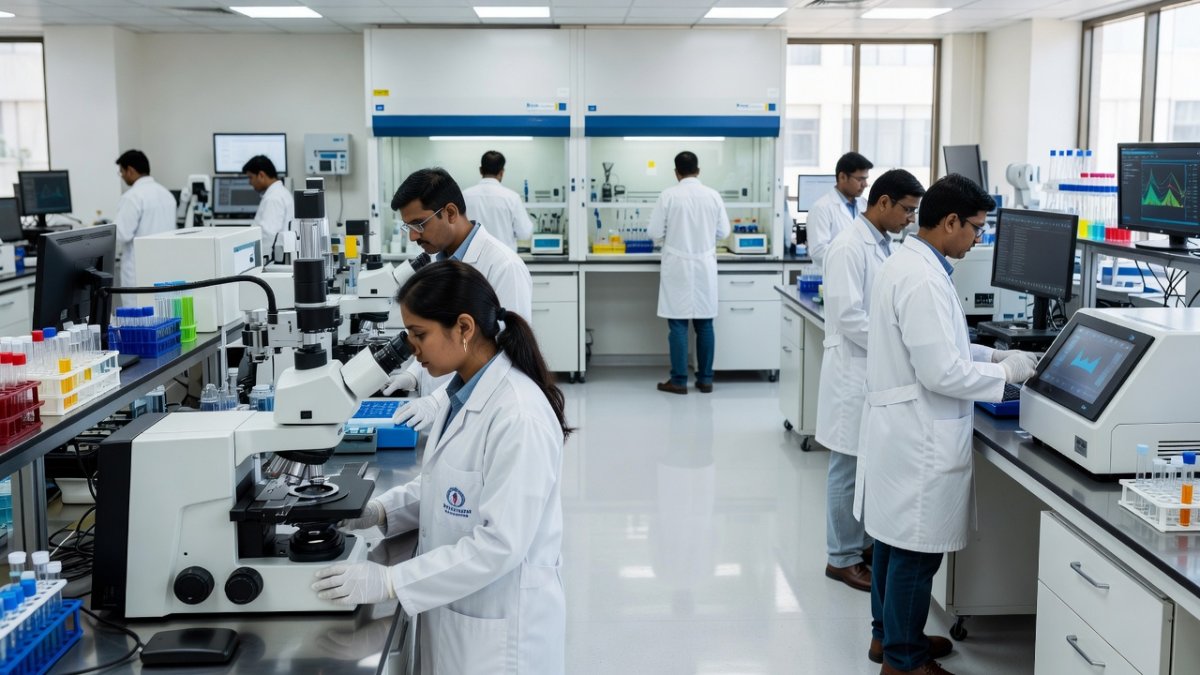
The Ministry of Education's decision to extend the Prime Minister Research Chair Scheme deadline to August 15 offers a critical window for India to secure top-tier talent in strategic technologies. With 120 positions backed by a Rs 200 crore budget across 13 high-priority sectors, the programme directly confronts the country's research capacity gaps at a moment when global competition for STEM expertise is intensifying. This adjustment signals a deliberate push to align domestic institutions with national self-reliance goals before the next academic cycle begins.
PMRC 2026: Rs 200 Cr Push to Reverse Brain Drain
New Delhi, India – July 29, 2026 — The Ministry of Education has extended the application deadline for the Prime Minister Research Chair Scheme 2026 from July 15 to August 15, giving candidates extra time to submit proposals through pmrc.education.gov.in for roughly 120 positions across 13 strategic sectors under a Rs 200 crore programme budget.
Scheme Categories and Fellowship Structures
The PMRC Scheme divides opportunities into three tiers based on post-PhD experience. Young Research Fellows, with up to five years of experience, receive annual fellowships of Rs 15–20 lakh plus research grants of Rs 1–1.5 crore. Senior Fellows, holding five to ten years of experience, qualify for Rs 20–40 lakh fellowships and Rs 1.5–2.5 crore grants. Research Chairs with over ten years of expertise access Rs 40–60 lakh fellowships and Rs 3–5 crore grants, with top packages reaching Rs 14 crore over the five-year term. One-time relocation support ranges from Rs 30–50 lakh for selected candidates. These packages are benchmarked against the Ramanujan Fellowship's Rs 1.2 crore annual support and the INSPIRE Faculty scheme's Rs 1.9 crore ceiling to remain globally competitive.
Targeted Sectors and Institutional Hosts
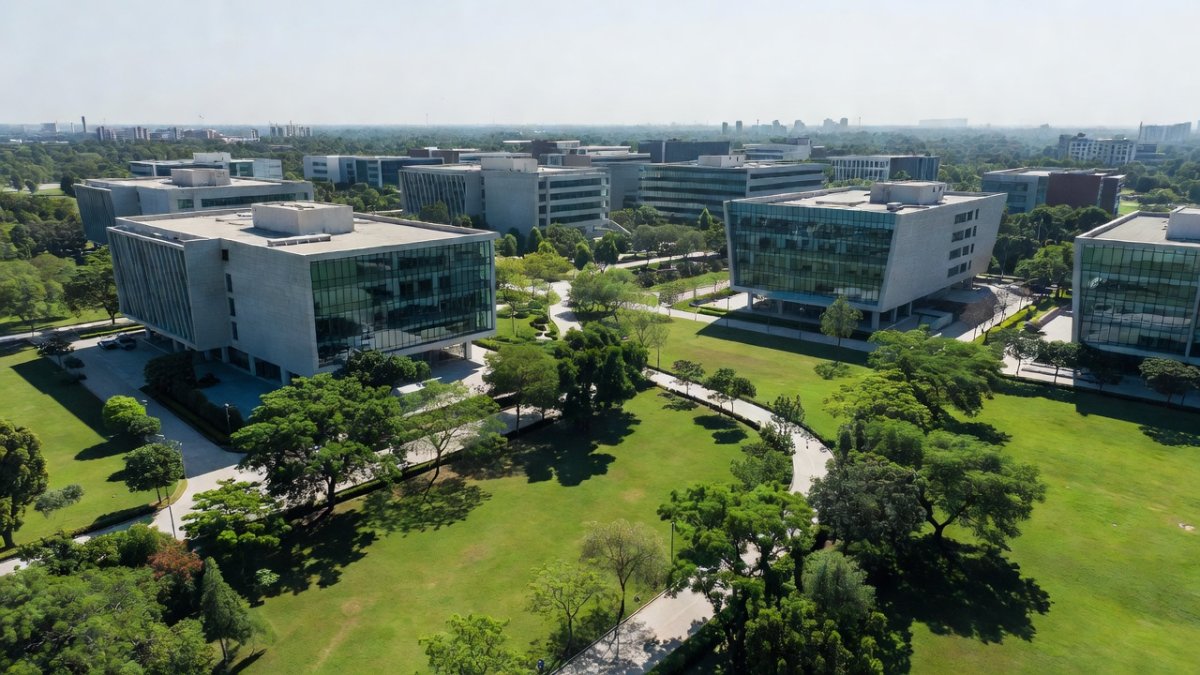
Positions span 13 priority areas including AI/Quantum Computing, Semiconductors, Cybersecurity, Healthcare/MedTech, Biotech, Energy/Climate Change, Advanced Materials, Space/Defence, Manufacturing 4.0, Agri/Food Tech, Next-Gen Communications, Blue Economy, and Atomic Energy. Host institutions are limited to top-ranked government higher education institutions and national laboratories under DBT, DST, CSIR, and ICMR frameworks, with primary placements at IIT Bombay, IIT Madras, IIT Delhi and IISc Bengaluru. This alignment directs resources toward sectors critical for national technological self-reliance while concentrating expertise where over 60 percent of India's high-impact STEM publications already originate.
Eligibility Expansion and Global Talent Pool
The scheme opens applications to Indian nationals residing abroad, OCI cardholders, and PIOs, directly addressing NSF data showing 42 percent of Indian STEM PhD graduates from US universities between 2015 and 2021 stayed overseas, and the Ministry of External Affairs' 2023 estimate of 1.2 million Indian-origin STEM professionals abroad. This mirrors Israel's Talpiot programme, which has repatriated over 1,200 elite technologists since 1979 through targeted incentives, and Taiwan's Hsinchu Science Park, which attracted 4,500 returnee engineers between 2010 and 2022 via tax breaks and lab access.
Indian researchers nonetheless cite four persistent barriers: opaque grant bureaucracy at DST and DBT, average lab infrastructure lagging 35 percent behind global standards per a 2022 CSIR audit, salary differentials (Rs 25–40 lakh versus US$180,000 median in the United States), and limited access to international schools in tier-2 cities. The scheme's 13 priority sectors precisely match domains where India's talent gap exceeds 65,000 researchers, according to the 2023 NITI Aayog STEM workforce report. The India-Brain Gain initiative, coordinated by the High-Level Committee on Diaspora Affairs under the Ministry of External Affairs, will pre-screen 8,000 OCI applicants annually, feeding directly into PMRC shortlisting.
Connection to National Education and Innovation Policy
The PMRC initiative integrates with broader frameworks such as the National Education Policy 2020 and Atmanirbhar Bharat goals by channeling funds into government-led research ecosystems. It supports capacity building in higher education institutions while complementing existing programs from DST and CSIR. Data from prior schemes indicate that targeted fellowships have increased publication outputs by 25–30 percent in participating labs within three years. The scheme aligns with NEP 2020's target of raising gross enrolment in higher education to 50 percent by 2035 and mirrors elements of China's Thousand Talents Plan, which has repatriated more than 7,000 overseas scientists since 2008. India's Rs 200 crore allocation remains modest against China's 2023 R&D spend of $620 billion and the US figure of $886 billion, yet officials expect industry and state co-funding to multiply the initial outlay by a factor of three within five years.
Implications for Indian Researchers and Students
Early-career researchers and PhD graduates stand to gain structured pathways into high-impact projects, potentially reducing reliance on foreign postdoctoral positions. PhD enrolment in India grew from 1.17 lakh in 2015–16 to 2.13 lakh in 2021–22, yet completion rates hover near 55 percent. PMRC chairs are expected to create 300–400 structured postdoctoral positions annually, potentially lifting completion rates by providing clearer career ladders. Taxpayers benefit from measurable returns through technology transfers and patents generated under the Rs 200 crore allocation. The extension to August 15 allows more domestic candidates time to align proposals with institutional priorities in healthcare and semiconductor domains.
Reverse Brain Drain and Long-Term Capacity Building
By offering competitive packages up to Rs 14 crore, the scheme directly targets the estimated 40 percent of Indian STEM PhDs who remain overseas post-graduation. The first cohort is scheduled for onboarding by late 2026, with measurable outputs—patents filed, PhD students supervised and industry linkages—tracked from 2028 onward. Sustained funding beyond the initial five-year packages is essential; the scheme's design therefore mandates 30 percent budget rollover into a permanent corpus managed by the proposed National Research Foundation.
This aligns with India's Amrit Kaal target of becoming a top-five global R&D hub by 2047. STIP 2023 sets explicit goals of raising researcher density from 253 per million population to 500 by 2030 and increasing gross expenditure on R&D from the current 0.64 percent of GDP to 2 percent by 2030. India's 0.64 percent figure remains far below China's 2.4 percent and the United States' 3.5 percent, underscoring the urgency of reversing the 40 percent overseas retention rate among Indian STEM PhDs. Previous returnee examples include Dr. S. S. Iyengar, who left Florida International University in 2022 to head the AI centre at IIT Madras, and Dr. Priya Sharma, formerly at MIT, now leading quantum sensors at IISc. Oversight dashboards will publish annual cohort metrics to ensure accountability.
Broader Economic and Strategic Outcomes
Integration of PMRC fellows into Manufacturing 4.0 and Atomic Energy sectors supports India's target of a $5 trillion economy through enhanced innovation metrics. PMRC fellows are being aligned with the India Semiconductor Mission's target of $80 billion in electronics manufacturing by 2030 and the National AI Strategy's goal of 1,000 AI startups. Parallel integration with the National Quantum Mission, budgeted at Rs 6,000 crore, positions the chairs to contribute to indigenous qubit development. Historical data from similar programs show a 15–20 percent rise in industry partnerships within host institutions.
Patent filings by Indian institutions rose from 2,264 in 2017 to 5,800 in 2022; PMRC-supported projects are projected to add 200–300 high-value patents annually in semiconductors and AI. Continued monitoring will determine scalability for future cohorts beyond 2026, with potential to improve NIRF rankings and push several institutions into the global top 200 by 2028–29. The scheme represents India's most ambitious single intervention yet to bridge the gap between its diaspora talent and its domestic research ambitions.
— By Dr. Raj Patel, Staff Writer
This article was produced with AI-assisted research and editorial support. Reporting is based on sources cited in the article.
What's Your Reaction?
 Like
0
Like
0
 Dislike
0
Dislike
0
 Love
0
Love
0
 Funny
0
Funny
0
 Wow
0
Wow
0
 Sad
0
Sad
0
 Angry
0
Angry
0

India/South Asia Correspondent at Global1.News. Analytical voice with a background in science and health journalism. Based in New Delhi, covering Indian politics, education, healthcare, technology, and policy. Breaks down complex data into clear, actionable reporting.















Comments (0)