
Saudi Arabia's New Regional Order: Riyadh's Pivot to State Institutions
Saudi Arabia is pivoting its foreign policy toward engagement with established state institutions and recognized governments, moving away from its earlier reliance on non-state proxies across the region. This strategic shift under Crown Prince Mohammed bin Salman seeks to reduce escalation risks, stabilize energy routes, and support Vision 2030 economic goals amid ongoing Middle East tensions and the fallout from the 2026 US-Iran conflict. Saudi Arabia's New Regional Order: R
Saudi Arabia is pivoting its foreign policy toward engagement with established state institutions and recognized governments, moving away from its earlier reliance on non-state proxies across the region. This strategic shift under Crown Prince Mohammed bin Salman seeks to reduce escalation risks, stabilize energy routes, and support Vision 2030 economic goals amid ongoing Middle East tensions and the fallout from the 2026 US-Iran conflict.
Saudi Arabia's New Regional Order: Riyadh's Pivot to Legitimate State Institutions
Beirut, Lebanon – July 29, 2026 — This analysis explores how Riyadh's recalibrated approach is reshaping alliances and institutional priorities across the Gulf and beyond.
Regional Framing: Stability Through Recognized States
Saudi Arabia's foreign policy under Crown Prince Mohammed bin Salman has moved toward engagement with established governments and international institutions. This approach seeks to reduce reliance on non-state actors that characterized earlier regional competition. The shift aligns with broader Middle East dynamics, including Sunni-Shia tensions, energy route security, and the demands of economic diversification.
Dr. Aziz Alghashian's Analysis of Institutional Engagement
Dr. Aziz Alghashian, Senior Non-Resident Fellow at the Gulf International Forum, outlines how Riyadh now prioritizes dealings with recognized authorities to build regional security. This preference reflects a calculated response to past proxy engagements that often produced unpredictable outcomes. By anchoring diplomacy in state-to-state relations, Saudi Arabia aims to limit escalation risks while projecting influence through formal channels.
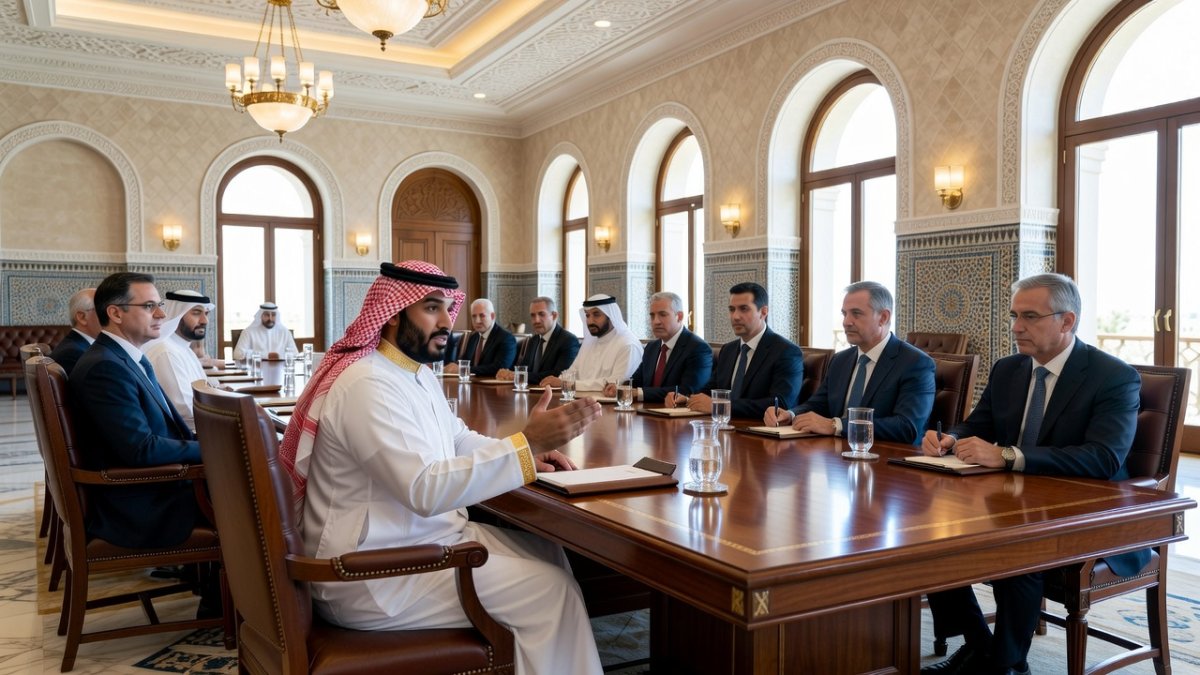
The transition from proxy-centric competition to formalized state-to-state diplomacy marks a decisive evolution in Saudi Arabia’s regional posture. Prior to 2021, Riyadh channeled influence through non-state actors across multiple theaters: in Lebanon, support flowed to Sunni political factions and Hariri-aligned networks to counter Hezbollah’s dominance; in Iraq, backing for Sunni tribal militias and political blocs sought to dilute Iranian sway over the Popular Mobilization Forces; and in Yemen, the Houthis were confronted through a coalition that initially relied on local southern separatists and Islah party elements rather than direct Saudi ground forces. These approaches minimized direct exposure while preserving plausible deniability. By 2023, however, Crown Prince Mohammed bin Salman’s consolidation of power enabled a pivot toward direct ministerial channels and economic leverage, reducing the utility of deniable proxies that often proved costly and unpredictable.
This recalibration reflects both internal Saudi priorities and external constraints. Institutional engagement now emphasizes bilateral agreements on trade corridors, security coordination, and investment frameworks, as seen in the 2024 Riyadh-Baghdad energy pipeline talks and renewed diplomatic outreach to Beirut’s central bank. The pre-2021 model frequently entangled Riyadh in local power struggles that eroded its leverage, whereas state-to-state mechanisms allow Saudi Arabia to tie economic incentives directly to political outcomes. Dr. Alghashian’s analysis correctly identifies this as a maturation of Saudi strategy, though it remains vulnerable to sudden escalations that could revive proxy dynamics.
Economic Pressures from the 2026 US-Iran Conflict
The 2026 US-Iran war has imposed immediate costs on Riyadh. Saudi Arabia recorded a Q1 budget deficit of 125.7 billion Saudi riyals, equivalent to $33.5 billion, the largest in eight years. Traffic through the Strait of Hormuz has fallen to near standstill levels, disrupting oil exports and related revenues. These figures illustrate the direct link between regional instability and Saudi fiscal health, reinforcing the incentive to favor predictable state partners over fluid proxy networks.
The 2026 US-Iran conflict triggered sharp oil price volatility, with Brent crude surging from $78 per barrel in January to $124 by late March following strikes on Iranian export terminals. Saudi Aramco shares on the Tadawul exchange declined 17 percent in the first quarter, erasing roughly $280 billion in market capitalization as investors priced in sustained supply disruptions and potential secondary sanctions. This turbulence directly threatened Vision 2030’s flagship projects: NEOM’s Phase One construction schedule slipped by nine months due to a 22 percent rise in imported steel costs, while the Red Sea Project reported a $4.1 billion funding gap that forced the Public Investment Fund to issue additional sukuk. Qiddiya entertainment city faced similar headwinds, with foreign contractors demanding 15 percent price escalations amid insurance premiums that tripled for Red Sea shipping routes.
Regional energy market dynamics compounded these pressures. Gulf Cooperation Council states coordinated a 1.2 million barrel per day production increase, yet Saudi Arabia absorbed the largest share to stabilize prices below $110. The conflict also accelerated diversification away from Asian buyers, with Aramco redirecting 18 percent of exports toward European spot markets. These shocks underscore how external military confrontations continue to test the kingdom’s fiscal buffers despite years of reform rhetoric.
Emergence of a New Diplomatic Axis
A Saudi-led grouping now includes Qatar, Turkey, Pakistan, and Egypt. This axis notably excludes the UAE and emphasizes coordination among recognized governments. The configuration supports Riyadh's state-centric model by creating structured platforms for security and economic cooperation. Each participant brings distinct leverage: Turkey offers NATO ties, Pakistan provides manpower and nuclear signaling, Egypt contributes Arab League weight, and Qatar supplies financial and media reach. The exclusion of the UAE highlights differing tactical preferences within the Gulf Cooperation Council.
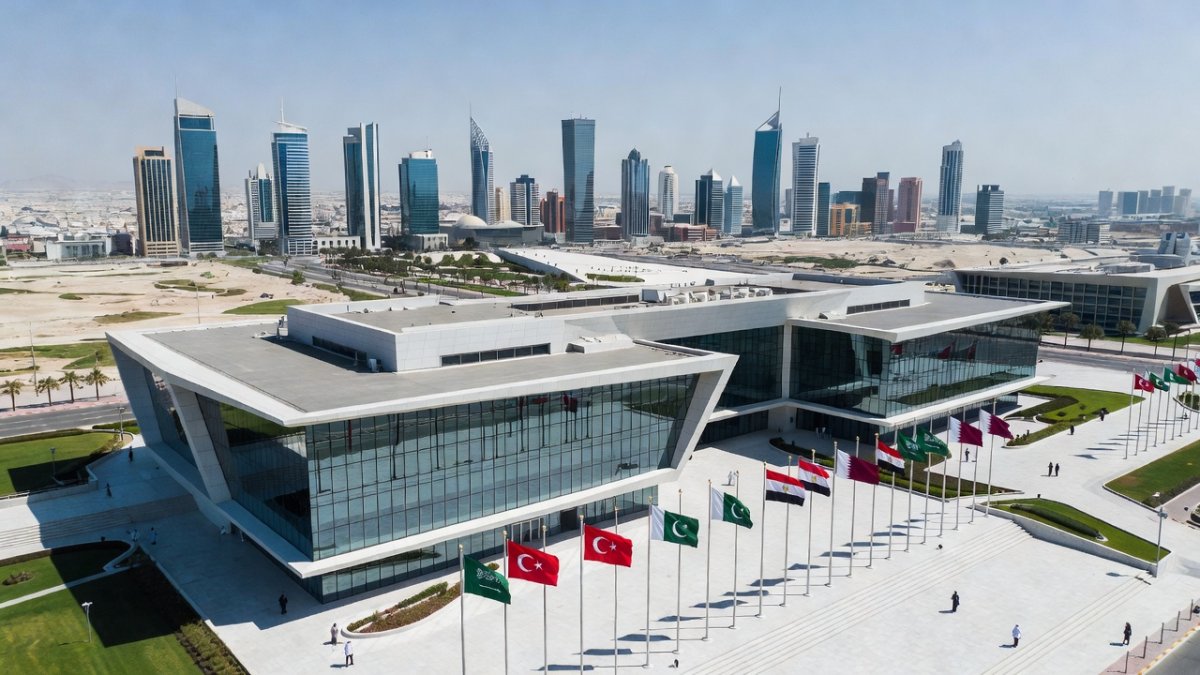
The June 2026 Cairo meeting between Saudi, Egyptian, Turkish, and Pakistani foreign ministers crystallized an emerging alignment designed to manage regional security without direct American orchestration. Turkey’s ongoing military modernization—marked by the integration of domestically produced TF-X fighters and expanded drone exports—provided the axis with credible hard-power projection, while Egypt’s $152 billion external debt burden made Gulf financial support indispensable for Cairo’s 2026 IMF program compliance. Pakistan contributed its nuclear deterrent posture and a 2.3 million-strong expatriate workforce whose remittances reached $32 billion annually, offering both strategic depth and economic ballast. The deliberate exclusion of the UAE signaled Riyadh’s intent to lead a narrower coalition less encumbered by Abu Dhabi’s competing commercial interests in Sudan and Libya.
This configuration allows Saudi Arabia to coordinate responses to Iranian maritime activity in the Red Sea while leveraging Turkish mediation channels in Syria. Egypt gains breathing room on debt servicing through $8 billion in new Saudi deposits at the Central Bank of Egypt, and Pakistan secures renewed access to Gulf labor markets. The axis’s cohesion will depend on whether these transactional incentives can override longstanding bilateral frictions.
Vision 2030 and the Requirement for Predictable Order
Launched in 2016, Vision 2030 depends on sustained inflows of foreign capital and skilled labor. Persistent proxy conflicts or maritime disruptions raise risk premiums and deter investors. Saudi planners therefore view engagement with established governments as a prerequisite for project timelines and diversification targets. The March 2023 China-brokered rapprochement with Iran lowered immediate political temperature but left underlying structural competition intact, underscoring that diplomatic thaw alone does not substitute for institutional stability mechanisms.
The Public Investment Fund’s assets under management reached $1.27 trillion by mid-2026, up from $925 billion in 2023, yet foreign direct investment inflows totaled only $41 billion against the $100 billion annual target set in the 2021 National Investment Strategy. This shortfall has intensified pressure on Riyadh to secure stable external environments for mega-project execution. Gulf sovereign wealth funds, particularly the Kuwait Investment Authority and Qatar Investment Authority, have stepped in with $19 billion in co-investments across NEOM logistics and Red Sea tourism infrastructure, providing both capital and political reassurance. Predictable order is therefore not merely a diplomatic preference but a fiscal necessity for sustaining PIF’s projected 8 percent annual returns.
Without reduced regional volatility, the kingdom risks capital flight from international partners wary of supply-chain disruptions. The emphasis on state-to-state frameworks thus serves to lock in long-term commitments that proxy competition could never guarantee.
Strategic Calculus and Second-Order Effects
Riyadh calculates that working through recognized states reduces the chance of blowback from non-state actors whose agendas can diverge. This approach also positions Saudi Arabia to shape multilateral responses on issues such as maritime security and reconstruction financing. For Iran, the Saudi pivot narrows opportunities to exploit proxy vacuums, potentially pushing Tehran toward greater reliance on formal diplomatic and economic tools. Neighboring states observe that Riyadh's new axis offers clearer lines of accountability than previous informal arrangements. Over time, this pattern may encourage other regional actors to strengthen their own state institutions rather than maintain parallel networks.
Iran’s nuclear calculus faces new constraints as the Saudi-led axis narrows Tehran’s maneuvering room in the Levant and Red Sea. Russia’s diminished footprint—limited to residual Syrian airbase access and arms sales—has created openings for Chinese Belt and Road Initiative projects to pivot toward Gulf-backed ports in Oman and Pakistan, with Beijing committing $15 billion to Gwadar expansions tied to Saudi financing. The Abraham Accords framework, meanwhile, risks marginalization if the new Cairo axis prioritizes Turkish and Pakistani equities over Israeli normalization, potentially stalling further Arab-Israeli economic integration.
These second-order effects suggest a multipolar Middle East where Saudi Arabia trades direct confrontation for calibrated institutional influence, though success hinges on sustaining the economic surpluses required to underwrite such diplomacy.
Implications for Broader Middle East Dynamics
The Saudi emphasis on recognized governments intersects with Arab-Israeli normalization efforts, Turkish regional ambitions, and great-power competition involving China and the United States. Energy markets remain sensitive to any renewed Hormuz volatility, while Sunni-Shia competition continues to influence alliance choices. By anchoring policy in state institutions, Riyadh seeks to convert economic leverage into durable security arrangements that support Vision 2030 timelines. If sustained, the approach could gradually reshape incentives across the region toward formal diplomacy over proxy competition.
By Malik Hassan, Staff Writer
This article was produced with AI-assisted research and editorial support. Reporting is based on sources cited in the article.
What's Your Reaction?
 Like
0
Like
0
 Dislike
0
Dislike
0
 Love
0
Love
0
 Funny
0
Funny
0
 Wow
0
Wow
0
 Sad
0
Sad
0
 Angry
0
Angry
0

Middle East Correspondent at Global1.News. Based in Beirut, covering politics, conflict, energy, and society across the Middle East. Brings context and depth to a region often reduced to headlines.










Comments (0)