
World Cup Halftime Show Triggers Streaming Boom for African and Global Artists
The first-ever Super Bowl-style halftime concert at a FIFA World Cup final has triggered a massive streaming surge across global music platforms, with African artists and a Ugandan dance troupe taking centre stage alongside international superstars. The July 19 spectacle at MetLife Stadium in New York New Jersey marked a historic moment for African music on the world's biggest sporting stage.
The first-ever Super Bowl-style halftime concert at a FIFA World Cup final has triggered a massive streaming surge across global music platforms, with African artists and a Ugandan dance troupe taking centre stage alongside international superstars. The July 19 spectacle at MetLife Stadium in New York New Jersey marked a historic moment for African music on the world's biggest sporting stage.
World Cup Halftime Show Triggers Streaming Boom for African and Global Artists
Dakar, Senegal — The historic FIFA World Cup 2026 Final Halftime Show has sent shockwaves through the global music industry, with streaming numbers skyrocketing for artists who performed at the landmark event. For African music, the moment represents a watershed — with Burna Boy becoming the first major Afrobeats artist to perform at a World Cup halftime, and a Ugandan youth dance troupe sharing the spotlight with global pop icon Shakira at the Spain vs Argentina final.
A Historic First: The Halftime Show That Changed the Game
The FIFA World Cup 2026 Final between Spain and Argentina at MetLife Stadium brought together billions of viewers for what organisers called a celebration of global unity through music. Produced by Global Citizen and curated by Coldplay frontman Chris Martin, the 11-to-30-minute halftime spectacle was the first of its kind at a men's World Cup final — rivalling the production value of an NFL Super Bowl halftime show.
The lineup read like a summit of planetary pop royalty. Madonna took the stage at 67 years old, proving her enduring relevance. Shakira and Burna Boy delivered a fiery rendition of "Dai Dai," the tournament's official anthem. BTS brought their precision choreography to "Dynamite." Justin Bieber performed "Everything Hallelujah." Coldplay closed the segment with an original song titled "We Dance," accompanied by the PS22 Chorus of schoolchildren from Staten Island.
Behind the scenes, the musical firepower was staggering. Venezuelan conductor Gustavo Dudamel led the New York Philharmonic and the Simón Bolívar Symphony Orchestra, creating a fusion of orchestral grandeur and contemporary pop that underscored the event's ambition. The Iranian violinist Bijan Mortazavi added a Silk Road flourish, while even the Muppets' Electric Mayhem made an appearance in certain broadcast segments.
For African viewers, the moment was especially resonant. The deliberate inclusion of artists from every continent — Africa represented by Burna Boy, Latin America by Shakira, Asia by BTS, North America by Madonna and Justin Bieber, Europe by Coldplay — mirrored the tournament's global footprint across the United States, Canada, and Mexico.
africanews reported on the streaming surge sparked by the halftime show on July 23, 2026, noting that the post-event data showed audiences rushing to streaming platforms to replay their favourite performances. The French-language africanews channel also covered the phenomenon, highlighting how the World Cup final concert had propelled streaming numbers to new heights.
Burna Boy and the Afrobeats Global Breakthrough
Burna Boy's halftime performance was more than a career milestone — it was a statement about the global arrival of Afrobeats. As the first major Afrobeats artist to perform at a World Cup final halftime show, the Nigerian Grammy winner carried the hopes of an entire continent's music industry on his shoulders. He delivered.
The immediate impact was measurable. Burna Boy's monthly listeners on Spotify nearly doubled from approximately 30 million before the tournament to nearly 60 million in the World Cup window. His collaboration with Shakira on "Dai Dai" — the official FIFA World Cup 2026 anthem — hit number one on the global Spotify charts and reached a new Billboard Hot 100 peak at number 42.
The streaming numbers tell a vivid story. "Dai Dai" experienced a 155% streaming surge in the days immediately following the halftime show. On July 20 alone, the track recorded over 2.2 million on-demand streams in the United States alone — a 65 to 84 percent jump from its pre-show benchmarks. YouTube views for Shakira and Burna Boy's "Dai Dai" performance surpassed 20 million within a week.
Beyond the raw numbers, the performance carried deep symbolic weight. Burna Boy's presence on that stage — flanked by dancers from two continents, performing a song that blended Latin rhythms with Afrobeats — signalled that African popular music had earned its place at the highest table of global entertainment. The "Dai Dai" music video, which featured the song's infectious choreography, became a dance challenge across African social media platforms from Lagos to Nairobi to Dakar.
Burna Boy's streaming boost helped him reclaim the top spot among African artists on Spotify, reinforcing his lead in cumulative streams — already over 10 billion all-time across credits. The moment built on his existing momentum from earlier in 2026, when he had already set records for monthly listeners and global chart feats. For Senegalese audiences, Burna Boy's journey mirrors the trajectory of Youssou N'Dour, who brought Mbalax to the world stage decades earlier — a reminder that African music has always had global ambitions, even if the platforms to realise them have only recently arrived.
The official FIFA World Cup 2026 Album further amplified African talent. South Africa's Tyla, Nigeria's Ayra Starr and Rema, and other African artists appeared on the soundtrack alongside global stars — a sign that record labels and tournament organisers recognise the commercial and cultural power of African music in the global marketplace.
From Kampala to MetLife: The Triplets Ghetto Kids Story
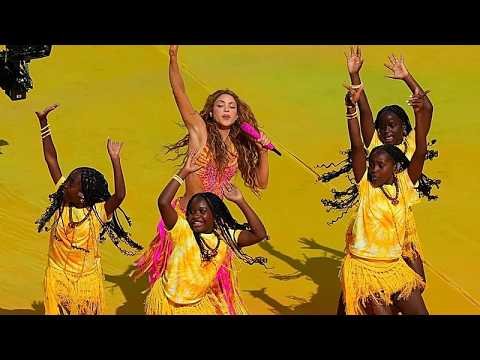
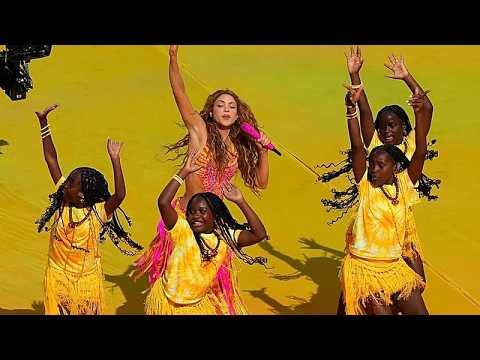
Perhaps the most touching story to emerge from the halftime show belongs not to a superstar, but to a group of young dancers from Uganda. The Triplets Ghetto Kids — a Ugandan NGO that uses music, dance, and drama to support disadvantaged children, street kids, and orphans — performed alongside Shakira during "Dai Dai," and their journey from the streets of Kampala to the stage at MetLife Stadium captured hearts worldwide.
Their story began on TikTok, where the group's energetic choreography to "Dai Dai" went viral. Shakira and her team noticed the videos and extended a personal invitation for the kids to appear in the official music video. True to her word, the Colombian superstar then brought them to perform at the World Cup final itself — fulfilling a promise she had reportedly made after their videos exploded online.
The Ghetto Kids' motto — "Where Children Dream, The World Wins" — reflects their mission of transforming lives through the performing arts. Founded to support Uganda's most vulnerable children, the group has previously won BET Awards and AFRIMMA nominations, building a reputation as one of Africa's most powerful youth dance collectives. Their official handle @ghettokidstfug chronicles their journey from local performances to global stages.
After the show, emotional footage circulated showing Shakira comforting the young dancers and promising to stay in touch. She invited the group to visit her in Madrid for future shows, and photos of the embrace — a global superstar kneeling to hug Ugandan children — became one of the most shared images from the entire World Cup final weekend.
The Ghetto Kids' story resonates deeply across Africa, where the performing arts have long been a pathway out of poverty. From Senegal's own dance troupes in the suburbs of Dakar to South Africa's vibrant township dance culture, the Ugandan group's journey reminds the continent that talent, when combined with opportunity and digital visibility, can open doors once thought impossible.
The Streaming Tsunami: Numbers That Tell the Story
The streaming data emerging from the World Cup 2026 halftime show reads like a record book of modern music consumption. africanews reported the surge as one of the most significant single-event streaming boosts in music industry history, with multiple tracks seeing triple-digit percentage increases.
The largest surge belonged to "Desire" — the official FIFA anthem, which saw a staggering 945% increase in streams. Justin Bieber's "Everything Hallelujah" jumped 240%, while Madonna's 2000 hit "Music" — performed during the show — climbed 180%. "Dai Dai" by Shakira and Burna Boy rose 155%, and BTS's "Dynamite" increased 105%. Even Coldplay's brand-new original song "We Dance," written specifically for the halftime show, joined the streaming surge.
BTS achieved the highest single-day Spotify streams among all halftime acts, exceeding 30 million streams on the day of the performance. Their "Dynamite" performance on YouTube drew approximately 17 million views within the first week. Justin Bieber saw an overall streaming increase of 110% across his catalogue. Madonna's back catalogue also benefited significantly, with streams of her greatest hits climbing across platforms.
The economic impact is substantial. Streaming surges of this magnitude translate directly into revenue for artists, record labels, and publishers. For African artists like Burna Boy and the other Afrobeats stars featured on the FIFA album, the streaming boost creates leverage in contract negotiations, touring deals, and brand partnerships. It signals to the global music industry that African artists are not niche — they are mainstream commercial forces.
The data also reveals changing consumption patterns. African audiences are now significant drivers of global streaming numbers, particularly on platforms like Spotify, Boomplay, and Audiomack. The halftime show's streaming surge was powered not just by American and European listeners, but by fans across Africa who tuned in and immediately sought out the music they had just witnessed on the world's biggest stage.
Madonna, BTS, and the Power of Global Pop
Beyond the African angle, the halftime show demonstrated the enduring power of global pop music to unite audiences across generations and geographies. Madonna's performance of "Music" at age 67 was a defiant statement about longevity in an industry that often discards artists past their commercial peak. Her streaming surge — a 180% increase — proved that her catalogue remains culturally relevant.
BTS brought their characteristic precision and passion to "Dynamite," sending the K-pop group's fandom — known as ARMY — into a streaming frenzy. Beyond the music, BTS members' stage outfits and accessories became collector's items. A charity auction for V's scarf reportedly reached approximately $18,000, or 26 million South Korean won, demonstrating the extraordinary economic engine that K-pop fandom represents.
Justin Bieber's "Everything Hallelujah" benefited from the largest individual streaming surge among the show's solo performances at 240%, suggesting that the World Cup platform introduced his music to new audiences or re-engaged lapsed listeners. Coldplay's decision to write an original song for the event — "We Dance" — rather than relying on their catalogue of hits, added a sense of occasion and permanence to the halftime show.
Shakira's appearance was itself historic. The Colombian star became the only artist to perform at four World Cup finals in some capacity, having previously performed at the 2010, 2014, and 2022 tournaments. Her ability to bridge Latin pop with African collaboration — she brought both Burna Boy and the Ghetto Kids on stage — exemplified the kind of cross-cultural collaboration that defines 21st-century global entertainment.
The deliberately international lineup — representing every inhabited continent — reflected a conscious decision by FIFA and Global Citizen to use the World Cup's unparalleled reach to showcase musical diversity. In an era of algorithm-driven cultural silos, the halftime show served as a rare moment of shared global experience, where billions of people watched the same performances simultaneously and then rushed to streaming platforms to revisit them.
What This Means for African Music and Global Culture
The World Cup 2026 halftime show's streaming surge is not merely a statistical curiosity — it is a signal about the direction of global culture. For African artists and the continent's creative economy, the implications are profound. Mega-sporting spectacles accelerate global music discovery in ways that traditional marketing, radio play, and even social media algorithms cannot replicate.
The presence of Burna Boy, the Ghetto Kids, and multiple African artists on the official FIFA album represents a structural shift in how the global music industry views African talent. Where previous World Cups featured African artists as token representatives, the 2026 tournament embedded them throughout the musical programme — from the official anthem to the halftime show to the soundtrack album.
For streaming platforms, the data from this event will inform future investment in African music. Spotify, Apple Music, and Boomplay now have clear evidence that African artists drive significant engagement during mega-events. This translates into better playlist placement, marketing budgets, and algorithm support for African genres ranging from Afrobeats and Amapiano to Mbalax and Bongo Flava.
The legacy for the Ghetto Kids extends beyond their 11 minutes on stage. Their journey from Kampala's streets to MetLife Stadium has inspired dance groups across Africa. In Senegal, where traditional Sabar dance and contemporary hip-hop coexist in vibrant fusion, the Ghetto Kids' success story reinforces the message that African dance, rooted in centuries of tradition, can captivate a global audience when given the right platform.
Looking ahead, the streaming surge from the World Cup 2026 halftime show creates a template for how African artists can leverage global sporting events for career breakthroughs. With the 2026 FIFA World Cup having cemented its legacy as a platform for musical as well as athletic excellence, African musicians, dancers, and cultural practitioners have a clear roadmap: create compelling content, build digital audiences, and seize the moment when the world is watching. The halftime show at MetLife Stadium proved that when African talent meets a global stage, the whole world presses play.
By Amara Diop, Staff Writer
This article was produced with AI-assisted research and editorial support. Reporting is based on sources cited in the article.
What's Your Reaction?
 Like
0
Like
0
 Dislike
0
Dislike
0
 Love
0
Love
0
 Funny
0
Funny
0
 Wow
0
Wow
0
 Sad
0
Sad
0
 Angry
0
Angry
0

West Africa/Sahel Correspondent at Global1.News. Dakar-based journalist covering politics, security, climate, and development across Francophone and Anglophone West Africa. Tells the stories of a region undergoing profound transformation.











Comments (0)