
JIDAR Returns: Rabat Transformed Into an Open-Air Gallery for 11th Edition
The JIDAR festival has once again transformed Rabat into a vibrant canvas of urban expression, bringing together artists from around the world to create monumental works that speak to contemporary themes. This year's event coincided with Rabat's designation as UNESCO World Book Capital, amplifying its cultural impact across Morocco and beyond. With 15 new murals added to the ci
The JIDAR festival has once again transformed Rabat into a vibrant canvas of urban expression, bringing together artists from around the world to create monumental works that speak to contemporary themes. This year's event coincided with Rabat's designation as UNESCO World Book Capital, amplifying its cultural impact across Morocco and beyond. With 15 new murals added to the city's landscape, the festival continues to build on its legacy of over 100 murals since its inception.
JIDAR Returns: Rabat Transformed Into an Open-Air Gallery for 11th Edition
Dakar, Senegal — Rabat, Morocco's capital known as the Ville des Lumières, hosted the 11th edition of the JIDAR festival from April 16-26, 2026, turning neighborhoods into living galleries that celebrate both local heritage and global dialogue.
The Return of JIDAR: Street Art Takes Over Rabat
JIDAR means wall in Arabic, a name that directly reflects the festival's focus on transforming urban surfaces into sites of artistic conversation. The 11th edition ran from April 16-26, 2026, under the theme Urban Dialogues or Dialogues Urbains, inviting artists to explore connections between communities through large-scale imagery. Fifteen new monumental murals appeared across the neighborhoods of Hassan, Yacoub El Mansour, El Youssoufia, and Agdal-Riad, adding fresh layers to Rabat's public spaces.
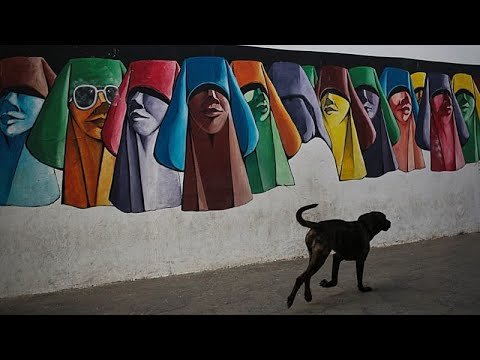
Over 100 murals have accumulated since the festival began, creating a permanent open-air collection that residents and visitors encounter daily. The timing with Rabat's year as UNESCO World Book Capital reinforced the city's identity as a hub for literature and visual storytelling, allowing murals to reference written narratives alongside painted forms. Buildings across Morocco's capital became massive canvases where abstract symbols met figurative scenes drawn from everyday life.
The festival's structure encourages artists to respond to the architecture of each neighborhood, ensuring that works in Hassan reflect historic administrative buildings while those in Agdal-Riad engage with modern residential blocks. This site-specific approach has helped street art gain acceptance among city planners who once viewed it as temporary decoration. Local authorities now integrate mural locations into urban renewal plans, recognizing their role in revitalizing underused walls.
Visitors experience the murals as an evolving map of Rabat's growth, with each edition layering new meanings onto older pieces. The theme of Urban Dialogues encouraged cross-cultural exchanges visible in the blending of Moroccan geometric patterns with international motifs. This accumulation of work positions the city as a living archive of contemporary African and global street art practices.
Organizers coordinated with neighborhood associations to secure permissions quickly, allowing painting to begin immediately after the April 16 opening. The resulting density of murals in central districts means that a short walk reveals multiple large-scale pieces without requiring special transport. Rabat's compact layout supports this accessibility, turning routine commutes into encounters with monumental art.
The overlap with the UNESCO World Book Capital program included joint events where poets read beside newly completed murals, linking written and visual expression in public settings. This integration highlighted how JIDAR extends beyond painting into broader cultural programming that sustains year-round interest in the city's artistic identity.
Artists from Across the Globe
Ecuadorian artist Oscar Medina painted a colossal bird clutching the sun and moon on a prominent wall in the Hassan district, creating a celestial symbol that draws crowds at sunrise and sunset. South African artist Keya Tama depicted a lion surrounded by greenery with Arabic script reading Knowledge of people is a treasure, linking North and sub-Saharan African visual traditions through a single composition. Peruvian artist Jurena Muñoz created a dragon-like figure accompanied by the phrase You make the future possible, encouraging passersby to reflect on collective agency.
Russian artist Marat Morik paid tribute to Moroccan culture by incorporating carpets, traditional doors, and local people into his mural in El Youssoufia, blending familiar domestic elements with bold color fields. Artists from Portugal and Peru also participated, contributing works that explored migration and memory through abstract and figurative styles. Their presence expanded the festival's reach beyond Africa and Europe, creating a truly intercontinental dialogue on the walls of Rabat.
Each international artist worked alongside Moroccan assistants, exchanging techniques that influenced both the final murals and the assistants' own practices. This collaboration model ensures that skills remain in the local community long after the painters depart. The resulting pieces demonstrate how global perspectives can honor Moroccan contexts without appropriation.
Italian artist Vesod joined the roster with geometric abstractions that interacted with the architectural lines of Agdal-Riad buildings, adding another European voice to the mix. His precise lines contrasted with the organic forms of other contributors, illustrating the range of approaches the festival accommodates. Such diversity prevents the event from settling into a single aesthetic.
The international artists received briefings on Rabat's history and current social issues before beginning work, ensuring their murals addressed local realities rather than generic themes. This preparation produced works that feel rooted even when created by visitors. The festival's reputation now attracts established names who view participation as a meaningful addition to their portfolios.
Public talks held during the April 16-26 period allowed residents to hear directly from the artists about their choices of imagery and color. These sessions strengthened community ownership of the new murals and generated ongoing discussions about urban identity. The combination of creation and conversation distinguishes JIDAR from purely decorative street art events.
Morocco's Rising Street Art Scene
Moroccan artist Mohamed Roshdi crafted a portrait of a woman holding two fish that blends human and animal features, exploring themes of sustenance and transformation on a wall in Yacoub El Mansour. El Mostafa Amziline painted enormous oranges and blossoms across a long facade in El Youssoufia, celebrating Morocco's agricultural heritage through oversized natural forms. These works demonstrate how local artists draw on regional iconography while adopting the monumental scale typical of festival commissions.
Edone has gained international acclaim as a graffiti artist whose lettering and characters now appear in major European cities, yet he returns each year to contribute to JIDAR. Mizmiz created a large-scale diptych of a blue angel with golden wings and halo beside a red devil with horns, tail, and trident, both figures shown in mirrored, meditative postures. The piece invites viewers to consider balance between opposing forces rather than simple moral contrasts.
Mizmiz progressed from participating in the Collective Wall program to receiving major commissioned murals, illustrating the festival's role in developing careers. BAKR directed the Mur Collectif or Collective Wall, providing a dedicated space for young Moroccan artists and art students to experiment under professional guidance. This initiative ensures that emerging voices receive technical support and public exposure early in their development.
The presence of established Moroccan practitioners alongside newcomers creates a visible lineage of street art practice within the country. Younger artists learn directly from those who navigated earlier skepticism toward the medium. This transmission of knowledge strengthens the overall scene and reduces reliance on foreign instructors.
Local materials and color palettes appear consistently across Moroccan contributions, grounding the international works in a shared visual language. The result is a cohesive yet varied collection that reflects both national identity and individual expression. Rabat's growing reputation as a street art destination now draws Moroccan artists from other cities to participate or study the existing murals.
Edone's international bookings have increased following his JIDAR appearances, showing how the festival serves as a platform for global recognition. Similarly, Mizmiz's diptych has become a reference point for discussions about duality in Moroccan contemporary art. These individual successes contribute to the broader professionalization of street art within Morocco.
Building a Street Art Community
Festival artistic director Salaheddine Malouli stated that large-scale murals have helped create a street art community in Morocco by changing how society views the art form. The Grand Prix JIDAR recognition program now awards outstanding contributions each edition, providing both prestige and modest funding for future projects. Guided tours and workshops run alongside mural production, allowing participants to learn techniques directly from visiting and local artists.
The self-guided open-air gallery experience lets residents and tourists explore the murals at their own pace using maps distributed at cultural centers. The Mur Collectif specifically targets emerging Moroccan artists, giving them structured opportunities to contribute to the festival's legacy. Since the festival began, street art has gained legitimacy and visibility in Moroccan public spaces that previously excluded it.
Salaheddine Malouli's leadership emphasizes long-term community building over one-off spectacles, ensuring that each edition strengthens networks among artists, curators, and municipal officials. The Grand Prix JIDAR awards have become a sought-after honor that signals professional achievement within the regional scene. Workshops held in neighborhood youth centers extend the festival's educational reach beyond the painting sites themselves.
Guided tours during the April 16-26 period attracted school groups and families, normalizing street art as a legitimate cultural offering. These tours also generate revenue that supports maintenance of older murals, preserving the collection for future generations. The combination of creation, education, and preservation forms a sustainable model for urban art festivals.
BAKR's direction of the Mur Collectif has produced several artists who now receive independent commissions in Casablanca and Marrakech. This pipeline demonstrates how JIDAR functions as an incubator rather than a temporary event. The resulting community extends beyond Rabat, linking practitioners across Morocco's major cities.
Public perception has shifted noticeably since the early editions, with residents now requesting murals in their own neighborhoods rather than opposing them. Salaheddine Malouli credits this change to consistent quality and community engagement. The festival's approach offers a template for other Moroccan cities considering similar programs.
Rabat as an African Street Art Capital
JIDAR positions Rabat as a leading street art destination in Africa by maintaining a permanent collection that rivals festivals on other continents. Morocco's cultural influence through urban art now extends to collaborations with practitioners from Senegal, South Africa, and beyond. The festival's role in connecting local talent with international creators accelerates the professional development of Moroccan artists while enriching the global exchange of techniques.
Street art festivals across Africa continue to grow, with events in Dakar, Lagos, and Johannesburg establishing their own identities. Rabat's edition stands out for its emphasis on monumental scale and year-round visibility, offering a model that other capitals can adapt. The economic impact includes increased tourism as visitors plan trips specifically to view the murals, supporting local businesses in the Ville des Lumières.
The presence of South African artist Keya Tama alongside Moroccan contributors illustrates the festival's function as a continental meeting point. These exchanges influence how African artists represent shared themes such as heritage, migration, and environmental change. Rabat's location on the Atlantic coast further facilitates participation from both European and African creators.
Tourism data shows measurable growth in cultural visitors during and after each JIDAR edition, with hotels reporting higher occupancy from art enthusiasts. This economic benefit strengthens municipal support for the festival and encourages investment in public art infrastructure. The creative economy gains from both direct commissions and the secondary market for prints and merchandise featuring the murals.
Comparisons with Senegal's Dakar Biennale and Saint-Louis Jazz Festival reveal similar strategies of using recurring events to build international profiles. JIDAR contributes to Africa's broader cultural identity by demonstrating that street art can serve as serious public discourse rather than mere decoration. The festival's success encourages other African cities to develop their own urban art programs.
Future editions plan increased participation from artists across the continent, further solidifying Rabat's position as a hub. The permanent nature of the murals ensures that the city's status as an African street art capital endures beyond any single edition. This sustained presence shapes how the world perceives Morocco's contemporary creative output.
What to Watch For
Festival materials remain visible year-round as a self-guided tour, allowing visitors to explore the full collection of over 100 murals at any time. JIDAR is expected to return in 2027 for its 12th edition, continuing the tradition of adding new works while maintaining existing ones. The growing African street art movement suggests that more artists from Dakar, Lagos, and Johannesburg will join future lineups.
Interested visitors can obtain maps from Rabat's cultural centers and follow routes through the neighborhoods of Hassan, Yacoub El Mansour, El Youssoufia, and Agdal-Riad. The permanent open-air gallery requires no special tickets, making it accessible to both residents and international travelers. Planning a visit around the April dates offers the chance to witness new murals being created in real time.
The continued expansion of the collection will likely include additional Moroccan artists who began through the Mur Collectif program. International participation is also projected to increase, bringing fresh perspectives while preserving the festival's commitment to local context. Rabat's infrastructure supports this growth through improved lighting and signage around major mural sites.
Travelers seeking deeper engagement can join workshops that teach basic mural techniques using the same materials employed by festival artists. These sessions provide practical skills and a direct connection to the community that sustains JIDAR. The combination of viewing and learning creates a more immersive experience than passive observation alone.
Future editions may incorporate digital elements such as augmented reality overlays that reveal additional layers of meaning on the existing murals. This evolution would keep the festival at the forefront of urban art practices while honoring its origins in physical painting. Rabat's status as Ville des Lumières makes it an ideal setting for such technological integrations.
The JIDAR festival demonstrates how sustained investment in public art can reshape a city's identity and contribute to Africa's creative economy. By maintaining a permanent collection and fostering local talent, Rabat offers a compelling example for other African capitals seeking to develop their own cultural landscapes. The 11th edition's success confirms that street art, when rooted in community and dialogue, becomes a lasting expression of shared African and global experiences.
By Amara Diop, Staff Writer
This article was produced with AI-assisted research and editorial support. Reporting is based on sources cited in the article.
What's Your Reaction?
 Like
0
Like
0
 Dislike
0
Dislike
0
 Love
0
Love
0
 Funny
0
Funny
0
 Wow
0
Wow
0
 Sad
0
Sad
0
 Angry
0
Angry
0

West Africa/Sahel Correspondent at Global1.News. Dakar-based journalist covering politics, security, climate, and development across Francophone and Anglophone West Africa. Tells the stories of a region undergoing profound transformation.










Comments (0)