
World Cup 2026 Halftime Show Gives Streaming Numbers a Super Bowl-Sized Bump — Burna Boy and Shakira Lead the Surge
The 2026 FIFA World Cup final delivered more than just Spain's victory over Argentina on July 19 — it produced the tournament's first-ever dedicated halftime show, and the streaming numbers are in: the music industry has a new blueprint for global exposure.
The 2026 FIFA World Cup final delivered more than just Spain's victory over Argentina on July 19 — it produced the tournament's first-ever dedicated halftime show, and the streaming numbers are in: the music industry has a new blueprint for global exposure.
World Cup 2026: Halftime Show Gives Streaming Numbers a Super Bowl-Sized Bump — Burna Boy and Shakira Lead the Surge
Dakar, Senegal — When Shakira stepped onto the MetLife Stadium pitch with Burna Boy to perform "Dai Dai," the official anthem of the 2026 FIFA World Cup, something shifted. That moment — a Nigerian Afrofusion superstar sharing the world's biggest sporting stage with a Latin pop icon — wasn't just a highlight of the halftime show. It was a statement about where African music now sits in the global cultural conversation.
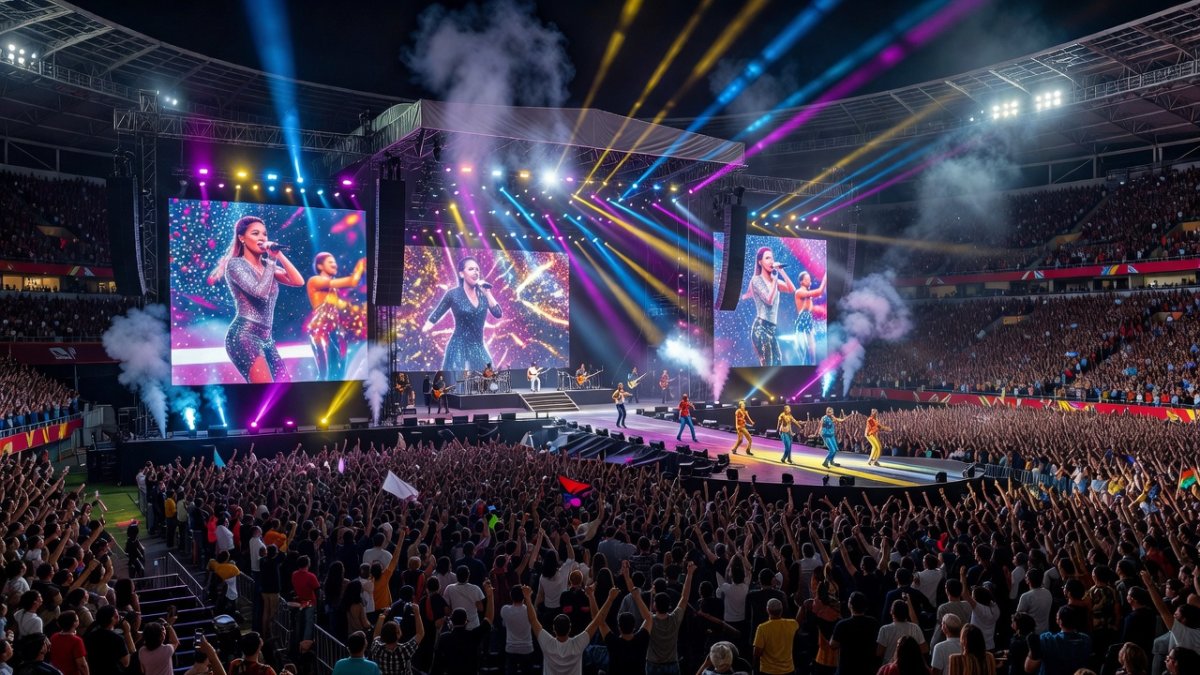
The First-Ever World Cup Halftime Spectacular
The 2026 World Cup final between Spain and Argentina marked a historic first for FIFA: a dedicated, extended halftime show designed to rival the production value of a Super Bowl broadcast. Previous World Cup finals had brief ceremonies and closing segments, but nothing of this scale. The 11-minute set at MetLife Stadium in East Rutherford, New Jersey, on July 19 featured a rotating lineup of global superstars — Madonna, Justin Bieber, BTS, Coldplay, and Shakira joined by Burna Boy — each performing abbreviated versions of their biggest hits.
Industry data tracker Luminate, which measures on-demand streaming across major platforms, was watching closely. And the numbers that emerged in the days following the final told a clear story: the World Cup halftime show, in its debut iteration, had delivered a streaming bump comparable to the NFL's Super Bowl halftime effect, long considered the gold standard for music-event monetisation.
For FIFA, the show represented a strategic pivot. With the tournament co-hosted across the United States, Canada, and Mexico, the organisation recognised that entertainment had become a central pillar of the fan experience, not a sideshow. The lineup — spanning pop, K-pop, Latin, Afrobeats, and dance music — was designed to reach every corner of the global audience.
And it worked. Across the board, every performer saw their catalogues spike. But none of the streaming stories was as culturally significant as the one playing out in the Afrobeats and African music ecosystem.
Burna Boy and Shakira: The African Beat Goes Global
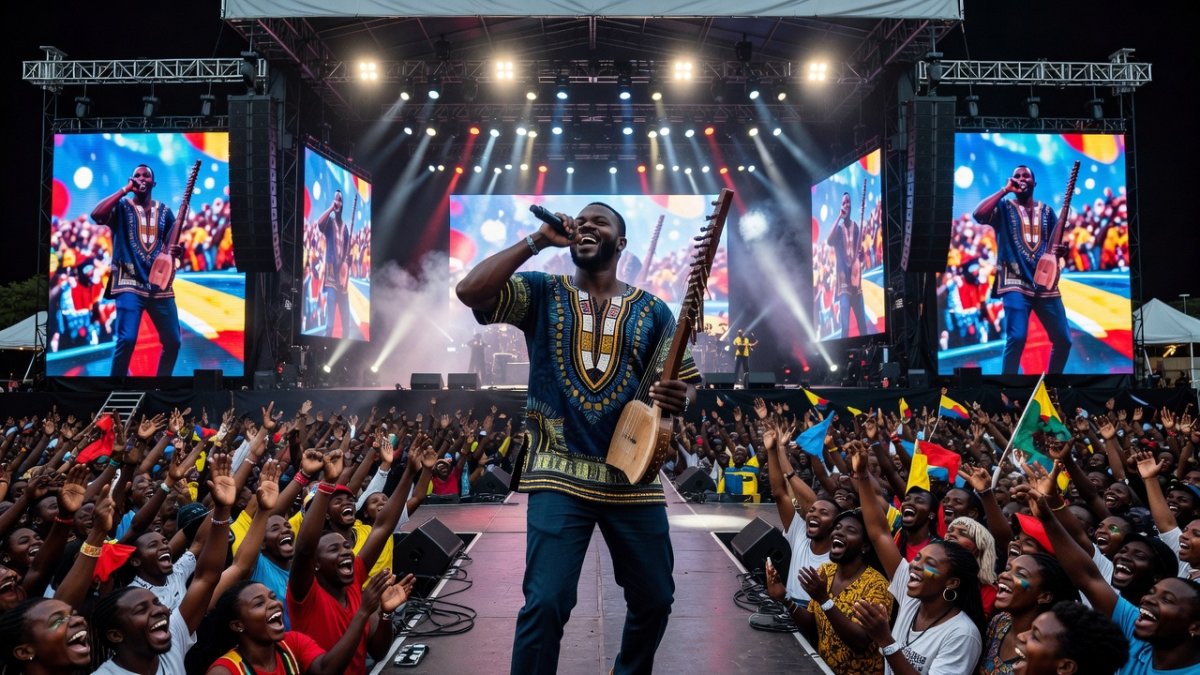
Burna Boy, the Grammy-winning Nigerian Afrofusion artist who has spent the better part of a decade reshaping global pop, was the only African musician in the halftime lineup. His collaboration with Shakira on "Dai Dai" — the official anthem of the 2026 tournament — was already a worldwide hit before the final whistle blew. But the halftime performance catapulted it into another stratosphere entirely.
According to Luminate data, "Dai Dai" recorded approximately 2.2 million official on-demand streams in the United States on July 20 alone — a 65 per cent increase from the day before the final and an 84 per cent rise from post-opening ceremony levels. The song spent over 20 consecutive days at number one on the Global Spotify chart, peaking at 5.38 million streams in a single day. It topped charts in dozens of countries, entered the Billboard Hot 100, and accumulated hundreds of millions of YouTube views.
For Senegalese audiences, and indeed music lovers across the continent, seeing Burna Boy command that stage alongside Shakira was a moment of immense pride. It validated what African music executives have been saying for years: that Afrobeats, Amapiano, Mbalax, and the continent's diverse soundscapes belong on the biggest global platforms. The streaming data simply confirmed what the roar of the stadium already made clear.
Burna Boy's performance also opened doors. The visibility of an African artist at a World Cup halftime show — the first time any African musician has featured in such a lineup — signals to festival organisers, brand partners, and streaming platforms that African talent draws global audiences. Shakira, who has approximately 101 million monthly Spotify listeners, brought her massive fanbase to the collaboration. But it was Burna Boy's distinct Afrofusion sound that made "Dai Dai" a genuine cross-continental phenomenon.
Madonna Returns to the Global Stage
Madonna, at 66 years old, proved that staying power is its own kind of superpower. Performing "Music" and a medley of her catalogue hits, the Queen of Pop reminded a new generation of World Cup viewers why she has remained a fixture of global entertainment for four decades. Her inclusion in the lineup brought essential generational depth to a show that otherwise leaned heavily toward younger acts.
While specific Luminate figures for Madonna's streaming bump were less prominently highlighted compared to BTS or Bieber, her catalogue saw measurable increases across platforms in the days following the final. With approximately 54 million monthly Spotify listeners, Madonna's reach remains substantial, and the World Cup exposure introduced her music to viewers who may only know her as a cultural reference rather than an active touring artist.
Her performance also carried symbolic weight. Madonna has been a fixture of Super Bowl halftime shows and major global events for decades. Seeing her share a World Cup stage with artists half her age — and in some cases a third of her age — underscored the breadth of the show's ambition. FIFA was not targeting one demographic. It was reaching for everyone.
BTS's Dynamite Explodes Again on Streaming Charts
No performer generated more social media buzz than BTS. The K-pop phenomenon, performing their global hit "Dynamite," generated an estimated 1.2 billion social media impressions from their performance alone. Their global streams grew 43 per cent from 2.14 million to 3.05 million per Luminate, while Spotify saw a 105 per cent increase with approximately 1.1 million streams in a single day.
BTS has approximately 36 million monthly Spotify listeners, and their performance clip on YouTube rapidly amassed between 17 and 20 million views in the days following the final. The group's ARMY fandom, known for its organised streaming campaigns, amplified the effect, but the World Cup exposure brought BTS's music to casual viewers who may not typically engage with K-pop.
The BTS performance also had a ripple effect across the group's back catalogue. Older songs saw renewed interest as new listeners discovered the group through their World Cup appearance. This is one of the most valuable effects of major event exposure — not just a spike on the song performed, but a catalogue-wide surge that can last weeks or months.
For African audiences, BTS's global dominance offers a parallel to what Afrobeats artists are building. Both movements prove that music in languages other than English can top global charts. Both demonstrate that streaming has flattened the geographic barriers that once limited non-Western artists.
Justin Bieber's Everything Hallelujah Skyrockets
Justin Bieber produced the highest percentage streaming increase of any halftime performer. His on-demand streams jumped between 110 and 161 per cent in the United States the day after the performance, reaching 268,000 streams in a single day. With approximately 125 million monthly Spotify listeners — the largest base of any artist in the lineup — Bieber's World Cup performance was the definition of reaching audiences who already knew his music.
The streaming bump was concentrated on the songs he performed during the 11-minute set, but like BTS, the benefit extended across his catalogue. Bieber's team has long understood the value of major event placement; his Super Bowl and award show performances have historically produced similar streaming lifts. But the World Cup audience — estimated in the billions globally — represented a scale that even the Super Bowl cannot match.
Bieber's performance also connected with a younger demographic that FIFA has been actively cultivating. The 2026 tournament, co-hosted across North America, was marketed heavily to Gen Z and millennial audiences through social media, gaming partnerships, and music integration. Bieber's inclusion in the halftime show was a natural extension of that strategy.
What the Streaming Bump Means for African Artists
The Luminate data from the 2026 World Cup halftime show provides the clearest evidence yet that global event exposure translates directly into measurable streaming growth. For African music industries still building infrastructure and negotiating fair streaming royalty rates, this data is a powerful negotiating tool. When a collaboration like "Dai Dai" can generate 2.2 million US streams in a single day and sustain a number-one position on Global Spotify for three weeks, the message to platforms and brands is unambiguous: African music pays.
Burna Boy's presence in the lineup was not an accident. The Afrobeats wave has been building for over a decade, from the global dominance of artists like Wizkid, Davido, and Tems to the rise of Amapiano as a genre in its own right. Senegal's own Youssou N'Dour and Baaba Maal helped pave this road decades ago, bringing Mbalax and West African sounds to international audiences long before streaming made global distribution instant. The World Cup halftime show represents the maturation of that journey.
For African artists and producers watching from Dakar, Lagos, Accra, Nairobi, and Johannesburg, the lesson is clear: the path to global audiences runs through the biggest stages, and those stages are increasingly accessible. Major tournaments, international festivals, and streaming-platform playlists are no longer gatekept by geographic or cultural barriers. The music itself — whether Afrofusion, Amapiano, Mbalax, or Highlife — is the only credential required.
As Senegal prepares to host the 2026 Youth Olympic Games in Dakar, the conversation about African music on the world stage has never been more urgent. The 2026 World Cup halftime show proved that when African artists are given the platform, they deliver — and the streaming numbers prove the world is ready to listen.
By Amara Diop, Staff Writer
This article was produced with AI-assisted research and editorial support. Reporting is based on sources cited in the article.
What's Your Reaction?
 Like
0
Like
0
 Dislike
0
Dislike
0
 Love
0
Love
0
 Funny
0
Funny
0
 Wow
0
Wow
0
 Sad
0
Sad
0
 Angry
0
Angry
0

West Africa/Sahel Correspondent at Global1.News. Dakar-based journalist covering politics, security, climate, and development across Francophone and Anglophone West Africa. Tells the stories of a region undergoing profound transformation.










Comments (0)