
U.S.-Saudi 123 Nuclear Agreement Signals Shift in Regional Power Dynamics
The July 2026 US-Saudi 123 nuclear agreement allows Riyadh fuel-cycle options without the gold standard, raising questions about non-proliferation, Iran dynamics, and Saudi Vision 2030 goals amid congressional review and Israeli concerns.
Background of the Negotiations
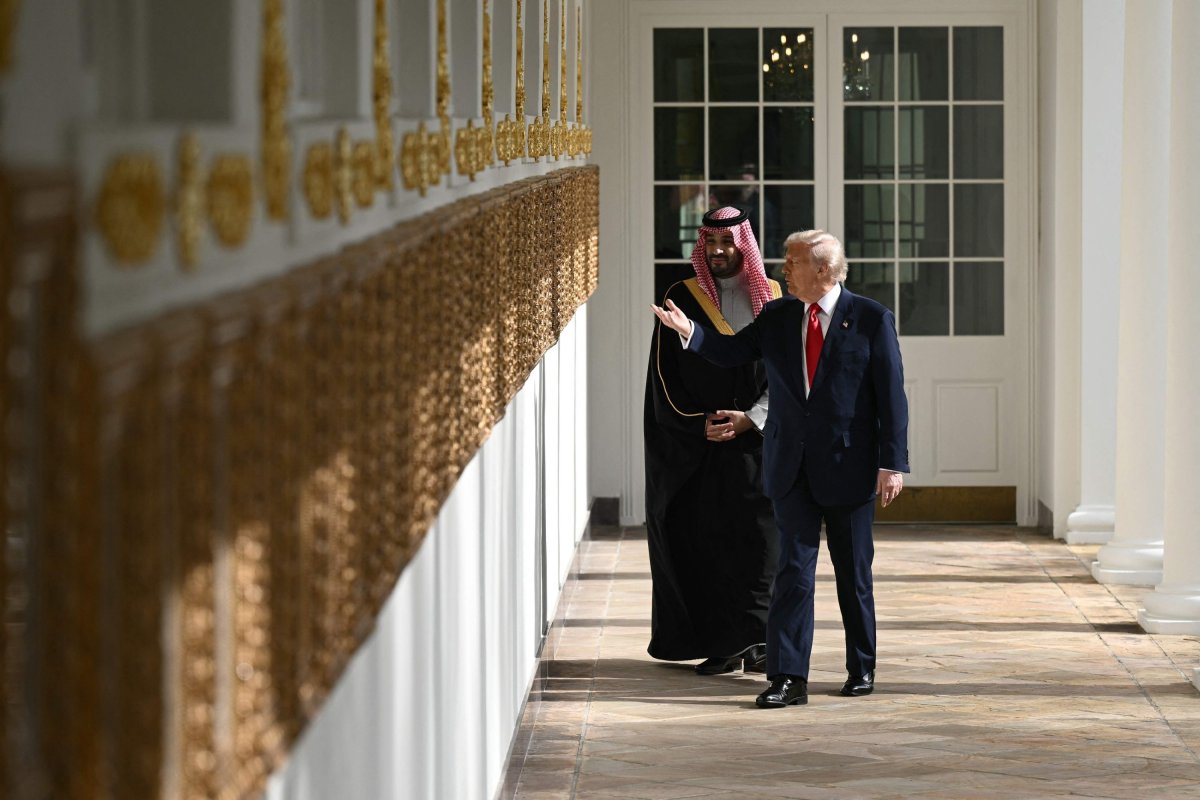
Discussions between the United States and Saudi Arabia on nuclear cooperation have spanned multiple administrations. The final text emerged after prolonged talks focused on civilian energy applications. Saudi officials have framed the agreement as essential for long-term energy planning rather than immediate weapons ambitions. The absence of the IAEA Additional Protocol in the reported terms distinguishes this arrangement from stricter past models.
The two-decade negotiation history reveals persistent roadblocks that shifted with each U.S. administration. Under President Trump, initial talks stalled over demands for stricter non-proliferation assurances tied to arms sales, while the Biden era introduced fresh hurdles linked to human rights concerns and regional stability priorities that delayed progress for years. These interruptions underscored how domestic politics in Washington repeatedly intersected with Riyadh's strategic timeline.
The 123 agreement legal framework itself draws from the Atomic Energy Act, requiring congressional review and presidential certification that the pact advances U.S. non-proliferation goals. Riyadh has long insisted on retaining sovereign rights to the full fuel cycle, a position that clashed with earlier U.S. templates but ultimately prevailed in the final text. This evolution reflects broader adjustments in American policy toward Gulf partners amid changing global energy dynamics.
Saudi Arabia's Economic and Geopolitical Aims
Saudi Arabia seeks civilian nuclear power to support economic diversification under Vision 2030. Officials aim to conserve oil reserves for export while developing future nuclear energy exports. Geopolitically, Riyadh positions itself for greater leadership within the GCC. The agreement provides leverage in regional energy markets where Saudi Arabia already holds significant swing-state influence through OPEC+ diplomacy.
Vision 2030 explicitly outlines plans for up to 17 gigawatts of nuclear capacity by 2040, positioning nuclear power as a cornerstone of the kingdom's post-oil economy. Cost projections for the initial phase exceed $80 billion, with the first reactor targeted for operation by 2032 to meet rising domestic electricity demand and free up crude for export revenues.
Comparisons with the UAE's Barakah plant highlight Saudi ambitions on a larger scale. Barakah's four reactors deliver 5.6 gigawatts at a total cost near $25 billion, whereas Riyadh envisions multiple sites with greater indigenous fuel-cycle involvement to reduce long-term foreign dependence. This approach aligns with Mohammed bin Salman's vision of technological self-reliance while enhancing geopolitical leverage across the GCC.
Comparison with the UAE Precedent
The UAE signed a 123 Agreement years earlier and constructed a functional nuclear plant under the gold standard, which required renunciation of enrichment rights. Saudi Arabia rejected those restrictions. The new agreement reportedly omits any such requirement, allowing Riyadh to retain fuel-cycle options. This difference highlights varying U.S. approaches to non-proliferation commitments across Gulf partners.
Specific legal differences center on Article IV rights under the Nuclear Non-Proliferation Treaty, which the UAE voluntarily waived in its 2009 pact. The gold standard prohibited domestic enrichment and reprocessing, a clause Riyadh refused outright to preserve strategic flexibility and avoid perceived second-class status among nuclear aspirants.
Saudi officials argued that accepting the UAE model would undermine national sovereignty and limit industrial development goals. This refusal forced Washington to recalibrate its template, resulting in a more permissive framework that still includes basic safeguards but stops short of the earlier restrictions. The divergence illustrates how U.S. non-proliferation policy has adapted to individual partner priorities rather than applying uniform standards.
Reactions from Israel and Congressional Oversight
Israel expressed profound anxiety over the terms, questioning the logic of confronting Iran while enabling another regional state to develop nuclear capabilities. Congressional review remains ahead, with lawmakers expected to examine the agreement's safeguards and long-term implications. Donald Trump posted on social media 24 hours after the announcement, introducing new conditions that demand Saudi-Israeli normalization as a follow-on step.
Netanyahu's reported stance emphasizes deep reservations, with Israeli officials privately warning that the deal could accelerate a regional arms race. Congressional review follows a mandatory 90-day period during which lawmakers may propose amendments or block implementation through joint resolutions.
Potential amendments could include added reporting requirements on Saudi enrichment activities or linkage to broader regional security pacts. This oversight process allows both chambers to scrutinize the agreement's alignment with non-proliferation norms before it takes full effect.
Alternative Partnerships Cultivated by Riyadh
Saudi Arabia has cultivated ties with Russia, China, and Pakistan as potential nuclear partners. These relationships provide Riyadh with options should U.S. terms prove insufficient. The cultivation of multiple suppliers reflects a calculated effort to maximize leverage in negotiations while advancing domestic energy goals tied to Vision 2030.
Rosatom's proposals from Russia include turnkey reactor construction with fuel supply guarantees, while CNNC from China has offered technology transfer packages at competitive financing rates. These alternatives have given Riyadh significant bargaining power during talks with Washington.
Pakistan's role centers on potential technical expertise and training programs, building on longstanding defense ties. Riyadh's multi-vector approach ensures that progress on Vision 2030 nuclear targets does not hinge solely on any single supplier.
Analyst Views on Broader U.S. Strategy
Some analysts interpret the agreement as signaling a possible broader U.S.-Iran nuclear arrangement. Others view it as part of Washington's burden-shifting strategy, encouraging regional actors to assume greater responsibility for their security. Foreign Policy described the move as diplomatic malpractice, citing risks to established non-proliferation norms. The deal's timing intersects with Saudi Arabia's strategic weight in the Gaza Deal and the Middle East Quad.
The burden-shifting framework encourages Gulf states to develop independent security capabilities, reducing direct U.S. military commitments in the region. Whether this signals an impending U.S.-Iran deal remains debated, though the timing suggests Washington may be preparing a wider diplomatic reset.
Critics argue the agreement weakens long-standing non-proliferation precedents at a sensitive moment. Supporters counter that it strengthens U.S. influence by anchoring Riyadh more firmly within American technical standards rather than ceding ground to competitors.
Implications for Sunni-Shia Competition and Iran
The agreement occurs against the backdrop of ongoing Sunni-Shia geopolitical competition. Iran's nuclear program and regional proxy networks remain central concerns for Gulf states. By securing fuel-cycle flexibility, Saudi Arabia gains potential parity options that could influence future talks involving the IAEA. Second-order effects may include heightened Israeli vigilance and renewed pressure on Washington to clarify its red lines with Tehran.
The Yemen dimension adds urgency, as Houthi attacks continue to threaten Saudi infrastructure and underscore the need for diversified energy sources less vulnerable to disruption. Gulf security architecture may evolve toward greater collective deterrence mechanisms involving nuclear-capable partners.
Iran's response will likely focus on accelerating its own program while accusing Washington of double standards. This dynamic risks intensifying proxy confrontations across the region in the coming years.
Energy Markets and Great Power Competition
Energy markets and OPEC+ diplomacy form another layer of the strategic calculus. Saudi Arabia's ability to balance oil production with emerging nuclear capacity affects global prices and supply stability. Great power competition involving the United States, China, and Russia adds complexity, as Riyadh weighs offers from multiple capitals. The agreement's outcome will shape how Gulf states navigate these overlapping interests without triggering uncontrolled proliferation.
Specific oil price implications include potential stabilization around $75-85 per barrel as nuclear capacity reduces domestic consumption and allows higher export volumes. OPEC+ dynamics could shift if Saudi Arabia gains greater flexibility to adjust output without internal energy constraints.
This development strengthens energy security for import-dependent economies while challenging U.S. dominance in Gulf nuclear technology. Riyadh's balancing act between Washington, Moscow, and Beijing will determine whether the region avoids escalation into broader great-power rivalries.
By Malik Hassan, Staff Writer
This article was produced with AI-assisted research and editorial support. Reporting is based on sources cited in the article.
What's Your Reaction?
 Like
0
Like
0
 Dislike
0
Dislike
0
 Love
0
Love
0
 Funny
0
Funny
0
 Wow
0
Wow
0
 Sad
0
Sad
0
 Angry
0
Angry
0

Middle East Correspondent at Global1.News. Based in Beirut, covering politics, conflict, energy, and society across the Middle East. Brings context and depth to a region often reduced to headlines.












Comments (0)