
Amazon at the Tipping Point: Brazil's Progress and the Threat of Irreversible Loss
The Amazon rainforest has lost 17-24% of its original cover since the 1970s, pushing it toward a tipping point that could trigger irreversible savannization. Brazil's deforestation rates have fallen sharply under renewed enforcement, but scientists warn the window for action is narrowing.
Brasília, June 2026 — The Amazon rainforest stands at a historic crossroads, where decades of destruction collide with fresh signs of recovery under renewed Brazilian leadership. Cumulative losses since the 1970s have already stripped 17-24% of the original forest cover, pushing the biome toward irreversible thresholds that threaten not only Brazil but the entire Latin American climate system.
Amazon Tipping Point: Is There Still Time to Save the Rainforest?
Brasília, Brazil — Article continues below.
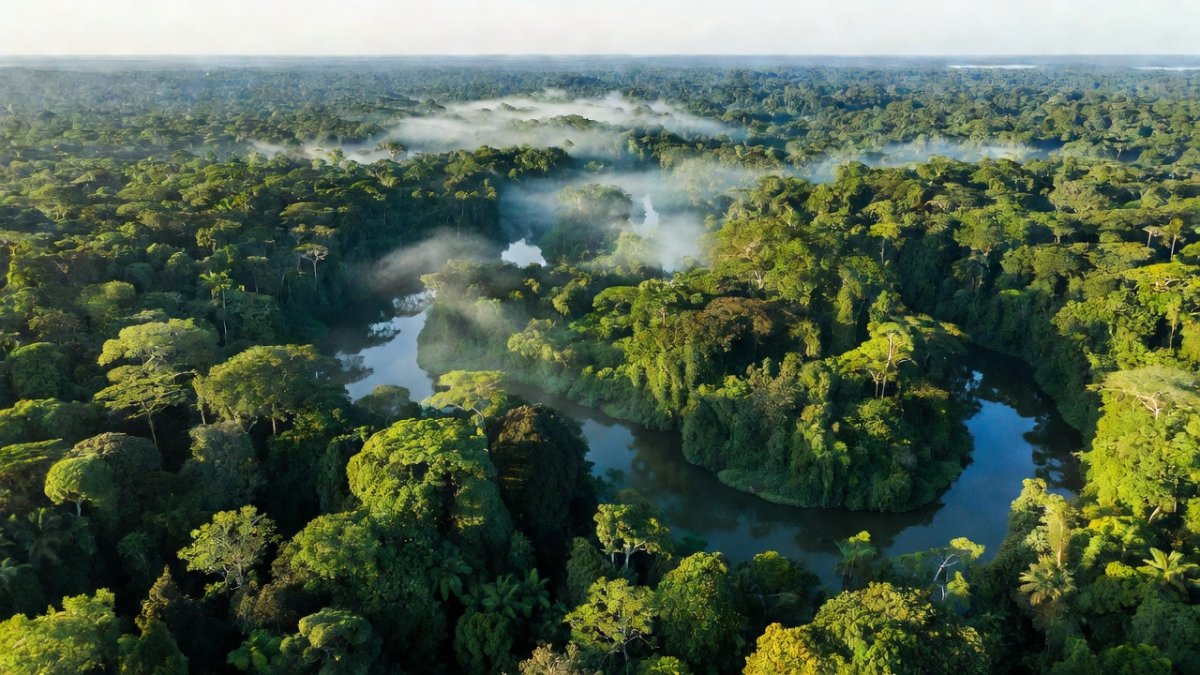
The Carbon Sink That Became a Source
The Amazon once absorbed vast quantities of carbon dioxide, acting as a planetary stabilizer for Latin America and beyond. Today cumulative deforestation has removed 17-24% of the original forest since the 1970s, converting the region from sink to source. Cattle ranching drives the majority of this loss, followed closely by soy expansion, illegal logging, and mining operations that fragment habitats across Brazil, Peru, and Colombia. Each hectare cleared releases stored carbon while reducing rainfall recycling that sustains agriculture in Argentina, Paraguay, and Bolivia. Data from satellite monitoring reveal how edge effects and selective clearing compound the damage, turning once-resilient ecosystems into vulnerable patches. Latin American economies dependent on stable water cycles now face mounting risks as the forest’s capacity to regulate regional climate erodes. The shift has already altered fire regimes and biodiversity corridors that connect Andean highlands to Atlantic forests. Without accelerated action, the Amazon’s transformation threatens food security and energy production tied to hydropower across multiple nations. This data-dense reality underscores why protecting the remaining cover represents an urgent priority for the entire continent rather than a localized Brazilian concern.
Nobre's Warning: On the Brink of the Point of No Return
Carlos Nobre, the Brazilian climatologist whose research has defined Amazon tipping-point science, states the forest stands “on the brink of the point of no return.” He warns that 20-25% deforestation combined with degradation could trigger irreversible dieback to savanna. Current losses sit within this danger zone. Crossing the threshold would convert 50-70% of the forest to savanna, releasing 200-250 billion tonnes of CO2 between 2050 and 2100. Such emissions would accelerate warming across Latin America, intensifying droughts in the Cerrado and Pantanal while disrupting monsoon patterns that feed Andean glaciers. Nobre’s models show feedback loops where reduced transpiration dries soils further, inviting more fires and tree mortality. The consequences extend beyond Brazil to Venezuela, Ecuador, and Central American nations reliant on Amazon-derived moisture. Latin American governments have begun integrating these projections into national climate plans, yet enforcement gaps persist. Nobre emphasizes that every percentage point of additional loss narrows the window for reversal. His urgent assessment frames the Amazon not as a distant wilderness but as the climatic anchor for the entire region’s future prosperity and stability.
Brazil's Turnaround: Enforcement, Monitoring, and Political Will
Under the Lula administration the PPCDAm plan has been revived while the Amazon Fund, managed by BNDES with support from Norway and Germany, channels results-based payments for verified reductions. Marina Silva, Environment Minister, declares that “keeping the forest standing is more profitable” than conversion. IBAMA has intensified fines, equipment seizures, and joint operations with Federal Police. DETER alerts for May 2026 recorded a 61.4% drop compared with May 2025, the largest May decline since 2016. PRODES annual figures show 6,288 km² lost in 2023-24 and 5,796 km² in 2024-25, the lowest totals in eleven years. First-semester 2026 alerts reached only 1,295 km², a 38% reduction and the decade’s lowest. Burned area fell to 3.1 million hectares in 2025, an 80% decline from 2024 and a 41-year low. Conservation units saw deforestation drop to 166 km² in 2025, down 86% from 2022. These gains position Brazil as the leader in a 36% regional reduction in tropical rainforest loss reported by the World Resources Institute. The turnaround demonstrates how coordinated enforcement and international finance can bend the deforestation curve across Latin America.
Indigenous Territories: The Amazon's Most Effective Guardians
Indigenous territories continue to outperform other land categories in preserving forest cover. MapBiomas data indicate a 22% reduction in deforestation within these areas during 2025. Strengthened FUNAI funding, staffing, and inter-agency coordination have enabled Operation Gavião, which reinforced protection across eight indigenous lands in Amazonas state. Courts have upheld safeguards, with the TRF1 invalidating a FUNAI norm that risked weakening land rights in June 2026. These territories function as living barriers against illegal mining, mercury contamination, and organized crime networks that threaten both ecosystems and communities. Latin American indigenous movements have long argued that territorial recognition delivers measurable conservation outcomes superior to many state-managed parks. The 22% drop recorded last year validates that perspective with hard numbers. International donors increasingly tie Amazon Fund disbursements to indigenous-led monitoring, recognizing that cultural stewardship aligns economic incentives with forest permanence. Continued support for these guardians remains essential if Brazil is to meet its zero illegal deforestation target by 2030 while serving as a model for neighboring countries facing similar pressures on native lands.
What Crossing the Tipping Point Means for Latin America
Should the Amazon cross its tipping point, Latin America would confront cascading climate and economic shocks. Conversion of 50-70% of the forest to savanna would release 200-250 billion tonnes of CO2, intensifying heatwaves and altering rainfall patterns from the Andes to Patagonia. Agricultural heartlands in Brazil’s Cerrado and Argentina’s Pampas would suffer prolonged droughts, while Andean nations would face reduced glacier melt and hydropower reliability. The 36% drop in tropical rainforest loss achieved in 2025 proves that coordinated policy can still avert catastrophe, yet the window is narrowing. Carlos Nobre’s threshold of 20-25% combined deforestation and degradation now looms as both scientific benchmark and political deadline. Regional cooperation through Amazon Cooperation Treaty mechanisms must expand to include fire management, mercury pollution controls, and sustainable supply-chain standards. Latin American cities already experience intensified flooding and heat linked to Amazon degradation; further savannization would multiply these costs. The data from 2025 reductions in burned area and PRODES totals offer a template for scaling protection, but only sustained political commitment across borders can secure the biome’s role as the continent’s climatic foundation.
The Shadow of Degradation and Political Risk
Despite clear-cut reductions, degradation from selective logging, edge effects, and fires often exceeds reported deforestation numbers, silently eroding forest resilience. Illegal mining, known as garimpo, continues to contaminate rivers with mercury while organized crime networks finance land grabs. Political pushback in Congress threatens to dilute enforcement budgets, and the 2026 election cycle introduces uncertainty that could reverse recent gains if future administrations weaken IBAMA or FUNAI. The Cerrado biome, though showing slower improvements, remains vulnerable to soy-driven expansion that could spill into Amazon margins. Marina Silva’s emphasis on profitable standing forests must contend with powerful ranching and mining lobbies. Without addressing these degradation pathways and political risks, the 20-25% tipping threshold identified by Carlos Nobre could be crossed even as headline deforestation figures decline. Latin American civil society and international donors must therefore monitor not only clear-cut statistics but also the cumulative impact of fires, logging roads, and policy volatility that together determine whether the Amazon remains a forest or becomes savanna.
The Bottom Line: A Decade of Decision
The next decade will decide whether Latin America preserves its greatest natural asset or accepts irreversible savannization. Brazil’s 2025-2026 data—61.4% May alert drops, record-low PRODES totals, 80% burned-area reduction, and 22% indigenous-territory gains—demonstrate that zero illegal deforestation by 2030 remains achievable when enforcement, finance, and indigenous leadership align. The Amazon Fund’s results-based model, backed by Norway and Germany, provides scalable finance, while strengthened FUNAI and court rulings protect the territories that deliver the strongest conservation outcomes. Yet degradation, illegal mining, and electoral uncertainty continue to cast shadows. Carlos Nobre’s warning that the forest stands “na beira do ponto de não retorno” must galvanize sustained action across the region. If Latin American governments maintain and expand these policies, the Amazon can remain a carbon sink and rainfall engine. If they falter, 200-250 billion tonnes of CO2 will reshape the continent’s climate and economies for centuries. The data now show both the peril and the pathway; the choice belongs to this generation.
By Elena Vasquez, Staff Writer
This article was produced with AI-assisted research and editorial support. Reporting is based on sources cited in the article.
What's Your Reaction?
 Like
0
Like
0
 Dislike
0
Dislike
0
 Love
0
Love
0
 Funny
0
Funny
0
 Wow
0
Wow
0
 Sad
0
Sad
0
 Angry
0
Angry
0

Latin America Correspondent at Global1.News. Based in Mexico City, covering politics, economics, energy, and culture across the region. Brings an on-the-ground perspective to stories spanning from the Rio Grande to Patagonia.















Comments (0)