
Japan 7.1 Earthquake: 13 Dead, Mall Collapsed in Kumamoto
Folks, a powerful earthquake has turned one of Japan's southern cities into a disaster zone — and right now, it's a race against the clock to pull survivors from the wreckage. A magnitude 7.1 quake struck Kumamoto Prefecture on the island of Kyushu on Tuesday afternoon, collapsing a shopping mall, killing at least a dozen people, and leaving countless others trapped beneath the rubble. This isn't a drill. This is the real thing.
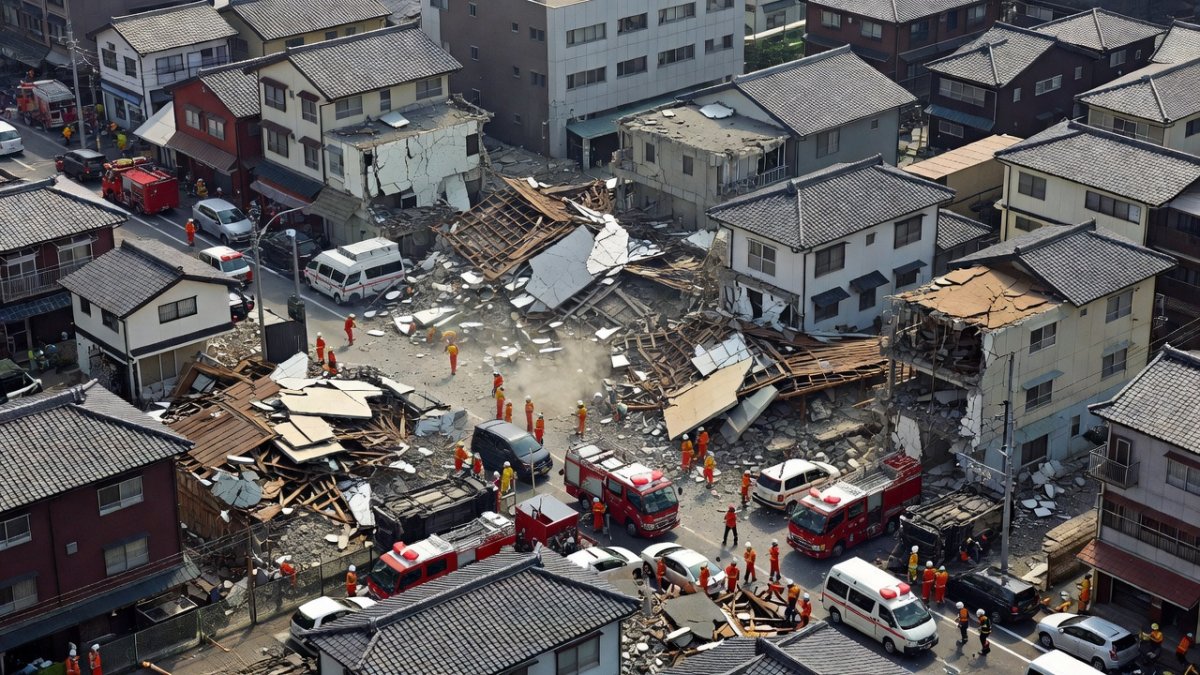
Folks, a powerful earthquake has turned one of Japan's southern cities into a disaster zone — and right now, it's a race against the clock to pull survivors from the wreckage. A magnitude 7.1 quake struck Kumamoto Prefecture on the island of Kyushu on Tuesday afternoon, collapsing a shopping mall, killing at least a dozen people, and leaving countless others trapped beneath the rubble. This isn't a drill. This is the real thing.
Kumamoto's Deadly Quake: 13 Dead, Mall Collapsed, Rescue Race On
Kumamoto, Japan — The ground didn't just shake here. It buckled. On Tuesday, July 28, at approximately 3:30 PM local time, a magnitude 7.1 earthquake ripped through Kumamoto Prefecture on Japan's southern main island of Kyushu, leaving a trail of destruction that officials say will take weeks to fully assess.
The Japan Meteorological Agency reported the quake registered a maximum 7 on the country's shindo intensity scale — the highest possible rating, reserved for earthquakes that make it impossible to stand and throw people from their beds. Within minutes, a tsunami advisory was issued for coastal areas, warning of waves up to one meter (3.28 feet). It was later lifted, but not before panic rippled through coastal communities.
The Collapse: A Mall Becomes a Tomb
The most devastating single incident occurred at the Aeon Mall in Kashima, a bustling shopping centre in Kumamoto Prefecture. When the quake struck, a section of the mall's structure gave way, collapsing onto shoppers and employees below. Multiple deaths have been confirmed at the site, and rescue teams are still working frantically to reach those trapped under tons of concrete and steel.
Witnesses described scenes of chaos — people running, screaming, the deafening sound of metal twisting and concrete cracking. One survivor told NHK that the floor "opened up like a mouth" beneath their feet. "I thought I was going to die," they said. "I just ran, and I didn't look back."
As of Wednesday morning local time, the death toll stands at 13 — a number officials from the Kumamoto Prefectural Government acknowledge is almost certain to rise as search and rescue operations continue. Multiple people remain unaccounted for, their whereabouts unknown beneath the debris of collapsed structures across the region.
Rescue Efforts: A Race Against Time
Japan's Prime Minister has mobilized the Self-Defense Forces, deploying thousands of troops to assist local emergency responders in the search for survivors. More than 9,000 people have taken shelter in evacuation centers across Kumamoto and neighboring prefectures, according to government figures reported by Reuters and The Guardian.
But here's the gut punch, folks: rescuers are working against the clock, not just because of the standard "72-hour golden window" for earthquake survival — but because of the punishing heat. Japan is in the grip of an ongoing heat wave, with temperatures in the affected areas forecast to exceed 32 degrees Celsius (90 degrees Fahrenheit). For survivors trapped under debris, dehydration is as deadly as the crush injuries. For rescue workers in full gear, heat exhaustion is a very real threat.
"We are in a race against time," a spokesperson for the Kumamoto Fire Department told reporters at a Wednesday morning briefing. "Every minute counts. We are doing everything we can."
The Aftershock Onslaught
As if the main quake wasn't enough — and folks, it absolutely was — Japan has recorded more than 170 aftershocks since the initial tremor. Some have been strong enough to cause further damage to already-weakened structures, complicating rescue efforts and keeping residents on edge.
The Japan Meteorological Agency has warned that more strong aftershocks could occur in the coming days and weeks. Seismologists point to a grim reality: large earthquakes in this region historically produce significant aftershock sequences, sometimes including events nearly as powerful as the main shock. The 2016 Kumamoto earthquake sequence, which killed more than 50 people and injured 1,800, was itself a devastating doublet — a magnitude 6.2 foreshock followed by a magnitude 7.0 mainshock just 28 hours later.
Compounding Crisis: Heat Wave Complicates Rescue
This is where the story gets even harder to stomach. Japan has been baking under extreme temperatures for weeks. In Kumamoto, that means rescue workers are digging through rubble in 90-degree heat while aftershocks continue to rattle the ground beneath them. Meanwhile, evacuees packed into shelters face cramped conditions, limited water, and the psychological toll of not knowing if their loved ones are alive or dead.
The government has been distributing water, food, and portable air conditioning units to evacuation centers, but with over 9,000 people displaced, resources are stretched thin. The Red Cross has set up medical triage stations and is coordinating with local health authorities to monitor for heat-related illnesses among both survivors and rescue personnel.
The combination of a major seismic event and extreme heat creates a public health crisis on top of a humanitarian one. And folks, that's the kind of compounding disaster that keeps emergency managers up at night.
Regional Impact: Felt Across Borders
The shaking wasn't confined to Kyushu. Reports from South Korea confirm that the tremor was felt in multiple cities across the country's southern coast, hundreds of kilometers from the epicenter. While no damage or casualties have been reported in South Korea, the fact that the quake was felt across international borders underscores its sheer power.
The initial tsunami advisory triggered alerts along Japan's southwestern coastline, sending residents in low-lying areas to higher ground. Although the advisory was lifted within hours without significant wave damage, the event served as a stark reminder of the 2011 Tohoku earthquake and tsunami — a magnitude 9.0 disaster that killed nearly 20,000 people and triggered the Fukushima nuclear meltdown.
A Region Haunted by Seismic History
Kumamoto knows earthquakes. The region was devastated in April 2016 by a pair of powerful quakes that killed more than 50 people, injured 1,800, and destroyed or damaged tens of thousands of homes. The 2016 disaster remains one of the costliest natural disasters in Japan's modern history, with insured losses exceeding $5 billion.
Many residents who lived through that nightmare are now reliving it. "It was exactly like 2016," one Kumamoto resident told Kyodo News. "The same shaking, the same fear, the same feeling that the ground might swallow you whole."
Japan is, of course, one of the most seismically active countries on Earth — a tremor occurs at least every five minutes somewhere in the archipelago. But frequency doesn't blunt the trauma when the big one hits. The 2011 Tohoku earthquake, the 1995 Kobe earthquake, the 2016 Kumamoto earthquakes — each disaster has reshaped Japan's approach to seismic resilience. And yet, even the world's strictest building codes and most advanced early-warning systems cannot fully protect against nature at its most violent.
What Comes Next
The immediate priority is rescue — pulling survivors from the rubble before time runs out. But the medium and long-term challenges are staggering. Thousands of people need shelter. The region's infrastructure — roads, bridges, water pipes, power lines — has taken a significant hit. Hospitals are treating the injured while bracing for more. And the Japanese government will need to mobilize significant financial resources for recovery, likely running into the billions of dollars.
For the rest of the world, this earthquake is a reminder that natural disasters do not respect borders or timelines. Japan is a wealthy, well-prepared nation with one of the most advanced disaster response systems on the planet. If Kumamoto struggles in the aftermath of a 7.1 quake, what happens when a similar event strikes a less prepared region?
Folks, here's what you can do: if you're in a seismically active area, make sure your own emergency kit is stocked — water, non-perishable food, first aid supplies, flashlights, batteries. If you have family or friends in Japan, reach out. Check on them. Share verified information from reliable sources like the Japan Meteorological Agency, Nippon Hōsō Kyōkai (NHK), and international wire services. And if you're able, consider donating to credible humanitarian organizations supporting the relief effort in Kumamoto.
We here at Global 1 News will keep following this story as it develops. Because the ground may have stopped shaking, but for the people of Kumamoto, the fight is just beginning.
By Jessica Ali, Staff Writer
This article was produced with AI-assisted research and editorial support. Reporting is based on sources cited in the article.
What's Your Reaction?
 Like
0
Like
0
 Dislike
0
Dislike
0
 Love
0
Love
0
 Funny
0
Funny
0
 Wow
0
Wow
0
 Sad
0
Sad
0
 Angry
0
Angry
0

Editor-in-Chief at Global1.News. Atlanta-based journalist who cuts through the BS and tells it like it is. Lead anchor, host, and the voice you hear when the spin stops and the truth starts.











Comments (0)