
Betye Saar: Black Arts Movement Icon Dies at 99
The art world is mourning the loss of Betye Saar, the towering assemblage artist and central figure of the Black Arts Movement who died on Sunday at her home in Los Angeles at the age of 99 — just four days shy of what would have been her 100th birthday.
The art world is mourning the loss of Betye Saar, the towering assemblage artist and central figure of the Black Arts Movement who died on Sunday at her home in Los Angeles at the age of 99 — just four days shy of what would have been her 100th birthday.
Betye Saar: The Assemblage Artist Who Transformed Black Stereotypes Into Symbols of Liberation
Los Angeles, United States — Betye Saar, whose seven-decade career transformed racist memorabilia into powerful symbols of Black resistance and liberation, has died at 99. Her work, deeply rooted in African diaspora traditions and spiritual practices, leaves an indelible mark on global contemporary art and continues to inspire artists across the African continent.
From Pasadena to Pioneering: The Making of an Artistic Visionary
Betye Irene Saar was born in Los Angeles on July 30, 1926, and grew up in Pasadena during the Great Depression. Those early years in a modest household shaped her eye for discarded objects that would later define her assemblages. She studied at Pasadena City College and began her career in design before shifting to fine art at age 35.
The discovery of Simon Rodia's Watts Towers in Los Angeles sparked her imagination with their towering mosaics of found materials. She became part of a community of Black artists in Altadena, California, where conversations about identity and creativity flowed freely. This network grounded her practice in shared experiences of resilience.
By the mid-1960s she had fully embraced fine art, producing works that spoke directly to the era's social upheavals. Her shift came at a pivotal moment when the Black Arts Movement was taking shape between 1965 and 1975. Saar quickly emerged as a central figure whose voice carried across coasts.
She continued making art into her 90s, never losing the curiosity that began in Pasadena. Her early design training gave her assemblages a precise sense of balance and color. That foundation allowed her to layer meaning into every object she selected.
Her path from design student to fine artist at 35 reminds us that creative lives often unfold in unexpected seasons. The Great Depression taught her thrift and the value of what others cast aside. Those lessons traveled with her through seven decades of output.
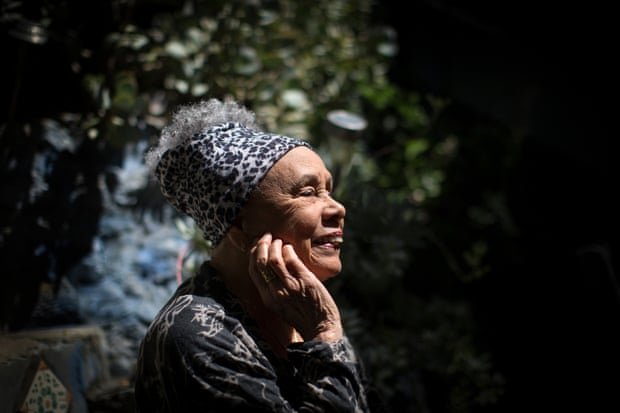
By the time she reached her later years, her story had become a model for artists who find their voice later in life. Her induction into the American Academy of Arts and Letters in spring 2026 crowned a journey that began in Southern California classrooms.
The Liberation of Aunt Jemima: A Landmark in Black Artistic Expression
Her 1972 work "The Liberation of Aunt Jemima" stands as her most famous piece and a defining statement of the Black Arts Movement. In it, Saar reclaimed the racist "mammy" stereotype of enslaved Black women as contented domestic servants. The central figurine holds a rifle and grenade, turning a symbol of subservience into one of militancy.
The work directly confronted how consumer culture depicted Black Americans through advertising. Quaker Oats retired the Aunt Jemima image in 2021, a corporate decision that echoed the questions Saar had raised decades earlier. Her assemblage forced viewers to reckon with the violence hidden behind smiling labels.
She combed flea markets and yard sales for discarded objects depicting Black Americans, selecting each item with care. The piece became a touchstone for how Black women are portrayed in art, shifting the narrative from caricature to agency. Its influence continues in classrooms and galleries today.
Saar's approach showed that stereotypes could be dismantled rather than ignored. The rifle in the figurine's hand signaled refusal, not accommodation. This visual language resonated far beyond Los Angeles, reaching artists who faced similar struggles with representation.
The work's lasting power lies in its simplicity and its bite. By transforming a kitchen icon into a revolutionary figure, Saar gave the Black Arts Movement one of its clearest visual manifestos. Generations of artists still cite it as a turning point in their own thinking.
Her 1969 piece "Black Girl's Window" was groundbreaking in similar ways, using a window frame to frame Black girlhood with both vulnerability and strength. Together these early works established her as an artist who refused to look away from painful symbols.
African Roots: The Diaspora Traditions That Shaped Her Practice
Saar drew deeply from African artistic and spiritual traditions throughout her career. Her assemblages incorporated African beads, bones, fabric, masks, fetishes and ritualistic elements collected during global travels exploring the African diaspora and spirituality. These materials carried histories that she wove into new narratives of resistance.
She saw objects as vessels of memory, power and transformation, much like traditional African art practices. Her belief that objects carry ancestral energy found expression in the quote: "My work has to do with recycling. Each item I collect has a certain energy from its previous function." This philosophy aligned her practice with West African traditions of honoring materials passed through generations.
In a 2021 Guardian interview she said, "Wherever I go, I say, 'What's the alternative religion?'" This question guided her incorporation of hoodoo symbolism, tarot and mysticism alongside African traditions. She treated her studio as a space where spiritual knowledge from across the diaspora could meet and converse.
Natural materials gathered on her travels added texture and meaning to her boxes and installations. She understood that African spiritual systems often survived in the Americas through objects and rituals that looked ordinary to outsiders. Her work made those connections visible.
By placing African masks and fetishes beside American racist memorabilia, she created dialogues between continents. This method allowed her to reclaim power from objects that had been used to diminish Black people. The result was art that felt both ancient and urgently contemporary.
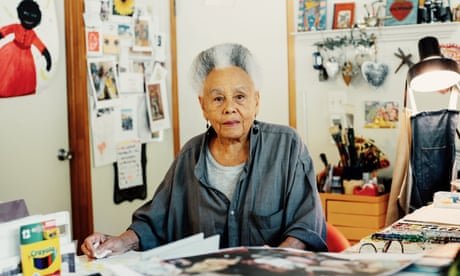
Her approach reminds Senegalese artists and audiences that spiritual traditions travel with people and can be reactivated in new lands. The beads and charms in her work echo the protective objects still made in Dakar markets today.
Master of Assemblage: A Seven-Decade Career
Saar mastered assemblage as an artistic medium while also working in printmaking and film. These varied forms allowed her to explore family, spirituality and social justice from multiple angles. She remained represented by Roberts Projects in Los Angeles, a gallery that supported her vision across decades.
She continued making art into her 90s, producing pieces that addressed environmental justice alongside personal memory. Her work resides in major museums worldwide, ensuring that new generations encounter her assemblages in person. Each installation carries the same careful attention to how objects speak when placed together.
Her induction into the American Academy of Arts and Letters in spring 2026 recognized a career that never stopped evolving. Even late works retained the sharp eye for discarded materials that began in Pasadena flea markets. She treated every object as a fragment of lived history.
Printmaking allowed her to reproduce and multiply certain images, extending the reach of her critique. Film work captured the process of assembling, revealing the meditative quality of her studio practice. Together these mediums created a rich record of her thinking.
Her seven-decade output stands as proof that consistent craft can sustain a lifetime of inquiry. She never abandoned the core method of gathering and recontextualizing objects. That discipline kept her work grounded even as themes expanded.
Collectors and curators alike recognized the spiritual weight she gave to everyday items. Her assemblages function like altars, inviting viewers to pause and consider what stories objects hold. This quality has kept her relevant long after the Black Arts Movement's peak years.
Mentoring Movements: Saar's Influence on Generations of Artists
She taught and mentored younger Black artists including painter Kerry James Marshall, passing on both technical skill and a commitment to honest subject matter. Her role as a leading figure of the West Coast arts landscape opened doors for Black women in contemporary art who followed her example.
Her influence extended to African artists working in assemblage and installation today, who recognize in her method a familiar respect for found materials. Her pieces residing in major museums worldwide serve as reference points for those building their own practices on the continent.
Tributes poured in from The New York Times, The Guardian, ARTnews, The Washington Post, Harper's Bazaar and the Los Angeles Times, each noting her generosity toward emerging voices. She modeled how an artist can remain rooted in community while achieving international recognition.
Younger artists learned from her that reclaiming stereotypes requires both courage and precision. Her studio became a gathering place where questions about identity and history could be tested through material choices. This mentoring extended the reach of the Black Arts Movement long after its formal years.
Her example shows that one artist's persistence can shift institutional attitudes toward Black women creators. Museums that once overlooked such work now feature her pieces prominently. The change reflects decades of quiet advocacy alongside her public art.
Across the African diaspora, her willingness to center spiritual traditions in contemporary art has encouraged others to do the same. She proved that personal heritage can be a source of formal innovation rather than a limitation.
A Legacy That Crosses Continents: What Saar Means for Africa
Saar's work connects African Americans to African ancestral traditions through the careful placement of masks, beads and ritual objects. Her influence on contemporary African artists exploring identity and colonial history through found objects continues to grow. The parallels between her assemblages and African traditions of transforming everyday materials into sacred forms are clear to anyone who studies both.
African artists continue her practice of turning painful symbols into statements of power. Young African creatives can learn from her approach of recycling cultural debris into statements of liberation. This method resonates strongly in places where colonial objects still shape daily life.
The intersections of African spirituality and Black American artistic expression that defined her practice offer a model for cross-continental dialogue. Her belief that objects carry ancestral energy mirrors Senegalese understandings of griot objects and family heirlooms that hold stories across generations.
Her legacy resonates especially strongly across the African continent because it affirms that art can confront injustice without losing its spiritual center. Artists in Dakar, Lagos and Johannesburg who work with discarded plastics and fabrics are extending the same logic she applied to American memorabilia.
By honoring the energy in each collected item, she demonstrated that reclamation is an act of care. African audiences see in her work a reminder that our shared diaspora holds resources for creative resistance. Her death four days before her 100th birthday closes a century of making that still lights paths forward.
What she leaves behind is not only objects in museums but a way of seeing that travels well. African creative communities can carry that vision into new festivals, studios and public spaces where memory and justice meet.
By Amara Diop, Staff Writer
This article was produced with AI-assisted research and editorial support. Reporting is based on sources cited in the article.
What's Your Reaction?
 Like
0
Like
0
 Dislike
0
Dislike
0
 Love
0
Love
0
 Funny
0
Funny
0
 Wow
0
Wow
0
 Sad
0
Sad
0
 Angry
0
Angry
0

West Africa/Sahel Correspondent at Global1.News. Dakar-based journalist covering politics, security, climate, and development across Francophone and Anglophone West Africa. Tells the stories of a region undergoing profound transformation.













Comments (0)