
Nicotine's Grip on India: 1.3 Million Deaths and Viksit Bharat 2047
India confronts nicotine as its most persistent yet under-named health adversary. On World No Tobacco Day 2026, themed "Unmasking the appeal: countering nicotine and tobacco addiction," ICMR-NICPR experts highlight how nicotine sustains addiction across 267 million users while driving more than 13 lakh deaths each year. The Ministry of Health and Family Welfare must now treat n

India confronts nicotine as its most persistent yet under-named health adversary. On World No Tobacco Day 2026, themed "Unmasking the appeal: countering nicotine and tobacco addiction," ICMR-NICPR experts highlight how nicotine sustains addiction across 267 million users while driving more than 13 lakh deaths each year. The Ministry of Health and Family Welfare must now treat nicotine itself, not merely smoke, as the central target.
Half of all tobacco-attributable deaths, approximately 6.5 lakh annually, result from cardiovascular disease. This burden falls heavily on working-age adults, with 26% of tobacco-linked CVD deaths occurring in the 30-44 age group. Such figures directly threaten India's demographic dividend and productivity goals under Viksit Bharat 2047.
Nicotine's Grip on India: Inside the 267 Million-User Tobacco Crisis
New Delhi, India – June 7, 2026 — Every year, 1.3 million Indians die from tobacco-related causes. Half of those deaths, some 650,000, stem from cardiovascular disease — and more than a quarter of those fatalities strike adults between the ages of 30 and 44. These are not distant statistics. They represent breadwinners, young professionals, and parents. And the driving force behind this epidemic, according to a new analysis by ICMR-NICPR experts, is nicotine itself.
The Scale of India's Tobacco Epidemic
India is home to approximately 267 million tobacco users, making it one of the largest tobacco-consuming nations in the world. The toll is staggering: tobacco kills more than 13 lakh people annually in India. Cardiovascular disease accounts for roughly half of these deaths — around 6.5 lakh each year. Crucially, 26% of tobacco-attributable CVD deaths occur in the 30–44 age group, robbing the country of lives and livelihoods at the peak of economic contribution.
The Global Adult Tobacco Survey (2017-18) found actual quit ratios of only 16.8% among former daily smokers and 5.8% among former daily smokeless tobacco users. These figures reflect a system that continues to fail those who want to quit. For taxpayers funding the National Tobacco Control Programme, the return on investment remains stubbornly low.
ICMR-NICPR researchers stress that these numbers have not declined meaningfully since the last national survey. India's demographic dividend — the working-age population that is supposed to drive economic growth — is being eroded by a preventable health crisis that begins with a single substance.
Nicotine's Mechanism of Harm — The Cardiovascular Connection
Nicotine is not merely an addictive substance; it is a direct cardiovascular toxin. It triggers repeated adrenaline surges, induces arrhythmias, constricts blood vessels, promotes endothelial dysfunction, enhances platelet aggregation, and accelerates atherosclerosis. These pathways explain why cardiovascular disease accounts for half of all tobacco-attributable deaths in India.
Among smokeless tobacco users — who consume products such as khaini, gutkha, and zarda — 26% absorb nicotine directly through the oral mucosa. These users experience no combustion, yet they suffer identical cardiovascular effects. ICMR studies confirm elevated risks of myocardial infarction and stroke in this population, many of whom reside in rural districts with limited access to cardiac care.
The concentration of deaths in the 30-44 age bracket is especially alarming. These are Indians in their prime earning years, often supporting multiple dependents. A heart attack at 35 does not just end one life; it destabilises entire families and places additional strain on state healthcare systems.
India's Complex Tobacco Landscape and Legal Framework
India's tobacco market is among the world's most diverse, encompassing cigarettes, bidis, hookah, khaini, gutkha, zarda, and dozens of regional variants. Each product type has its own industry structure, tax regime, and political economy. Yet beneath this diversity lies a single common thread: nicotine.
Indian law classifies nicotine as a drug under the Drugs and Cosmetics Act, 1940. Several states — including Haryana, Karnataka, and Punjab — have notified extracted nicotine as a Class A poison under the Poisons Act of 1919, restricting its sale, possession and distribution. The Prohibition of Electronic Cigarettes Act (PECA) and the Cigarettes and Other Tobacco Products Act (COTPA) form the core legal architecture at the national level, supported by the National Tobacco Control Programme.
Despite these laws, a 2025 systematic review found 14% vaping prevalence in India — levels far higher than before the 2019 PECA ban. Weak and inconsistent enforcement was identified as the primary reason. Many Indian cricketers, actors, and models promote nicotine and tobacco products through surrogate advertisements. The legal framework to act is already in place; enforcement is the missing link.
Global Policy Shift — COP11 and Generational Bans
The global policy landscape has shifted decisively toward nicotine control. At the Conference of Parties (COP11) of the WHO Framework Convention on Tobacco Control (WHO FCTC) in Geneva in November 2025, the international community formally endorsed sixteen Forward-Looking Measures under Article 2.1. These include birthdate-based sales restrictions, creating a nicotine-free generation, banning flavouring agents, and phasing out the commercial sale of tobacco products.
The United Kingdom has already enacted such a generational ban, prohibiting tobacco and vape sales to anyone born on or after 1 January 2009. The Maldives brought comparable legislation into force in November 2025. Both examples demonstrate that age-based restrictions can protect future cohorts without disrupting adult users.
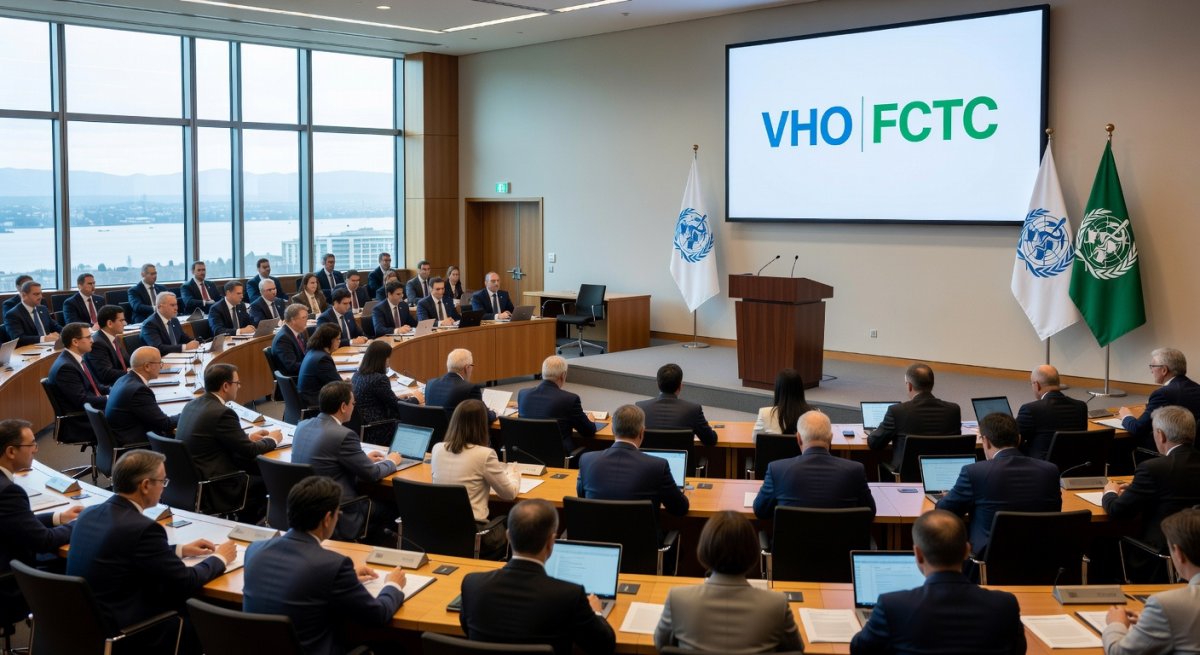
India's legislative record on tobacco and electronic cigarette control is among the most progressive in the world. However, COP11's measures require India to go further — including extending controls to synthetic nicotine and nicotine-like substances (nicotinoids), which existing laws do not cover.
What Works for Cessation — Cytisine, Varenicline, and the NRT Paradox
Non-nicotine pharmacological options deserve greater attention. Varenicline and bupropion address craving and withdrawal through non-nicotinic mechanisms. Cytisine — a plant-derived alkaloid with a long record of success in Eastern Europe — offers comparable efficacy to varenicline at a fraction of the cost. Utilising cytisine for tobacco cessation through Ayushman Bharat platforms and primary healthcare centres merits serious consideration.
The paradox of nicotine replacement therapy (NRT) — using nicotine to treat a disorder perpetuated by nicotine itself — becomes more glaring when inexpensive, more effective non-nicotine agents are available. The issue has acquired further urgency as major tobacco companies have reinvented themselves as "health and wellness" companies by acquiring pharmaceutical firms that manufacture tobacco cessation products, including NRTs.
These same tobacco companies simultaneously lobby against tobacco control measures. The FCTC's Article 5.3 obligations — which require protection of public health policies from tobacco industry interference — apply as much to the cessation market as to advertising or product regulation. For Indian patients, the choice between a nicotine patch from a tobacco-adjacent manufacturer and a plant-derived tablet like cytisine should be guided by science, not industry convenience.
The Bottom Line — Viksit Bharat 2047 Requires a Nicotine-Free Generation
Achieving a nicotine-free generation is essential for India's Viksit Bharat 2047 vision. With 267 million current users and 1.3 million annual deaths, continued inaction will erode gains in life expectancy, economic output, and healthcare system capacity. The 26% share of CVD mortality in the 30-44 age group already signals long-term fiscal strain on the public exchequer.
ICMR-NICPR analysis demonstrates that nicotine itself must be named and regulated as the primary driver of India's tobacco epidemic. Strengthened enforcement of PECA, nationwide adoption of state-level poison classification rules, integration of cytisine into public health programmes, and alignment with COP11's 16 Forward-Looking Measures offer concrete next steps.
The WNTD 2026 theme is ultimately a call to catch the bull by its horns — addressing what nicotine does to the developing adolescent brain, its causative role in nearly half of all tobacco-related deaths, the industry's calculated use of flavours and marketing to recruit young users, and the conflict of interest in an industry that profits from both addiction and its attempted cessation. India has the urgency, the epidemiological burden, the legislation, the COP11 mandate, and the moral authority to lead more boldly than any other country. The vision of a Viksit Bharat by 2047 demands nothing less than a generation free from nicotine and all its masked avatars.
— By Dr. Raj Patel, Staff Writer
This article was produced with AI-assisted research and editorial support. Reporting is based on sources cited in the article.
What's Your Reaction?
 Like
0
Like
0
 Dislike
0
Dislike
0
 Love
0
Love
0
 Funny
0
Funny
0
 Wow
0
Wow
0
 Sad
0
Sad
0
 Angry
0
Angry
0

India/South Asia Correspondent at Global1.News. Analytical voice with a background in science and health journalism. Based in New Delhi, covering Indian politics, education, healthcare, technology, and policy. Breaks down complex data into clear, actionable reporting.















Comments (0)