
Blue Catfish Invasion Hits Chesapeake Bay and Latin America
Blue catfish devour 59 million pounds daily in Chesapeake Bay while Latin America battles lionfish and pez diablo. Invasive species threaten fisheries, economies, and food security across the hemisphere.
A new Al Jazeera English video released July 18, 2026, documents the explosive spread of blue catfish through the Chesapeake Bay watershed. The footage captures how this single species now dominates biomass levels and consumes native prey at rates that directly threaten commercial fisheries and coastal economies across the U.S. East Coast.
Blue Catfish Invasion Threatens Chesapeake Bay and Latin America's Fragile Fisheries
Chesapeake Bay, United States — Invasive blue catfish, introduced decades ago for sport, now dominate the Chesapeake Bay watershed with nearly one billion pounds of biomass consuming 59 million pounds of native species daily.
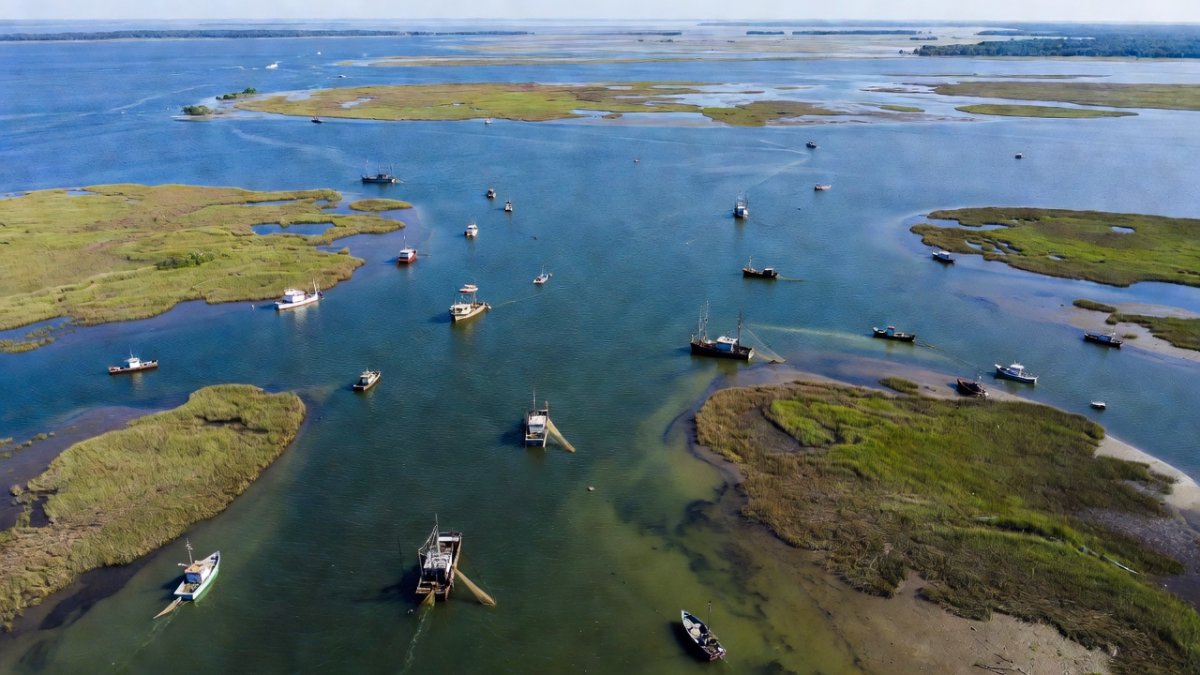
The Chesapeake Bay Invasion — Millions of Pounds Devoured Daily
Blue catfish (Ictalurus furcatus) were deliberately stocked into Virginia rivers during the 1970s to create recreational fishing opportunities. Within five decades the species expanded across the entire Chesapeake Bay watershed and now ranks among the largest biomass components in the estuary. Researchers estimate nearly one billion pounds of blue catfish currently inhabit the system. These fish consume approximately 59 million pounds of native species each day, including crabs, shrimp, fish, oysters, and clams. The predation pressure compounds existing stressors such as habitat loss, overfishing, and declining water quality. Recreational fishing along the Atlantic coast already generates more than $1.5 billion in annual economic output, much of it supported by the menhaden forage base now under direct assault. Because blue catfish lack natural predators in the Bay and tolerate wide salinity ranges, their population continues to grow unchecked. The scale of daily consumption documented in 2026 studies leaves little doubt that sustained removal efforts must match the invasion’s speed if native stocks are to survive.
A Billion-Pound Problem: Blue Crabs at Record Lows
Blue crab populations in the Chesapeake Bay reached their lowest recorded levels in 2026 according to Washington Post reporting. While habitat degradation and water quality issues contribute, blue catfish predation is widely cited by Maryland’s crab industry as a primary driver. Industry representatives have labeled the invader “public enemy number one.” The loss of blue crabs ripples through supply chains that support processors, restaurants, and export markets. At the same time, menhaden populations that once buffered the broader food web face intensified pressure. NOAA-led pilot programs initiated in 2025 attempt to shield remaining native species through targeted removals, yet the sheer biomass of nearly one billion pounds of blue catfish overwhelms localized efforts. Maryland’s Department of Natural Resources responded by organizing 2026 removal tournaments that offer cash rewards. These measures illustrate the urgency felt by state agencies, yet biologists caution that tournaments alone cannot reduce populations fast enough to reverse the trajectory of native species decline.
Eating the Invader: Can Markets Solve What Removal Cannot?
Federal and state programs launched in 2025 seek to convert the invasion into economic opportunity. The USDA allocated roughly $6 million in grants and pilot funding to seafood processors willing to harvest and distribute blue catfish. Maryland school lunch programs now serve the fish in breaded sandwiches, fish cakes, and fillets. Virginia offered individual processing grants reaching $250,000. The bipartisan MAWS Act (Markets for Aquatic Invasive Species Act of 2025), introduced by Rep. Sarah Elfreth (D-MD) and Rep. Rob Wittman (R-VA), passed the House and moved to the Senate by July 2026. The legislation aims to open new outlets, including the pet-food industry. Morgan State University’s PEARL lab received $575,000 from NOAA and Maryland DNR in 2025 to study population dynamics and market viability. Lawmakers describe blue catfish as one of the greatest ecological and economic threats facing the Bay. Officials acknowledge that “eating our way out” remains insufficient given the daily consumption rate of 59 million pounds; sustained harvesting, expanded markets, continued research, and stronger policy frameworks are all required to prevent existential risks to native marine life.
Latin America’s Own Invasion Crisis: From Lionfish to Pez Diablo
Latin American marine and freshwater ecosystems face parallel invasions driven by the same vectors: aquarium releases and aquaculture escapes. Lionfish (Pterois volitans), native to the Indo-Pacific, were first detected in South Florida during the 1980s and rapidly colonized Caribbean reefs, the Gulf of Mexico, and the U.S. East Coast. On invaded reefs, prey biomass has dropped more than 80 percent, disrupting food webs and reducing herbivorous fish that control algae. The resulting phase shifts from coral-dominated to algae-dominated reefs threaten tourism economies and commercial fisheries throughout the Caribbean and coastal Latin America. Venomous spines and prolific reproduction render complete eradication nearly impossible. Management relies on diver culls, lionfish derbies, and promotion of human consumption, with Aruba testing targeted deepwater technologies. Meanwhile, armored suckermouth catfish (Pterygoplichthys spp.), known locally as “pez diablo,” escaped from the Amazon basin into Mexican and Central American rivers. In parts of Mexico these fish now comprise 80 percent of catches, prompting ichthyologist Juan Schmitter to describe the situation as “apocalyptic, catastrophic.”
Mexico’s Pez Diablo: When an Invasive Becomes a Product
In Tabasco state, Mexico, pez diablo has been transformed into commercial cat food under the “Miauu” brand, mirroring Chesapeake efforts to market blue catfish. The species burrows into riverbanks, accelerating erosion and sedimentation that degrade habitats critical to Indigenous communities and small-scale fishers. Its ability to breathe air and survive out of water, combined with tough armor that deters predators, allows rapid expansion into non-Amazonian basins across Mexico and Central America. Similar patterns appear with African sharptooth catfish (Clarias gariepinus), introduced for aquaculture in Brazil, Mexico, Colombia, and Caribbean nations. This highly predatory species decimates native fish communities while tolerating poor water quality and traveling short distances overland. Climate change and habitat alteration further amplify invasion success across the hemisphere. These cases demonstrate that human-mediated introductions remain the dominant vector, followed by high reproductive rates and broad environmental tolerance once established.

The Regional Toll: 91% Decline, Collapsing Fisheries, Threatened Food Security
Latin American migratory fish populations declined approximately 91 percent between 1970 and 2020, among the steepest drops recorded globally. Dams, habitat fragmentation, overfishing, pollution, and invasive species together drive the losses. Tilapia escaping aquaculture facilities near Brazil’s Xingu River and the Belo Monte dam now threaten endemic species in the Amazon basin. Record Sargassum seaweed inundations struck Caribbean and Mexican beaches throughout 2026, while the invasive marine gastropod Eualetes tulipa was newly documented in Colombia’s Caribbean waters. Inland fisheries supply critical protein to millions of rural and Indigenous households; their collapse directly undermines regional food security. Across both the Chesapeake Bay and Latin American basins, the same lesson emerges: once established, invasive species impose compounding costs that removal programs and market initiatives can only partially offset. Coordinated prevention, sustained harvesting, and cross-border research remain essential to protect remaining biodiversity and the communities that depend on it.
The Bottom Line — Prevention, Adaptation, and a Shared Hemisphere Challenge
The Chesapeake Bay’s blue catfish crisis and Latin America’s lionfish, pez diablo, and African sharptooth catfish invasions share identical root causes and demand parallel responses. Policy tools such as the MAWS Act, NOAA-funded research at Morgan State University, and Mexico’s Tabasco cat-food initiative illustrate adaptation strategies already underway. Yet the 59-million-pound daily consumption rate in the Bay and the 91-percent regional decline in migratory fish populations underscore that prevention at points of introduction must become the priority. Indigenous territories and small-scale fishing communities across Latin America bear disproportionate impacts when ecosystems shift. Only integrated approaches that combine early detection, market development, rigorous science, and enforceable regulations can slow the hemisphere-wide spread of aquatic invaders before more native species and livelihoods are lost.
By Elena Vasquez, Staff WriterThis article was produced with AI-assisted research and editorial support. Reporting is based on sources cited in the article.
What's Your Reaction?
 Like
0
Like
0
 Dislike
0
Dislike
0
 Love
0
Love
0
 Funny
0
Funny
0
 Wow
0
Wow
0
 Sad
0
Sad
0
 Angry
0
Angry
0

Latin America Correspondent at Global1.News. Based in Mexico City, covering politics, economics, energy, and culture across the region. Brings an on-the-ground perspective to stories spanning from the Rio Grande to Patagonia.















Comments (0)