
AI Is Eating Every Chip in the Supply Chain — And It’s About to Get Worse
AI data centers are devouring the semiconductor supply chain. GPU lead times hit 52 weeks, DRAM surged 50% in a quarter, NVIDIA cut gaming production 30%, RTX 5090 near 3,000 dollars. A hosting founder on the chip famine and why this shortage has years left.
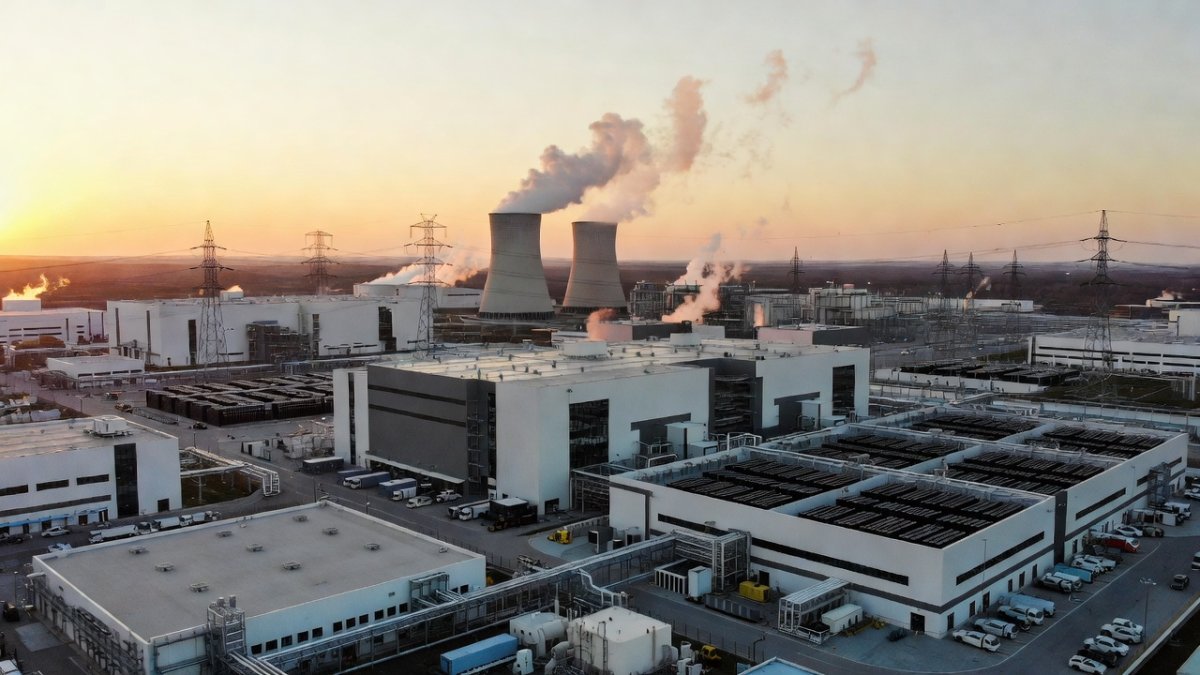
AI Is Eating Every Chip in the Supply Chain — And It's About to Get Worse
Let me tell you something that's been nagging at me every time I look at hardware prices lately. The AI boom isn't just consuming GPUs anymore. It's eating the entire semiconductor supply chain — DRAM, NAND, HBM, GDDR7, you name it. And the ripple effects are hitting everything from the servers I buy for my infrastructure to the smartphones in our pockets and the cars on the road.
I've been watching this for the last eighteen months, and in the last quarter the situation went from "tight" to "genuinely alarming." We're looking at GPU lead times of 36 to 52 weeks for data-center class hardware. Blackwell orders that weren't placed by early 2026? Looking at Q1 2027 delivery windows. That's not a supply constraint — that's a structural inability to manufacture fast enough. And the memory situation is somehow even worse.
The GPU Numbers Are Staggering
Let's start with the obvious one because the numbers are so big they've stopped being abstract. Data-center GPU lead times now stretch 36 to 52 weeks. If you didn't get your Blackwell B200 orders in by February 2026, you're looking at next year. CoreWeave, one of the biggest GPU rental providers, is raising prices over 20% and demanding longer contract terms. Companies that built their entire business model around renting NVIDIA compute are suddenly finding those margins crushed.
But here's where it gets interesting — and where the story stops being about GPUs and starts being about everything else. NVIDIA is reportedly cutting discrete gaming GPU production by 30 to 40 percent in the first half of 2026 to manage VRAM shortages. The same GDDR7 memory chips that go into RTX 5090s are being prioritized for data-center GPUs because the margins are better. The result? An RTX 5090 that's supposed to be a $1,999 card is sitting on shelves at $2,800 to $3,000 — if you can find one. And NVIDIA might skip a whole generation of gaming GPU launches, which would be the first time in three decades they've done that.
Let that sink in. The world's most valuable semiconductor company — one that makes more profit in a quarter than most countries' GDP — cannot get enough memory chips to make its own products.
The Memory Crunch Nobody's Talking About
This is the part that keeps me up at night as someone who buys servers and storage for a living. The memory shortage is worse than the GPU shortage, and it's affecting far more industries.
According to a June 2026 analysis from CryptoBriefing, AI data centers are expected to consume as much as 70 percent of total memory production this year. Not 30 percent. Not 50 percent. Seventy. That leaves 30 percent of global DRAM and NAND output for everything else — smartphones, laptops, cars, industrial equipment, gaming consoles, networking gear, and every independent hosting provider trying to buy RAM for their next server refresh.
DRAM spot prices have climbed over 50 percent quarter-on-quarter. NAND flash is up more than 90 percent. Memory module prices that were $20 two years ago are now running $100 or more — and that's if you can secure allocation. Samsung, SK Hynix, and Micron together control nearly 90 percent of global DRAM supply, and they're all prioritizing HBM (High Bandwidth Memory) for AI data centers because the margins are roughly ten times what they make on consumer memory.
Micron has sold out its entire 2026 HBM output under fixed-price contracts and moved HBM4 volume production forward by a quarter just to meet demand. SK Hynix finalized its 2026 allocation months ago and expects tightness to extend through 2027 at minimum.
That's not a "shortage" that will fix itself next quarter. That's a multi-year structural constraint.
This Is Already Breaking Consumer Prices
The ripple effects aren't theoretical — they're showing up in consumer price tags right now. Smartphone prices in 2026 are up 20 to 30 percent year-on-year, driven almost entirely by memory costs. Mid-range phones are getting hit with shrinkflation — less RAM at the same price point — because every DIMM that goes into a phone could have gone into an AI server at ten times the margin. Flagship "Ultra" tier smartphones are at risk of being discontinued entirely because the memory bill of materials alone makes them unprofitable at traditional price points.
The automotive industry is getting squeezed too. Modern cars use DRAM for infotainment, ADAS systems, and increasingly for autonomous driving features. AI data centers are outbidding carmakers at every turn. BMW, Mercedes, and Toyota are reportedly facing memory allocation shortfalls that could delay vehicle deliveries into 2027.
Even the humble gaming console — the PlayStation and Xbox — is feeling the pinch. Both Sony and Microsoft are reportedly negotiating hard for memory allocation, and the next console generation may launch with less RAM than originally planned because the supply simply isn't there.
What This Means for Independent Hosting Providers
This is where I stop giving you macroeconomic numbers and start telling you what this means for people running actual server infrastructure. Because I'm one of you, and I'm feeling this every time I place a hardware order.
First — server pricing is going up, not down. The days of predictable hardware refresh cycles are over for now. If you've been running on a three-year cycle, start planning for four or five. Server DIMM prices have doubled, and SSD prices are following. Your next server refresh is going to cost 30 to 50 percent more than the last one, and you're going to wait longer to get it.
Second — lock in your supplier relationships now. If you have a good relationship with a distributor or OEM, lean on it. The independent hosting providers who get squeezed first are the ones buying spot hardware from whoever has stock. The ones who have frame agreements and committed volume with Supermicro, Dell, HPE, or their ODM of choice will get allocation. Everyone else will wait.
Third — plan your capacity differently. You cannot assume the hardware you want will be available when you need it. If you're planning a capacity expansion for Q1 2027, you should be placing those orders now. Not next quarter. Now. I'm not exaggerating — 36 to 52 week lead times mean January 2027 hardware needs to be ordered by August 2026 at the latest.
Fourth — consider used or refurbished gear more seriously. The secondary market for enterprise servers and networking gear is going to stay strong because new hardware is both expensive and hard to get. If you've been reflexively buying new, now's the time to check what your local refurbisher has available. A well-maintained Dell R760 or HPE DL380 Gen11 with a memory upgrade is going to serve you fine for another two or three years.
The Real Problem — Nobody's Building Fast Enough
Let me call out the elephant in the room that nobody in the industry wants to admit: even with all the announced fab expansions — Micron's new U.S. investments, TSMC's Arizona fabs, Samsung's Taylor plant — none of this capacity comes online fast enough to matter in the next 18 months.
Building a semiconductor fab takes three to five years from groundbreaking to first wafer. TSMC's Arizona fab, which got massive subsidies and political support, is still ramping. Micron's next new factory won't come online until 2027. By late 2026, manufacturers will have maxed out expansion in current facilities, and then what?
The AI boom everyone's been celebrating for the last two years is actively cannibalizing the supply chain for everything that isn't AI. Every HBM die that goes into a B200 GPU could have gone into a server DIMM. Every wafer allocated to HBM4 is a wafer not making GDDR7 for gaming GPUs. Every bit of memory that goes into an AI data center is memory that doesn't go into a car, a phone, a console, or your next server.
And here's the kicker — the hyperscalers don't care. Microsoft, Meta, Amazon, and Google have the balance sheets to outbid everyone for memory allocation. They're paying premium prices and demanding guaranteed volume. The rest of us — independent providers, enterprises, consumers — are fighting over whatever's left.
The Bottom Line — This Shortage Has Years Left to Run
I've been watching hardware markets for over a decade. I've seen the DRAM cycle swing up and down more times than I can count. This time is different. This isn't a normal cyclical shortage. It's a structural supply-demand mismatch driven by a once-in-a-generation technology shift, and it's not going to resolve itself on next quarter's earnings call.
If you run servers, start budgeting 30 percent more for hardware. If you're planning a capacity expansion, place your orders now — not when you need the gear. If you've been putting off efficiency improvements on your existing infrastructure, now's the time to optimize. Every watt you don't draw and every server you don't have to replace is money you keep.
And if you're sitting there wondering whether the AI bubble is going to pop and make all of this go away — don't hold your breath. Even if the hype cools, the infrastructure already being built will consume chips for years. The genie isn't going back in the bottle.
Stop assuming hardware will be available when you need it. Start treating every server you buy as a strategic asset that might be the last one you get for a while. Because the chip famine has years left to run, and the people who plan for that now will be the ones still in business when the rest are scrambling.
— Allan Ali, Founder
This article was produced with AI-assisted research and editorial support. Reporting is based on sources cited in the article.
What's Your Reaction?
 Like
0
Like
0
 Dislike
0
Dislike
0
 Love
0
Love
0
 Funny
0
Funny
0
 Wow
0
Wow
0
 Sad
0
Sad
0
 Angry
0
Angry
0

Publisher of Global1.News. Automation architect, systems builder, and the guy making sure the truth gets published.














Comments (0)