
Iran Declares Full-Scale War on United States as Gulf Conflict Widens
Iran's President Masoud Pezeshkian's declaration of full-scale war with the United States has injected fresh volatility into an already fragile Middle East, where Gulf energy routes, Iranian nuclear ambitions, and shifting alliances between Arab states and Israel intersect with great-power competition. The latest round of U.S.
Iran's President Masoud Pezeshkian's declaration of full-scale war with the United States has injected fresh volatility into an already fragile Middle East, where Gulf energy routes, Iranian nuclear ambitions, and shifting alliances between Arab states and Israel intersect with great-power competition. The latest round of U.S. strikes and Iranian retaliation across multiple fronts threatens to redraw maritime security and energy pricing for months ahead.
Iran Declares Full-Scale War on United States as Gulf Conflict Widens
Beirut, Lebanon — July 20, 2026 — Iranian President Masoud Pezeshkian's blunt declaration of "full-scale war" with Washington has jolted an already combustible Middle East, where energy chokepoints, nuclear ambitions, and fragile Arab-Israeli ties now collide with direct superpower friction.
Escalation Timeline and Trigger Events
The current cycle began after three U.S. service members were killed in a Jordan base attack attributed to Iranian-backed militias. Washington responded with precision strikes on military command centers, air-defense systems, coastal surveillance sites, missile and drone launch facilities, and communications nodes. Targets included underground missile bases near Tabriz and facilities adjacent to the Bushehr civilian nuclear power plant. An interim 60-day memorandum of understanding reached in June is now more than halfway through its implementation window, yet mediators have offered Iran a fresh 10-day ceasefire proposal to revive it.
Pezeshkian’s Declaration and Iranian Strategy
President Pezeshkian framed the conflict as existential, warning that any attempt to seize Kharg Island—the critical oil-export terminal—would cross a red line. Tehran’s calculus appears aimed at raising costs for Washington and its Gulf partners while preserving leverage in any revived nuclear talks. Iranian officials simultaneously signaled openness to talks through back channels in Islamabad, where the interior minister is expected to travel. Iran’s decision to hit Bahraini and Kuwaiti facilities rather than U.S. warships reflects a deliberate cost-imposition doctrine refined after the 2020 Soleimani strike. By targeting GCC energy infrastructure and U.S. forward-operating fuel depots, Tehran preserves plausible deniability while raising the political price Washington pays for continued presence. IRGC Navy commander Alireza Tangsiri’s asymmetric toolkit—swarm boats, mines, and anti-ship missiles—remains the primary instrument.
Expansion of the U.S. Military Campaign
U.S. Secretary of State Marco Rubio stated that operations would continue as long as Iran targeted global shipping. Strikes have systematically degraded Iran’s ability to project power through missiles and drones while avoiding direct hits on the Bushehr reactor itself. Analysts Jason Brodsky of United Against Nuclear Iran and Erol Morkoc of Republicans Overseas, speaking to Al Arabiya English, noted that Washington’s objective is to restore deterrence without triggering a broader regional war. Domestic U.S. pressure is compressing the timeline. With three American service members killed, congressional leaders from both parties have demanded a response. China, which purchased 1.1 million barrels per day of Iranian crude in June 2026, has quietly urged restraint, while Russia has limited its support to rhetorical condemnation.
Iran’s Retaliation Across the Gulf
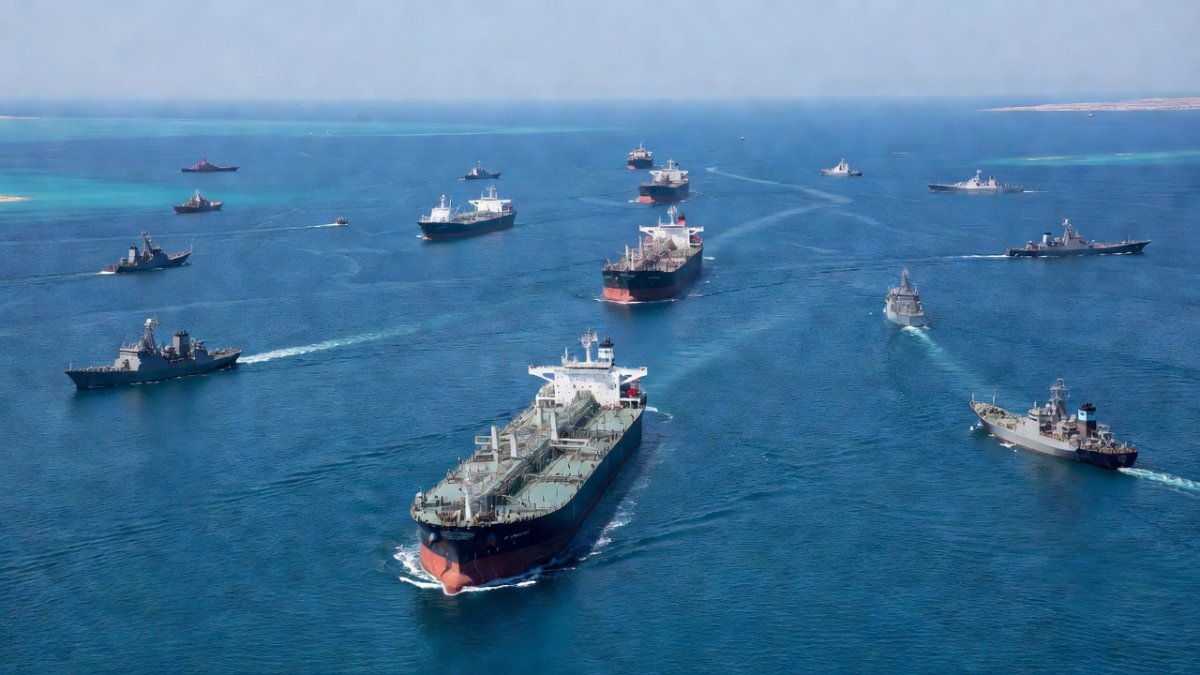
Iran responded by striking targets in Bahrain, home to the U.S. Fifth Fleet, and Kuwait, while also harassing oil tankers transiting the Strait of Hormuz. Two Greek-owned tankers were disabled, bringing traffic in the vital waterway near standstill. These moves demonstrate Tehran’s capacity to disrupt energy flows without formally closing the strait, preserving plausible deniability. Bloomberg reported that a VLCC was struck by an IRGC Navy fast-attack craft west of Bandar Abbas, forcing a temporary closure of the westbound lane. Proxy coordination has accelerated: Houthis announced a Red Sea interdiction line, while Iraqi militias launched drone strikes on U.S. logistics nodes.
Strait of Hormuz Crisis and Energy Market Shock
With Hormuz traffic severely curtailed, oil prices have surged past $90 per barrel and U.S. gasoline averages $4 per gallon. The incident pushed Brent to $93.40 a barrel and sent U.S. regular gasoline futures above $4.05 per gallon. Asian refiners absorbed the first wave: Japan confirmed it had drawn 4.2 million barrels from its strategic reserves, while South Korea activated its 90-day emergency protocol for the first time since 2019. Insurance markets reacted faster. Lloyd’s syndicates raised war-risk premiums for Hormuz transits from 0.25% to 1.85% of hull value overnight. That surcharge adds roughly $1.8 million per VLCC voyage—costs passed to Indian and Chinese buyers who still take 38% of Gulf crude. OPEC+ spare capacity of 3.2 million barrels per day is concentrated in Saudi Arabia and the UAE; both have signaled they will not release barrels while their own export terminals remain under threat.
Houthi Blockade and Red Sea Ripple Effects
Yemen’s Houthis announced a blockade of Saudi ports, further constricting Red Sea routes already strained by prior attacks. Riyadh faces simultaneous pressure on its eastern and western flanks, testing the kingdom’s ability to maintain oil exports while managing domestic economic reforms. The Houthi “Red Sea Exclusion Zone” directly threatens 2.1 million barrels per day that normally transit Bab el-Mandeb, forcing Saudi Aramco to reroute eastbound cargoes back through Hormuz—the very chokepoint Riyadh has spent decades trying to bypass. Saudi officials face a two-front economic war. Vision 2030 and NEOM construction schedules, which rely on just-in-time module deliveries via Yanbu and Jizan ports, are slipping. The UAE has quietly increased air-freight capacity to Europe while lobbying Washington for expanded naval escorts.
Diplomatic Off-Ramps and Regional Implications
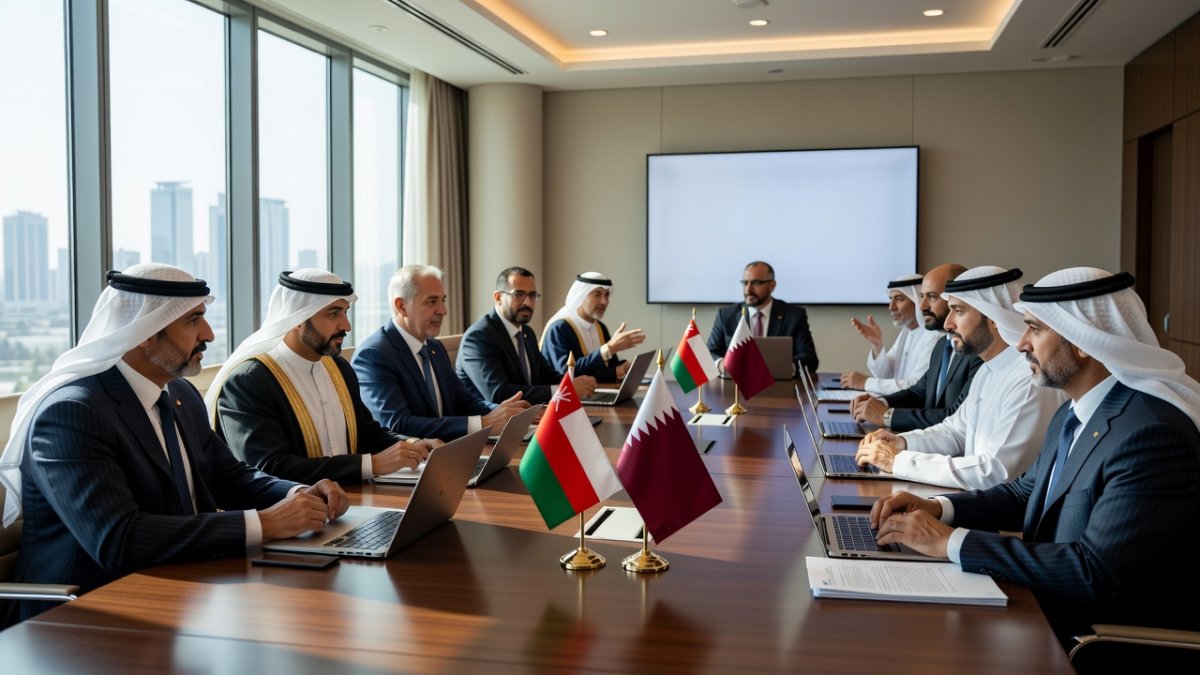
Despite the intensity, both sides have left narrow diplomatic channels open. The 10-day ceasefire proposal and Iranian outreach to Pakistan suggest Tehran seeks to avoid total isolation. Omani and Qatari back-channel envoys delivered a 10-day ceasefire framework to Tehran, building on the MoU signed in Muscat last month that had capped Iranian enriched-uranium stockpiles in exchange for partial sanctions relief. That MoU is fraying because Washington has not yet released the $6 billion in frozen Iraqi funds promised under the original text. Pakistan’s foreign minister reportedly offered to host a trilateral working group, signaling Islamabad’s desire to protect its own $2.5 billion annual oil import lifeline. For Washington, continued pressure aims to degrade Iranian capabilities ahead of any future nuclear negotiations. Turkey balances its own energy interests, while China and Russia weigh opportunities to expand influence amid U.S. distraction. By Malik Hassan, Staff Writer
This article was produced with AI-assisted research and editorial support. Reporting is based on sources cited in the article.
What's Your Reaction?
 Like
0
Like
0
 Dislike
0
Dislike
0
 Love
0
Love
0
 Funny
0
Funny
0
 Wow
0
Wow
0
 Sad
0
Sad
0
 Angry
0
Angry
0

Middle East Correspondent at Global1.News. Based in Beirut, covering politics, conflict, energy, and society across the Middle East. Brings context and depth to a region often reduced to headlines.













Comments (0)