
Interstellar Sugar Discovery Boosts Search for Life
In a landmark breakthrough, astronomers have detected erythrulose—a genuine four-carbon sugar—freely floating in the interstellar molecular cloud G+0.693−0.027 some 27,000 light-years from Earth. The find, made with Spain’s Yebes 40-meter and IRAM 30-meter telescopes, marks the first time a true sugar molecule has been identified in interstellar space and dramatically strengthens the case that life’s chemical building blocks form on icy dust grains long before planets asse...
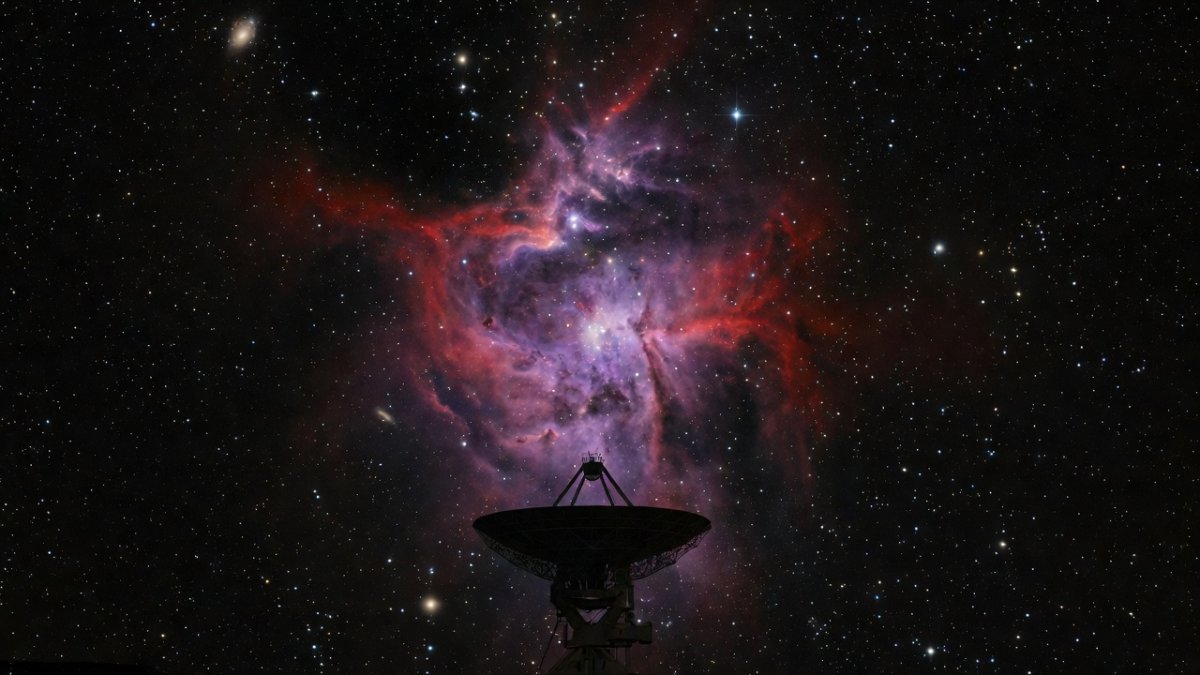
In a landmark breakthrough, astronomers have detected erythrulose—a genuine four-carbon sugar—freely floating in the interstellar molecular cloud G+0.693−0.027 some 27,000 light-years from Earth. The find, made with Spain’s Yebes 40-meter and IRAM 30-meter telescopes, marks the first time a true sugar molecule has been identified in interstellar space and dramatically strengthens the case that life’s chemical building blocks form on icy dust grains long before planets assemble.
Interstellar Erythrulose Discovery Rewrites Life’s Cosmic Origins
New Delhi, India – July 19, 2026 — An international team led by Dr. Izaskun Jimenez-Serra at Spain’s Centre for Astrobiology has identified erythrulose, a four-carbon ketose monosaccharide with the formula C4H8O4, in the chemically rich molecular cloud G+0.693−0.027 located 27,000 light-years from Earth near the Milky Way’s centre.
The Discovery
The team identified erythrulose in the chemically rich molecular cloud G+0.693−0.027, situated approximately 27,000 light-years from Earth toward the galactic centre. Observations relied on the Yebes 40-meter telescope in Spain and the IRAM 30-meter telescope, which captured the spectral signatures of this four-carbon simple sugar. Dr. Izaskun Jimenez-Serra’s group at Spain’s Centre for Astrobiology led the effort, confirming erythrulose as the most complex sugar detected beyond the Solar System to date. Erythrulose stands out as a genuine four-carbon ketose monosaccharide with the formula C4H8O4, distinguishing it from simpler two-carbon compounds like glycolaldehyde that lack the full aldose or ketose ring structure required for classification as true sugars.
Why This Sugar Matters
Erythrulose represents the first true sugar molecule found in the interstellar medium, surpassing earlier detections such as glycolaldehyde identified in 2000. While ribose, a five-carbon sugar, appeared in asteroid samples last year, erythrulose’s presence in free-floating interstellar gas demonstrates that such molecules can exist independently of planetary bodies. This elevates the complexity of known interstellar organics and directly supports models where life’s precursors accumulate in space. This structural complexity matters because four-carbon sugars can participate directly in prebiotic pathways leading to ribose and other pentoses essential for RNA, whereas two-carbon species serve mainly as intermediates. The 2025-2026 analysis of samples returned by JAXA’s Hayabusa2 mission from asteroid Ryugu confirmed ribose at concentrations of several parts per billion, extending the inventory of extraterrestrial sugars beyond the earlier 2000 detection of glycolaldehyde in the Sagittarius B2 cloud by Hollis and colleagues. Parallel observations have catalogued amino acids such as glycine in the same molecular clouds and polycyclic aromatic hydrocarbons (PAHs) with up to 50 carbon atoms, illustrating a clear chemical progression from simple aldehydes through sugar-like intermediates to functionalized prebiotic molecules capable of surviving incorporation into planetesimals.

From Dust Grains to Life’s Building Blocks
Researchers conclude that erythrulose forms on icy dust grains within cold molecular clouds through surface chemistry reactions. These grains later incorporate into protoplanetary disks, delivering pre-formed sugars to emerging planets. The mechanism implies that key carbohydrates reached early Earth via comets and meteorites rather than arising solely through terrestrial processes, consistent with the cloud’s observed chemical richness. Researchers modeling ice-grain surface chemistry conclude that erythrulose forms via successive additions of formaldehyde and glycolaldehyde on amorphous water ice mantles at approximately 10 K, where quantum tunneling enables H-atom additions despite negligible thermal energy. The formose reaction provides the key mechanism, in which formaldehyde molecules adsorbed on interstellar ice grains undergo base-catalyzed polymerization at temperatures near 10 K, progressively building erythrulose and higher sugars through aldol condensations driven by cosmic-ray-induced radicals and UV photoprocessing over timescales of several million years. Ultraviolet photons from nearby young stars and cosmic-ray secondaries generate reactive radicals that accelerate chain elongation, with laboratory simulations showing sugar yields reaching 1-2 percent of the initial ice carbon reservoir after 10^6-10^7 years. Once formed, these molecules become embedded in dust grains that coagulate within protoplanetary disks, as mapped by ALMA observations of complex organics around stars such as TW Hydrae. The Murchison meteorite, which fell in 1969, delivered more than 70 amino acids and sugar derivatives to Earth, providing direct evidence that similar delivery occurred during the Late Heavy Bombardment between 4.1 and 3.8 billion years ago when an estimated 10^12-10^13 kilograms of organic carbon may have reached the terrestrial surface. This exogenous contribution likely supplemented any terrestrial synthesis, raising the inventory of available carbohydrates for early metabolic networks.
What This Means for Indian Space Science
Indian institutions including the Raman Research Institute in Bangalore, Tata Institute of Fundamental Research in Mumbai, and various IIT astrophysics groups actively study astrochemistry and molecular clouds. ISRO’s ongoing space biology initiatives and the Gaganyaan human spaceflight programme stand to benefit from these findings, as they inform experiments on organic molecule stability in microgravity. Indian students and researchers at these centres can now prioritise targeted observations of galactic-centre clouds using upgraded radio facilities, strengthening India’s role in international astrobiology collaborations. Indian astronomers operating the PARAS spectrograph at the Mount Abu Observatory have contributed radial-velocity data to the growing exoplanet census and are positioned to pursue follow-up spectroscopy of disk chemistry in regions accessible to future national missions.
The Big Question: Are We Alone?
The detection indicates that complex sugars form readily across the galaxy, increasing the probability that life’s chemical precursors exist on countless worlds. This shifts astrobiology from Earth-centric models toward a distributed cosmic inventory of organics. For Indian scientists, the result underscores the value of investing in high-resolution spectroscopy and dust-grain simulation studies to map similar molecules in regions accessible to future Indian space missions. The detection of erythrulose across the galaxy raises the value of the fraction of planets that develop life (f_l) in the Drake Equation by demonstrating that carbohydrate precursors are not rare terrestrial accidents but widespread products of cold-cloud chemistry. With more than 5,700 confirmed exoplanets, including dozens in the habitable zone of Sun-like stars, the probability that at least some worlds receive comparable prebiotic inventories has increased substantially. The James Webb Space Telescope has already begun probing atmospheric biosignatures such as dimethyl sulfide on rocky exoplanets, while the European Space Agency’s PLATO mission, scheduled for launch in 2026, and NASA’s planned Habitable Worlds Observatory will extend these searches to lower-mass planets with higher photometric precision. The distinction between biosignature searches, which target atmospheric disequilibria produced by metabolism, and technosignature efforts focused on artificial radio or laser emissions becomes sharper once the baseline availability of sugars is shown to be high; resources can therefore be allocated more efficiently toward worlds already seeded with complex organics rather than assuming all chemistry must originate locally.
The Bottom Line
Erythrulose’s confirmed presence 27,000 light-years away demonstrates that four-carbon sugars arise on interstellar ice before planet formation. With direct ties to ISRO programmes and research at RRI, TIFR, and the IITs, this discovery supplies Indian researchers with new targets for molecular surveys and strengthens the scientific foundation for India’s expanding space biology efforts. The data show life’s ingredients are more widely available than previously modelled, guiding both national and global searches for extraterrestrial biosignatures.
— By Dr. Raj Patel, Staff Writer
This article was produced with AI-assisted research and editorial support. Reporting is based on sources cited in the article.
What's Your Reaction?
 Like
0
Like
0
 Dislike
0
Dislike
0
 Love
0
Love
0
 Funny
0
Funny
0
 Wow
0
Wow
0
 Sad
0
Sad
0
 Angry
0
Angry
0

India/South Asia Correspondent at Global1.News. Analytical voice with a background in science and health journalism. Based in New Delhi, covering Indian politics, education, healthcare, technology, and policy. Breaks down complex data into clear, actionable reporting.















Comments (0)