
Kenya's Maternal Surname Revolution Among Kikuyu Men
In Kikuyu communities across Kenya, names have always carried the weight of ancestry, belonging and memory, yet a quiet revolution is unfolding as growing numbers of men choose to carry their mothers’ surnames instead of their fathers’. This shift challenges long-held patriarchal norms while echoing deeper cultural truths about the House of Mumbi and the central role women have played in shaping families and identity.
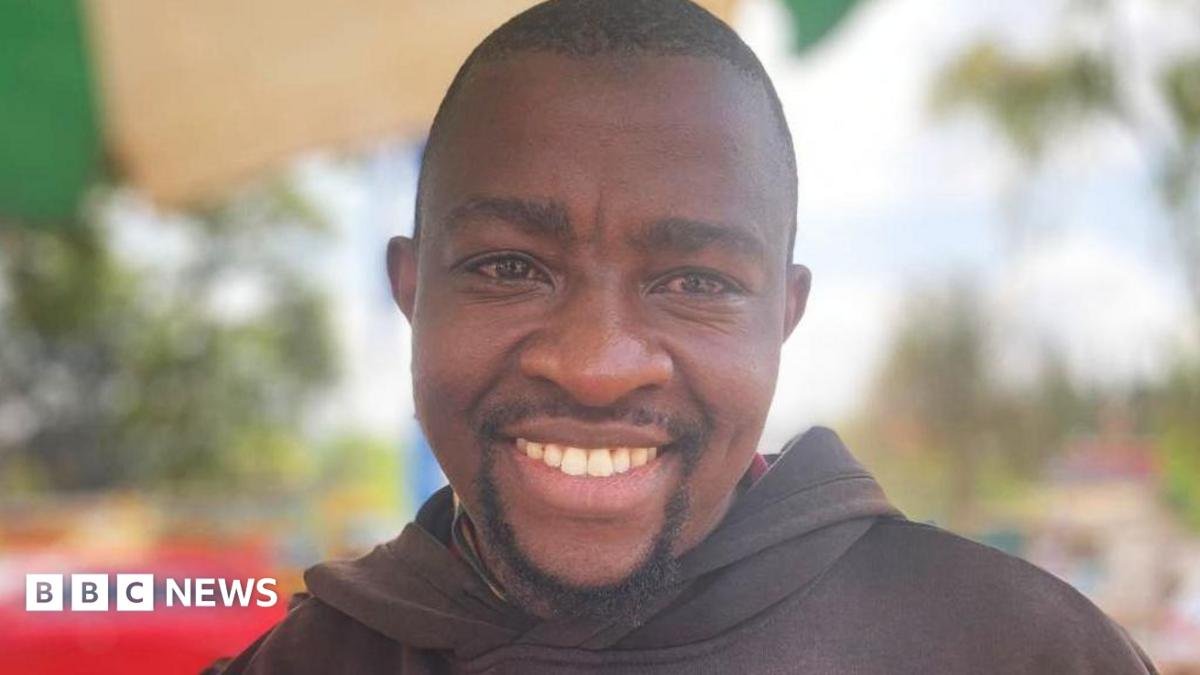
In Kikuyu communities across Kenya, names have always carried the weight of ancestry, belonging and memory, yet a quiet revolution is unfolding as growing numbers of men choose to carry their mothers’ surnames instead of their fathers’. This shift challenges long-held patriarchal norms while echoing deeper cultural truths about the House of Mumbi and the central role women have played in shaping families and identity. The debate reveals both resistance and respect, as personal stories of absence, resilience and love collide with tradition in one of Africa’s most dynamic societies.
Kenya's Maternal Surname Revolution
Dakar, Senegal — Article continues...
Kenya's Shifting Surnames Among Kikuyu Men
In Kenya, many children traditionally receive their father's first name as a surname, yet a growing number of Kikuyu men now carry their mother's name instead. This practice has sparked debate within the country's largest ethnic group, where patriarchal expectations often clash with new family realities. Men like Simon Macharia Wangui speak openly about choosing their mother's name to honour the parent who raised them, while facing occasional ridicule from those who view the choice as unusual.
Personal Choices Rooted in Absence and Respect
Simon Macharia Wangui’s decision to take his mother’s name emerged from a childhood shaped by absence and quiet endurance. After losing his mother at twelve, he was raised by his grandmother in a household where survival depended on women’s labour and emotional steadiness. When the time came to register a surname for his birth certificate, choosing his absent father felt dishonest. He later told interviewers that credit should be given only where it has been earned, a sentiment that captures the private calculations many young Kenyan men now make when official documents force them to name their lineage.
Across much of Africa, fatherhood has long been measured by provision rather than daily presence, yet economic migration and shifting social norms have thinned that model. In Kikuyu communities, where land and clan identity once passed through men, the growing visibility of single mothers has forced a re-examination of what constitutes legitimate kinship. Wangui’s choice mirrors the experience of countless women who have raised children alone while watching society still insist that a father’s name confers dignity the mother cannot supply.
The emotional labour of this decision often falls heaviest on young men who must defend their mothers’ names in classrooms, workplaces and family gatherings. Their stance quietly challenges the assumption that respect for tradition requires erasing the women who actually sustained the household. In doing so, they join a wider continental conversation about redefining fatherhood not as automatic inheritance but as demonstrated care.
Political Figures Normalising Female Surnames
MP John Njuguna Wanjiku, elected in 2021, carries his mother's name and answers to the nickname Ka-Wanjiku, meaning child of Wanjiku. His visibility in public office shows how such names now appear in prominent positions where they were once rare. Others, including broadcaster Evans Kibe Waceke, note that single-mother households have become more common, yet some still assume children from these homes lack discipline or moral grounding.
Musicians Turning Maternal Names Into Cultural Cachet
Peter Kigia wa Esther has carried his mother’s name through decades of performing benga, the guitar-driven genre that emerged in the 1960s and 1970s along the shores of Lake Victoria and quickly became a vehicle for Kikuyu storytelling. Benga’s circular rhythms and conversational lyrics traditionally celebrate lineage, migration and moral lessons; by registering his company as Wa Esther Productions, Kigia folded his mother into that public archive. The name travels on posters and album covers, turning a private act of remembrance into an audible claim on cultural memory.
Younger artists such as Waithaka wa Jane and 90K Ka Msoh have extended the practice into Nairobi’s contemporary scene. Their stage names appear on matatu speakers and social-media clips, normalising maternal surnames among audiences who once associated artistic success with paternal lineage. In an industry still dominated by male promoters and clan-based patronage networks, publicly honouring one’s mother functions as both artistic signature and subtle rebuke to expectations that men should minimise female influence.
The trend resonates because benga has always drawn strength from women’s lived experience—market traders, church singers and grandmothers whose oral histories supplied the genre’s moral core. By foregrounding maternal names, these musicians reconnect the music to its deepest sources while modelling a form of masculinity that draws power from gratitude rather than erasure.
Ridicule, Debate and Emotional Costs
The trend drew sharp public comment two years ago when motivational speaker Robert Burale argued that female surnames undermine masculinity. TV personality Fred Muiritiri later described dropping his mother's name after years of embarrassment and low self-esteem that contributed to depression at age 23. Women with maternal surnames rarely encounter the same criticism, and many later adopt a husband's first name upon marriage.
Kikuyu Legends and the House of Mumbi
Kikuyu cosmology begins with Gikuyu and Mumbi, the founding couple who received land from Ngai and bore nine daughters whose names became the principal clans. The tenth, sometimes counted separately, completes the circle. Every Kikuyu person is said to belong to the House of Mumbi, a designation that places female ancestry at the centre of collective identity. Yet contemporary ridicule of men who carry their mothers’ names reveals a selective forgetting of this origin story, as though the community’s foundational narrative can be honoured in ritual while dismissed in daily life.
Cultural expert Mugwe wa Njugi has observed that Kikuyu people have “always aligned ourselves with women,” citing clan names such as Mumbui that descend directly from the daughters. The irony is sharp: a society that traces its very existence to female progenitors now treats maternal surnames as anomalies. This tension surfaces most clearly when young men must justify their choices against elders who insist that only paternal names confer full belonging.
The writer Ngugi wa Thiong’o himself was known in childhood by his mother’s name before adopting a paternal one for publication. That early identification with the maternal line quietly echoes the same pattern now re-emerging in public life. Reclaiming these names, therefore, is less an innovation than a return to an older logic in which women’s centrality was never questioned.
West African Naming Parallels in Senegal
In Senegal, Wolof families transmit the father’s jammu—the clan name that signals social position and historical occupation—yet daily identity is often shaped by the mother’s household. Children learn moral conduct, language and social networks through her relatives, and the tontine savings groups organised by mothers remain the most reliable source of capital for education and small business. A Wolof elder asked about a man taking his mother’s name would likely note that while the jammu remains fixed for inheritance, the person who fed and guided the child deserves public recognition; respect, he might say, is not erased by paperwork.
Among the Sereer, certain matriclans preserve oral histories that trace belonging through mothers, offering a living reminder that West African family structures have never been uniformly patrilineal. These traditions sit alongside Islamic and French legal frameworks that privilege paternal lines, creating the same layered negotiations visible in Kenya. A Sereer grandmother might observe that a son who honours his mother publicly simply makes visible what the community has always known: the hand that rocks the cradle also shapes the clan’s reputation.
From my own Senegalese vantage point, these Kenyan choices feel familiar. Across West Africa, naming practices encode both continuity and adaptation. When men publicly claim their mothers’ names, they are not discarding tradition but insisting that the women who sustained families through economic upheaval and migration receive the same archival permanence once reserved for fathers alone.
Broader Shifts in Family and Identity
Academic George Gathigi observes that Kikuyu naming traditions continue to evolve alongside wider changes in Kenyan society. Single-parent households, economic pressures and greater public discussion of gender roles all contribute to the trend. Men who stand by their maternal surnames do so not to reject their heritage but to recognise the lived reality of who provided care and continuity, a choice that resonates with many families navigating similar transitions across Africa today.
By Amara Diop, Staff Writer
This article was produced with AI-assisted research and editorial support. Reporting is based on sources cited in the article.
What's Your Reaction?
 Like
0
Like
0
 Dislike
0
Dislike
0
 Love
0
Love
0
 Funny
0
Funny
0
 Wow
0
Wow
0
 Sad
0
Sad
0
 Angry
0
Angry
0

West Africa/Sahel Correspondent at Global1.News. Dakar-based journalist covering politics, security, climate, and development across Francophone and Anglophone West Africa. Tells the stories of a region undergoing profound transformation.










Comments (0)