
Khalil al-Hayya Named New Hamas Political Bureau Chief — What It Means for Gaza, Ceasefire Talks, and Regional Dynamics
Khalil al-Hayya Named New Hamas Political Bureau Chief — What It Means for Gaza, Ceasefire Talks, and Regional Dynamics Profile and Path to Leadership Khalil al-Hayya, born in 1960, brings a distinctive background to Hamas leadership. He earned a doctorate in the Sunnah of the Prophet and Hadith Sciences from the Holy Quran University in Sudan in 1997. Elected to the Palestinian Legislative Council in 2006 as a Gaza City representative, he later headed Hamas' Office of Arab a
Profile and Path to Leadership
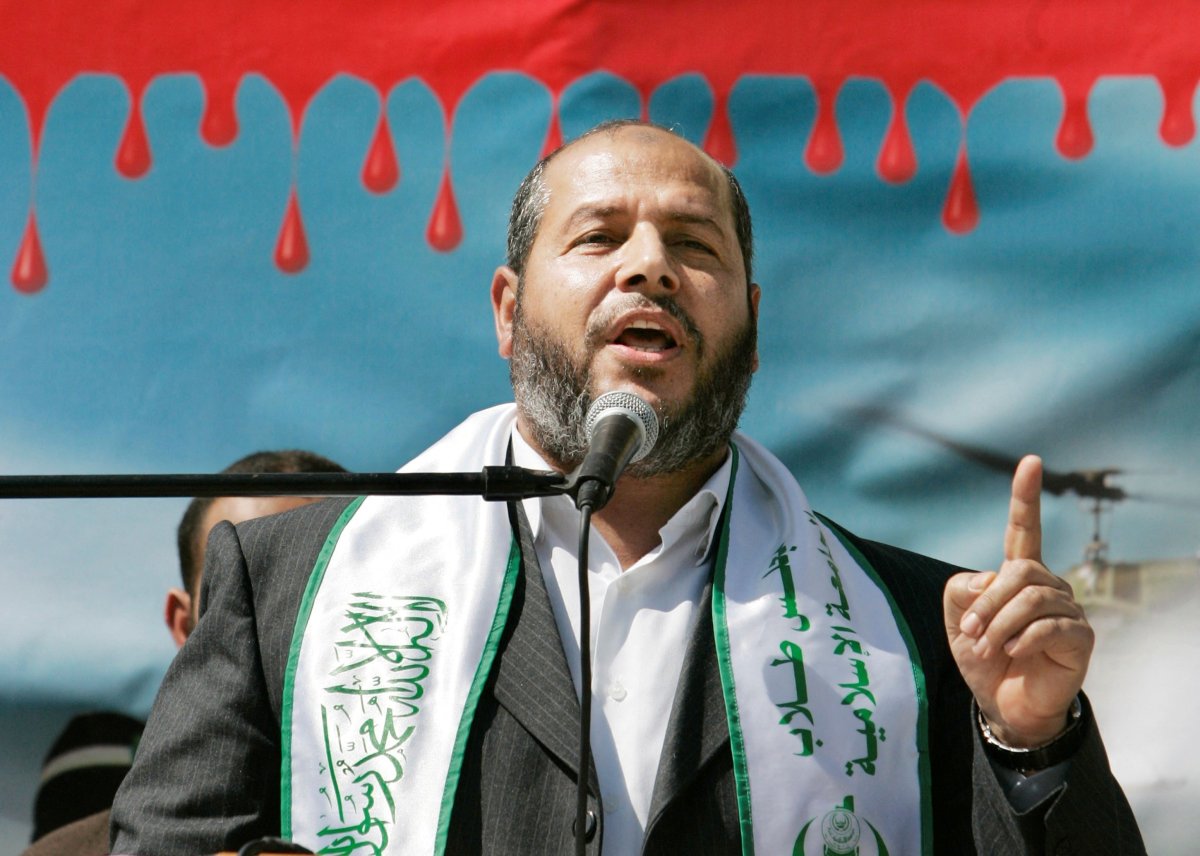
Khalil al-Hayya, born in 1960, brings a distinctive background to Hamas leadership. He earned a doctorate in the Sunnah of the Prophet and Hadith Sciences from the Holy Quran University in Sudan in 1997. Elected to the Palestinian Legislative Council in 2006 as a Gaza City representative, he later headed Hamas' Office of Arab and Islamic Relations after the movement's 2021 internal elections. His elevation follows the October 2024 killing of Yahya Sinwar by Israeli forces, positioning al-Hayya as the successor after serving as Sinwar's deputy and briefly leading the movement in Gaza.
Hamas's 2006 PLC victory secured 74 of 132 seats amid Fatah's fragmentation, establishing al-Hayya as a Gaza representative before the 2007 split. The 2021 internal elections, held after Haniyeh's relocation to Qatar, reinforced Sinwar's Gaza dominance and elevated al-Hayya's external-relations portfolio, reflecting a deliberate shift toward figures with academic and diplomatic credentials rather than purely military ones.
Hamas's internal electoral process relies on the Shura Council, a consultative body that vets candidates through secret ballots and regional consultations to ensure ideological alignment and operational security. This mechanism, which operates across Gaza, the West Bank, and diaspora branches, played a decisive role in al-Hayya's selection by prioritizing continuity in external diplomacy while mitigating risks from Israeli targeting of military figures.
Personal Losses and Organizational Resilience
Al-Hayya's family has endured repeated Israeli strikes. His son Hamza, a Qassam Brigades field commander, died in clashes in eastern Gaza City in 2008. Eight relatives, including brothers and their sons, were killed in a May 2007 Israeli assassination attempt that targeted a family gathering in eastern Gaza City. Additional family members have died amid the ongoing Gaza conflict. These experiences shape his worldview yet have not disrupted Hamas' internal succession process, which maintained continuity despite multiple high-profile losses including Ismail Haniyeh and Saleh al-Arouri.
Previous transitions, such as the 2017 replacement of Khaled Mashal by Haniyeh, demonstrated Hamas's capacity to absorb targeted killings without paralysis. The October 16, 2024, confirmation of Sinwar's death in Rafah and Haniyeh's July 31, 2024, assassination in Tehran tested this resilience once more, yet the Shura Council completed al-Hayya's selection within weeks.
Strategic Calculus Behind the Appointment
Hamas selected al-Hayya to preserve organizational cohesion at a critical juncture. Israel seeks to dismantle Hamas command structures through targeted operations, while Hamas prioritizes leadership continuity to sustain both military and political functions. Al-Hayya's prior role in Arab and Islamic relations gives him leverage in coordinating with external actors. This choice signals Hamas' intent to balance armed resistance with diplomatic outreach rather than shifting toward full accommodation with Israeli demands.
The U.S. State Department and EU Council swiftly reiterated terrorist designations for Hamas, while UN Secretary-General António Guterres called for inclusive Palestinian representation. Egypt and Qatar expressed cautious engagement, with Doha continuing to host politburo functions and Cairo prioritizing Rafah border control.
Effects on Ceasefire Negotiations
Ceasefire discussions involving Qatar, Egypt, and the United States now face a new interlocutor. Al-Hayya's academic credentials and long-standing ties within Palestinian institutions may facilitate clearer communication on core Hamas positions, such as prisoner exchanges and reconstruction guarantees. Israeli Prime Minister Benjamin Netanyahu's government continues to emphasize total victory, creating friction that could prolong talks. Second-order effects include potential delays in hostage releases and humanitarian access, which in turn affect regional stability and energy market perceptions tied to Gulf state diversification plans under Vision 2030.
The November 2023–January 2024 negotiation rounds collapsed over hostage-prisoner ratios, with over 1,200 Israelis and 43,000 Palestinians reported killed by late 2024. Al-Hayya's elevation may recalibrate demands around the 250-plus remaining detainees, though Netanyahu's office signaled no policy shift.
Relations with Iran and Proxy Networks
Al-Hayya's appointment intersects with Iran's regional strategy through the Islamic Revolutionary Guard Corps. Hamas maintains operational and financial links with Tehran despite its Sunni orientation, creating a pragmatic axis against shared adversaries. Iran benefits from a stable Hamas leadership that can sustain pressure on Israel without immediate collapse. This dynamic influences Hezbollah's posture in Lebanon and Houthi actions in the Red Sea, illustrating how leadership changes in Gaza ripple across the axis of resistance and complicate U.S. and Israeli containment efforts.
Turkey under Erdoğan welcomed the continuity, offering expanded mediation channels, while Saudi Arabia maintained distance, conditioning any Hamas outreach on alignment with Arab League positions. IRGC statements emphasized sustained funding despite leadership turnover.
This leadership continuity strengthens Iran's ability to synchronize Hamas operations with Hezbollah's northern front and Houthi maritime disruptions, allowing Tehran to maintain multi-front pressure on Israel and its allies without overextending resources or exposing its own proxies to premature escalation.
Israeli-Palestinian Dynamics and Normalization
The succession occurs against the backdrop of the Abraham Accords, which normalized relations between Israel and several Arab states. Saudi Arabia and the UAE weigh economic diversification against Palestinian grievances. Al-Hayya's emphasis on Islamic scholarship and political experience may reinforce Hamas' rejection of unilateral concessions, slowing further Arab-Israeli normalization. Turkey under Recep Tayyip Erdoğan could seek expanded mediation space, while Egypt focuses on border security and refugee containment. These competing interests highlight how Hamas leadership transitions affect broader alliance structures.
Regional responses diverged sharply: Qatar sustained political hosting, Turkey signaled diplomatic support, and Saudi Arabia reiterated linkage to Palestinian statehood. The UAE avoided direct comment, underscoring normalization's economic priority over immediate political entanglement.
Outlook for Regional Stability
Al-Hayya's tenure will test Hamas' ability to navigate military pressure and political isolation. Israel retains significant leverage through ongoing operations and international diplomacy, yet Hamas retains influence via its governance role in Gaza and external support networks. The appointment underscores the movement's adaptability rather than its defeat. Over time, this could shape reconstruction timelines, influence OPEC+ energy diplomacy indirectly through regional tension levels, and determine whether renewed negotiations produce durable arrangements or renewed cycles of confrontation.
Analysts note that without addressing the 2006–2007 governance split and subsequent blockade, any leadership change risks repeating cycles of confrontation. Egypt and Qatar continue to anchor talks, yet durable arrangements remain contingent on Israeli concessions and Hamas's willingness to integrate reconstruction guarantees into future rounds.
Reconstruction efforts in Gaza will hinge on al-Hayya's capacity to secure international funding while navigating Israeli oversight, directly affecting humanitarian aid corridors and the feasibility of a viable "day-after" governance model that avoids renewed factional violence or external occupation scenarios.
By Malik Hassan, Staff WriterThis article was produced with AI-assisted research and editorial support. Reporting is based on sources cited in the article.
What's Your Reaction?
 Like
0
Like
0
 Dislike
0
Dislike
0
 Love
0
Love
0
 Funny
0
Funny
0
 Wow
0
Wow
0
 Sad
0
Sad
0
 Angry
0
Angry
0

Middle East Correspondent at Global1.News. Based in Beirut, covering politics, conflict, energy, and society across the Middle East. Brings context and depth to a region often reduced to headlines.












Comments (0)