
Wildfire Smoke Threatens World Cup Final Air Quality
As the world tunes in for the epic showdown between Spain and Argentina in the World Cup final at MetLife Stadium, an invisible threat looms from the north: thick plumes of smoke from Canadian wildfires blanketing the skies. This transboundary crisis underscores the interconnected climate emergency that binds North America with Latin America's burning landscapes, from the Amazon to Patagonia.
As the world tunes in for the epic showdown between Spain and Argentina in the World Cup final at MetLife Stadium, an invisible threat looms from the north: thick plumes of smoke from Canadian wildfires blanketing the skies. This transboundary crisis underscores the interconnected climate emergency that binds North America with Latin America's burning landscapes, from the Amazon to Patagonia.
Wildfire Smoke Threatens World Cup Final Air Quality
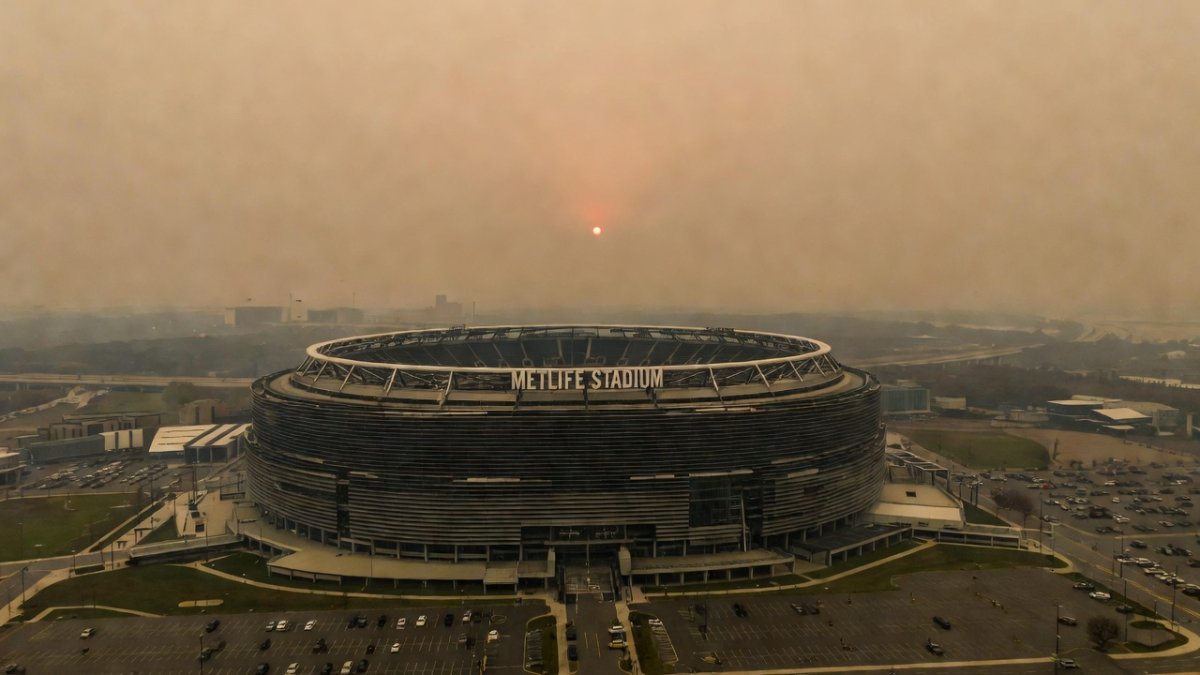
East Rutherford, New Jersey, USA — July 19, 2026 — Today, as fans gather for the Spain versus Argentina final, Canadian wildfire smoke has already infiltrated the air across the Northeast, turning the open-air venue into a frontline of the climate crisis.
Canada Ablaze: 3,700 Wildfires and 2.8 Million Hectares Burned
Canada faces an unrelenting inferno this season, with more than 3,700 wildfires recorded year-to-date and 2.79 million hectares already consumed. The Canadian Wildland Fire Information System reports 888 active fires, many still uncontained. The Northwest Territories alone have lost over 700,000 hectares, while Ontario’s single massive blaze has scorched 351,000 hectares and Quebec’s fires have exceeded 100,000 hectares under SOPFEU monitoring. Driven by lightning strikes amid prolonged hot, dry conditions, these fires sit near the 20-year average yet produce outsized transboundary effects. Smoke travels thousands of kilometers, reaching Latin American communities already familiar with similar devastation. In Argentina’s Patagonia, January and February 2026 saw over 15,000 hectares burned amid budget cuts under President Milei, mirroring Canada’s lightning-driven outbreaks. The scale reminds us that fire seasons no longer respect national lines. Data from the National Wildfire Coordinating Group and CWFIS confirm the cumulative footprint rivals entire provinces. Each hectare lost releases stored carbon, intensifying the very warming that fuels future blazes. For Latin American nations watching their own forests ignite, Canada’s crisis is not distant news but a shared warning. The 2.8 million hectares burned represent lost biodiversity, displaced wildlife, and communities breathing the same particulate cocktail now drifting toward MetLife Stadium.
Smoke Blankets 19 States: From Code Red to World Cup Stadium
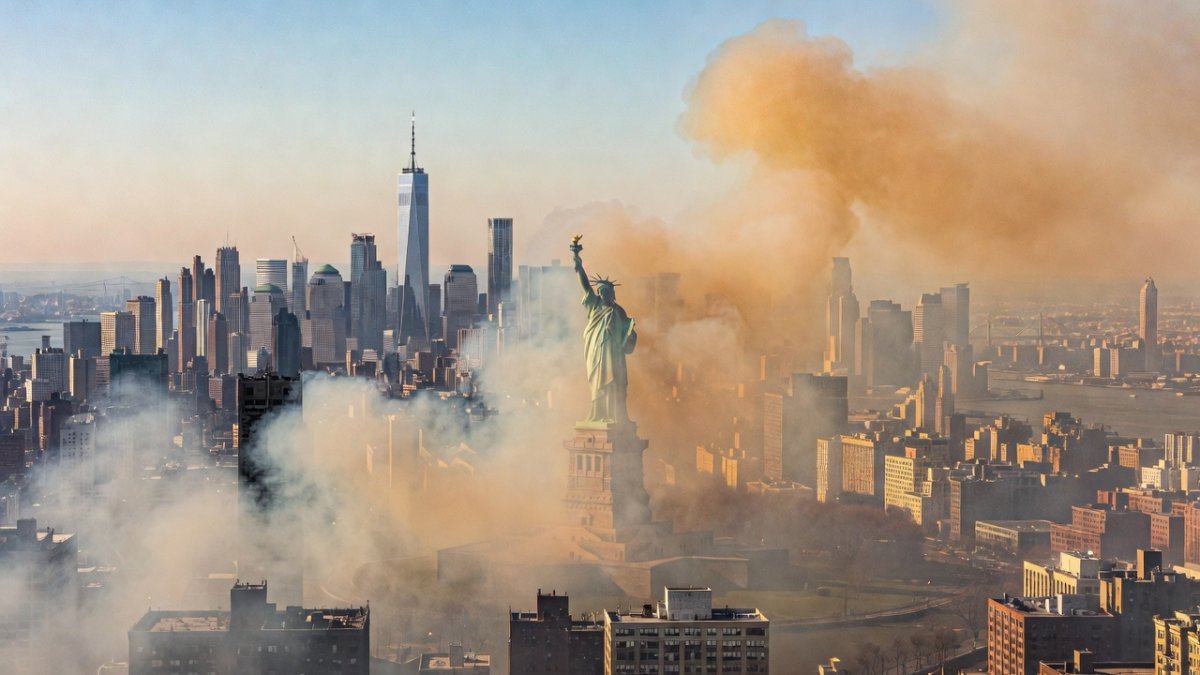
Nineteen U.S. states now labor under unhealthy air as Canadian smoke drifts south. Air quality indices have climbed into the unhealthy range of 151-200, with localized peaks near 245. New Jersey’s Department of Environmental Protection issued a Code Red alert, warning residents to limit outdoor exertion. Fine PM2.5 particles penetrate deep into lungs and bloodstream, creating hazy veils over landmarks like the Statue of Liberty and slashing visibility along the Hudson. AirNow.gov maps show the plume stretching from the Midwest to the Atlantic coast. The White House World Cup task force monitors conditions hourly while 80,000 fans prepare for the open-air final. Thunderstorms briefly cleared the stadium vicinity by game day, yet residual particulates linger. This mirrors recurring smoke events that have plagued Latin American capitals during Amazon and Pantanal fire seasons. Brazilian INPE data and Chilean CONAF reports document similar visibility collapses and school closures. The 19-state footprint demonstrates how one nation’s fire management failures become another’s public health burden. East Rutherford residents and visiting Argentine supporters alike face the same invisible hazard. NJ DEP alerts emphasize that even brief exposure during cheering and travel compounds risk. The World Cup final, meant to celebrate hemispheric unity, instead spotlights the urgent need for coordinated air-quality forecasting across borders.
Public Health Emergency: 80,000 Lungs at Risk
Eighty thousand spectators at MetLife Stadium confront elevated PM2.5 levels that trigger immediate respiratory distress. Short-term effects include eye and throat irritation, persistent coughing, reduced lung function, and headaches that intensify under physical exertion from cheering and long travel. Sensitive groups—those with asthma, COPD, cardiovascular disease, the elderly, and children—face heightened danger. FIFA medical teams and local health officials urge N95 mask use and hydration, recalling how Major League Soccer postponed a Chicago match earlier this season due to similar smoke. Exertion at a World Cup final amplifies inhalation rates, turning celebration into potential medical emergency. Latin American fans traveling from smoke-prone regions in Argentina and Brazil recognize these symptoms all too well. Argentine supporters who endured Patagonia’s January fires now confront the same particulates in New Jersey. Health departments stress that fine particles cross the blood-air barrier, raising risks of systemic inflammation. Emergency services stand ready, yet prevention remains the only reliable defense. The convergence of mass outdoor gathering and transboundary pollution exposes gaps in event-day air-quality protocols. Officials continue monitoring forecasts, but the underlying message is clear: climate-driven smoke events demand proactive, cross-border health strategies rather than reactive alerts.
From Canada to the Amazon: A Hemisphere on Fire
The fires stretching from Canada’s boreal forests to South America’s biomes reveal a single hemispheric crisis. Argentina’s Patagonia wildfires in early 2026 burned more than 15,000 hectares amid austerity measures that slashed firefighting budgets. Brazil’s Pantanal suffered drought-fueled criminal fires while INPE recorded rising ignition risks under El Niño. Although Amazon deforestation rates have declined, fire danger climbs as dry conditions persist. Global burned area from January through April 2026 surpassed 150 million hectares, twenty percent above previous records according to World Resources Institute analysis. CONAF in Chile and IBAMA in Brazil document parallel patterns of lightning, drought, and land-use pressure. Argentine fans arriving for today’s final carry firsthand knowledge of these losses. The same atmospheric rivers that transport Canadian smoke southward also carry Amazonian particulates northward during peak fire months. This shared geography demands coordinated response. When 2.8 million Canadian hectares burn, the carbon pulse affects climate trajectories felt in the Chaco and Cerrado. The World Cup final under smoky skies forces recognition that Latin America’s fire seasons and Canada’s boreal outbreaks are not separate stories but chapters of one accelerating narrative.
El Niño, Climate Change, and the New Normal of Transboundary Smoke
Strengthening El Niño conditions, with NOAA reporting rising Niño 3.4 anomalies, intensify both Canadian and Latin American fire seasons. Climate change amplifies temperature extremes and dries fuels earlier each year. The 2023 Canadian season, which scorched 18 million hectares, established a grim precedent now repeating. Transboundary smoke events have become annual rather than exceptional. Carbon feedback loops accelerate as burning forests release stored greenhouse gases, further warming the planet. Agricultural expansion and deforestation interact with these climate drivers, creating conditions where fires escape control. In Latin America, weakened enforcement of forest codes under political pressure compounds the threat. The same dynamics that push Canadian smoke across 19 U.S. states also send Pantanal and Amazon emissions into neighboring countries. “Super El Niño” fears have materialized, locking regions into prolonged dry spells. Adaptation requires acknowledging that fire seasons will grow longer and more intense. Cross-border data sharing between CWFIS, INPE, and CONAF must become routine. Without aggressive mitigation, the new normal will feature repeated World Cup-level events where outdoor gatherings occur beneath hazardous skies.
The Bottom Line — Smoke Knows No Borders
Extreme fire seasons once considered rare are now expected. The smoke blanketing MetLife Stadium today signals the necessity of binding cross-border air quality agreements. Transboundary smoke management protocols must extend from Canada through the United States into Latin America, where Amazon, Pantanal, and Chaco fire seasons intensify through October. Calls for stronger forest code enforcement, sustainable land-use planning, and increased funding for firefighting echo from Quebec to Patagonia. Argentine supporters at today’s final understand that protecting their own forests requires solidarity with northern neighbors. The World Cup final serves as a climate wake-up call: adaptation investments and emissions reductions cannot wait. Smoke travels without passports; solutions must do the same. Only coordinated hemispheric action can prevent future finals from unfolding under hazardous, particulate-laden skies.
By Elena Vasquez, Staff Writer
This article was produced with AI-assisted research and editorial support. Reporting is based on sources cited in the article.
What's Your Reaction?
 Like
0
Like
0
 Dislike
0
Dislike
0
 Love
0
Love
0
 Funny
0
Funny
0
 Wow
0
Wow
0
 Sad
0
Sad
0
 Angry
0
Angry
0

Latin America Correspondent at Global1.News. Based in Mexico City, covering politics, economics, energy, and culture across the region. Brings an on-the-ground perspective to stories spanning from the Rio Grande to Patagonia.












Comments (0)