
Peru Twin Earthquakes — A Seismic Disaster in the Andean Heartland
Twin earthquakes struck Peru's Junín Region on July 19, 2026, killing 6 and destroying 49+ homes in Pumpunya. A disaster science analysis of seismic vulnerability in the Andean corridor, hospital infrastructure damage, and the deadly toll of adobe construction.
The twin earthquakes that struck central Peru's Junín Region on July 19, 2026, have left at least six dead, dozens injured, and hundreds displaced — a devastating reminder of the seismic vulnerability that runs through the Andean corridor. With epicenters just 7 km south of Chupaca in the Mantaro Valley, the shallow temblors collapsed more than 49 homes in the rural community of Pumpunya, cracked hospital walls in Huancayo, and sent 12 aftershocks rippling through one of Latin America's most tectonically active zones. As firefighters dug through rubble with bare hands and families camped outside their ruined adobe homes, the disaster laid bare the deadly intersection of moderate geology and fragile infrastructure.
Peru's Twin Earthquakes — A Seismic Disaster in the Andean Heartland
The Twin Quakes — A Region Shaken
The twin earthquakes that struck central Peru's Junín Region on July 19, 2026, delivered a stark reminder of the region's unrelenting seismic vulnerability. The first tremor registered between 5.1 and 5.6 in magnitude, with its epicenter located just 7 km south of Chupaca in the Mantaro Valley, approximately 300 km east of Lima. A second shock followed within minutes, both occurring at shallow depths ranging from 10 to 24 km. These parameters amplified surface shaking across rural communities already accustomed to frequent but usually milder events. The Instituto Geofísico del Perú recorded 12 aftershocks in the ensuing hours, keeping residents on edge as they assessed initial damage.
Data from the event underscore its concentrated impact despite moderate magnitudes. Six people lost their lives, while 21 to 30 or more sustained injuries ranging from fractures to crush trauma. Roughly 300 individuals found themselves displaced as homes crumbled. This sequence arrived on the heels of other significant Latin American quakes, including Venezuela's M7.1-M7.2 doublet in June 2026 and Mexico's M7.3 event that triggered tsunami alerts. Such clustering highlights the interconnected tectonic stresses along the Pacific margin. Local authorities immediately activated emergency protocols, with the Premier Luis Enrique Arroyo Sánchez pledging swift federal support. The human cost, though contained numerically, reveals deeper systemic fragilities in Peru's Andean heartland.
Pumpunya: Ground Zero of the Mantaro Valley Destruction
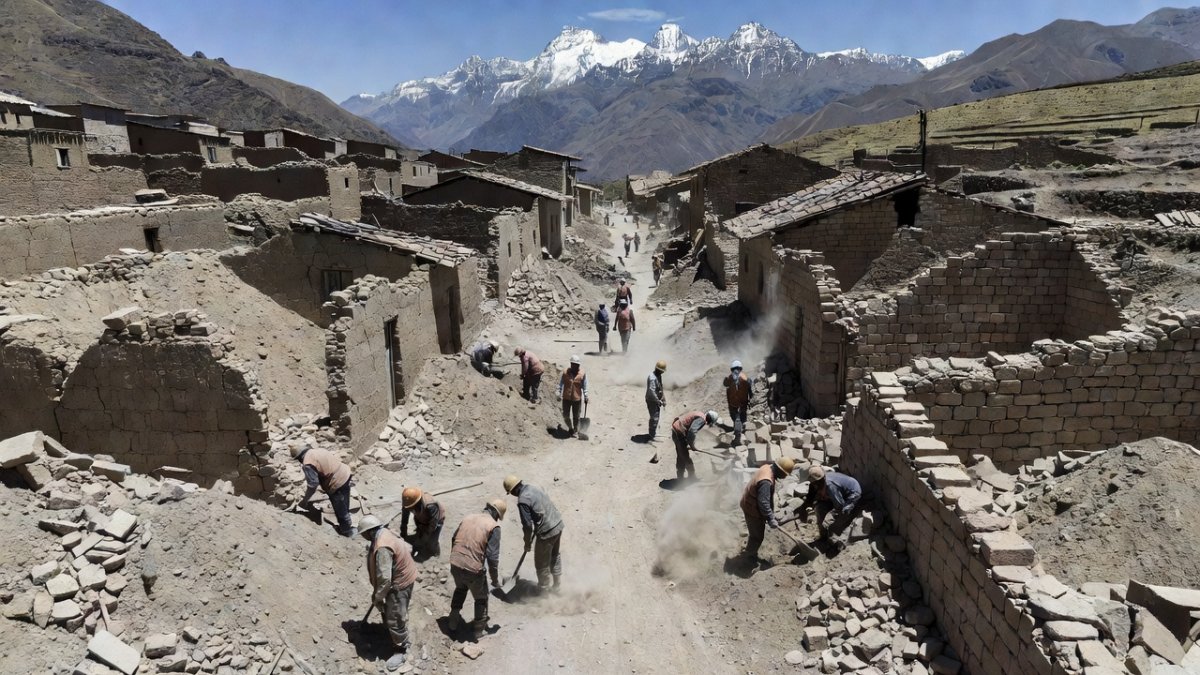
In the Pumpunya community of Chongos Bajo district, the destruction reached its most visceral expression. More than 49 homes collapsed entirely, their adobe and masonry walls reduced to rubble piles that entombed belongings and, in several cases, residents. Firefighters worked through the night to extract survivors from the debris, their efforts hampered by unstable structures and limited heavy equipment. The shallow focal depths meant intense vertical accelerations that adobe walls—lacking reinforcement—could not withstand. Families who escaped now sleep in tents pitched outside the ruins of their former dwellings, exposed to the highland chill and ongoing aftershocks.
Displacement figures reached approximately 300 across the affected zone, with Pumpunya bearing the heaviest share. The 6 fatalities and dozens of injuries clustered here, many resulting from roof collapses during the evening hours when people were indoors. Rescue teams documented harrowing accounts of neighbors digging with bare hands until professional crews arrived. Power lines snapped, plunging thousands into darkness and complicating medical evacuations. INDECI teams arrived within hours to catalog losses and coordinate temporary shelters. The scene in Pumpunya encapsulates the broader challenge facing rural Junín: centuries-old building practices colliding with modern seismic realities in one of Latin America's most active corridors.
Hospitals at Risk — Public Health Infrastructure Under Strain
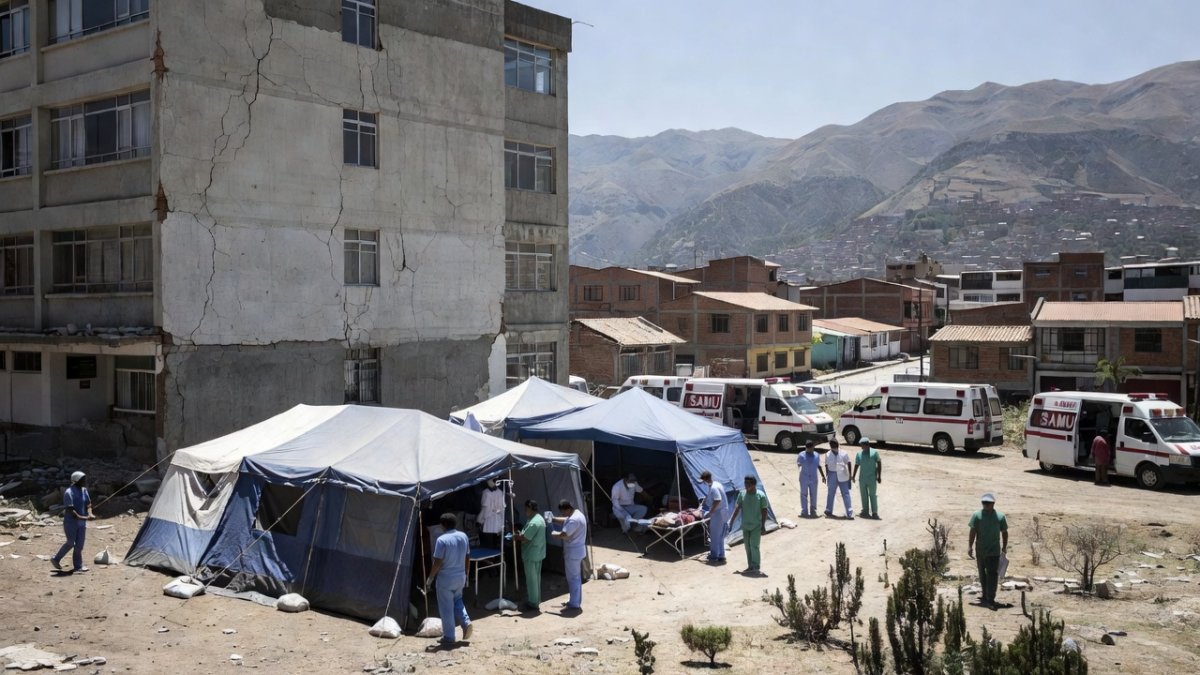
Structural assessments revealed alarming cracks at two critical facilities: El Carmen Mother and Child Hospital and Daniel Alcides Carrión Hospital in Huancayo. These fissures appeared in load-bearing walls and ceilings, forcing partial evacuations and the relocation of patients to field tents. A 16th-century church in the Mantaro Valley also suffered significant damage, its historic adobe facade fractured in multiple places. Such losses threaten both immediate medical response and long-term cultural heritage. Power outages affected thousands, knocking out refrigeration for vaccines and lighting for nighttime care.
Health officials reported that the injured—numbering between 21 and 30—overwhelmed remaining capacity, with many requiring orthopedic interventions unavailable on site. The Premier's visit to these damaged zones underscored governmental concern, yet the visible cracks serve as a warning that even institutional buildings require urgent retrofitting. INDECI is now coordinating an emergency declaration to unlock additional resources for hospital repairs. In a region where access to specialized care already lags national averages, these infrastructure failures compound the human toll of the July 19 twin quakes.
Peru's Ring of Fire Reality — A Nation Built on Shifting Ground
Peru occupies a prime position on the Pacific Ring of Fire, one of the most seismically active zones on the planet. Subduction of the Nazca Plate beneath the South American Plate generates frequent earthquakes, some of devastating scale. The July 19 events, though moderate in magnitude, illustrate how even smaller quakes can produce outsized consequences when they strike shallow depths near populated valleys. Historical records show that Junín and neighboring departments have endured repeated cycles of destruction, yet population growth and aging infrastructure continue to raise exposure levels.
Regional comparisons with the recent Venezuela and Mexico events reveal shared tectonic drivers across Latin America. Peru's segment of the Ring of Fire releases energy through both great megathrust quakes and more frequent moderate shocks like those centered near Chupaca. Scientists at the IGP emphasize that the 12 recorded aftershocks signal ongoing stress adjustment. This geological reality demands perpetual vigilance rather than episodic response. For Andean nations, living atop shifting ground is not an abstract concept but a daily determinant of urban planning, building codes, and emergency preparedness.
Vulnerable Construction — The Deadly Toll of Adobe Homes
Adobe construction remains prevalent throughout rural Andes communities, prized for its thermal properties and low cost yet highly vulnerable to shaking. In Pumpunya, the 49-plus collapsed dwellings exemplified this weakness: unreinforced earthen walls failed under lateral forces generated by the shallow 5.1-5.6 magnitude tremors. Masonry additions without proper tying or bracing fared little better. The result was a disproportionate casualty count relative to the event's size, with six deaths concentrated in these traditional structures.
Engineering assessments confirm that adobe's low tensile strength turns even moderate accelerations into catastrophic failures. Families displaced into tents now confront the reality that rebuilding with the same materials risks repetition. National building codes exist but enforcement lags in remote districts where economic constraints favor traditional methods. The July 19 disaster thus spotlights an urgent need for subsidized retrofitting programs and alternative low-cost seismic designs tailored to Andean realities. Without such interventions, the human cost of future events will continue to mount.
Voices from the Ground — Rescue, Displacement, and Community Response
Firefighters described pulling survivors from rubble in Pumpunya amid aftershocks that threatened secondary collapses. One rescuer recounted finding a child trapped beneath a fallen beam, saved only by the quick action of neighbors. Families now huddle in tents outside collapsed homes, sharing stories of loss while awaiting government aid. The Premier Luis Enrique Arroyo Sánchez toured these sites, promising accelerated reconstruction funds and temporary housing solutions.
INDECI personnel coordinate the emergency declaration process, cataloging needs for food, medical supplies, and structural evaluations. Community leaders have organized mutual aid networks, distributing blankets and organizing debris clearance. The 300 displaced individuals represent not merely statistics but entire households whose livelihoods—tied to agriculture in the Mantaro Valley—face prolonged disruption. These ground-level responses demonstrate resilience, yet they also expose gaps in pre-event preparedness that future policies must address.
The Bottom Line — Building Resilience in an Earthquake-Prone Region
The twin earthquakes of July 19, 2026, leave Peru with clear lessons on seismic risk reduction. From the epicenter 7 km south of Chupaca to the damaged hospitals in Huancayo, every data point reinforces the necessity of proactive measures. Adobe vulnerabilities, hospital cracks, and power failures all trace back to insufficient investment in resilient infrastructure. Following closely after Venezuela's doublet and Mexico's M7.3 event, the Junín quakes remind Latin America that tectonic hazards respect no borders.
INDECI's emergency declaration and the Premier's direct engagement signal political will, yet sustained funding for retrofitting and early-warning systems remains essential. The 12 aftershocks and ongoing displacement of 300 people underscore that recovery will stretch months. By prioritizing seismic-resistant construction and community education, Peru can transform its Ring of Fire location from liability into a catalyst for innovation. The lives lost in Pumpunya demand nothing less than comprehensive, science-driven resilience across the Andean corridor.
By Elena Vasquez, Staff Writer
This article was produced with AI-assisted research and editorial support. Reporting is based on sources cited in the article.
What's Your Reaction?
 Like
0
Like
0
 Dislike
0
Dislike
0
 Love
0
Love
0
 Funny
0
Funny
0
 Wow
0
Wow
0
 Sad
0
Sad
0
 Angry
0
Angry
0

Latin America Correspondent at Global1.News. Based in Mexico City, covering politics, economics, energy, and culture across the region. Brings an on-the-ground perspective to stories spanning from the Rio Grande to Patagonia.













Comments (0)