
Argentina's Cábalas: The Superstitions Driving a World Cup Title Defence
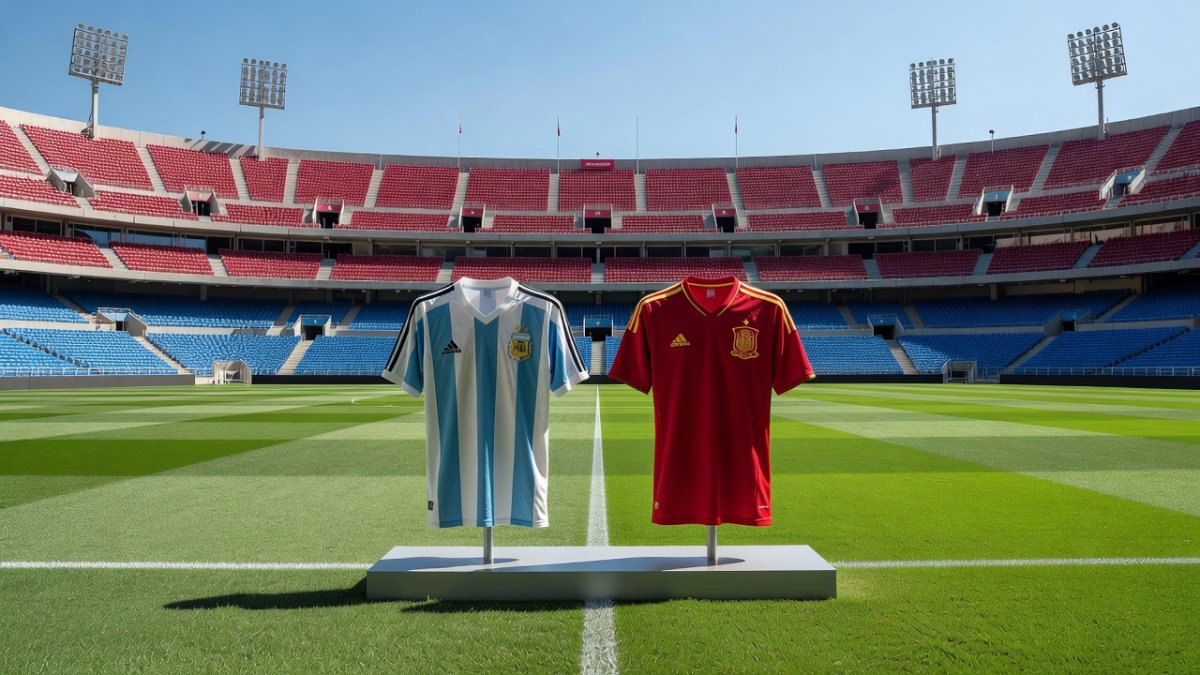
The 2026 FIFA World Cup final pits defending champions Argentina against European champions Spain at MetLife Stadium in East Rutherford, New Jersey on July 19. Referee Slavko Vincic of Slovenia will officiate the match that carries record prize money of $727 million total, with $50 million going to the winners. The trophy arrives in a bespoke Louis Vuitton trunk, and average ticket prices have reached $11,327, the highest in United States sporting history.
The 2026 FIFA World Cup final pits defending champions Argentina against European champions Spain at MetLife Stadium in East Rutherford, New Jersey on July 19. Referee Slavko Vincic of Slovenia will officiate the match that carries record prize money of $727 million total, with $50 million going to the winners. The trophy arrives in a bespoke Louis Vuitton trunk, and average ticket prices have reached $11,327, the highest in United States sporting history. But the real story may not be on the pitch at all — it is in the rituals, the routines, the deeply held beliefs that have carried Argentina through seven straight victories in this tournament.
Argentina's Cábalas: The Superstitions Driving a World Cup Title Defence
Johannesburg, South Africa — Argentina's football culture goes beyond tactics and talent. As the defending champions prepare to face Spain in the 2026 FIFA World Cup final at MetLife Stadium in New Jersey, much of the focus has fallen on something far less tangible than formations or fitness — the power of superstition, or what Argentines call "cábalas," the ritualistic beliefs and habits that fans and even the president believe can influence a match.
The Stage is Set for Argentina Against Spain
The 2026 FIFA World Cup final pits defending champions Argentina against European champions Spain at MetLife Stadium in East Rutherford, New Jersey on July 19. Referee Slavko Vincic of Slovenia will officiate the match that carries record prize money of $727 million total, with $50 million going to the winners. The trophy arrives in a bespoke Louis Vuitton trunk, and average ticket prices have reached $11,327, the highest in United States sporting history.
Argentina reached the final after a dramatic 2-1 semi-final victory over England, with Lautaro Martinez scoring a 92nd-minute winner. Spain overcame France to set up this dream showdown. But while the tactical battle promises fireworks, the cultural story unfolding around this match is just as compelling.
The Cábalas Tradition: More Than Just Superstition
Listen up, my fellow sports fanatics, because Argentina's cábalas are not just quirky habits – they are the beating heart of a nation that lives and breathes football with every fibre of its being. President Milei sticking to that same jacket, refusing to turn on the heating, watching from that exact spot in his Olivos residence – this is not eccentricity for its own sake. It is the stuff of national faith.
Milei was blunt when asked whether he would travel to New Jersey for the final. "No way," he told local radio station El Observador. He explained his reasoning with a story that any South African sports fan will instantly recognise. "Since it's cold and I don't turn on the heat, I wear an oil company-branded jacket. The day of the Switzerland game, it made me really hot. I took it off, and they scored a goal against us. I put it back on and never took it off again."
This tradition runs deeper than one president's wardrobe. It stretches back to 1990, when then-President Carlos Menem visited the Argentine squad before a stunning opening loss to Cameroon. Menem was branded a "mufa" — a jinx — and no sitting Argentine president has attended a national team match since. That is 36 years of presidential absence from the stands, all because of one ill-timed visit.
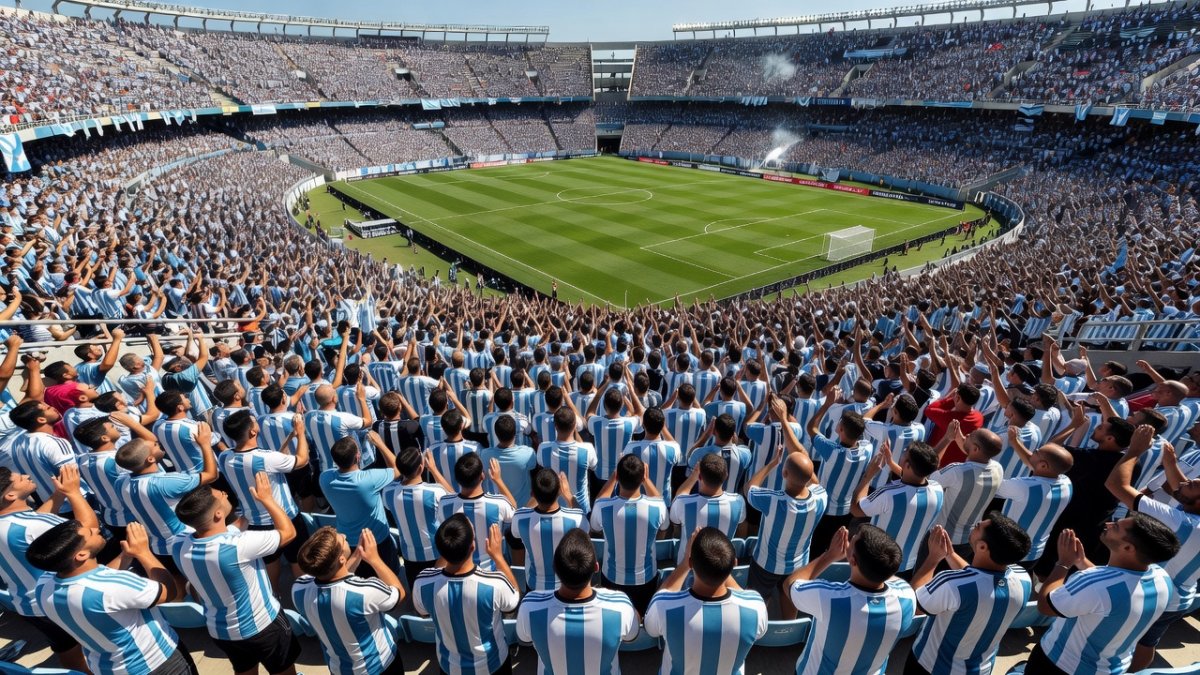
The cábalas tradition goes well beyond the presidential palace. Fans across Argentina wear the same clothes during every match, refusing to wash their jerseys for the entire duration of the World Cup. Some watch each game from the exact same spot. Some are not allowed to watch at all — especially if they happened to be in the bathroom when Argentina scored. In one widely shared video from this tournament, a group of fans began reading from the Bible just as Argentina started scoring against Egypt. They have obliged themselves to repeat the ritual at every match since.
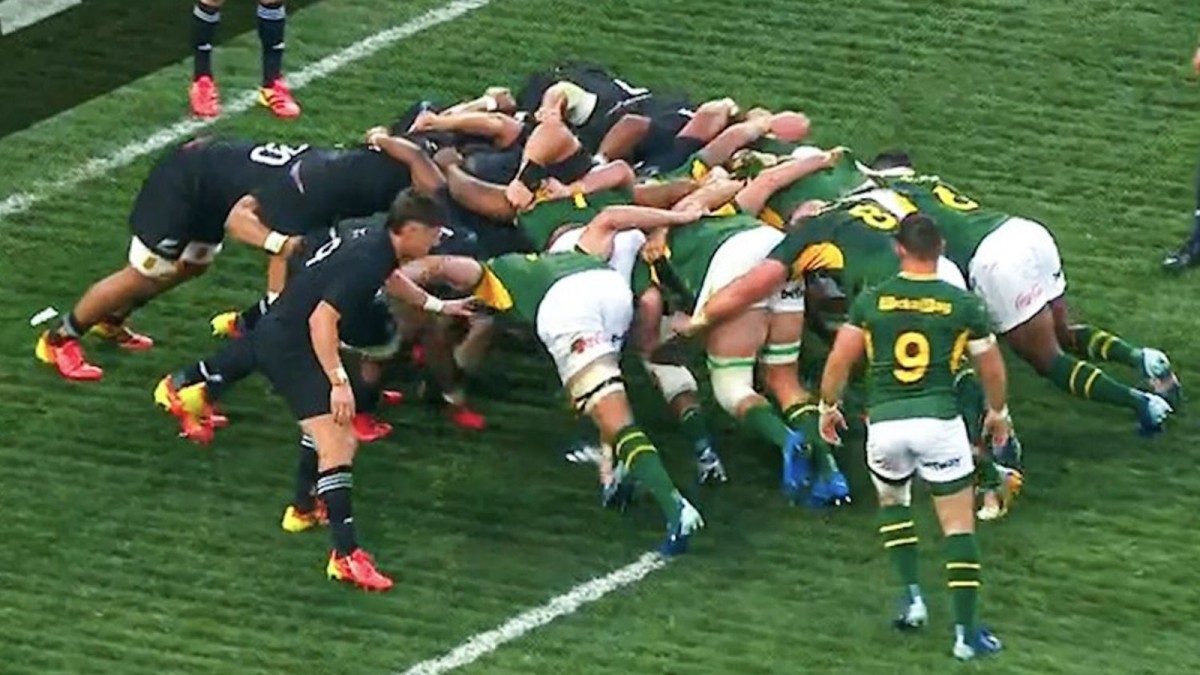
South African sports fans will recognise this energy immediately. During the Springboks' 2019 and 2023 Rugby World Cup campaigns, how many of us wore the same green jersey for every match, sat in the same chair, refused to change our pre-match rituals? Bafana Bafana supporters during the 1996 AFCON triumph had their own routines — from wearing specific combinations of colours to gathering at the same shebeens for every knockout match. The psychology is the same: in high-stakes sport, when you cannot control what happens on the field, you cling to what you can control off it.
The Messi-Yamal Story: A Generational Clash
No single image has captured the imagination of this World Cup quite like the photograph of a 20-year-old Lionel Messi bathing a five-month-old Lamine Yamal during a 2007 UNICEF fundraising shoot at Barcelona's Camp Nou. At first, many thought the photo was AI-generated, but it is real — captured by photographer Joan Monfort. "It is a true miracle of destiny," Monfort told the BBC.
Almost two decades later, Messi, now 39, and Yamal, now 19, face each other in a World Cup final. Messi is playing what is expected to be the final World Cup match of his legendary career, having matched the record for most World Cup goals earlier in the tournament with a hat-trick against Canada. Yamal, Spain's teenage sensation, represents the vanguard of European football's next generation.
This is the football equivalent of a changing of the guard — and South Africa has witnessed similar transitions. When the Springboks transitioned from the 2007 generation to the 2019 champions, there was a period of uncertainty before Siya Kolisi's squad finally emerged. Bafana Bafana's own generational shifts — from the 1996 heroes to the current crop emerging through the Diski Challenge and PSL academies — show that every great football nation must eventually pass the torch.
World Cup Fever in South Africa
The World Cup final falls on a Sunday night South African time, and expect viewing parties to erupt across the length and breadth of this country. SuperSport carries every match live, and from Soweto to Cape Town, from Durban to Mamelodi, fans will gather around big screens in taverns, community halls, and homes to witness history.
South Africa's connection to this World Cup is deeper than just being spectators. SAFA will be watching the final closely, understanding that the global football landscape continues to evolve. Bafana Bafana's failure to qualify for the 2026 tournament was a bitter pill, but it does not diminish the passion for the beautiful game in this country. The PSL continues to grow, the MultiChoice Diski Challenge develops young talent, and grassroots football remains the most accessible sport for millions of South African children.
There is something South African fans can learn from Argentina's football culture. The passion, the ritual, the unwavering belief — these are not foreign concepts here. Remember 1996, when Bafana Bafana won the Africa Cup of Nations on home soil? Remember the 2010 FIFA World Cup when the vuvuzela became the soundtrack of a nation? Football runs through South Africa's veins just as it runs through Argentina's. The difference is that Argentina has sustained that passion into consistent global success, and that is the standard SAFA should be aiming for.
The Spectacle: Trump, Half-Time Show, and Record Numbers
US President Donald Trump will attend the final and jointly present the trophy alongside FIFA President Gianni Infantino. It will be Trump's first appearance at the tournament, though his involvement has been controversial — he personally urged Infantino to review a red card decision for US striker Folarin Balogun, leading FIFA to suspend the ban in a move that drew sharp criticism.
For the first time in World Cup history, the final will feature a half-time show inspired by the Super Bowl, curated by Coldplay's Chris Martin. Madonna, Justin Bieber, Shakira, Burna Boy, and Coldplay are among the performers. The half-time break may be extended to up to 30 minutes — FIFA is targeting a 20-minute halftime for the performance alone.
The numbers surrounding this final are staggering. Average ticket prices have reached $11,327, making it the most expensive single sporting event in US history by that measure. The FIFA prize fund has ballooned to $727 million — a 50 percent increase over the 2022 tournament in Qatar — with $50 million going to the champions.
For South Africa, this raises questions about the direction of global football. The 2010 World Cup in South Africa was celebrated for its accessibility and community feel, with affordable ticket prices that allowed ordinary fans to attend matches. The 2026 final's pricing tells a different story — one of increasing commercialisation that may price out the very fans who give the sport its soul. King Felipe VI of Spain and Queen Letizia will attend alongside Spanish Prime Minister Pedro Sánchez, a reminder that football remains the sport of royalty and politicians alike.
What This Means for South African Football
Argentina's run to the final — built on seven consecutive victories, driven by ritual and belief as much as by talent — offers lessons for South African football. The structures are here: the PSL, the academies, the broadcasting platforms. What Argentina demonstrates is the power of a football culture that permeates every level of society, from the president in his palace to the fan in the cheapest seat.
When the final whistle blows at MetLife Stadium, one thing is certain: South Africans will be watching. Whether you support Messi's Argentina or Yamal's Spain, whether you have your own pre-match rituals or just enjoy the spectacle, this final represents everything that makes football the world's game — drama, passion, superstition, and the unifying power of sport.
By Dante Williams, Staff Writer
This article was produced with AI-assisted research and editorial support. Reporting is based on sources cited in the article.
What's Your Reaction?
 Like
0
Like
0
 Dislike
0
Dislike
0
 Love
0
Love
0
 Funny
0
Funny
0
 Wow
0
Wow
0
 Sad
0
Sad
0
 Angry
0
Angry
0

Breaking News and Investigations Correspondent at Global1.News. Based in London, covering global breaking news, security, and investigative stories. Known for digging deeper and connecting the dots across continents.









Comments (0)