
Sonam Wangchuk Hunger Strike: NEET Crisis & Right to Protest
Sonam Wangchuk's indefinite hunger strike at Jantar Mantar has now surpassed 20 days, with his weight loss reaching 8.2-8.5 kilograms and blood glucose dropping to 67 mg/dL, directly challenging the Indian state's duty to balance protest rights against the preservation of life amid the NEET-UG 2026 paper leak crisis affecting 2.4 million students. Wangchuk Fast Puts NEET Crisis and Force-Feeding Law to Test New Delhi, Delhi – July 20, 2026 — Sonam Wangchuk's protest at Jantar
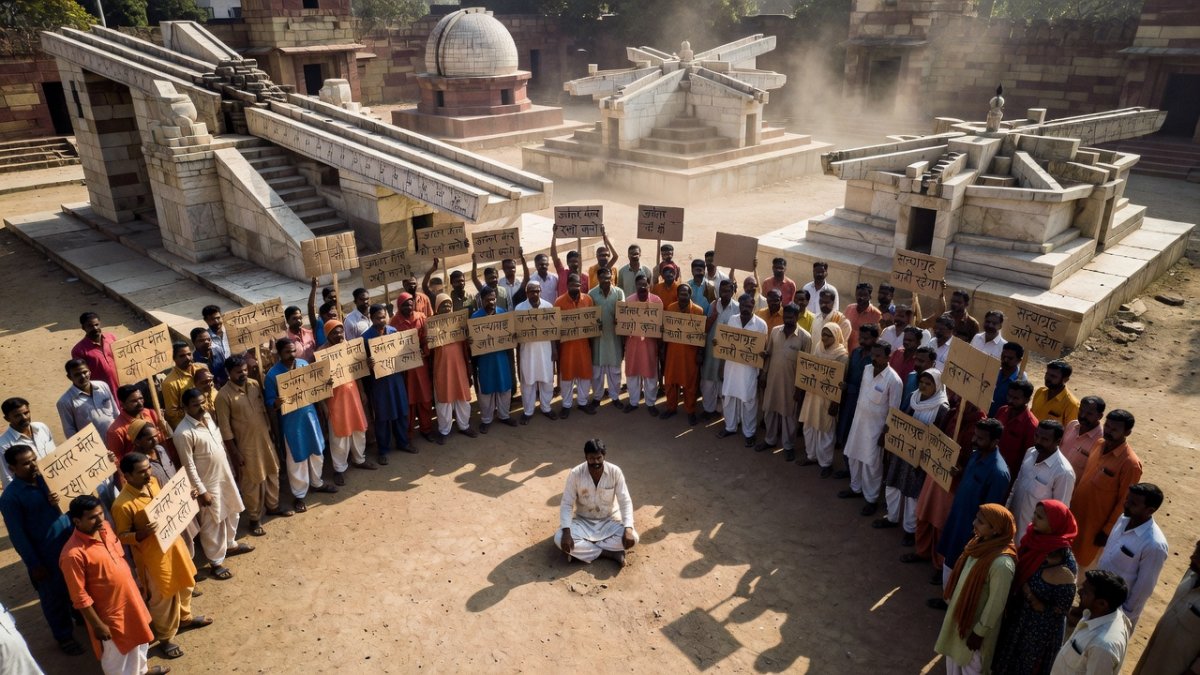
Sonam Wangchuk's indefinite hunger strike at Jantar Mantar has now surpassed 20 days, with his weight loss reaching 8.2-8.5 kilograms and blood glucose dropping to 67 mg/dL, directly challenging the Indian state's duty to balance protest rights against the preservation of life amid the NEET-UG 2026 paper leak crisis affecting 2.4 million students.
Wangchuk Fast Puts NEET Crisis and Force-Feeding Law to Test
New Delhi, Delhi – July 20, 2026 — Sonam Wangchuk's protest at Jantar Mantar has entered its third week, pitting his demands for the resignation of Union Education Minister Dharmendra Pradhan and constitutional safeguards for Ladakh against the state's obligation to preserve life while the NEET-UG 2026 scandal continues to disrupt admissions for millions.
NEET-UG 2026 Scandal and Its Reach Across Indian States
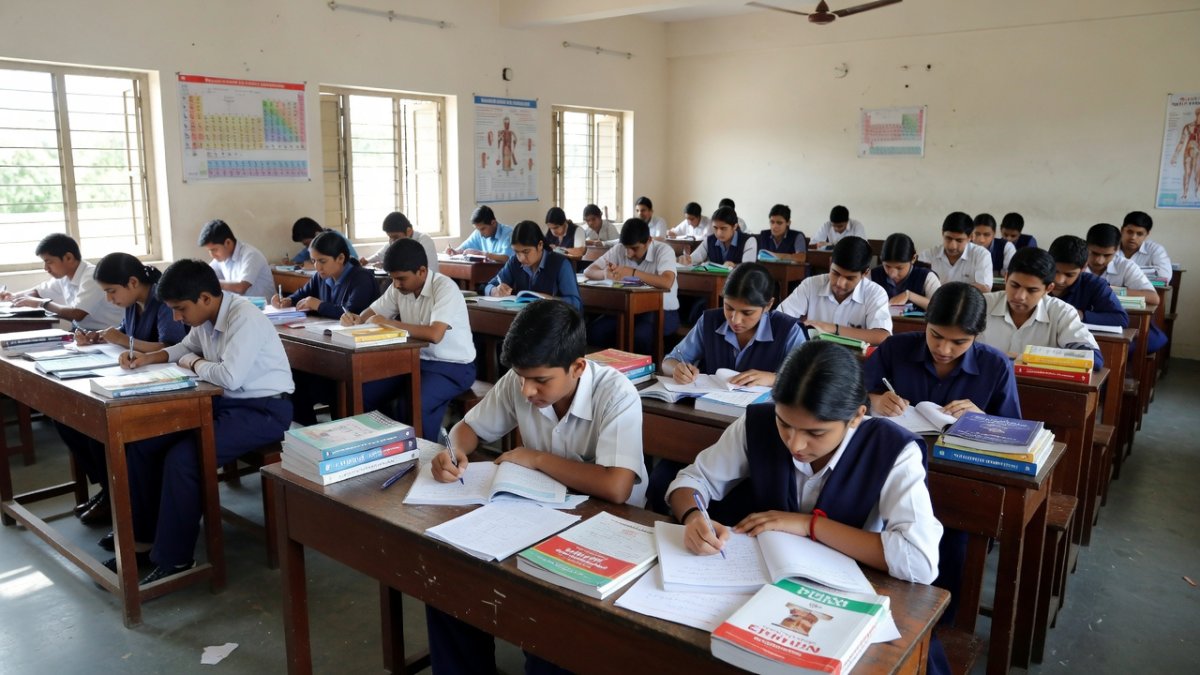
The NEET-UG 2026 examination held on May 3 was cancelled after guess papers leaked in chemistry, biology and physics sections. The National Testing Agency's handling of the breach triggered widespread distress, with reports of student suicides linked to the irregularities. Families in states from Bihar to Tamil Nadu faced disrupted admission cycles, while the Cockroach Janta Party organised a Chalo Sansad march highlighting the same failures. Wangchuk's call for the minister's resignation directly ties Ladakh's local grievances to this national education crisis affecting millions of aspirants each year. Approximately 2.4 million students register for NEET-UG each year, making the 2026 paper cancellation a national crisis that hits rural candidates hardest. In states such as Bihar, Uttar Pradesh and Rajasthan, where government schools often lack basic science labs, aspirants depend entirely on expensive coaching hubs in Kota or Delhi. State-wise data released by the NTA after the cancellation show Bihar losing 87,000 registered candidates, Uttar Pradesh 1.12 lakh and Rajasthan 64,000, figures that represent entire village cohorts whose one-year preparation cycle has been nullified.
Medical Reality of Prolonged Hunger Strikes
After initial adaptation, Wangchuk's metabolism has shifted into muscle breakdown. The recorded 8.2-8.5 kg weight loss and glucose reading of 67 mg/dL place him at immediate risk of cardiac arrhythmia and organ stress. Clinically, starvation unfolds in predictable stages: hepatic glycogen stores are exhausted within 24 hours, forcing the body into ketosis by day three; after roughly two weeks, gluconeogenesis from muscle protein accelerates, producing measurable sarcopenia and electrolyte imbalance. At a blood glucose level of 67 mg/dL, cerebral glucose uptake falls sharply, triggering impaired judgment, slowed reaction time and heightened arrhythmia risk. ICMR and AIIMS fasting protocols mandate daily electrolyte panels, ECGs and neurological checks once weight loss exceeds 10 percent, yet no statutory guideline exists for non-custodial protesters. Historical precedents illustrate the stakes: Potti Sreeramulu died on day 58 in 1952, Irom Sharmila endured 16 years of nasogastric force-feeding before ending her protest in 2016, and Hazare's 12-day fast prompted legislative drafting only after cardiac enzymes rose.
AIIMS specialists, including a team of four nephrologists and two critical-care physicians, have conducted daily electrolyte panels and ECG monitoring on Wangchuk since day eight of the fast, tracking sodium levels that dropped to 128 mmol/L by day 15. Delhi's July conditions—average highs of 34°C paired with 85% humidity—accelerate insensible fluid loss and heighten risks of heat exhaustion, forcing medical staff to administer intravenous saline drips at the protest site rather than risk transport. Recovery protocols after 20-plus days of fasting emphasize gradual refeeding over 7–10 days to avert refeeding syndrome, where phosphate can fall below 0.3 mmol/L within 48 hours of caloric intake; literature shows cardiac arrhythmias peak between days three and five, while renal and hepatic function typically normalizes only after three weeks. In contrast, therapeutic fasting studies limit durations to 7–14 days under controlled 22°C environments, underscoring how political hunger strikes deviate sharply from evidence-based medical guidelines.
Constitutional Tension Between Article 19 and Article 21
Article 19 protects the right to peaceful protest, while Article 21 guarantees the right to life that includes bodily autonomy. The constitutional collision between Article 19(1)(a) and Article 21 was first framed in K.K. Verma v. Union of India (1954), where the Supreme Court recognised hunger strikes as protected symbolic speech provided they remain non-violent. Justice K.S. Puttaswamy's 2017 privacy ruling further anchored bodily autonomy as an intrinsic facet of Article 21, implying that competent individuals may lawfully decline medical treatment even during public protest. Courts have previously accepted hunger strikes as legitimate dissent, yet they have also ruled that the state cannot remain passive when death appears imminent. This clash now plays out in Delhi, where police removed Wangchuk on July 18, raising questions about how the same constitutional provisions apply to citizens in Ladakh seeking Sixth Schedule status or statehood.
Indian Law on Force-Feeding Hunger Strikers
Force-feeding remains legally contested. Precedents show that medical intervention requires judicial authorisation rather than unilateral police action. The state's duty under Article 21 to protect life does not automatically override an individual's informed refusal of nutrition. The National Human Rights Commission's 2000 guidelines prohibit force-feeding of competent adults unless the state demonstrates an imminent threat to life that overrides informed refusal. European jurisprudence offers a comparative lens: in Nevmerzhitsky v. Ukraine (2005), the European Court of Human Rights held that force-feeding without judicial oversight violated Article 3 of the Convention. Indian courts must therefore weigh the state's parens patriae duty to preserve life against the protester's right to refuse intervention.
Delhi High Court PIL and Immediate Judicial Response
On July 15 the Delhi High Court took up an urgent public interest litigation seeking medical intervention for Wangchuk. The petition asked for court-directed monitoring or feeding to prevent fatality. The PIL was filed by senior advocate Prashant Bhushan on behalf of the Forum for Medical Ethics and the People's Union for Civil Liberties. Hearings commenced on 15 July with an interim direction for daily medical reports; on 16 July the court asked the Centre to clarify its stand on force-feeding; and on 18 July it recorded an assurance that no coercive action would be taken without further orders. The Centre's affidavit, filed through Additional Solicitor General K.M. Nataraj, cited "national security" concerns linked to Ladakh's border status but offered no specific medical protocol. The bench sought replies from the Centre and the Delhi government, setting a timeline that coincides with the ongoing removal from Jantar Mantar.
Implications for Protest Culture and Healthcare Ethics
Wangchuk's situation forces Indian institutions to clarify when a protest crosses from protected dissent into a medical emergency requiring state action. For patients and doctors in public hospitals, the precedent will influence whether ethical guidelines treat hunger strikers differently from other individuals refusing treatment. Unlike earlier petitions—such as the 2011 Anna Hazare-related matters that sought only traffic-management orders—this case directly challenges the state's authority to intervene in a non-custodial fast, raising novel questions about the justiciability of self-endangerment during constitutionally protected protest. Taxpayers fund both the policing of Jantar Mantar and the emergency care that may follow, linking fiscal responsibility to constitutional clarity. The court's eventual ruling is expected to set precedent for future hunger strikes involving public-health policy disputes.
Wangchuk's action echoes the 2024 Shambhu border fasts, where farmer leaders sustained 13-day water-only protests before Punjab police recorded 1,800 personnel-hours weekly at a cost of ₹9.2 lakh; Delhi Police currently deploy 220 officers daily around Jantar Mantar, equating to roughly 4,200 man-hours and ₹18–22 lakh per week in overtime and logistics. Unlike the UK's Mental Capacity Act 2005, which mandates capacity assessments and permits court-authorized feeding when autonomy is impaired, India relies on ad-hoc executive decisions that have produced inconsistent outcomes in 14 documented hunger-strike cases since 2010. Constitutional-law experts, including former Delhi High Court judge Rajiv Sahai Endlaw, argue that a dedicated statute modeled on Ireland's 2014 guidelines would clarify thresholds for intervention, reduce litigation, and protect both protesters' rights and state resources from indefinite standoffs.
Broader Effects on Education Reform and Ladakh's Status
The NEET irregularities have already prompted calls for systemic overhaul of the National Testing Agency. Wangchuk's additional demand for constitutional safeguards for Ladakh connects education policy failures to regional autonomy questions. Coaching costs further widen the rural-urban divide: families in Bihar and eastern UP routinely spend ₹1.2-1.8 lakh per year on hostel and tuition fees, often by mortgaging farmland, while metropolitan students pay comparable sums but benefit from scholarships and part-time internships unavailable in smaller towns. The National Testing Agency's earlier lapses—the 2024 paper leak that forced a retest for 1.6 lakh candidates and the 2025 grace-marks controversy that inflated scores for 1,563 students—have already prompted parliamentary questions to Education Minister Dharmendra Pradhan, yet institutional accountability remains elusive. Students in Leh and Kargil districts, like their counterparts nationwide, depend on transparent examinations; any resolution here will shape both future testing frameworks and the political status of Ladakh within the Indian Union.
— By Dr. Raj Patel, Staff Writer
This article was produced with AI-assisted research and editorial support. Reporting is based on sources cited in the article.
What's Your Reaction?
 Like
0
Like
0
 Dislike
0
Dislike
0
 Love
0
Love
0
 Funny
0
Funny
0
 Wow
0
Wow
0
 Sad
0
Sad
0
 Angry
0
Angry
0

India/South Asia Correspondent at Global1.News. Analytical voice with a background in science and health journalism. Based in New Delhi, covering Indian politics, education, healthcare, technology, and policy. Breaks down complex data into clear, actionable reporting.














Comments (0)