
Amazon Soy Moratorium Collapse Risks Massive Forest Loss
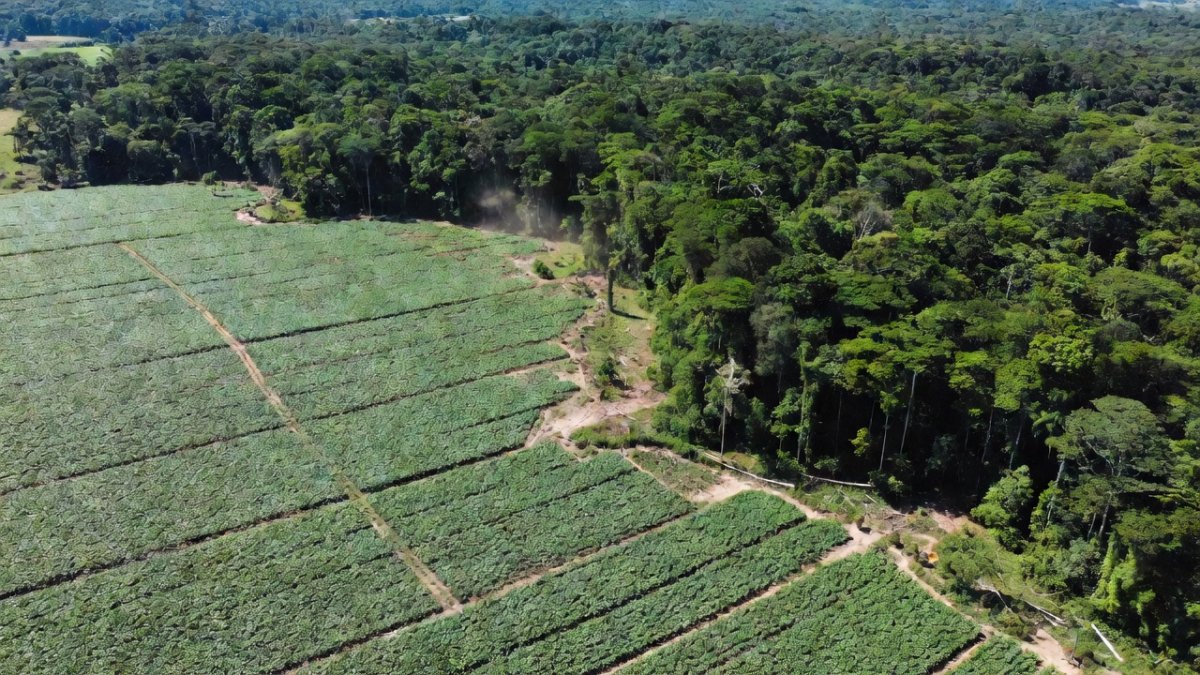
In the vast soy fields of Mato Grosso, where the Amazon rainforest once stood as an unyielding frontier, a hard-won barrier against destruction has given way. The Amazon Soy Moratorium, a private-sector agreement that held back industrial farming on newly cleared land for nearly two decades, collapsed this week under pressure from antitrust regulators and agribusiness interests.
Amazon Soy Moratorium Collapse Risks Massive Forest Loss
Brasília, Brazil — Article continues...
Brasília, Brazil — The unraveling of the moratorium marks a decisive turn in Brazil's environmental governance, moving conservation efforts away from voluntary corporate commitments and toward sole reliance on the 2012 Forest Code. Local politicians tied to farming interests and the political faction of former president Jair Bolsonaro played central roles in the outcome. At the same time, fresh satellite readings from Brazil's National Space Research Institute show deforestation alerts at a 10-year low for the first half of 2026, creating a complex picture that demands close examination.
The Sudden Collapse of Two Decades of Protection
The moratorium began in 2006 when the Brazilian Association of Vegetable Oil Industries and the National Association of Cereal Exporters joined environmental groups including Greenpeace to ban purchases of soy grown on land deforested after that year. For nearly 20 years the pact kept soy-linked clearing in the Amazon near zero, opening export markets in Europe and elsewhere that demanded verified sustainable supply chains. Its end came after Mato Grosso passed legislation limiting tax incentives for companies that continued to follow the agreement, a move that directly threatened the pact's viability in Brazil's top soy-producing state.
European importers, facing the EU Deforestation Regulation's December 2024 implementation deadline, have already begun requiring satellite-verified polygons for Brazilian soy shipments. Traders report that several Dutch and German crushing groups reduced 2026 contracts with Mato Grosso suppliers by 12–15 percent, shifting volumes to certified Argentinian and Paraguayan origins. Asian buyers present a more fragmented picture: Chinese state-owned enterprises have signaled continued price-based purchasing, yet Japanese and South Korean food processors have requested additional traceability documentation to maintain access to EU re-export markets.
The Mercosur-EU trade agreement, still awaiting ratification, now faces renewed scrutiny over soy supply chains. Brazilian diplomats have warned that loss of the moratorium could trigger additional due-diligence clauses or even temporary suspension of tariff preferences. For Mato Grosso producers, the immediate effect is lower compliance costs, but longer-term revenue risk remains elevated if European buyers impose private certification premiums averaging US$8–12 per tonne, according to Rabobank's March 2026 commodity outlook.
The Science paper, published online 18 February 2026, combined INPE PRODES annual maps (2006–2024), MapBiomas land-use transitions, and a difference-in-differences econometric model comparing soy expansion inside versus outside the moratorium zone. Lead author Tiago Reis, a WWF-Brazil senior scientist with a PhD in applied ecology from the University of São Paulo, previously co-authored the 2021 Nature Climate Change assessment of zero-deforestation commitments. The 1.4 million hectare projection equals roughly 1.8 times the 2024 PRODES total for the entire Legal Amazon and would release an estimated 680–720 Mt CO₂e—equivalent to Canada's reported 670 Mt CO₂e national inventory for 2023.
Reis's team calibrated the model against the 2002–2006 pre-moratorium baseline, when soy-driven clearing averaged 1,200 km² per year in the Amazon biome. Sensitivity tests showed that even a 30 percent compliance rate under the Forest Code alone would still produce an additional 820,000 hectares of loss by 2035. The emissions figure translates to roughly 1.9 years of Brazil's current annual fossil-fuel emissions, underscoring the Amazon's outsized role in national climate accounting.
INPE's PRODES data show the 38 percent drop to 1,295 km² in the first half of 2026 occurred alongside a 22 percent reduction in rural credit disbursements and intensified Ibama field operations under the Lula administration's 2023–2026 enforcement plan. Researchers at IPAM and the Federal University of Pará argue the decline is largely cyclical rather than structural, citing similar temporary drops in 2009 and 2016 that reversed within 18 months once commodity prices rebounded and monitoring intensity eased. Historical satellite records reveal that Amazon clearing rates have fallen below 5,000 km² annually only during periods of credit contraction or federal task-force presence, then climbed 40–70 percent once those conditions changed.
Experts warn of a potential lag effect: land-clearing decisions made in 2025–2026 may appear in 2027–2028 imagery once new soy frontiers are prepared. A 2024 study in Global Environmental Change found that 60 percent of post-moratorium clearing in the Cerrado occurred 12–24 months after market signals shifted. Without the moratorium's real-time trader verification, any future relaxation of federal enforcement could therefore produce accelerated losses that current low alert numbers do not yet capture.
CADE invoked Article 36 of Law 12.529/2011, which prohibits concerted practices that restrict market access or create artificial barriers to competition. The authority ruled that the moratorium functioned as a collective boycott by dominant traders, limiting farmers' ability to sell soy from post-2008 cleared areas and thereby distorting the domestic grain market. Mato Grosso's December 2025 statute (Lei 12.418/2025) denied ICMS tax credits and state financing to any firm maintaining the private ban, directly threatening Cargill, ADM, Bunge, and Louis Dreyfus with annual losses estimated at R$180–240 million in the state's top-producing municipalities. CADE's January 12, 2026, preliminary injunction gave the companies ten business days to exit or face daily fines of up to R$5 million; all four notified withdrawal by January 28.
The sequence unfolded rapidly: Mato Grosso's law took effect on December 15, 2025; CADE opened an administrative proceeding on December 22; the injunction followed three weeks later. Traders cited the combined state and federal pressure as decisive, noting that continued adherence would have exposed them to both tax penalties and antitrust liability. This mechanism effectively transferred enforcement power from private supply-chain contracts to the uneven application of the Forest Code across 5,500 Amazon municipalities.
How the Moratorium Was Built and Why It Mattered
Early signatories recognized that unchecked expansion of soy plantations threatened both biodiversity and Brazil's international reputation. The agreement required grain traders to verify that suppliers had not cleared new forest areas, creating a market-based enforcement mechanism that operated alongside federal laws. Tiago Reis, co-author of the Science study and researcher with World Wildlife Fund-Brazil, noted that the moratorium produced clear environmental gains while also securing new commercial opportunities for compliant producers. Without it, the Amazon's role as a storehouse for 150 to 200 billion tons of carbon faces renewed pressure from agricultural expansion.
Political Pressures from Agribusiness Heartlands
Farmers and ranchers associations, along with local elected officials aligned with agribusiness, argued that the moratorium had outlived its purpose once the Forest Code took effect in 2012. Aprosoja Brasil, the Brazilian Soybean Producers Association, pointed to Ministry of Environment figures showing a 37.5 percent drop in Amazon deforestation alerts between August 2025 and May 2026 as evidence that government rules alone could suffice. Flávio Bolsonaro, son of the former president, publicly pledged to dismantle the agreement, framing it as an unnecessary restriction on rural development in states such as Mato Grosso and Pará.
Antitrust Ruling Forces Traders to Withdraw
Brazil's antitrust authority, CADE, issued an order giving major grain traders ten days to suspend participation in the moratorium or face penalties. In response, Cargill, ADM, and Bunge announced their withdrawal, removing the market leverage that had kept the pact effective. A Mongabay investigation published in February 2026 had already warned that the departure of these companies could push deforestation 30 percent higher by 2045. The decision shifted enforcement responsibility entirely to federal and state agencies operating under the Forest Code, a framework that has historically struggled with consistent application across remote Amazon municipalities.
Warnings of Massive New Deforestation
The Science study quantifies the expected impact with precision: 1.4 million hectares of additional clearing over ten years, releasing emissions comparable to Canada's annual total. This projection rests on observed patterns from periods when voluntary restrictions were absent. The Amazon's climate-regulating function extends far beyond Brazil's borders, influencing rainfall patterns that support agriculture in neighboring countries including Argentina and Paraguay. Loss of this scale would also accelerate biodiversity decline in one of the planet's most species-rich regions.
Deforestation Drops Even as Pact Ends
INPE satellite data released this month recorded only 1,295 square kilometers of deforestation in the first half of 2026, a 38 percent reduction from the same period in 2025. This decline occurred even as the moratorium dissolved, raising questions about whether improved enforcement of the Forest Code or other factors are temporarily holding back clearing. Analysts note that such reductions have occurred before during periods of economic slowdown or heightened federal monitoring, yet they have often proved reversible once political or market conditions changed.
Shifting to Government Enforcement Alone
With private-sector safeguards removed, Brazil's ability to meet its international pledge of zero illegal deforestation by 2030 now depends entirely on public agencies. The Forest Code requires landowners to maintain legal reserves and riparian buffers, yet monitoring and penalties have varied widely across states. Policia Federal operations and state-level environmental secretariats in Amazonas and Rondônia will face increased demands without the supplementary pressure once supplied by export markets. The transition tests whether statutory rules can replicate the rapid, market-driven compliance the moratorium achieved.
Impacts on Brazil's Climate Commitments and Economy
Soybeans remain Brazil's leading export, and agribusiness contributes substantially to national GDP and employment in interior regions. The collapse of the moratorium could ease short-term production constraints for farmers in Mato Grosso while exposing the country to renewed international scrutiny over supply-chain sustainability. European and Asian buyers that once relied on the agreement's verification system may now demand alternative certifications or shift sourcing elsewhere. For communities living along the Amazon's expanding agricultural frontier, the change brings uncertainty about land-use pressures and the long-term viability of forest-based livelihoods.
By Elena Vasquez, Staff WriterThis article was produced with AI-assisted research and editorial support. Reporting is based on sources cited in the article.
What's Your Reaction?
 Like
0
Like
0
 Dislike
0
Dislike
0
 Love
0
Love
0
 Funny
0
Funny
0
 Wow
0
Wow
0
 Sad
0
Sad
0
 Angry
0
Angry
0

Latin America Correspondent at Global1.News. Based in Mexico City, covering politics, economics, energy, and culture across the region. Brings an on-the-ground perspective to stories spanning from the Rio Grande to Patagonia.














Comments (0)