
Trump Tariffs: ¥2.4 Trillion Hit to Japan Automakers
Trump Tariffs: ¥2.4 Trillion Hit to Japan Automakers Tokyo, Japan — One year after the Trump administration imposed a 25% tariff on imported automobiles and auto parts, Japan's six largest automakers have absorbed a combined ¥2.4 trillion ($15.9 billion) in tariff-related costs during fiscal 2025, which ended in March 2026.
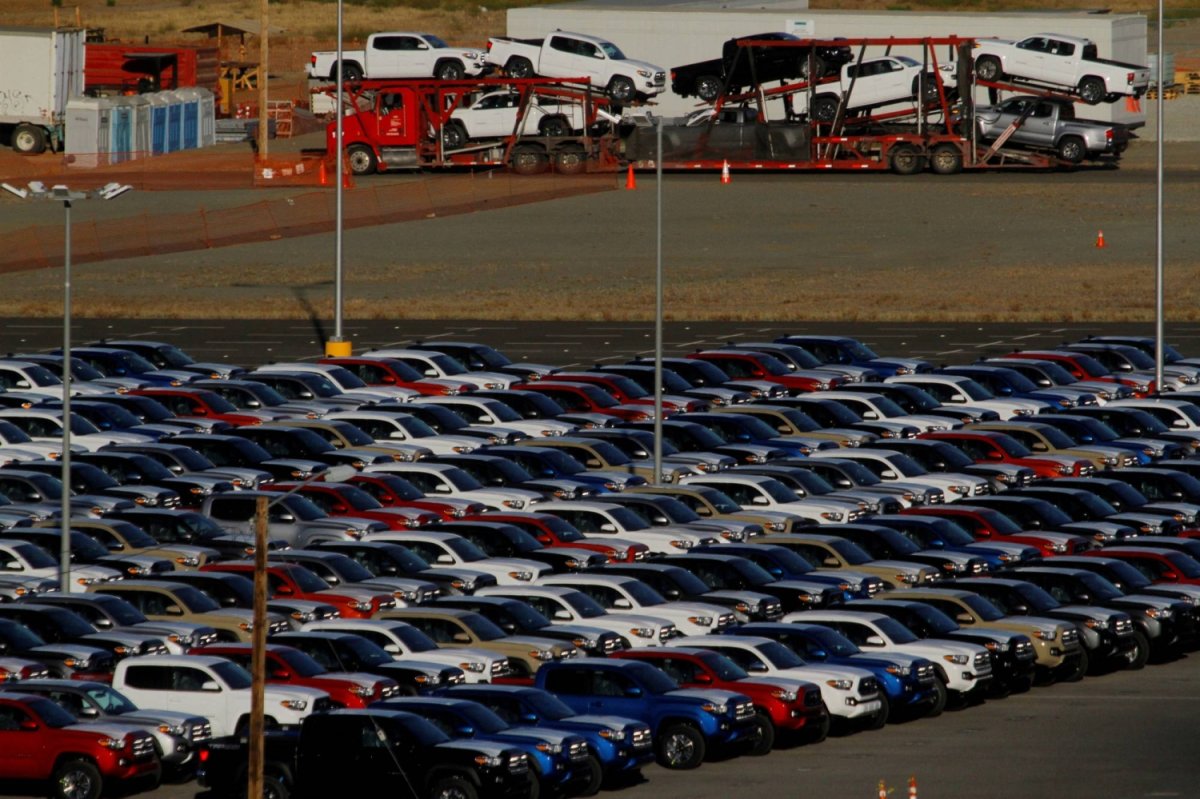
Trump Tariffs: ¥2.4 Trillion Hit to Japan Automakers
Tokyo, Japan — One year after the Trump administration imposed a 25% tariff on imported automobiles and auto parts, Japan's six largest automakers have absorbed a combined ¥2.4 trillion ($15.9 billion) in tariff-related costs during fiscal 2025, which ended in March 2026. The toll on Japan's most critical export industry has been severe, triggering production cutbacks, profit warnings, and a fundamental reassessment of supply chain strategies across the sector.
Tags: Trump tariffs, Japan automakers, Toyota, Honda, Nissan, US-Japan trade, auto industry, tariff costs
The Scale of the Impact: ¥2.4 Trillion and Counting
According to data compiled from financial disclosures of Japan's six major automakers — Toyota Motor Corp., Honda Motor Co., Nissan Motor Co., Mazda Motor Corp., Subaru Corp., and Mitsubishi Motors Corp. — the combined direct and indirect costs attributable to the Trump administration's 25% tariff on automotive imports exceeded ¥2.4 trillion in fiscal 2025. This figure encompasses higher raw material costs, supply chain disruptions, currency hedging losses linked to tariff uncertainty, and reduced production efficiency at both domestic and North American facilities.
The 25% tariff, which took effect in April 2025 under the Trump administration's broader trade policy, applies to finished vehicles and a wide range of auto parts imported into the United States. For Japan, whose automakers exported roughly 1.4 million vehicles to the U.S. market in fiscal 2024, the impact was immediate and deep.
Toyota Bears the Heaviest Burden
As Japan's largest automaker and the world's top-selling car company by volume, Toyota Motor Corp. has shouldered the heaviest tariff burden. The company projected a one-fifth decline in operating profit for fiscal 2025, citing tariff costs and a stronger yen as the primary headwinds. Toyota estimated its full-year tariff-related costs at approximately ¥1.4 trillion, reflecting both direct import duties and the cascading effects on its North American supply chain.
In the April-to-June quarter alone, Toyota reported a ¥63.6 billion operating loss in its North American operations — a striking reversal for a company that had posted record profits just two years earlier. The company's U.S. affiliate implemented a regular annual price increase in mid-2025, though executives insisted the adjustment was not a direct response to tariffs.
Honda and Nissan: Divergent Fortunes
Honda Motor Co. has been among the hardest hit relative to its revenue base. The company's automotive division posted a ¥29.6 billion operating loss in the April–June 2025 quarter, with executives projecting a total annual tariff impact of ¥450 billion. Honda's exposure is amplified by its reliance on vehicle exports from Japan and its Mexican production facilities, which also face tariff implications under the USMCA framework.
Nissan Motor Co., which produces more than 615,000 vehicles annually in Mexico — approximately 40% of which are exported to the U.S. — has faced a dual challenge: the auto tariffs themselves plus heightened scrutiny of products routed through Mexico. Nissan's financial results have not been disclosed separately for tariff impacts, but analysts estimate the company faces several hundred billion yen in additional annual costs.
Supply Chain Restructuring Under Pressure
The tariff regime has forced Japan's automakers to accelerate a difficult strategic calculus: absorb costs and protect U.S. market share, raise prices and risk losing ground to domestic competitors, or restructure production to shift more capacity into the United States. Each option carries significant risks.
Toyota has expanded production at its existing U.S. plants in Texas, Indiana, and Alabama, while Honda has explored shifting more SUV assembly to its Ohio and Indiana facilities. Nissan, with its substantial Mexican production base, faces the most complex restructuring challenge — moving supply chains from Mexico to the U.S. entails years of capital investment and regulatory approvals.
The Broader Economic Ripple Effects
The damage to Japan's auto industry extends beyond the Big Six. The Japan Automobile Manufacturers Association (JAMA) estimates that the tariff regime threatens hundreds of thousands of jobs across the domestic supply chain, from parts suppliers in Aichi Prefecture to logistics firms in Yokohama. Smaller subcontractors — many operating on thin margins — have been particularly exposed, as major automakers pass tariff costs down the supply chain.
Japan's Ministry of Economy, Trade and Industry (METI) has engaged in ongoing discussions with U.S. trade officials, but no tariff relief has materialized. Prime Minister Shigeru Ishiba's administration has pursued a dual-track approach: diplomatic engagement in Washington alongside domestic support measures for affected industries, including low-interest loans for small suppliers and enhanced export credit insurance.
What This Means for Japanese Consumers and Investors
For Japanese consumers, the tariff costs have not yet translated into higher domestic prices — automakers have absorbed most of the burden to maintain competitiveness in their home market. However, analysts at the Nomura Research Institute warn that sustained losses may eventually force price adjustments or reduced model availability in Japan as companies prioritize U.S. market compliance.
For investors, the outlook remains clouded. Toyota's stock has declined approximately 12% since the tariffs were announced in early 2025, underperforming the broader Nikkei 225 index. Honda and Nissan shares have fared worse, falling 18% and 22% respectively over the same period. Dividend yields across the sector have been cut as companies conserve cash for supply chain restructuring.
What to Watch For
Several key developments will shape the trajectory of Japan's auto industry over the coming year. First, the outcome of ongoing US-Japan trade negotiations — any reduction in the 25% tariff rate would provide immediate relief. Second, the pace of production shifts: Toyota's planned expansion of its Texas facility and Honda's potential new assembly line in Ohio will signal how quickly the industry can adapt. Third, the response of Japan's parts supply chain: if smaller Tier 2 and Tier 3 suppliers begin to fail under the tariff pressure, the broader industrial ecosystem in Aichi, Shizuoka, and other manufacturing prefectures could face cascading damage.
The ¥2.4 trillion toll represents more than a year of financial pain — it marks a structural shift in Japan's most important export industry. Whether Japan's automakers emerge leaner and more globally diversified, or permanently weakened, will depend on decisions made in the coming months in boardrooms in Tokyo, Detroit, and Washington.
By Kenji Tanaka, Staff Writer
This article was produced with AI-assisted research and editorial support. Reporting is based on sources cited in the article.
What's Your Reaction?
 Like
0
Like
0
 Dislike
0
Dislike
0
 Love
0
Love
0
 Funny
0
Funny
0
 Wow
0
Wow
0
 Sad
0
Sad
0
 Angry
0
Angry
0

Japan Correspondent at Global1.News. Tokyo-based voice covering Japanese politics, technology, economy, and culture. Tracks the intersection of tradition and innovation in one of the world's most dynamic societies.













Comments (0)