
Telegram Founder Durov Slams Russia's Internet Censorship as Boon for U.S. Spying
Introduction: A Stark Warning from Exile Pavel Durov’s latest intervention from Dubai has once again placed Russia’s digital policies under intense scrutiny. As founder of the messaging platform Telegram, Durov has long positioned himself as a defender of encrypted communication against state interference. His Friday statements, however, go further than previous critiques by di

Introduction: A Stark Warning from Exile
Pavel Durov’s latest intervention from Dubai has once again placed Russia’s digital policies under intense scrutiny. As founder of the messaging platform Telegram, Durov has long positioned himself as a defender of encrypted communication against state interference. His Friday statements, however, go further than previous critiques by directly linking Russian censorship measures to an unintended strengthening of U.S. cyber capabilities. According to Durov, the very tools deployed in pursuit of digital sovereignty are instead eroding it, leaving Russian users more exposed to foreign surveillance than ever before. Russian authorities have consistently framed these same policies as necessary defenses against external threats, yet Durov’s analysis suggests the opposite outcome is occurring.
Durov's Direct Critique
In his Telegram channel post, Durov argued that censorship and internet blocks have only pushed Russia further away from digital sovereignty. He described domestic tech initiatives as “Potemkin villages with a distinct flavor of corruption,” implying that surface-level appearances of independence mask deeper structural weaknesses and self-serving motives. This phrasing evokes historical Russian facades of grandeur that concealed underlying decay. Durov contends that such policies do not isolate Russia from foreign influence but instead amplify it by forcing reliance on platforms still controlled through iOS and Android ecosystems. His critique is not abstract; it ties directly to recent events, including Apple’s removal of the state-backed Max app. By highlighting backdoors and app-store controls, Durov asserts that any application operating within these environments remains subject to targeted U.S. surveillance and censorship. Russian officials have not directly responded to this specific characterization, though state media often dismiss such commentary as originating from individuals who have chosen to live abroad.
Russia's Failing Digital Sovereignty
Russia’s years-long project to isolate its web infrastructure and reduce reliance on foreign technology has been a central pillar of policy amid deteriorating relations with the West. The goal, articulated repeatedly by government bodies including the Foreign Ministry, has been to create a self-sufficient digital ecosystem capable of withstanding external pressure. Durov maintains that censorship and blocks actively undermine this objective rather than advance it. When authorities throttle speeds or restrict features, users turn to VPNs and alternative routing methods that often route traffic through foreign servers, increasing rather than decreasing exposure. This dynamic creates a paradox: measures intended to assert control instead disperse data flows beyond domestic oversight. Kremlin sources have defended the approach as essential for national security, pointing to alleged attacks attributed to Ukraine and its allies. Yet Durov’s position highlights how these same restrictions erode the technical foundation needed for genuine sovereignty, leaving the country dependent on the very foreign operating systems it seeks to escape.
The Max App Controversy
Days after Apple removed Russia’s state-backed messaging app Max from its App Store, Durov issued his assessment that any domestic or foreign app running on iOS and Android remains exposed to U.S. surveillance through backdoors and app stores. Critics, including Durov, have described Max as an instrument created for mass surveillance and censorship. The removal itself underscores the limits of Russian control over global platforms, as Apple’s decision illustrates the leverage held by foreign corporations. Russian authorities have promoted Max as a secure domestic alternative, yet Durov’s analysis suggests that its placement within existing mobile ecosystems negates any claim to independence. The episode reveals the difficulty of achieving technological autonomy when core infrastructure remains outside national jurisdiction. According to the FSB, broader concerns about foreign intelligence access justify restrictions on competing services, but Durov counters that switching “packaging” without altering underlying dependencies achieves little beyond cosmetic change.
FSB and iPhone Spying Claims
Earlier this week, the FSB security service accused major web hosting services of assisting Western intelligence agencies in spying on high-ranking Russian officials through their iPhones. This accusation forms part of the broader narrative justifying intensified controls over messaging applications. Durov’s comments intersect with these claims by noting that the same vulnerabilities cited by the FSB persist regardless of which app is used, provided it operates on foreign-controlled operating systems. The FSB’s statements emphasize security threats amid heightened geopolitical tensions, yet they also coincide with efforts to steer users toward state-preferred platforms. This connection illustrates how accusations of foreign espionage serve dual purposes: alerting the public to risks while reinforcing domestic regulatory campaigns. Durov’s response reframes the issue, suggesting that Russian policies inadvertently facilitate the very surveillance the FSB warns against by discouraging development of independent alternatives.
Telegram Under Pressure
Telegram has become more difficult to use in Russia without a virtual private network as authorities slow download speeds and block video and voice calls on the platform. Russian authorities argue the clampdown on messaging apps like Telegram and WhatsApp rests on security concerns tied to an increasing number of attacks blamed on Ukraine and its allies. Telegram has dismissed accusations of enabling criminal and terrorist activity, characterizing the restrictions instead as an attempt to force Russians to switch to Max. The practical effect for ordinary users is degraded service quality, pushing many toward paid VPN subscriptions or reduced functionality. Roskomnadzor, the agency responsible for communications oversight, has implemented these measures gradually, citing compliance failures. Durov’s perspective aligns with the view that such tactics prioritize displacement of foreign platforms over genuine security enhancements. The resulting friction affects millions of daily communications, from personal exchanges to professional coordination, without resolving the underlying architectural dependencies Durov identifies.
Brain Drain and Tech Talent Exodus
Durov also criticized Russian authorities for triggering a brain drain among tech workers capable of building a domestic smartphone operating system. He stated that the Russian official who broke the internet and threw the country back by decades under the guise of digital sovereignty deserves a national security medal from the U.S. This pointed remark underscores the human capital cost of prolonged restrictions and regulatory uncertainty. Skilled engineers and developers have sought opportunities elsewhere, diminishing the pool of talent required for ambitious sovereignty projects. Russian government statements have attributed emigration trends to external economic factors rather than domestic policy, yet Durov’s assessment links the exodus directly to decisions that prioritize control over innovation. Without sufficient local expertise, efforts to create independent systems stall, perpetuating reliance on foreign technology. The consequence extends beyond individual careers to national strategic goals, as the absence of homegrown alternatives leaves Russia more vulnerable to the very influences it seeks to counter.
Analysis and Implications
The paradox at the center of Durov’s critique—that censorship aids the adversary—carries significant implications for Russian internet freedom, the domestic tech sector, and ordinary citizens. When blocks and slowdowns drive users toward VPNs and foreign-hosted services, data flows become harder to monitor domestically while remaining accessible to actors controlling global infrastructure. This outcome contradicts the stated aims of digital sovereignty and risks entrenching long-term dependencies. For the tech sector, the talent exodus reduces capacity for genuine innovation, leaving state-backed initiatives like Max vulnerable to external decisions such as app-store removals. Ordinary Russians experience these policies through slower connections, restricted features, and pressure to adopt alternatives whose security claims remain contested. Russian authorities maintain that such measures protect against real threats, yet the absence of independent operating systems means the core exposure Durov describes persists. The situation illustrates how regulatory choices can produce unintended strategic disadvantages, particularly when they discourage the very technical self-sufficiency they purport to promote. Future developments will depend on whether policy adjustments address these architectural realities or continue along the current trajectory.
By Irina Volkov, Staff WriterThis article was produced with AI-assisted research and editorial support. Reporting is based on sources cited in the article.
What's Your Reaction?
 Like
0
Like
0
 Dislike
0
Dislike
0
 Love
0
Love
0
 Funny
0
Funny
0
 Wow
0
Wow
0
 Sad
0
Sad
0
 Angry
0
Angry
0
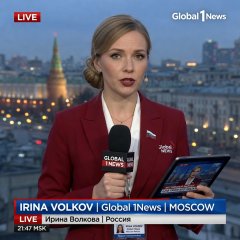
Russia/Eastern Europe Correspondent at Global1.News. Covering Russian politics, energy, security, and the shifting dynamics of the post-Soviet space. Provides clear-eyed analysis on one of the world's most opaque regions.













Comments (0)