
Japan's Offshore Wind Push: Floating Turbines in 2026
Japan is accelerating its offshore wind push with the first commercial floating farm slated for 2026, seeking to unlock an estimated 9,000 TWh of annual generation potential that far exceeds future domestic demand. Yet a persistent gap remains between this vast resource and actual deployment, as Japanese capital flows more readily into overseas projects while local approvals and grid connections lag.
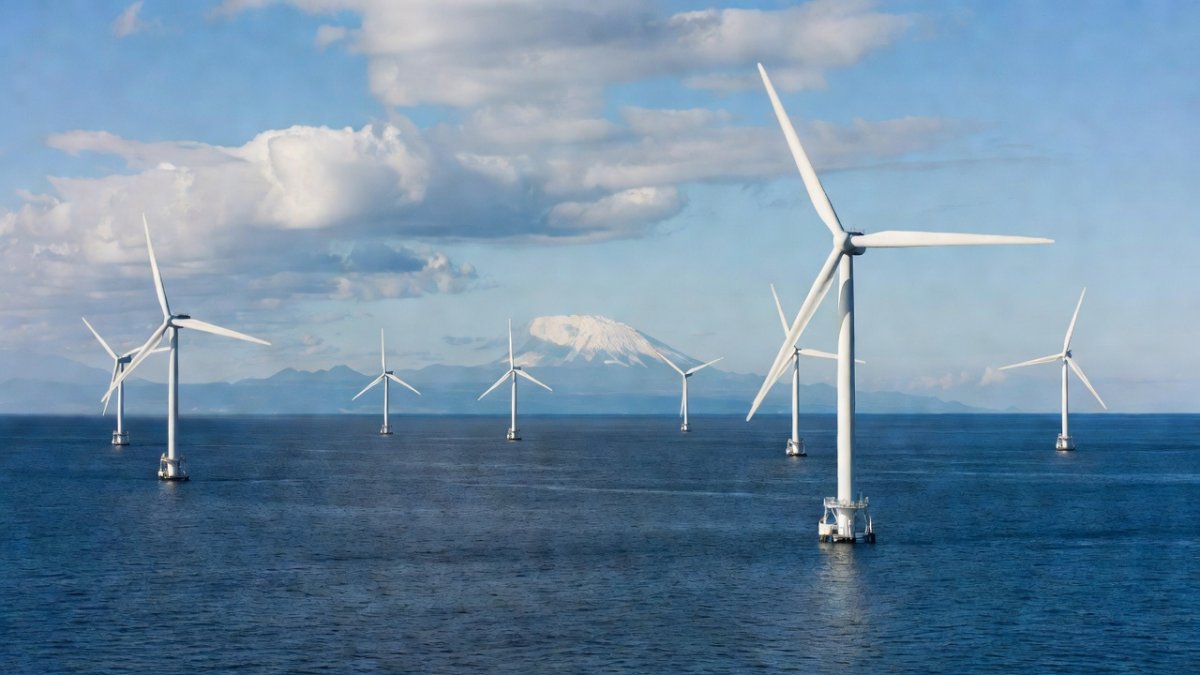
Blow Winds Blow: Time to Harvest Wind Power Off Japan’s Coast
Tokyo, Japan — Article continues...
Japan's Energy Context
Japan relies heavily on imported fossil fuels to meet its electricity needs. The country has committed to net-zero emissions by 2050, prompting the Ministry of Economy, Trade and Industry to accelerate renewable sources. Offshore wind forms a central part of this strategy because onshore options remain limited by geography and public acceptance.
The Floating Wind Opportunity
Japan's total offshore wind potential reaches approximately 9,000 terawatt-hours per year, more than nine times the country's projected electricity demand by 2050. Most of this resource lies in deeper waters where bottom-fixed turbines cannot operate. Floating technology therefore becomes essential for large-scale deployment.
Japan brought its first commercial floating wind farm online in 2026. In Nagasaki Bay, six Japanese companies began testing a Floating Axis Wind Turbine design in July 2026. The structure aims to reduce costs by simplifying the platform compared with conventional floating systems.
The floating axis configuration under test departs from conventional horizontal-axis systems by reorienting the rotor plane to interact differently with prevailing sea states. Traditional horizontal-axis turbines mounted on spar or semi-submersible platforms must counteract pitch and roll through substantial ballast and mooring tension, which increases both capital outlay and ongoing service demands. In contrast, the axis-aligned design integrates the turbine directly with a rotating cylindrical hull that follows wave motion more passively, thereby reducing peak loads transmitted to the drivetrain. This structural simplification targets lower steel tonnage per installed megawatt and shorter assembly sequences at quayside, addressing the cost premium that has historically limited floating wind to demonstration scale outside Japan. Early performance data from the Nagasaki Bay trial will clarify whether these engineering adjustments translate into measurable reductions in levelized cost once serial production begins.
Japan's bathymetry places the bulk of its wind resource beyond the 50-60 meter contour where monopile and jacket foundations remain technically viable. Neighboring markets such as the United Kingdom and Norway have concentrated initial floating arrays in somewhat shallower transitional zones, allowing hybrid supply chains that still rely on port infrastructure sized for fixed-bottom components. Japan's steeper continental shelf therefore necessitates purpose-built installation vessels and local content strategies from the outset. The 2026 commercial farm and concurrent platform test together establish a domestic reference case that can inform mooring standards, dynamic cable specifications, and typhoon-resilience criteria tailored to Pacific conditions rather than North Sea precedents.
Policy Targets and Challenges
METI has introduced updated offshore wind targets aligned with national net-zero goals. The METI director has described offshore wind as vital for Japan's energy security. However, domestic rollout continues to face policy and infrastructure hurdles that slow project approvals and grid connections.
Analyst Isshu Kikuma of BloombergNEF stated that METI's targets represent a good step, yet Japan requires additional effort to match deployment rates seen elsewhere. Grid upgrades and streamlined permitting remain key bottlenecks.
METI's updated capacity milestones embed offshore wind within the broader 2050 net-zero trajectory, yet the pathway from target to commissioned gigawatts remains gated by sequential regulatory and physical constraints. Environmental impact assessments must reconcile avian migration corridors, marine mammal habitats, and seismic risk factors before any seabed lease advances. Fishing-rights negotiations add another layer, requiring coordinated compensation frameworks across multiple prefectural cooperatives whose seasonal operations overlap proposed array footprints. Port and grid upgrades lag these processes; few existing harbors possess the heavy-lift quays or cable-landing infrastructure needed for 15 MW-class turbines, while transmission corridors to load centers require reinforcement that historically spans seven to ten years. These frictions compound the timeline between auction award and first power, distinguishing Japan's rollout from jurisdictions that front-loaded port modernization and standardized permitting templates.
Analyst commentary correctly notes that even ambitious targets will not close the deployment gap without parallel reforms. Streamlined one-stop permitting modeled on select European approaches could compress the pre-construction phase, yet political acceptance hinges on demonstrating local economic benefits through supply-chain mandates. Grid operators must simultaneously publish transparent queue-management rules and cost-allocation mechanisms for offshore reinforcements. Absent such measures, auction volumes risk remaining aspirational even if price-support levels prove attractive to developers already active in more permissive markets.
International Comparisons
Twenty-seven countries have now established offshore wind targets. Many European nations have already scaled bottom-fixed projects in shallow waters. Japan lacks comparable shallow sites, which places greater emphasis on floating technology development.
International developers including Mainstream Renewable Power and Aker Offshore Wind have acquired stakes in Japanese floating projects totaling 800 MW. These partnerships bring technical expertise while Japanese firms gain experience in deeper-water conditions.
Corporate Dynamics
Mitsubishi Corp. withdrew from three offshore wind projects in 2025, creating setbacks for planned capacity additions. At the same time, several Japanese companies continue to invest in overseas offshore wind developments where regulatory frameworks are more mature.
This pattern shows Japanese capital flowing abroad while domestic projects encounter repeated delays. The contrast highlights the gap between available technology and the pace of local project execution.
Japanese trading houses and manufacturers maintain active positions in European and Taiwanese offshore arrays where revenue stabilization mechanisms and grid access are contractually assured. Capital deployed abroad secures operational learning and supplier relationships that can later be repatriated once domestic conditions improve. Turbine and foundation fabrication capacity located in Japan benefits indirectly, as overseas orders keep production lines utilized while local projects navigate delays. This sequencing reflects a calculated hedge: overseas cash flows offset domestic holding costs and preserve engineering talent that might otherwise migrate to faster-moving regions.
The withdrawal from three domestic projects underscores the sensitivity of internal rate-of-return calculations to permitting duration and interconnection certainty. Equity partners reassess exposure when environmental review timelines extend or when local-content obligations raise equipment costs above global benchmarks. The resulting pattern - Japanese balance sheets financing capacity additions elsewhere while domestic auctions stall - highlights a structural mismatch between available technology and the pace of regulatory adaptation rather than any fundamental shortage of industrial capability.
Overseas Investments Versus Domestic Rollout
Japanese firms participate in international offshore wind markets to build operational knowledge and supply-chain capabilities. These overseas activities provide returns and technical insights that could eventually support projects inside Japan.
Domestic infrastructure limitations, including port facilities and transmission lines, continue to constrain faster rollout. Policy adjustments are under discussion, but concrete implementation timelines remain subject to further regulatory steps.
What This Means for Japan's Energy Future
Successful scaling of floating offshore wind would diversify Japan's energy mix and reduce dependence on imported fuels. The 2026 milestones, including the first commercial floating farm and Nagasaki Bay tests, mark incremental progress toward that objective.
Realizing the full 9,000 TWh potential will require sustained policy support, grid modernization, and continued collaboration between domestic and international developers. The coming years will show whether current targets translate into meaningful capacity growth.
Japan's current generation mix remains anchored by LNG-fired plants whose fuel imports expose the economy to price volatility and supply-chain disruptions originating in distant basins. Nuclear restarts have restored only a fraction of pre-2011 baseload, leaving coal and gas to fill residual demand. Floating offshore wind, once scaled, offers a high-capacity-factor complement that operates independently of seasonal hydro variability and does not require further fossil-fuel logistics. Integration studies indicate that 10-15 GW of offshore wind by the early 2030s could displace several million tonnes of annual LNG imports, improving both emissions intensity and trade balance.
Cost trajectories for floating technology continue to descend as platform standardization and installation experience accumulate. Early arrays in other regions have already demonstrated levelized costs falling below prior forecasts once project pipelines exceed demonstration scale. Japan's deeper-water sites may sustain a modest premium relative to fixed-bottom installations elsewhere, yet the absence of seabed-preparation requirements and the potential for local fabrication of simplified hulls could narrow that differential. Sustained policy visibility on grid access and revenue support will determine whether these cost reductions materialize quickly enough to influence 2040 planning scenarios.
Tags: Japan offshore wind, floating turbines, METI, renewable energy, energy security, net-zero
By Kenji Tanaka, Staff Writer
This article was produced with AI-assisted research and editorial support. Reporting is based on sources cited in the article.
What's Your Reaction?
 Like
0
Like
0
 Dislike
0
Dislike
0
 Love
0
Love
0
 Funny
0
Funny
0
 Wow
0
Wow
0
 Sad
0
Sad
0
 Angry
0
Angry
0

Japan Correspondent at Global1.News. Tokyo-based voice covering Japanese politics, technology, economy, and culture. Tracks the intersection of tradition and innovation in one of the world's most dynamic societies.













Comments (0)