
Alune Wade Lights Up Saint-Louis Jazz Festival 2025
Alune Wade delivered a legendary performance at the 2025 Saint-Louis Jazz Festival, captivating audiences with his virtuosic bass playing and the release of his sixth studio album New African Orleans. This work serves as a powerful bridge between Senegalese musical heritage and global jazz traditions, drawing on deep roots in West African rhythms while embracing international influences.
Alune Wade delivered a legendary performance at the 2025 Saint-Louis Jazz Festival, captivating audiences with his virtuosic bass playing and the release of his sixth studio album New African Orleans. This work serves as a powerful bridge between Senegalese musical heritage and global jazz traditions, drawing on deep roots in West African rhythms while embracing international influences.
Alune Wade Lights Up Saint-Louis Jazz Festival 2025
Saint-Louis, Senegal — The 33rd Saint-Louis Jazz Festival ran from May 28 to June 1, 2025, with over 30 artists and 15+ concerts that positioned the UNESCO World Heritage city as a vital hub for African jazz. Alune Wade, born in Saint-Louis and based in Paris while maintaining strong Senegalese ties, served as a cultural ambassador through his May 29 performance and album New African Orleans. His work reinforced the festival's mission to highlight the African roots of jazz while drawing visitors from across Senegal and beyond.
A Night at Baya Ndar: Wade's Electrifying Performance
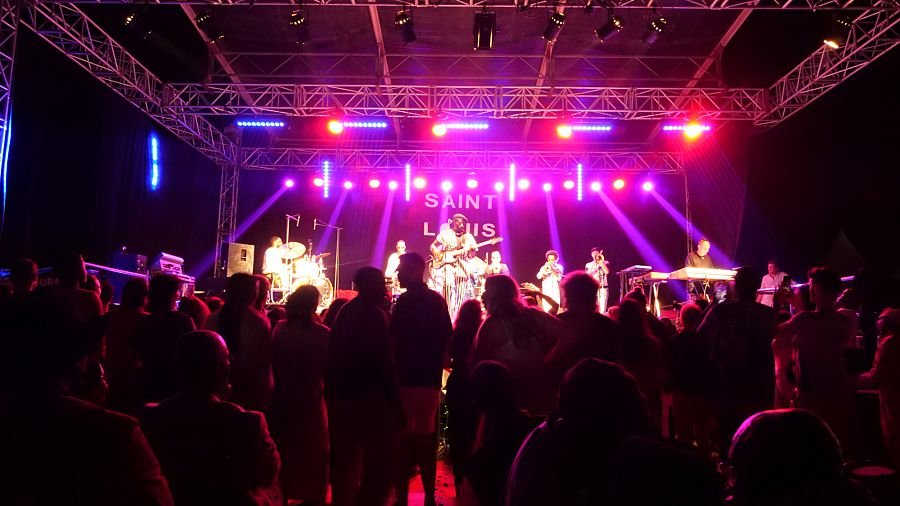
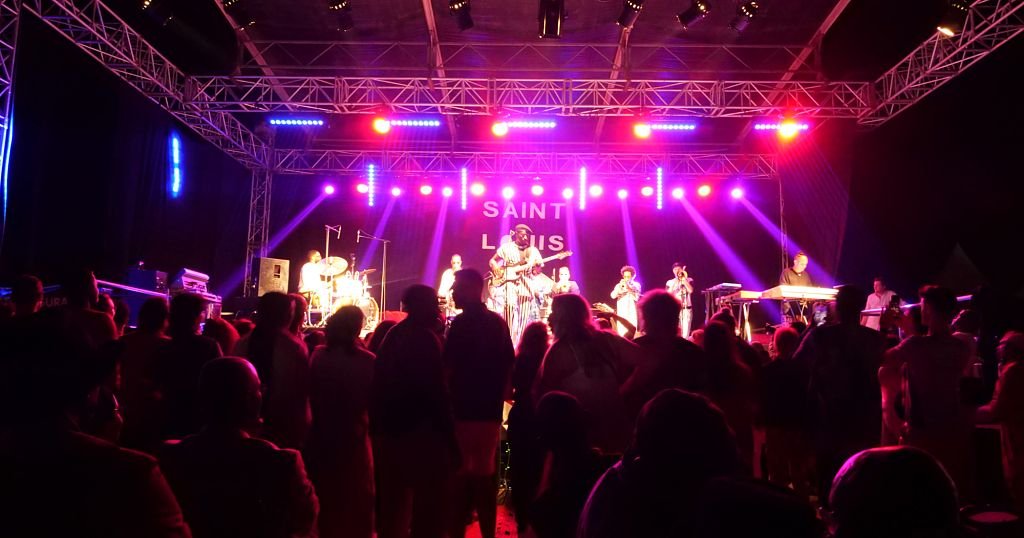
Alune Wade performed on May 29, 2025 at 23:00 at Place Baya Ndar during the 33rd Saint-Louis Jazz Festival, taking the main IN stage with commanding presence. His energy radiated through the historic square at the mouth of the Senegal River, where the crowd responded with immediate enthusiasm to every bass line.
The set drew heavily from his sixth studio album New African Orleans, released in 2025, which fuses his signature sound of West African rhythms, jazz, Afrobeat, and New Orleans brass-band grooves. Wade moved fluidly between these elements, creating a sound that felt both rooted in Ndar and expansive enough for global stages.
"It's a pleasure for me, even an honour, to have had the opportunity once again to participate—especially for this 33rd edition," Wade told the audience between songs. The moment underscored his two-decade connection to the festival and the city of his birth.
"That gives us even more strength to continue on this path we've been walking for over 20 years," he added, acknowledging the sustained support from Senegalese listeners. The crowd's cheers reflected that mutual bond.
Wade's virtuosic bass work, combined with his role as singer, composer, and bandleader, held the audience from the first note to the final encore. Listeners from Dakar to Saint-Louis described the performance as a highlight of the entire festival.
His ability to blend these traditions captivated both longtime fans and first-time visitors, turning Place Baya Ndar into a living example of cultural exchange.
The 33rd Edition: A Festival of More Than Music
The 33rd edition ran May 28-June 1, 2025 with over 30 artists and 15+ concerts spread across multiple venues in Saint-Louis. This scale confirmed the event as one of Senegal's most significant cultural gatherings each year.
The festival's history stretches back more than three decades, establishing it as a cornerstone of Senegalese cultural life that consistently attracts international attention. Local organizers have built programming that balances global names with emerging African talent.
IN concerts at Place Baya Ndar featured Saiko Nata, Rosa Brunello, Marco Mezquida, Salvador Sobral, Arnaud Dolmen, and Sixun, each bringing distinct approaches to jazz. These performances created a rich dialogue across continents.
The OFF program included workshops and exhibitions that engaged young musicians and visual artists from the region. Participants explored improvisation techniques and the historical links between Senegalese music and jazz forms.
The festival draws visitors from across Senegal and beyond, filling guesthouses and restaurants throughout the UNESCO World Heritage city. This influx supports local businesses while spreading appreciation for Saint-Louis as Ndar, the historic city at the mouth of the Senegal River.
Organizers noted that the combination of music, education, and tourism has turned the event into a reliable engine for cultural exchange and regional pride.
Reframing Jazz: Challenging the Elite Narrative
Baba Diop, a cultural journalist, observed that "When we talk about jazz, it's so broad today that it's sometimes hard to define it in its original sense. At the same time, you need great cultural knowledge to explore new territories and, from there, create fusion and offer a more accessible kind of jazz." His comments captured the festival's approach to genre boundaries.
Cherif Diop, a Saint-Louis resident, added that "In the arts and culture scene, we should explore the environment to get a concrete idea — not just assume jazz is music for the elite, that it's complicated, or not for Africans." His words resonated with many attendees who grew up hearing jazz influences in local sounds.
The festival's mission includes highlighting the African roots of jazz, tracing rhythms and call-and-response patterns back to West African traditions. Performers demonstrated these connections through both original compositions and reinterpreted standards.
Saint-Louis itself, a UNESCO World Heritage city, naturally bridges cultures as a former colonial port where African, European, and American musical currents have long intersected. This geography gives the event an authentic foundation for such explorations.
Workshops during the OFF program encouraged participants to experiment with these fusions, showing that jazz remains a living, adaptable form rather than a fixed museum piece.
Residents and visitors alike left with a clearer sense that jazz belongs to the continent that shaped its earliest expressions.
Alune Wade: From Saint-Louis to the World Stage
Alune Wade was born in Saint-Louis and raised on 1990s jazz fusion, absorbing influences that would later define his career. His early exposure to both local griot traditions and international recordings prepared him for a path that spans continents.
His career now stretches over 20 years, during which he has released a steady stream of albums that trace his artistic growth. Wade remains a virtuosic bassist, singer, composer, and bandleader whose work continues to evolve.
His discography spans from Mbolo (2006) to New African Orleans (2025), with notable stops including Ayo Nene (2011), Havana Paris Dakar (2015 with Harold López-Nussa), African Fast Food (2017), and Sultan (2022). Each release deepens his exploration of rhythmic connections across the Atlantic.
Wade collaborated with Marcus Miller on the 2015 album Afrodeezia, bringing Senegalese bass lines into a project that celebrated African diasporic sounds. That experience reinforced his interest in historical musical routes.
His projects often examine the historical connection between Saint-Louis, Dakar, and New Orleans, mapping shared brass traditions and rhythmic foundations. These investigations give his music both scholarly depth and immediate emotional appeal.
Though based in Paris, Wade returns regularly to Senegal, maintaining strong ties that keep his sound grounded in the communities that first nurtured it.
'New African Orleans': A Musical Bridge Across the Atlantic
The album New African Orleans reimagines covers including Jimi Hendrix's Voodoo Child while exploring Dr. John and Fela Kuti influences. These choices illustrate Wade's method of connecting seemingly distant musical points.
The original track From Congo To Square stands out for its direct mapping of Central African rhythms onto New Orleans street-band energy. Listeners hear the transatlantic conversation in real time.
Themes of cultural bridging between Africa and the Americas run throughout the record, reflecting Wade's own movements between Dakar, Paris, and Louisiana. The music treats these locations as parts of one extended musical family.
Critics have praised the album's place in Wade's artistic evolution, noting how it refines the fusion approach heard on earlier works while introducing fresh brass arrangements. It marks a mature statement from an artist still pushing boundaries.
Wade's music represents the transatlantic dialogue between Senegalese heritage and jazz traditions, showing how each side continues to reshape the other. The album makes this exchange audible and danceable.
The African roots of jazz emerge here as a global force that artists like Wade keep alive through constant reinvention rather than preservation alone.
34th Edition and the Festival's Enduring Legacy
The 34th edition, held May 13-17, 2026, continued the tradition with Orchestra Baobab, Corey Henry and the Treme Funktet from New Orleans, Kuba Stankiewicz Trio, and Addis Ken Project with Abate Barihun. These bookings extended the festival's reach across generations and continents.
Over three decades the Saint-Louis Jazz Festival has grown from a modest gathering into a major platform that regularly features both established legends and rising voices. Its programming reflects careful attention to both heritage and innovation.
The festival serves as a model for African cultural tourism and economic development, demonstrating how music events can sustain local economies while preserving intangible heritage. Hotels, restaurants, and artisans all benefit from the annual influx.
Regional officials have studied the event's structure to replicate its success elsewhere in Senegal and West Africa. Its combination of ticketed concerts, free workshops, and community engagement offers a practical template.
Observers already anticipate what to watch for in the 35th edition in 2027, expecting continued emphasis on transatlantic collaborations and new commissions from Senegalese composers.
Artists like Alune Wade keep Senegalese music on the global map by returning year after year and carrying the festival's spirit into their international work.
What This Means for African Music
Alune Wade represents a generation of Senegalese musicians taking African sounds global while remaining deeply connected to their origins. His trajectory from Saint-Louis stages to international festivals shows the viability of this path.
Festivals like Saint-Louis Jazz play a central role in nurturing local talent and attracting international audiences who then carry those sounds home. The event functions as both incubator and amplifier.
Senegal's musical heritage spans from Youssou N'Dour to Baaba Maal to contemporary artists like Wade, creating a continuous line of innovation that refuses to be confined by borders or genres.
The broader renaissance of African music on the world stage owes much to such festivals, which provide the infrastructure for artists to experiment and reach new listeners without losing their core identity.
The continent's musicians are reclaiming jazz as an African art form, using events in historic cities like Saint-Louis to demonstrate that the music's deepest roots lie in West African soil.
Cultural institutions such as the Saint-Louis Jazz Festival remain essential for preserving and evolving African music traditions, ensuring that each generation inherits both the knowledge and the freedom to transform it.
Alune Wade's journey from the banks of the Senegal River to stages worldwide mirrors the larger story of African music's global rise, with the Saint-Louis Jazz Festival serving as a vital stage where Senegal's cultural dynamism continues to shape how the world hears the continent's sound.
By Amara Diop, Staff Writer
This article was produced with AI-assisted research and editorial support. Reporting is based on sources cited in the article.
What's Your Reaction?
 Like
0
Like
0
 Dislike
0
Dislike
0
 Love
0
Love
0
 Funny
0
Funny
0
 Wow
0
Wow
0
 Sad
0
Sad
0
 Angry
0
Angry
0

West Africa/Sahel Correspondent at Global1.News. Dakar-based journalist covering politics, security, climate, and development across Francophone and Anglophone West Africa. Tells the stories of a region undergoing profound transformation.












Comments (0)