
Andy Burnham Becomes Prime Minister After Starmer Resigns
Today marks a defining shift in British politics as Andy Burnham steps into No. 10 as Prime Minister after Keir Starmer’s resignation. The rapid handover signals both the end of an unsettled chapter and the start of promised far-reaching reforms aimed at tackling the cost-of-living crisis and restoring public trust. Burnham’s arrival brings the prospect of a decisive break from the instability that has characterised Westminster since 2016.
Burnham's Circuit Breaker: New PM Vows Biggest Changes in 40 Years as Starmer Exits
London, UK – 20 July 2026 — Andy Burnham became the United Kingdom’s seventh prime minister since 2016 today after Keir Starmer resigned, promising immediate cost-of-living support and the biggest changes in forty years through a new 10-year plan. The former Greater Manchester mayor completed the constitutional formalities at Buckingham Palace before delivering an unscripted address outside Downing Street that set out his vision for devolution and stability.
Starmer’s Farewell and the Constitutional Handover
Keir Starmer formally resigned at 11:00 BST on 20 July 2026, delivering his final speech from the Downing Street lectern. He stated he was leaving “with good grace” and “a smile,” receiving a standing ovation from staff before travelling to Buckingham Palace to tender his resignation to King Charles III. The swift constitutional process saw Andy Burnham, the former Greater Manchester mayor, meet the King shortly afterwards and formally accept the invitation to form a government.
Starmer’s valedictory address struck a notably reflective tone, emphasising his government’s achievements in stabilising public services after the pandemic while acknowledging that “the pace of change had not matched the scale of public expectation.” He avoided direct criticism of his successor, instead framing his tenure as a necessary but incomplete chapter in Labour’s return to power. Political commentators noted the absence of the combative edge that defined his earlier Commons performances, interpreting it as a deliberate attempt to project institutional dignity amid yet another abrupt transition.
The constitutional mechanics unfolded with customary precision: Starmer’s formal letter of resignation was accepted by King Charles III at Buckingham Palace shortly after 11:30 BST, triggering the automatic invitation to the leader commanding the confidence of the House. Burnham, having secured the necessary parliamentary support within hours of Starmer’s announcement, completed the audience by early afternoon. This seamless transfer underscored the monarchy’s continuing role as constitutional arbiter, even as the frequency of such handovers has intensified.
Labour MPs expressed a mixture of relief and unease at the speed of events, with several backbenchers privately describing the departure as “necessary but humiliating.” Westminster analysts highlighted the deeper precedent: this marks the third prime-ministerial change since 2019 without a general election, further eroding the perceived link between electoral mandate and executive authority. The absence of a popular vote has intensified calls for fixed-term reforms to prevent future internal party coups from determining national leadership.
Burnham Delivers First Speech Without Lectern or Notes
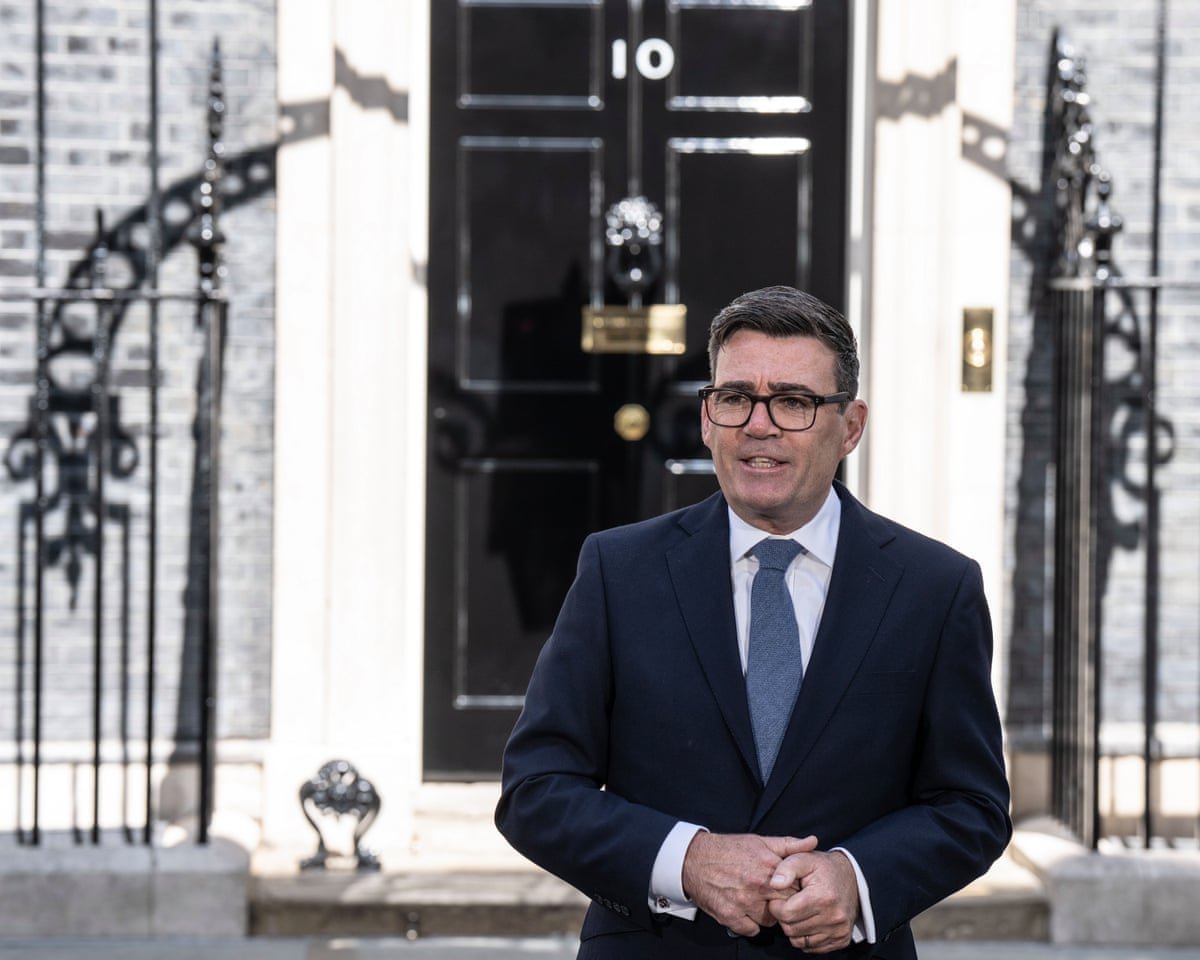
Outside No. 10, Burnham spoke for ten minutes without notes or a lectern, watched by his wife Marie-France van Heel. He described the moment as “a circuit breaker for Britain” and promised “the biggest changes in the last 40 years.” The new prime minister announced a 10-year plan to be set out later this year and pledged that cost-of-living measures would begin on Tuesday, with expected support for energy bills and bus fares.
Immediate Focus on Rough Sleeping and Public Trust
Burnham’s first instruction in office was to end rough sleeping, following visits to homeless people in London. He told the crowd: “I know people at home are fed up with politics. I hear you. We have not been good enough, and we need to be better. We will be.” He added that “Britain needs to show the world that we can regain our stability once again,” directly addressing disillusionment across regions from the North West to the South East.
Cabinet Upheaval Removes Reeves, Lammy and Reed
The new prime minister moved quickly to reshape the government. Rachel Reeves was removed as Chancellor after declining a “big job” offer. David Lammy departed as Deputy Prime Minister and Steve Reed left the Housing, Communities and Local Government brief. Shadow chancellor Mel Stride described Reeves’ departure as “inevitable.” Peter Kyle also left the front bench, signalling a decisive break from the previous administration’s inner circle.
Rachel Reeves’ chancellorship had been defined by repeated fiscal headwinds, including sluggish growth, persistent inflation above the Bank of England’s target, and criticism over the decision to maintain tight spending rules inherited from the previous Conservative administration. Her refusal of an alternative senior role reflected deep policy disagreements with Burnham over the pace of public investment. Potential replacements include Manchester MP Lucy Powell or former chief secretary to the Treasury Darren Jones, both viewed as more aligned with the new prime minister’s regional-growth priorities.
David Lammy’s removal signals a recalibration of foreign-policy emphasis away from the Atlanticist tone that characterised the Starmer era. While continuity on Ukraine remains, Burnham is expected to place greater weight on European security cooperation and trade diversification. Steve Reed’s swift departure, announced within minutes of the rough-sleeping pledge, carried particular irony given his former responsibility for housing and homelessness; the timing suggested Burnham wished to distance himself immediately from a minister associated with slow progress on temporary accommodation targets.
Financial markets reacted with cautious optimism, with sterling gaining modestly against the dollar and gilt yields easing as investors priced in the prospect of a more regionally focused fiscal stance. Business groups welcomed the decisive nature of the reshuffle but warned that prolonged uncertainty over tax policy could dampen investment until the autumn Budget clarifies the government’s approach to corporation tax and capital allowances.
New Economic Model and Devolution Across Every Postcode
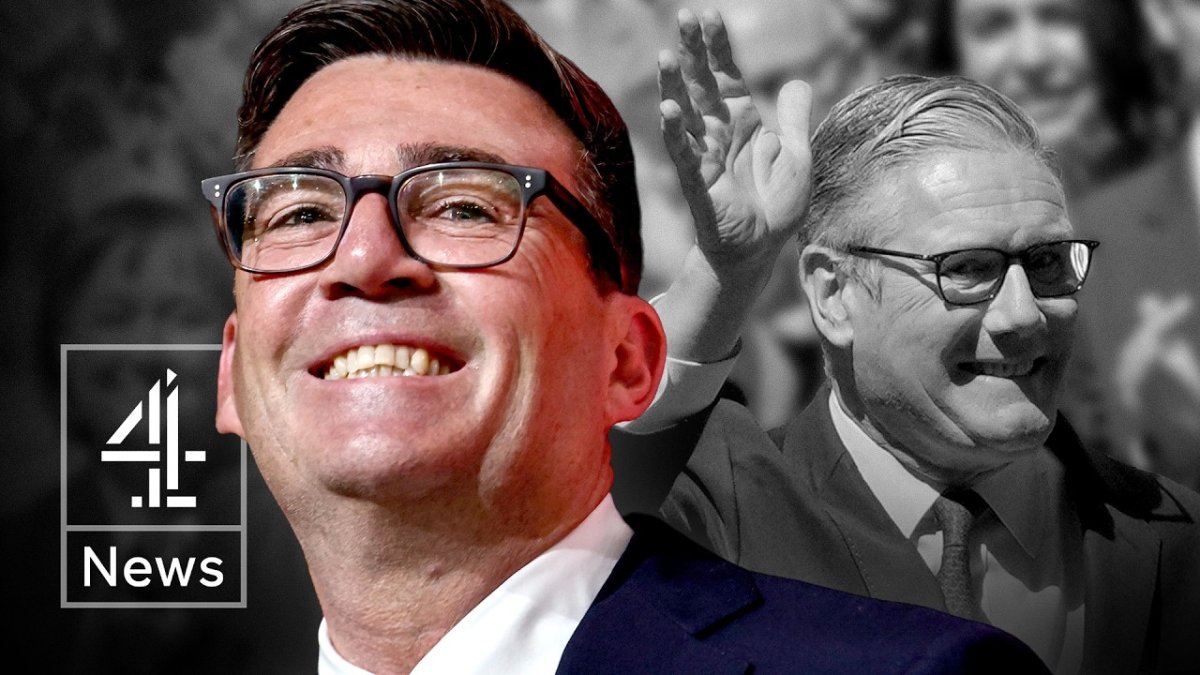
Burnham criticised the 1980s settlement, stating that “political power was centralised, economic power privatised, large parts of the country deindustrialised.” He pledged to redistribute power from Westminster, promising to “take power out of here and carry it into every postcode in the land.” The approach draws on his eight years as Greater Manchester mayor and recent return to Parliament via the Makerfield by-election last month. Plans to examine the tax-free personal allowance will feature ahead of the first Budget in the autumn.
Burnham’s record in Greater Manchester offers a practical template for the “Manchester model” now being nationalised. Over eight years he oversaw the expansion of the Bee Network bus franchising system, delivered more than 15,000 affordable homes through combined-authority planning powers, and secured devolved adult-education budgets that improved skills-matching in former industrial towns. These interventions demonstrated how metro-mayoral control can accelerate infrastructure and housing delivery where Whitehall direction has historically faltered.
The proposed new political and economic settlement envisages a decisive shift from the post-1980s centralised model. In practice this could involve statutory powers for combined authorities over strategic planning, transport, and skills, alongside fiscal flexibilities such as the ability to retain a greater share of business-rate growth. The examination of the tax-free personal allowance forms part of a broader review aimed at boosting disposable incomes for lower earners without triggering immediate fiscal drag, though any increase would require careful offsetting measures to maintain revenue neutrality.
Scotland, Wales and Northern Ireland present distinct challenges within this devolution agenda. While metro mayors in England gain enhanced powers, the devolved administrations already possess legislative competence in key areas; Burnham has indicated a willingness to explore further fiscal devolution, including potential borrowing powers, but must navigate sensitivities around the Barnett formula and the constitutional status of the Union. Early engagement with the Scottish and Welsh governments will be essential to prevent perceptions that English regionalism is being prioritised at the expense of the existing devolution settlement.
First Call With Trump and Continued Support for Ukraine
Burnham’s first telephone call with a foreign leader was with US President Donald Trump. He reaffirmed Britain’s backing for Ukraine, maintaining continuity on foreign policy while signalling a domestic reset. The conversation underscored the new government’s intention to balance renewed stability at home with established international commitments.
The Seventh Prime Minister Since 2016
Burnham becomes the UK’s seventh prime minister since 2016 and the sixth within a decade. His rapid rise from the Makerfield by-election to No. 10 follows Starmer’s loss of support among Labour MPs after a series of policy U-turns. The change arrives at a time when households across England, Scotland, Wales and Northern Ireland continue to face pressure on energy costs, transport and housing.
The sequence of seven prime ministers since 2016—David Cameron, Theresa May, Boris Johnson, Liz Truss, Rishi Sunak, Keir Starmer and now Andy Burnham—illustrates an unprecedented period of executive instability. Each transition has carried measurable economic costs: the Truss mini-Budget triggered a gilt-market crisis, while the prolonged uncertainty surrounding Johnson’s departure contributed to delayed investment decisions. Cumulative effects include elevated borrowing costs and a measurable decline in business confidence indices tracked by the CBI and OECD.
Voter fatigue is evident in successive polling showing trust in Westminster at historic lows, with only 12 per cent of respondents in recent surveys expressing confidence that politicians act in the national interest. This disillusionment is not uniform: London and the South East have experienced relatively stable representation, whereas northern and midlands constituencies have witnessed repeated changes of both MP and prime minister, amplifying perceptions of a disconnected political class.
The implications for the next general election are significant. With Burnham lacking a personal electoral mandate, the opposition will frame the government as the product of internal Labour manoeuvring rather than popular consent. Turnout is likely to be depressed unless the new administration can demonstrate tangible early progress on cost-of-living measures, while smaller parties in Scotland and Wales may capitalise on the continuing narrative of Westminster dysfunction to advance further constitutional change.
Burnham’s Rise From Health Secretary to Prime Minister
A former Health Secretary under Gordon Brown, Burnham spent eight years leading Greater Manchester before returning to Parliament only last month. Allies including Liverpool city region mayor Steve Rotheram and former Everton player Peter Reid attended his first speech. The new prime minister now faces the task of delivering the promised 10-year plan while managing expectations in constituencies that have seen six changes of leadership in ten years.
By Erica Thornton, Staff WriterThis article was produced with AI-assisted research and editorial support. Reporting is based on sources cited in the article.
What's Your Reaction?
 Like
0
Like
0
 Dislike
0
Dislike
0
 Love
0
Love
0
 Funny
0
Funny
0
 Wow
0
Wow
0
 Sad
0
Sad
0
 Angry
0
Angry
0

US Politics and Policy Correspondent at Global1.News. Based in Washington DC, covering American politics, policy, elections, and the courts. Knows how the system works and tells you what it actually means.














Comments (0)