
India Measles Crisis: 26,627 Cases in Six Months, Elimination Target in Jeopardy
Measles Cases Surge Past 2025 Total in Six Months India recorded 26,627 measles cases in the first half of 2026 according to WHO and CDC data. This figure already exceeds the 18,794 cases reported for the entire year of 2025. The country now holds the world’s second-highest tally after Bangladesh, which recorded 42,127 infections and nearly 800 deaths in the same period. The global measles resurgence provides critical context for India’s surge.
Measles Cases Surge Past 2025 Total in Six Months
India recorded 26,627 measles cases in the first half of 2026 according to WHO and CDC data. This figure already exceeds the 18,794 cases reported for the entire year of 2025. The country now holds the world’s second-highest tally after Bangladesh, which recorded 42,127 infections and nearly 800 deaths in the same period.
The global measles resurgence provides critical context for India’s surge. WHO data indicate that 57 countries experienced large or disruptive outbreaks in 2025-2026, driven by vaccination coverage falling below the 95% herd-immunity threshold in many regions. This international pattern reflects pandemic-related disruptions, supply-chain issues, and rising vaccine hesitancy. India’s position as the second-most affected nation underscores how these global trends intersect with domestic challenges in routine immunisation delivery.
Declining coverage rates below 95% have created pockets of susceptibility across multiple states. WHO surveillance shows that measles transmission accelerates rapidly once coverage dips even a few percentage points, particularly in densely populated areas. The current Indian data reveal that first-half 2026 cases already surpass full-year 2025 totals, signalling that the epidemic curve is steepening rather than flattening. Public-health analysts note that without immediate catch-up campaigns, the second half of 2026 could see another 30,000–40,000 additional infections.
Comparative international figures further highlight the urgency. The United States has already surpassed 700 confirmed cases in 2026, while several European countries report clustered outbreaks linked to under-vaccinated migrant communities. These parallel developments demonstrate that measles remains a highly mobile pathogen capable of exploiting any immunity gaps, regardless of a country’s overall development status.
Global Measles Resurgence: India in the International Context
WHO’s 2026 global report documents measles outbreaks in 57 countries, representing the widest geographic spread since 2019. Cumulative cases worldwide have risen 45% compared with the same period in 2025, with the African and South-East Asian regions accounting for the majority of the increase. India’s 26,627 cases place it behind only Bangladesh, yet ahead of nations such as Ethiopia, Nigeria, and Pakistan that historically reported higher burdens. This ranking reflects both genuine transmission dynamics and improved laboratory confirmation capacity in some states.
The United States has recorded more than 700 cases so far in 2026, concentrated in under-vaccinated communities in Texas, New York, and California. Europe has seen simultaneous outbreaks in Romania, Italy, and the United Kingdom, where coverage in certain districts has fallen below 85%. These high-income-country experiences illustrate that measles resurgence is not confined to low-resource settings; rather, it follows any sustained drop below the 95% threshold. India’s trajectory therefore mirrors a worldwide pattern rather than representing an isolated failure.
Cross-regional comparisons reveal shared risk factors. Migration, urban overcrowding, and COVID-19-related service interruptions have created immunity gaps everywhere. WHO emphasises that restoring routine immunisation to pre-pandemic levels remains the single most effective intervention. For India, this means not only increasing first-dose coverage but also ensuring second-dose completion rates exceed 90% in every district—an objective that will require both supply-side strengthening and demand-generation activities tailored to diverse cultural contexts.
Elimination Target at Risk After Repeated Delays
India set an ambitious goal to eliminate measles and rubella by 2026. Earlier deadlines of 2015, 2020 and 2023 were missed. The current rise reverses two years of declining numbers: 20,635 cases in 2024 and 18,794 in 2025. The last major documented outbreak occurred in late 2022 with 10,416 confirmed cases and 40 deaths.
India faces distinctive structural obstacles that neighbouring countries have largely overcome. Vaccine hesitancy persists in pockets of Uttar Pradesh and Bihar, while seasonal migration of construction workers and brick-kiln labourers disrupts two-dose schedules. Hard-to-reach tribal districts in Odisha, Jharkhand, and Chhattisgarh continue to report coverage below 70%, creating persistent reservoirs for transmission. These geographic and social determinants require targeted micro-planning rather than uniform national strategies.
In contrast, Sri Lanka and Bhutan achieved measles elimination by 2020 through sustained coverage above 95%, robust surveillance, and rapid outbreak response. Both nations benefited from smaller populations and stronger primary-health-care infrastructure. India’s challenge lies in scaling similar systems across 1.4 billion people while addressing interstate disparities. Without accelerated investment in these high-risk districts, the 2026 target will likely slip further, repeating the pattern of missed milestones observed since 2015.
Surveillance Transparency Remains Limited
International systems provide cumulative totals, yet no detailed state-wise or district-level breakdown has been released by the Ministry of Health. Parents and local health workers in states such as Uttar Pradesh and Bihar lack timely information on transmission clusters. This opacity affects planning for the Universal Immunisation Programme, which delivers two doses of the Measles-Rubella vaccine at nine to twelve months and sixteen to twenty-four months.
The Integrated Disease Surveillance Programme (IDSP) remains the backbone of India’s reporting architecture, yet it suffers from chronic under-reporting and delayed data flows. Weekly reports from Bihar and Uttar Pradesh often arrive 10–14 days late, while Kerala’s system transmits near-real-time laboratory-confirmed cases through an integrated digital dashboard. These disparities mean that national aggregates mask emerging hotspots until they have already seeded secondary waves.
Transitioning to real-time digital surveillance is technically feasible through the Ayushman Bharat Digital Mission platform. Linking IDSP with Aadhaar-linked vaccination records and hospital admission data would enable automated cluster detection. Pilot projects in Tamil Nadu have demonstrated a 40% reduction in outbreak detection time. Scaling such models nationally would require both infrastructure investment and capacity building for district epidemiologists currently reliant on paper-based forms.
Implications for Indian Families and Taxpayers
Each unreported cluster increases the risk of outbreaks in densely populated urban centres such as Mumbai and Delhi. Treatment remains supportive, relying on fever management and vitamin A supplementation. Complications including pneumonia and encephalitis raise costs for district hospitals already stretched by routine immunisation catch-up drives. Taxpayers ultimately fund these additional healthcare expenditures when routine coverage falters.
The economic burden falls heaviest on low-income households. Private-hospital treatment for measles-related pneumonia averages ₹45,000–80,000 per episode, while public facilities still incur ₹8,000–12,000 in direct costs per complicated case. Families often lose 7–10 working days, pushing many below the poverty line. When aggregated across thousands of cases, these micro-level shocks translate into measurable drags on state GDP and increased demand for social safety-net programmes.
India’s overall healthcare expenditure already allocates roughly 2.1% of GDP to health. Each additional measles outbreak diverts resources from chronic-disease management and maternal-health programmes. Modelling by the Public Health Foundation of India estimates that every 10,000 measles cases generate ₹120–150 crore in direct medical and indirect productivity losses. Closing surveillance gaps therefore represents not only a public-health imperative but also a fiscal responsibility to taxpayers.
Comparison With Bangladesh Highlights Regional Pressure
Bangladesh’s ongoing outbreak has produced more than 42,000 cases and close to 800 deaths. India’s lower death reporting may reflect differences in surveillance rather than lower severity. Both countries share porous borders and similar vaccination challenges, making coordinated cross-border monitoring essential for the 2026 elimination target.
SAARC health ministers have discussed a regional immunisation coordination mechanism since 2023, yet implementation remains limited. Bangladesh’s emergency vaccination campaign, which reached 95% coverage in outbreak districts within eight weeks, offers a replicable model. India could adapt similar rapid-response micro-plans along the Indo-Bangladesh border, where cross-border movement of unvaccinated children has been documented.
Cross-border health security also requires harmonised surveillance protocols. Joint case investigations and shared laboratory networks would reduce duplication and accelerate containment. Without such cooperation, measles will continue to exploit the porous frontier, undermining elimination efforts in both nations regardless of domestic progress.
Role of Routine Immunisation and Private Sector Options
The Universal Immunisation Programme remains the primary delivery mechanism. The Measles-Mumps-Rubella vaccine is also available privately, yet uptake varies by income and awareness. Disruptions during the 2020-2021 COVID-19 period contributed to the 2022 outbreak; similar gaps now threaten progress again.
Mission Indradhanush has added 3.5 crore children to the immunisation register since 2014, yet coverage plateaus persist in urban slums and tribal blocks. The private sector, led by manufacturers such as the Serum Institute of India, supplies both the public programme and private MMR formulations. However, private uptake remains concentrated among higher-income families, widening equity gaps rather than closing them.
Vaccine hesitancy manifests differently across settings. Rural resistance often stems from misinformation about adverse events, while urban parents cite concerns over multiple injections and perceived low disease risk. Tailored communication strategies—using community health workers in villages and digital platforms in cities—are therefore essential to raise coverage uniformly above the 95% threshold.
What Parents Need to Know About Measles in 2026
Measles begins with high fever, cough, coryza, and conjunctivitis, followed by a characteristic rash. Parents should seek immediate medical care if a child develops breathing difficulty, persistent high fever beyond three days, or altered consciousness, as these signal complications such as pneumonia or encephalitis. Early vitamin A supplementation and supportive care dramatically reduce mortality when administered promptly.
Under the Universal Immunisation Programme, the first MR dose is given at 9–12 months and the second at 16–24 months. Missed doses can be caught up at any age through routine sessions or special drives. The MMR vaccine used privately offers additional protection against mumps and rubella and carries an excellent safety profile, with serious adverse events occurring in fewer than one per million doses.
Parents should verify their child’s vaccination status via the Mother and Child Protection card or state digital portals. In outbreak settings, supplementary immunisation activities may offer an additional dose regardless of prior history. Maintaining two-dose coverage remains the most reliable defence against infection and its long-term sequelae.
Path Forward for Healthcare Policy
Strengthening real-time district reporting within the existing Integrated Disease Surveillance Programme would allow faster response. Linking school health records with vaccination databases could improve coverage tracking in states with high migration. Without these steps, the 2026 elimination deadline risks becoming another missed milestone.
NITI Aayog has recommended integrating IDSP with the Ayushman Bharat Digital Mission to create a unified health-data ecosystem. ICMR’s network of regional laboratories can provide confirmatory testing capacity, yet funding for reagent procurement and staff training remains inconsistent across states. Implementing these recommendations would transform surveillance from a passive reporting exercise into an active decision-support system.
Digital health tools also enable performance-based incentives for districts that achieve timely reporting and high coverage. Pilot evaluations show that such incentives improve both data quality and immunisation uptake. Scaling these approaches nationally, while preserving equity safeguards for under-resourced districts, offers a pragmatic pathway to protect children and meet India’s stated public-health goals.
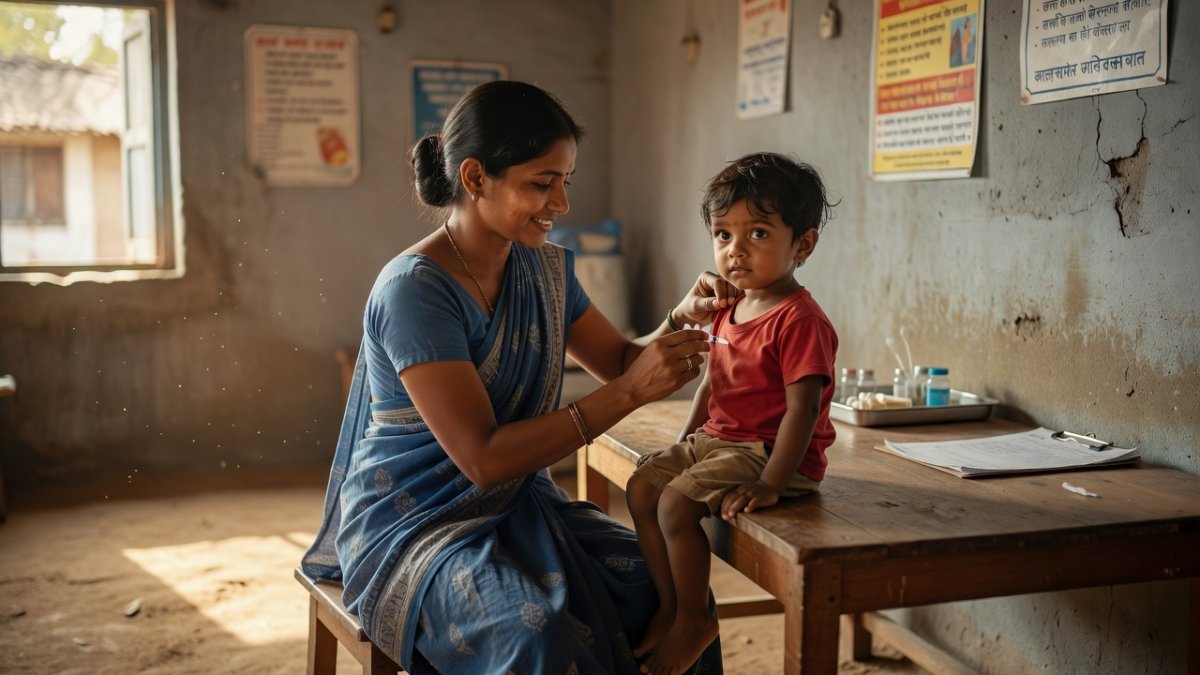
Implications for Indian Families and Taxpayers
Each unreported cluster increases the risk of outbreaks in densely populated urban centres such as Mumbai and Delhi. Treatment remains supportive, relying on fever management and vitamin A supplementation. Complications including pneumonia and encephalitis raise costs for district hospitals already stretched by routine immunisation catch-up drives. Taxpayers ultimately fund these additional healthcare expenditures when routine coverage falters.
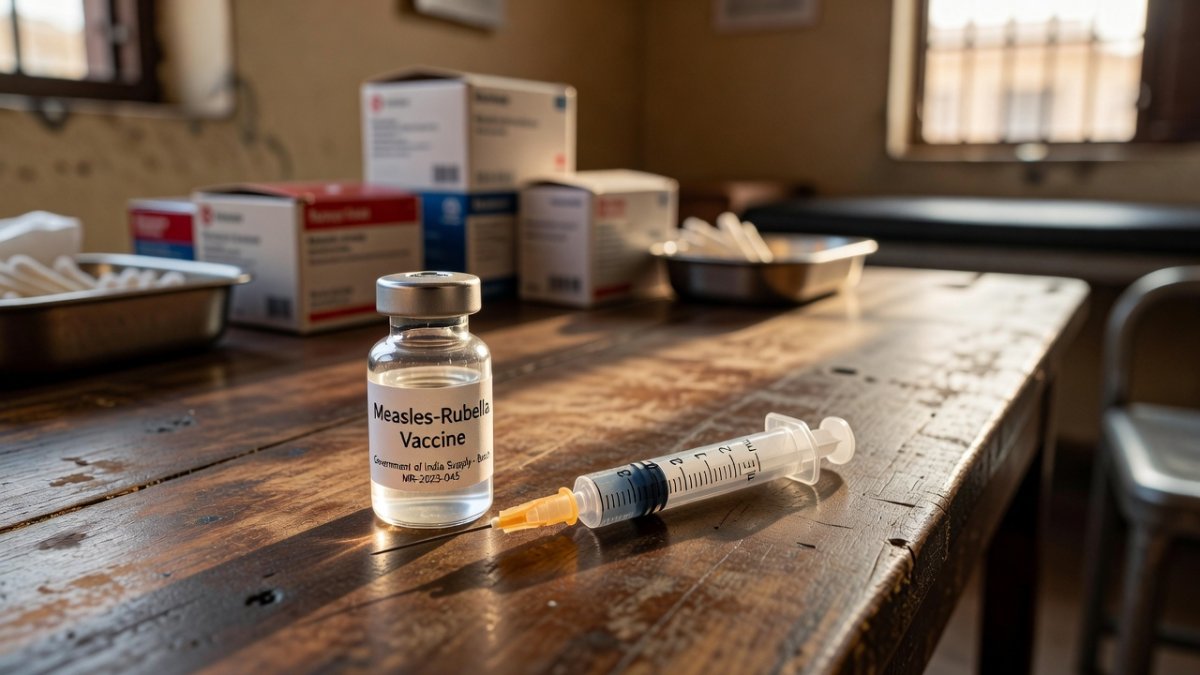
The data from WHO and CDC are clear. India must close surveillance gaps and accelerate coverage under the Universal Immunisation Programme to protect children and meet its stated public health goals.
— By Dr. Raj Patel, Staff WriterThis article was produced with AI-assisted research and editorial support. Reporting is based on sources cited in the article.
What's Your Reaction?
 Like
0
Like
0
 Dislike
0
Dislike
0
 Love
0
Love
0
 Funny
0
Funny
0
 Wow
0
Wow
0
 Sad
0
Sad
0
 Angry
0
Angry
0

India/South Asia Correspondent at Global1.News. Analytical voice with a background in science and health journalism. Based in New Delhi, covering Indian politics, education, healthcare, technology, and policy. Breaks down complex data into clear, actionable reporting.












Comments (0)