
Tnuva's Warehouse Glitch Paralyzes Israel's Dairy Supply
For weeks, shoppers across Israel have confronted an unfamiliar sight in the dairy aisle: refrigerated shelves stripped of cottage cheese and white cheese, with apologies from store managers taped to empty coolers. At the center of the disruption is a computer malfunction at Tnuva's automated warehouse in Alon Tavor — a failure that has exposed the fragility of Israel's reliance on imported industrial automation expertise and upended the grocery routines of millions of households.
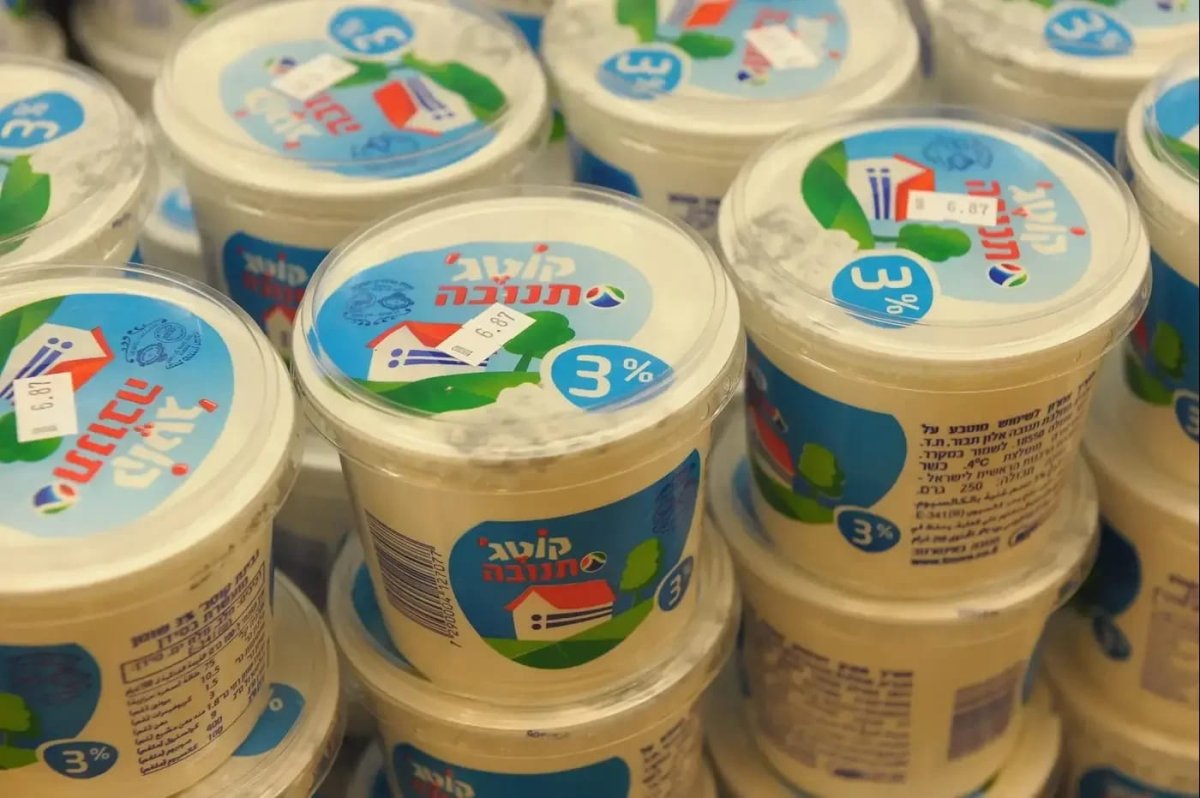
For weeks, shoppers across Israel have confronted an unfamiliar sight in the dairy aisle: refrigerated shelves stripped of cottage cheese and white cheese, with apologies from store managers taped to empty coolers. At the center of the disruption is a computer malfunction at Tnuva's automated warehouse in Alon Tavor — a failure that has exposed the fragility of Israel's reliance on imported industrial automation expertise and upended the grocery routines of millions of households.
Tnuva's Warehouse Glitch: How a Computer Malfunction Paralyzed Israel's Dairy Supply Chain
Tel Aviv, Israel — A software error in the automated storage and retrieval system at Tnuva's primary cottage cheese production facility in the Lower Galilee has trapped finished goods inside the warehouse, blocking distribution to retailers across the country. With German technicians refusing to travel to Israel due to the security situation, the disruption has stretched into its third week and expanded from cottage cheese to white cheese.
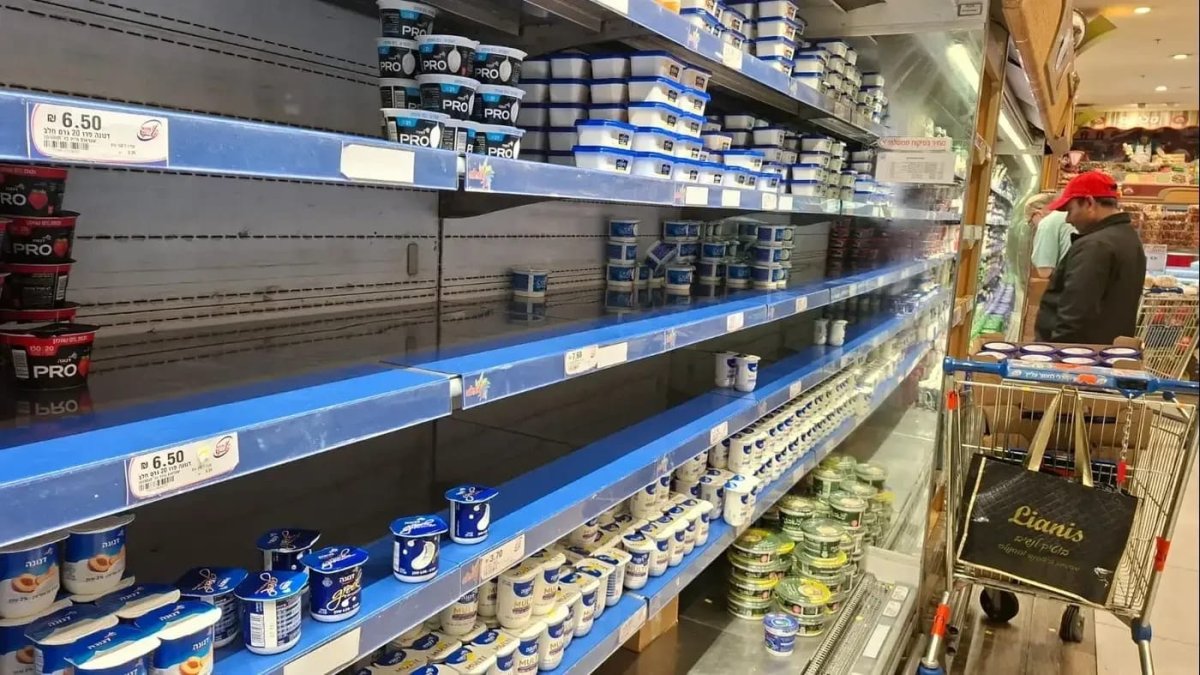
Walk into the Shufersal flagship on Ibn Gvirol in Tel Aviv on a weekday morning and the scene is striking: entire refrigerated cases once stacked with the familiar 250-gram cottage cheese tubs now hold only scattered packs of yogurt and imported cream cheese. At the Petah Tikva branch near the central bus station, shoppers pause in front of bare metal shelves where white cheese blocks used to sit, some muttering about having to drive to a third store. Similar scenes repeat at Rami Levy in Jerusalem’s Malha mall and Victory outlets in Haifa, where handwritten signs apologize for limited stock.
Empty Shelves in the Dairy Aisle Across Major Chains
The absence carries particular weight in Israeli households, where cottage cheese remains a daily staple for breakfast and children’s lunches. Parents describe rearranging meal plans and turning to pricier alternatives, while older shoppers recall the 2011 cottage cheese protests and worry the current disruption signals deeper fragility. Social media posts from affected neighborhoods show photos of empty aisles captioned with resigned humor, yet the underlying anxiety about reliable access to affordable protein is unmistakable.
Alon Tavor sits in the Lower Galilee, roughly twenty kilometers southeast of Afula, and serves as Tnuva’s primary production and high-volume distribution hub for cottage cheese and related fresh dairy lines. The site processes millions of units weekly through an integrated ASRS—automated storage and retrieval system—supplied by Dematic, featuring multi-level cranes, conveyor loops, and laser-guided shuttles that move sealed containers between production exits and outbound loading bays without human intervention.
The Computer Glitch at Alon Tavor
The malfunction first surfaced in late June 2026 when a firmware update to the warehouse management software caused the retrieval cranes to lose positional calibration. Since then, finished goods have accumulated inside the sealed racking while outbound trucks leave partially loaded, creating a growing backlog that now stretches into the second week of July.
German technicians have cited repeated rocket alerts in northern and southern border regions, combined with their company’s updated travel policy that flags Israel as a high-risk destination. Official advisories from the German Foreign Office recommend avoiding non-essential travel to areas within range of Gaza and Lebanon launches, prompting the service team to decline on-site visits despite Tnuva’s urgent requests.
Technicians Decline Travel to Israel
Remote Zoom sessions have allowed engineers to review error logs and attempt software resets, yet the physical fault lies in misaligned sensors and jammed shuttle mechanisms that require hands-on recalibration inside the chilled warehouse environment. Without direct access, the diagnostic loop remains incomplete and the blockage persists.
By mid-July consumers in Tel Aviv’s Florentin neighborhood and Netanya’s city center were posting videos of cleared dairy sections, with some stores limiting purchases to two units per customer. Tnuva shifted production emphasis to 500-gram and 750-gram white cheese formats that can still be manually retrieved from secondary storage, yet the smaller, higher-velocity cottage cheese packs remain trapped.
Expansion of the Shortage to White Cheese
Because cottage cheese is manufactured exclusively at Alon Tavor and cannot be imported, households have turned to social media groups to trade tips on remaining stock locations, accelerating sell-outs even at smaller chains. The cultural centrality of the product—cheap, fresh, and embedded in everyday Israeli cuisine—has amplified the sense of disruption beyond ordinary supply fluctuations.
Israel’s food-processing plants, ports, and pharmaceutical facilities increasingly rely on imported ASRS and robotic systems from European and Asian vendors, creating single points of failure when specialized maintenance is required. The KION/Dematic installation at Alon Tavor exemplifies this pattern, where proprietary code and hardware knowledge reside overseas.
Reliance on Foreign Automation Expertise
While the Israel Innovation Authority funds local robotics startups and the defense sector has cultivated domestic automation talent, food-grade cold-chain systems have received less attention, leaving producers dependent on foreign service contracts. Expanding local capability in industrial maintenance could reduce future exposure to travel disruptions.
Shufersal’s recent twenty-percent hike in delivery fees has compounded frustration for households already navigating stockouts, pushing lower-income families in the periphery to rely more heavily on smaller, pricier neighborhood groceries. Retailers report reallocating shelf space to imported dairy and plant-based alternatives while monitoring daily delivery shortfalls.
Effects on Retailers and Consumers
Central Bureau of Statistics data show dairy accounts for roughly eight percent of average household food expenditure, with cottage cheese forming a disproportionate share among lower-income groups; repeated shortages therefore translate directly into higher weekly grocery bills and reduced nutritional variety for those least able to absorb the difference.
Steps Taken by Tnuva and Authorities
Tnuva has maintained production volumes and explored internal workarounds for the warehouse blockage. The Ministry of Economy and the Israel Innovation Authority have been informed of the technical constraints. Discussions continue on how to restore full retrieval capability without immediate on-site support from the German provider.
The Alon Tavor episode echoes earlier disruptions during COVID-19 when port congestion and labor shortages delayed spare parts for automated lines across multiple sectors. Lessons from that period—chiefly the value of redundant manual override capabilities and diversified supplier networks—remain only partially implemented in Israel’s fresh-food infrastructure.
Supply Chain Resilience in Context
National food-security discussions now increasingly focus on mapping critical automation dependencies and incentivizing local service ecosystems, recognizing that even advanced economies can face sudden constraints when overseas expertise becomes logistically or politically unavailable.
Looking Ahead for Industrial Automation Support
Resolution of the current glitch will likely require either renewed travel arrangements or further development of remote diagnostic tools. The experience may prompt greater attention to redundancy in automated warehouses serving major producers such as Tnuva. Israel's broader tech ecosystem continues to advance local solutions, yet the immediate challenge remains tied to the specific system installed at the Alon Tavor site.
 By Hannah Berg, Staff Writer
This article was produced with AI-assisted research and editorial support. Reporting is based on sources cited in the article.
What's Your Reaction?
 Like
0
Like
0
 Dislike
0
Dislike
0
 Love
0
Love
0
 Funny
0
Funny
0
 Wow
0
Wow
0
 Sad
0
Sad
0
 Angry
0
Angry
0

Israel Correspondent at Global1.News. Based in Tel Aviv, covering Israeli politics, security, technology, and society. Provides balanced, deeply-sourced reporting on one of the most closely-watched regions in the world.















Comments (0)