
Colombia's Failed Crop Substitution Fuels Record Coca Boom
Colombia's crop substitution program under the 2016 peace accord has failed thousands of farmers in Meta department due to funding shortfalls and infrastructure gaps, driving coca cultivation to record levels of 253,000 hectares.
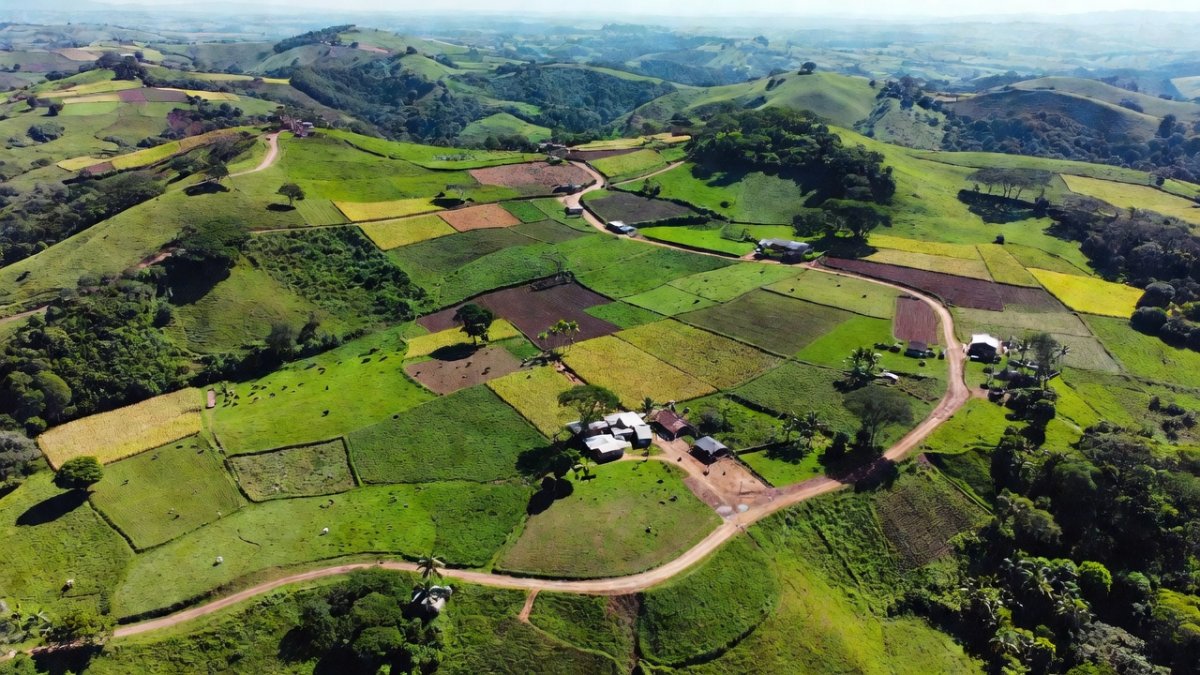
Colombia's ambitious plan to replace coca with legal crops has unraveled in remote regions, leaving farmers like those in Meta department with no choice but to return to the illicit economy. Despite billions in funding tied to the 2016 peace accord, systemic delays and infrastructure gaps have undermined the effort. As a result, coca cultivation has surged to unprecedented levels, threatening the stability of the peace process. This investigative report examines how the substitution program fell short and what it means for rural communities.
Colombia's Failed Crop Substitution Fuels Record Coca Boom
Bogotá, Colombia — Years after the peace agreement, promises of alternative livelihoods remain unfulfilled for thousands of farmers.
A Farmer's Return to Coca in Remote Meta
Colombian coca grower Perea removed every bush from his plot in a remote corner of Meta department after signing up for the national crop substitution program. He planted cassava and plantain instead, following the terms laid out under the 2016 peace agreement with the FARC. Within months, recurring floods destroyed much of the new harvest, and the absence of passable roads left the rest rotting in the field. Promised payments from the government never reached his account in full.
PNIS Program Falls Short on Delivery
The Programa Nacional Integral de Sustitución de Cultivos Ilícitos was designed to give families like Perea's a path out of coca. Official documents tied the initiative to the 2016 accord, yet field reports show that financial support arrived late or not at all for thousands of participants. Perea waited for months while his family went without income. By 2024 he had replanted coca, the only crop that buyers would collect directly from his farm gate.
The Programa Nacional Integral de Sustitución de Cultivos Ilícitos structured its core offer around three pillars: monthly cash transfers of 1.8 million Colombian pesos for up to twelve months to families that voluntarily eradicated coca, technical assistance for legal crops such as cacao and coffee, and community infrastructure projects including roads and irrigation. In practice, the cash component reached only 36 percent of the 132,000 families that signed collective agreements by 2022, according to the National Planning Department’s own audits. Technical visits occurred in fewer than one in five veredas, and promised road improvements stalled after initial surveys.
Budget execution tells the same story of institutional failure. The government earmarked 2.8 trillion pesos for PNIS between 2017 and 2023, yet the Comptroller General found that just 41 percent had been disbursed to beneficiaries by the end of 2023. The remainder remained trapped in bureaucratic approvals or redirected to other line items during the Duque administration. When Gustavo Petro took office in August 2022, he pledged to accelerate payments, but by mid-2024 only an additional 18,000 families had received their full twelve-month cycle.
The timeline itself magnified the damage. The 2016 peace accord set a two-year window for initial substitution, yet the first collective agreements were not signed until late 2017. Political shifts then froze momentum: Duque’s 2018–2022 government cut field staff by 40 percent and prioritized forced eradication. Families such as Perea’s watched neighbors who had kept coca receive steady income from traffickers while state checks arrived in irregular, partial installments. By the time Petro’s team attempted to restart the program, trust had collapsed and replanting accelerated.
Infrastructure Gaps Block Legal Alternatives
Meta's rural roads turn to mud during the rainy season, cutting off markets in Villavicencio and beyond. Without reliable transport, cassava and plantain fetch almost nothing even when they survive the floods. Government agencies responsible for rural development have not completed the access routes listed in the original substitution plans. Farmers in the same veredas report identical isolation, leaving them with few options beyond the armed groups that still control local trade.
Coca Area Reaches New Record Levels
UNODC figures released this year show Colombia's coca cultivation climbed 10 percent in 2023, reaching 253,000 hectares. That total exceeds any previous measurement since systematic monitoring began. The increase comes despite years of funding for eradication and substitution, much of it backed by international partners. Meta and neighboring departments account for a large share of the new plantings.
Colombian coca cultivation has followed a clear upward arc since the 2013 low of 48,000 hectares. After the 2016 peace accord suspended aerial spraying, cultivation rose steadily to 146,000 hectares by 2019 and then jumped again under the combined effects of pandemic-related enforcement gaps and shifting armed-group control. The 2023 UNODC figure of 253,000 hectares therefore represents not an isolated spike but the continuation of a decade-long trend that has now surpassed the previous record set in 2000.
This expansion occurred despite Colombia spending more than 1.2 trillion pesos annually on eradication and interdiction. Manual eradication teams destroyed 20,000 hectares in 2023, yet net cultivation still grew because new plots opened faster than old ones were removed. The Petro government’s decision to end all aerial glyphosate operations in 2022 removed the one tool that had previously capped growth in remote areas, leaving only ground teams that armed groups routinely block or attack.
At current yields, 253,000 hectares translate into roughly 1,800 metric tons of pure cocaine per year, enough to supply the combined annual consumption of the United States and Europe several times over. Demand remains robust: U.S. seizure data show cocaine purity at retail levels above 70 percent, while European wholesale prices have held steady or risen. The structural mismatch between voluntary substitution programs and sustained international demand continues to drive farmers back to coca regardless of official targets.
Peace Accord Commitments Remain Unfulfilled
The 2016 agreement required the state to provide technical assistance, land titles, and market access alongside the removal of coca. Five years later, many of those obligations sit on paper only. Local officials in Meta acknowledge that budget shortfalls and shifting national priorities have left entire municipalities without the support packages outlined in the accord. Families who complied with the program now face the same economic pressures that originally pushed them toward coca.
Chapters 1 and 4 of the 2016 Final Agreement explicitly linked coca substitution to comprehensive rural reform. Chapter 1 mandated a new rural land registry (catastro multipropósito) and formal titles for smallholders, while Chapter 4 required the state to deliver technical assistance, credit, and market access within five years. Five years after the constitutional court ordered full implementation, only 12 percent of the targeted 7 million hectares had received formal titles, and the rural cadastre had been completed in just 18 of 170 priority municipalities.
Security conditions have made delivery nearly impossible in the very zones where substitution was most needed. The Estado Mayor Central, the largest FARC dissident faction, controls an estimated 40 percent of coca-growing municipalities in Nariño, Cauca, and Putumayo. The ELN and Clan del Golfo maintain parallel taxation systems on coca paste. Community leaders who advocate for PNIS face systematic threats; the Colombian Ombudsman recorded 342 killings of social leaders in coca municipalities between 2016 and 2023, with substitution promoters disproportionately represented among the victims.
These governance failures have produced a predictable feedback loop. Families that signed substitution agreements found themselves without state protection once armed groups reasserted control. When payments arrived late or not at all, leaders who complained became targets. The resulting climate of fear has convinced many households that the safest economic choice remains staying inside the coca economy, where buyers arrive with cash and armed escorts rather than promises on paper.
Regional Pattern Repeats Across Borders
Similar substitution efforts in Peru's VRAEM region and in parts of Bolivia have produced uneven results when roads, credit, and stable buyers are missing. Colombian farmers watch these outcomes and draw the same conclusion: without functioning state presence, legal crops cannot compete. The pattern feeds skepticism toward externally funded strategies that emphasize eradication targets over sustained rural investment.
Peru’s Valle de los Ríos Apurímac, Ene y Mantaro (VRAEM) illustrates the same substitution impasse. Roughly 22,000 hectares remain under cultivation, protected by remnants of the Shining Path that tax every kilo of coca base. The Peruvian government’s voluntary eradication program has enrolled fewer than 3,000 families since 2017, and state presence is limited to occasional military sweeps. Farmers report that legal crops cannot compete with the guaranteed purchase and armed security offered by traffickers.
Bolivia’s experience under the cato system shows both the limits and the political appeal of regulated coca. The Arce government maintains the 22,000-hectare legal ceiling established during the Morales era, yet satellite data indicate at least 15,000 additional hectares outside authorized zones. Traditional growers in the Yungas defend their small plots as cultural patrimony, while commercial expansion in the Chapare feeds illegal markets. Enforcement remains politically costly, producing cycles of protest and negotiated tolerance rather than sustained reduction.
These national programs are further linked by transnational supply chains. Peruvian coca base travels across the Putumayo River into Colombian laboratories controlled by the Estado Mayor Central, then moves north through Panama and Central America to Mexican cartels for final distribution. Brazil’s Amazon states have recorded a 60 percent rise in cocaine seizures since 2020 as routes shift eastward. The pattern reveals a common structural flaw: substitution schemes that ignore both armed-group economics and persistent global demand inevitably collapse, leaving cultivation to migrate rather than disappear.
Daily Reality for Families in the Llanos
In Meta's scattered settlements, school fees, medical costs, and basic supplies still require cash that only coca provides on a predictable schedule. Women in the same communities describe spending hours carrying produce to the nearest track only to return with unsold loads. Men who once cleared coca now weigh the same calculation Perea faced: replant or watch savings disappear. These choices unfold far from Bogotá policy offices yet shape the national totals reported each year.
By Elena Vasquez, Staff WriterThis article was produced with AI-assisted research and editorial support. Reporting is based on sources cited in the article.
What's Your Reaction?
 Like
0
Like
0
 Dislike
0
Dislike
0
 Love
0
Love
0
 Funny
0
Funny
0
 Wow
0
Wow
0
 Sad
0
Sad
0
 Angry
0
Angry
0

Latin America Correspondent at Global1.News. Based in Mexico City, covering politics, economics, energy, and culture across the region. Brings an on-the-ground perspective to stories spanning from the Rio Grande to Patagonia.













Comments (0)